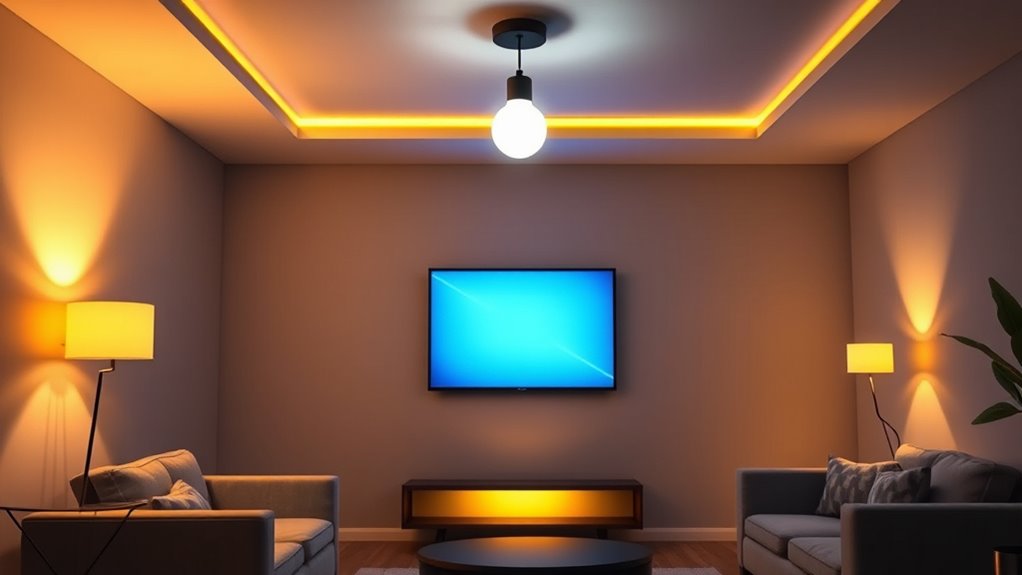

Choosing the right light bulb involves matching brightness and color temperature to each room’s purpose. For workspaces and kitchens, go for brighter bulbs around 5000K with higher lumens to guarantee visibility. Cozy areas like living rooms and bedrooms benefit from warmer tones around 2700K and softer lighting, creating a relaxing ambiance. By considering these factors, you’ll create inviting, functional spaces. Keep exploring to discover how to optimize your lighting for every room’s needs.

Get furniture and decor delivered free with Prime
- Fast, free delivery on millions of items
- Prime Video, Amazon Music and more included
- Member-only deals all year
Key Takeaways
- Match room size and activity to lumens: small spaces need 300-400 lumens, larger rooms 1,500+ lumens.
- Use warm white (2700K-3000K) for cozy areas, daylight (5000K-6500K) for workspaces and kitchens.
- Consider energy-efficient LED bulbs with ENERGY STAR certification for cost savings and longevity.
- Adjust brightness and color temperature to enhance comfort and functionality based on the room’s purpose.
- Smart lighting allows customizable control of brightness and color to create optimal room ambiance.

Ever wondered how to choose the right light bulb for your needs? It all starts with understanding your goals for each space. Are you looking to save on energy bills, create a cozy atmosphere, or incorporate the latest smart lighting technology? Knowing what you want helps you narrow down your options and make smarter choices. Energy efficiency is a key factor, especially if you’re aiming to reduce electricity costs and your environmental impact. LED bulbs are the most energy-efficient option available today, using a fraction of the energy that incandescent bulbs consume. They last much longer too, meaning fewer replacements and less waste over time. When considering energy efficiency, look for bulbs labeled with ENERGY STAR certification, which guarantees they meet strict standards for conserving power.
Smart lighting has revolutionized how you control your home’s illumination. With smart bulbs, you can adjust brightness, color, and even set schedules right from your smartphone or voice assistant. This convenience not only enhances your daily routines but also helps you save energy by turning lights off when not needed or dimming them during movie nights. Smart lighting systems often integrate with home automation setups, giving you the ability to customize lighting scenes for different rooms and activities effortlessly. The ability to control your lights remotely means you can turn them on before you arrive home or ensure they’re off when you’re away, preventing unnecessary energy consumption. When choosing smart bulbs, verify their compatibility with your existing smart home system and consider features like adjustable color temperatures and dimming capabilities to match your preferences.
Next, think about the purpose of each room. In workspaces or kitchens, bright, neutral white light enhances visibility and focus. For relaxation areas like bedrooms or living rooms, warmer tones create a cozy, inviting atmosphere. The color temperature of a bulb is measured in Kelvin (K), with lower numbers (2700K-3000K) producing warm, yellowish light, and higher numbers (5000K-6500K) producing bright, daylight-like illumination. The right brightness level, measured in lumens, depends on the size of the room and its usage. A small reading nook might need 300-400 lumens, while a large living room benefits from 1,500 lumens or more. Choosing the right brightness and color ensures your space feels comfortable and functional.
LED light bulbs with adjustable color temperature
As an affiliate, we earn on qualifying purchases.
As an affiliate, we earn on qualifying purchases.
Frequently Asked Questions
Can Smart Bulbs Change Color Automatically Based on Time?
Yes, smart bulbs can automatically change color based on time, allowing for ambient adjustments throughout your day. You can set schedules or routines that trigger automatic color shifts, creating a more dynamic and comfortable environment. This feature helps you wake up gently with warm tones in the morning or wind down with cooler hues at night. With smart bulbs, you control the ambiance effortlessly, making your space more adaptable and personalized.
How Do I Recycle or Dispose of Old Light Bulbs Safely?
You should recycle or dispose of old light bulbs safely by following local recycling methods and disposal regulations. For CFLs and fluorescents, take them to designated recycling centers or hazardous waste collection events to prevent mercury exposure. Incandescent bulbs can usually be disposed of with regular trash, but always check your local guidelines. LEDs are often recyclable through electronics recycling programs. Always handle bulbs carefully to avoid breakage and potential hazards.
Are There Bulbs That Adjust Brightness According to Ambient Light?
Yes, you can get bulbs with dimming technology that adjusts brightness automatically. These smart bulbs feature ambient light sensors, which detect surrounding light levels and adjust accordingly for ideal comfort and energy efficiency. You simply install them, connect to a compatible app or switch, and enjoy automatic brightness adjustments. They’re perfect for creating a cozy atmosphere or saving energy without manual dimming, making your space more adaptable and convenient.
Which Bulbs Are Safest for Homes With Pets or Children?
Ironically, choosing the safest bulbs isn’t as dangerous as ignoring pet safe lighting or childproof bulbs. You should opt for LED bulbs with low heat emission and no toxic materials, making them ideal for homes with pets and children. Always look for labels that specify “pet safe lighting” or “childproof bulbs,” and avoid incandescent or halogen options, which could cause burns or be chewed on. Safety first, even in the brightest moments!
How Do I Troubleshoot Flickering or Inconsistent Light From My Bulbs?
If your bulbs flicker, start troubleshooting flickering lights by checking bulb flicker causes like loose bulbs, faulty connections, or incompatible dimmers. Turn off the power and tighten or replace the bulbs if necessary. Inspect switches and wiring for loose connections. If the flickering persists, consider upgrading to compatible bulbs or consulting an electrician. Addressing these issues promptly helps guarantee safe, consistent lighting in your space.
Smart Wi-Fi light bulbs for home automation
As an affiliate, we earn on qualifying purchases.
As an affiliate, we earn on qualifying purchases.
Conclusion
Now that you know how to pick the perfect brightness and color for each room, don’t let confusion hold you back. It might seem overwhelming at first, but once you understand your needs, choosing the right bulb becomes easy and enjoyable. Remember, experimenting with different options can truly transform your space. Trust your instincts, and don’t be afraid to try new combinations—you’ll create a cozy, functional environment that feels just right for you.
As an affiliate, we earn on qualifying purchases.
dimmable daylight and warm white light bulbs
As an affiliate, we earn on qualifying purchases.
As an affiliate, we earn on qualifying purchases.
Fall Picks
fall essentials
As an affiliate, we earn on qualifying purchases.