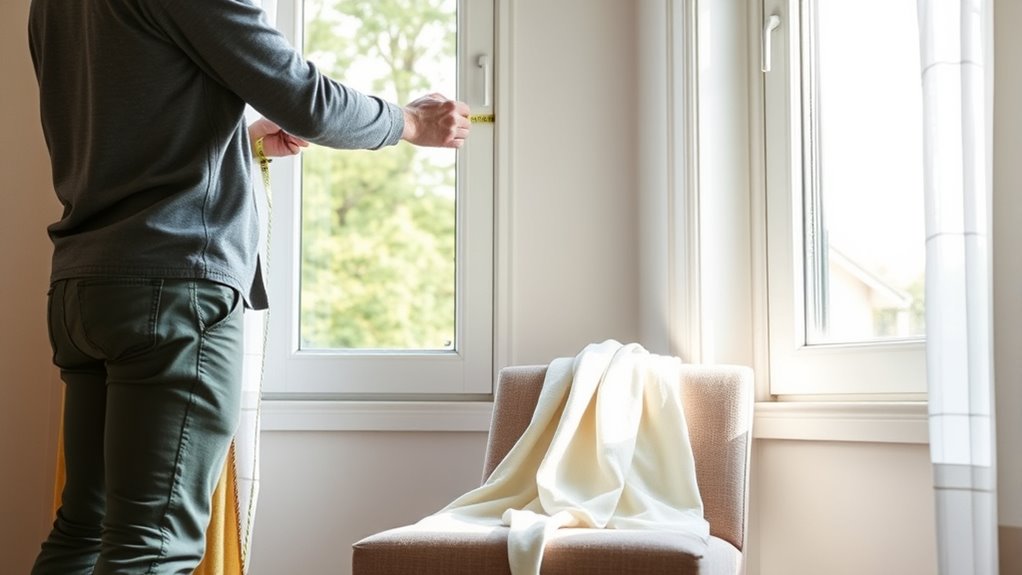

To measure your windows for curtains, start by extending your curtain rod 4-6 inches beyond each side of the window frame to create a broader, more elegant look. Measure the width from outer edge to outer edge of the frame and add 4-10 inches for fullness. For length, decide whether you want curtains to puddle or just touch the floor, then measure from the rod placement to the desired endpoint. If you want to learn more tips, keep going!

Get furniture and decor delivered free with Prime
- Fast, free delivery on millions of items
- Prime Video, Amazon Music and more included
- Member-only deals all year
Key Takeaways
- Measure window width from outer edge to outer edge, then add 4-10 inches on each side for fullness and coverage.
- Decide your curtain length (floor, sill, or apron) before measuring from the rod placement point.
- Extend the curtain rod 4-6 inches beyond the window frame on each side for a larger, more elegant look.
- Choose fabric type and consider shrinkage; add extra half-inch if fabric may shrink after washing.
- For pattern matching and style, measure accurately and consider puddling or just grazing the floor.

Measuring your windows accurately is essential to make sure your curtains fit perfectly and enhance your room’s appearance. The right measurements ensure your curtains will hang just right, whether you’re aiming for a tailored look or a more relaxed, casual vibe. Before you start, decide on your curtain rod placement, as this considerably influences your measurements. Typically, you want the rod to extend a few inches beyond the window frame on each side—about 4 to 6 inches—to make the window appear larger and to allow your curtains to fully cover the window when closed. Also, consider whether you want the curtains to reach the floor or just graze the sill, as this affects length measurements.
Begin by measuring the width of your window. Use a tape measure to get the distance from one outer edge of the frame to the other. For a more dramatic look, add an extra 4 to 10 inches on each side to the measurement, depending on how much you want the curtains to extend beyond the window. This will give your curtains a fuller, more luxurious appearance when pulled back. Next, measure the height from your chosen curtain rod placement point down to where you want the curtains to end. If you want floor-length curtains, measure from the rod to just above the floor, accounting for any baseboards or trim. For window sill or apron-length curtains, measure down to the sill or desired length. Additionally, consider the fabric weight and opacity when choosing your curtain length to ensure the style suits your space. When it comes to fabric selection tips, consider the weight and opacity of the fabric relative to your room’s needs. Heavier fabrics like velvet or brocade require sturdy rods and precise measurements for a clean fall. Lighter fabrics, such as sheers or linen, are more forgiving but still need accurate length measurements to prevent pooling or bunching. Keep in mind that certain fabrics may shrink after washing; if that’s the case, add an extra half-inch to your measurements to compensate. Also, think about the pattern and how it aligns across the panels—measurements should be precise to ensure the pattern matches up seamlessly when hanging.
Products Worth Considering

Levoit Core 600S-P Smart Air Purifier for Large Rooms

LEVOIT Vital 100S-P Smart Air Purifier with Washable Pre-Filter

Bose TV Speaker (2nd Gen) Compact Soundbar with Bluetooth and HDMI Connectivity
As an affiliate, we earn on qualifying purchases.
Frequently Asked Questions
Should I Add Extra Length for Curtain Hems?
Yes, you should add extra length for curtain hems to guarantee a polished look. When measuring for curtain length, consider hemming options like a simple fold or a decorative hem. Adding an extra 1-3 inches gives you flexibility to customize the final curtain length, especially if you want a puddled effect or a tailored finish. Always account for your specific curtain style and desired look when determining your hem length.
How Do I Measure for Custom Curtain Rods?
To measure for custom curtain rods, first decide on your preferred curtain rod styles and mounting options. Measure the width of your window, then add extra inches for the overhang, ensuring full coverage when curtains are drawn. For mounting, choose between inside or outside options based on your wall space. Use a tape measure to get precise measurements, and communicate these to your supplier for a perfect fit.
What’s the Best Way to Measure Awkward Window Shapes?
When measuring awkward window shapes, you should use flexible measuring tape and carefully follow the contours of the window frame. For irregular shapes, measure the widest and tallest points, then note any angles or curves. Use these measurements to select curtain fabric that complements the shape. Don’t forget to contemplate window accessories like custom rods or tiebacks to enhance your unique window’s appearance. Accurate measurements ensure your curtains fit perfectly and look great.
How Do I Account for Furniture Placement Around Windows?
When planning furniture placement around windows, don’t forget the magic number: window clearance. Measure how much space your furniture needs to dance without blocking the view or curtain movement. Keep your sofa, bed, or bookshelf at a respectful distance, ensuring curtains can open fully and furniture doesn’t turn into a curtain-hindering obstacle. After all, perfect window coverage only works if furniture and curtains don’t compete for the same airspace.
Do I Need to Measure for Blackout or Lined Curtains Differently?
You don’t need to measure differently for blackout or lined curtains. Just measure your window as usual, including the width and height. For blackout curtains, consider adding extra width for fullness to block light effectively. Lined curtains might need slightly more length if you want a more elegant drape. Make sure your measurements account for any additional layers so you get a perfect fit, whether it’s blackout or lined curtains.
Conclusion
Now that you know how to measure your windows, you’re ready to create a custom fit that’s as perfect as a tailor-made suit. Remember, accurate measurements are the foundation of great curtains—think of them as the blueprint for your window dressing masterpiece. With your new skills, you’ll be able to choose curtains that hang flawlessly, turning your windows into stunning focal points. Happy decorating!