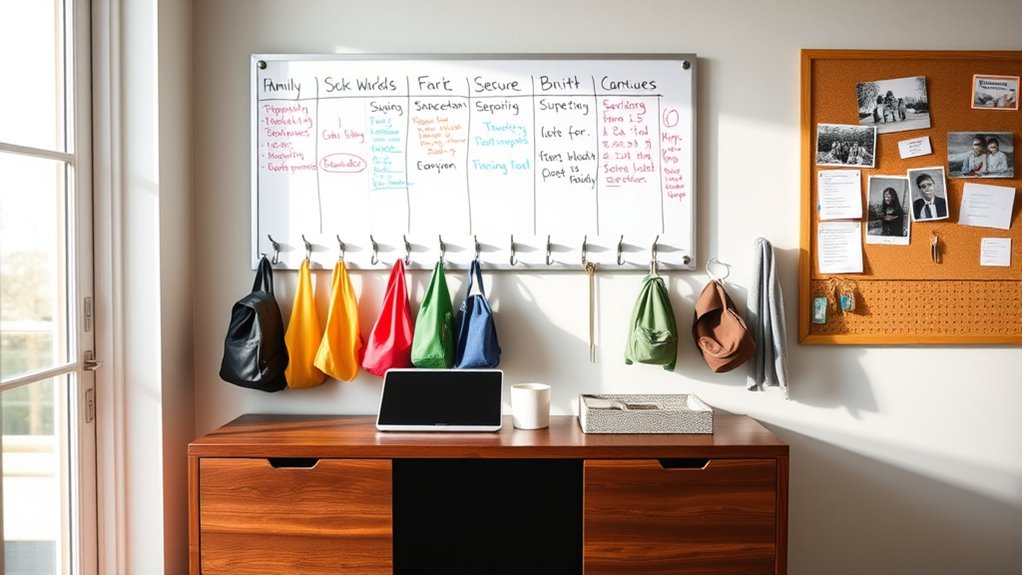

To create an organized family command center, choose a central, accessible spot like the kitchen or mudroom, avoiding busy areas. Gather supplies like labels, storage, and stationery, and set up clear storage solutions with labels for easy maintenance. Incorporate calendars, chore charts, and important documents to keep everyone on track. Regular updates and thoughtful organization will keep your home running smoothly—keep exploring for tips to build a truly functional hub.

Get furniture and decor delivered free — and shop member deals
- Fast, free delivery on millions of items
- Access to Prime Big Deal Days deals on October 6–7
- Prime Video, Amazon Music and more included
Key Takeaways
- Choose a central, accessible location with good lighting and minimal foot traffic to set up your command center.
- Use clear labels and designated storage solutions for keys, mail, documents, and supplies to maintain organization.
- Incorporate essential supplies like stationery, emergency items, and digital tools for schedules and reminders.
- Develop routines for regularly updating and reviewing documents, bills, and schedules to ensure system effectiveness.
- Position visual aids like calendars and chore charts in visible areas to promote family participation and accountability.
family command center wall organizer
As an affiliate, we earn on qualifying purchases.
As an affiliate, we earn on qualifying purchases.
Choosing the Perfect Location for Your Command Center

Selecting the right location for your family command center is essential to guarantee it’s both functional and accessible. You want a spot with good wall placement to keep everything within easy reach and visible. Avoid areas with high foot traffic or distractions, like near the front door or noisy rooms. Consider lighting considerations; natural light is ideal, but if that’s limited, ensure the space has ample artificial lighting to prevent eye strain. Position the center where you and your family can quickly drop off keys, mail, and schedules without clutter. A wall-mounted setup works best in a dedicated corner or part of the kitchen or mudroom. Keep the space organized, visible, and convenient to encourage daily use and maintain a tidy home. Additionally, choosing a location with proper projector placement can enhance visibility for family members and keep the space versatile for various activities.
kitchen mail and key storage solution
As an affiliate, we earn on qualifying purchases.
As an affiliate, we earn on qualifying purchases.
Gathering Essential Supplies and Materials

To get your family command center up and running, you need to gather essential supplies that keep everything organized and accessible. Make sure you have the right stationery, such as pens and labels, along with a system for storing important documents. Don’t forget basic emergency items like flashlights and first aid supplies to handle unexpected situations efficiently. Incorporating organization techniques can further streamline your setup and keep everything in order.
Essential Stationery Supplies
Gathering essential stationery supplies is the first step in organizing your family command center. Having the right writing supplies keeps everything running smoothly. Focus on items like pens, pencils, markers, highlighters, and sticky notes. These help with stationery organization and quick note-taking. To visualize, consider this table:
| Item | Purpose | Quantity |
|---|---|---|
| Pens and pencils | Daily writing and signings | 4-6 of each |
| Markers & highlighters | Color coding and emphasis | 3-4 each |
| Sticky notes | Reminders and labels | A pack |
| Paper clips & stapler | Keeping papers together | Basic supply set |
| Notepads | To-do lists and notes | 2-3 |
Having these supplies organized ensures your family stays efficient and prepared. Additionally, incorporating storage solutions can help keep everything neat and accessible.
Organized Document Storage
Have you thought about the supplies you’ll need to keep your important documents organized and accessible? To start, gather quality file folders, labels, and a sturdy storage box or filing cabinet. Digital filing is essential, so invest in a scanner or app to convert paper documents into digital files. Use clear labels to categorize papers such as bills, medical records, and legal documents, making retrieval quick and easy. For paper organization, consider a filing system that suits your needs—whether by date, category, or priority. Keep a small supply of paper clips, binders, and dividers handy for sorting. Regularly review and update your system to ensure everything stays current and accessible. Incorporating secure cloud storage solutions can further enhance your document management by providing safe online access and backup. With these supplies, you’ll create a streamlined, efficient system for safeguarding your important documents.
Basic Emergency Items
When preparing for emergencies, assembling a core set of essential supplies is vital to guarantee you’re ready for unexpected situations. Start with a well-stocked first aid kit to handle minor injuries quickly. Include bandages, antiseptic wipes, pain relievers, and any necessary medications. Flashlights are equally important; they provide illumination during power outages or when steering in the dark. Make sure to have enough batteries on hand and keep the flashlights in an easily accessible location. Consider adding other essentials like bottled water, non-perishable snacks, a whistle, and a multi-tool. Regularly check and update these items to guarantee they’re in working order. Having these basic emergency items organized in your family command center ensures you’re prepared to respond swiftly and effectively when it matters most. Additionally, incorporating water purification systems can help ensure a continuous supply of safe drinking water during extended emergencies.
As an affiliate, we earn on qualifying purchases.
Designing a Functional Layout and Organization System
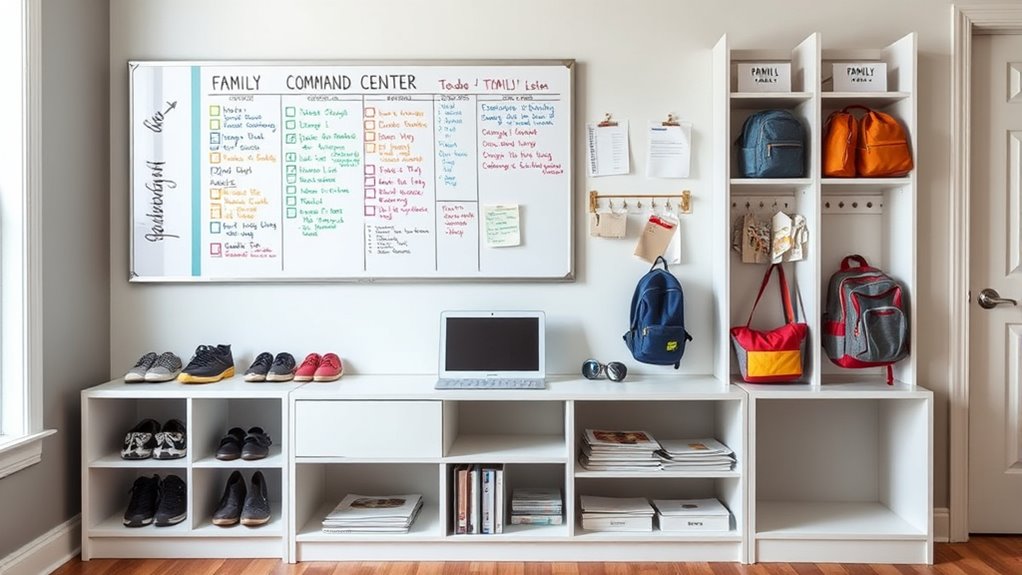
Start by evaluating your space and daily needs to determine the best layout for your family. Then, select storage solutions that keep essentials accessible and organized. Finally, establish a clear workflow system that helps everyone know where to find and return items efficiently. Incorporating upfitting fundamentals can help optimize your organizational system for better functionality.
Assess Space and Needs
How can you create a family command center that truly meets your household’s needs? Start with a needs assessment to identify what functions and items are essential. Consider your daily routines, storage requirements, and the types of activities your family engages in. Assess your space utilization to determine the best location—whether it’s a corner, hallway, or part of a larger room—that offers enough room without feeling cluttered. Think about high-traffic areas and accessibility for everyone, including kids. Measure available space carefully, noting existing furniture and fixtures. This step guarantees your organization system is tailored to your family’s unique lifestyle, making the command center practical, efficient, and easy to maintain. Proper assessment lays the foundation for an effective, personalized hub. Incorporating lifestyle products that suit your needs can further enhance functionality and satisfaction.
Choose Storage Solutions
Choosing the right storage solutions is essential to creating a functional and organized command center. You want storage bins that are clear or labeled so you can quickly find what you need. These bins keep small items, like chargers, stationery, or craft supplies, neatly contained. Shelving options are also crucial; adjustable shelves let you customize space for different items and maximize vertical storage. Consider open shelves for frequently used items, making them accessible at a glance. Use baskets or bins on shelves to group similar items together. When selecting storage solutions, think about durability and ease of access. Properly chosen storage bins and versatile shelving will keep your command center clutter-free, promote efficiency, and help your family stay organized daily. Additionally, incorporating proper safety and setup practices ensures that your storage system remains secure and functional over time.
Create a Workflow System
After selecting the right storage solutions, it’s time to focus on creating a workflow system that keeps everything running smoothly. Start by mapping out how your family interacts with daily tasks and items. Use digital tools like shared calendars or task management apps to coordinate schedules and deadlines. Design your layout so frequently used items are easily accessible, while less-used supplies are stored out of the way. Establish clear zones for different activities, such as homework, bills, or meal planning, to streamline routines. Incorporate visual cues and labels to improve organization and efficiency, making it easier for everyone to maintain the system. Consistency is key—label storage solutions clearly, and develop routines for returning items to their designated spots. A well-planned workflow system reduces clutter, saves time, and keeps your family organized and efficient.
As an affiliate, we earn on qualifying purchases.
Incorporating Calendars and Scheduling Tools
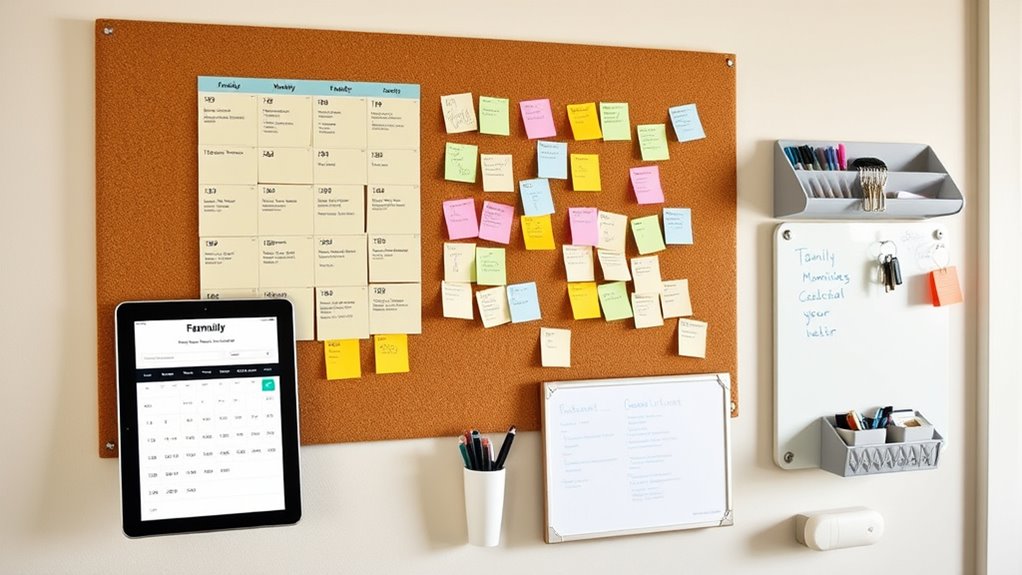
Incorporating calendars and scheduling tools into your family command center can transform chaos into organization. Start by choosing between digital apps and paper planners based on your family’s needs. Digital apps offer real-time updates, reminders, and easy sharing, making them perfect for tech-savvy households. Paper planners, on the other hand, provide a tactile way to visualize the month at a glance and reduce screen time. Place the calendar in a central location where everyone can access it easily. Use color coding or symbols to distinguish between family members and activities. Consistently update the calendar with appointments, events, and deadlines. This integrated approach keeps everyone on the same page and helps prevent scheduling conflicts, making your family’s busy life more manageable.
Setting Up Chore Charts and Task Lists
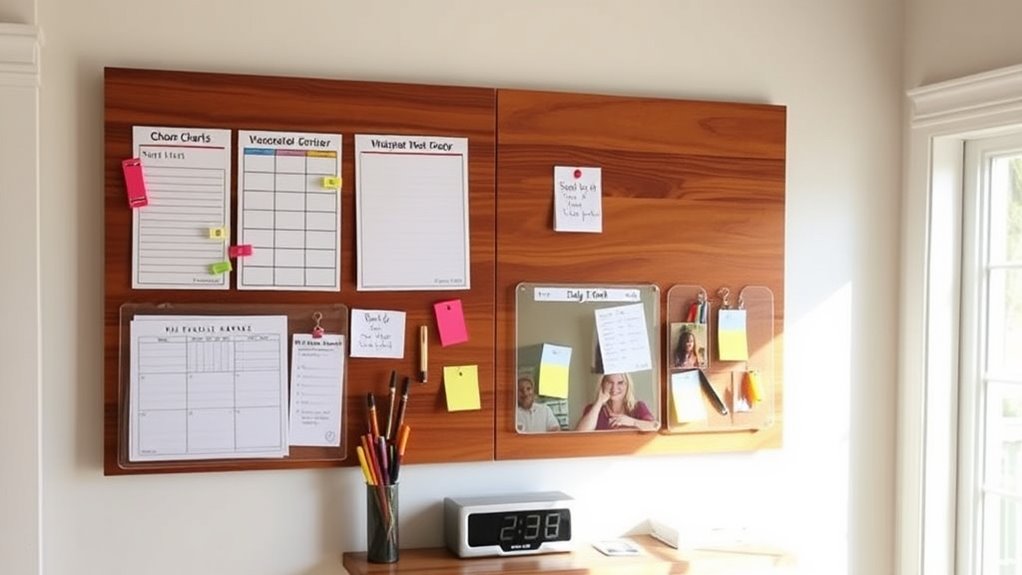
Ever wonder how to keep everyone accountable for household chores without constant nagging? Setting up chore charts and task lists can make a big difference. Use chore chart templates to create clear, visual schedules for each family member, making responsibilities straightforward. Incorporate reward systems to motivate participation and celebrate completed tasks, fostering a positive environment. Place the charts in a central location so everyone can check their duties daily. Keep the system simple and consistent to build habits and reduce confusion. You might assign daily, weekly, or monthly chores, depending on your family’s needs. By establishing structure with chore charts and reward systems, you’ll promote cooperation and shared responsibility, making household management smoother for everyone. Implementing organization strategies can further improve household efficiency and help maintain a tidy home.
Managing Important Documents and Bills

Managing important documents and bills is essential for keeping your household organized and avoiding missed payments. Start by creating a digital filing system to store receipts, insurance policies, and other key documents securely. Use a dedicated folder or app to keep everything easily accessible. Implement a bill tracking system—whether a physical calendar or a digital tool—to monitor due dates and avoid late fees. Regularly review and update your files, shredding outdated papers to reduce clutter. Set reminders for bill payments and important deadlines, ensuring nothing slips through the cracks. Keeping these documents organized not only saves time but also provides peace of mind, knowing your financial and legal information is safe, current, and easy to find when needed.
Adding Personal Touches and Decorative Elements

Once your important documents and bills are organized, you can personalize your space to make it feel more inviting and uniquely yours. Adding family photos creates a warm, personal touch that makes the command center feel like home. Arrange framed photos on shelves or clip them to a corkboard for easy updates. Decorative accents like colorful bowls, small plants, or themed accessories can also enhance the space’s visual appeal. Keep the arrangement simple and clutter-free to maintain functionality. Choose items that reflect your family’s personality and style, making the area welcoming without sacrificing organization. These personal touches not only brighten the space but also inspire a sense of pride and comfort every time you use your family command center.
Establishing Family Communication and Reminder Systems

To keep your family organized and connected, establishing clear communication and reminder systems is essential. Digital communication tools, like shared calendars or messaging apps, help everyone stay informed. These systems also enhance emergency preparedness by providing quick access to crucial information. To create an effective setup, consider:
- Utilizing shared digital calendars for appointments and events
- Setting up group chats for instant updates
- Posting daily or weekly reminders on a centralized board
- Using emergency contact lists accessible to all family members
- Implementing alert systems for urgent notices
Maintaining and Updating Your Command Center for Long-Term Success
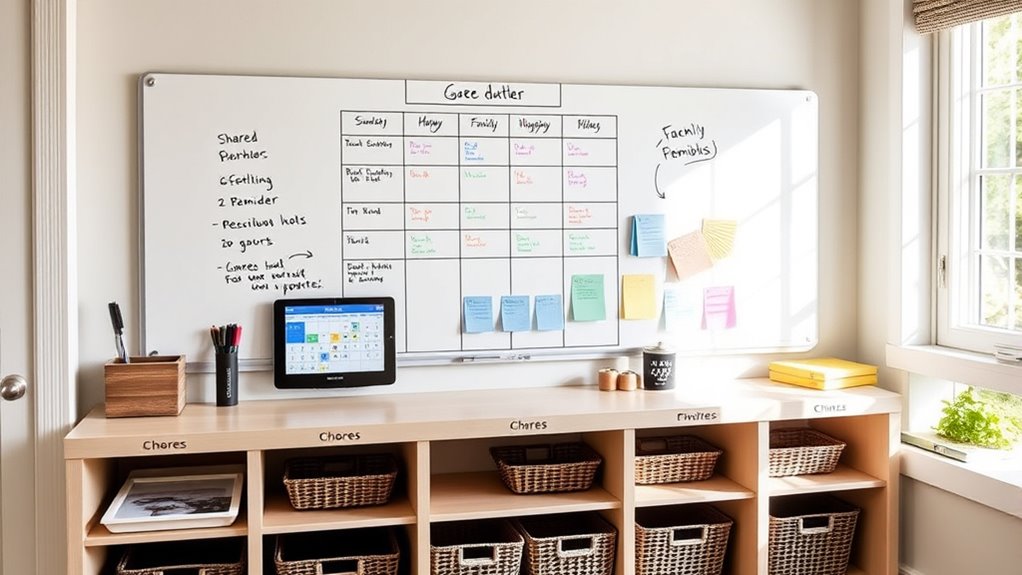
Keeping your family command center effective over time requires regular maintenance and updates. Digital tools, like shared calendars or messaging apps, help keep everyone on the same page and streamline communication strategies. Review your system monthly to guarantee all schedules, contacts, and important information are current. Adjust organizational tools as your family’s needs evolve, perhaps adding new sections or digital resources. Encourage family members to provide feedback on what’s working and what isn’t, fostering a sense of ownership. Consistently updating your command center prevents clutter and assures it remains a reliable hub. By staying proactive, you create a system that adapts with your family’s changing routines, making daily coordination smoother and more efficient for everyone involved.
Frequently Asked Questions
How Can I Customize My Family Command Center for Different Age Groups?
To customize your family command center for different age groups, start with age-appropriate organization. Use colorful labels and smaller bins for younger kids’ supplies, making it easy for them to find and put away items. For teens, add lockers or folders for school papers. Incorporate customization tips like personalized schedules or motivational quotes. Tailoring the space guarantees everyone can access what they need quickly and feels involved in keeping it organized.
What Are the Best Digital Tools to Integrate With Physical Organization Systems?
You can enhance your family command center with top digital tools like digital app integration and smart home devices. Use apps for calendars, to-do lists, and reminders, syncing them seamlessly with physical systems. Integrate smart home devices such as voice assistants, smart locks, and thermostats to streamline daily routines. This combination keeps your family organized, connected, and in control—making managing your home effortless and efficient.
How Often Should I Update or Review the Command Center?
You should review and update your command center at least once a month to keep everything current. Incorporate a maintenance schedule that includes seasonal updates, ensuring tasks, menus, and important contacts stay relevant. This regular review helps you stay organized and prevents clutter from accumulating. Set reminders on your digital tools to prompt these updates, making it easy to maintain an efficient and functional hub for your family’s needs.
How Can I Involve Children in Maintaining the Command Center?
You can involve children in maintaining the command center by assigning them specific child responsibilities, like updating schedules or organizing supplies. Make it fun by turning it into teamwork activities, such as daily check-ins or clean-up games. Encourage their independence and sense of ownership, which helps them learn responsibility. Regularly review and adjust tasks together to keep them engaged and ensure the command center stays effective for everyone.
What Common Mistakes Should I Avoid When Setting up a Family Command Center?
Don’t let your setup become a cluttered attic—overcrowding and neglecting flexibility are common mistakes. You might be tempted to cram everything into one space, but that leads to chaos. Instead, keep it simple and adaptable. Regularly review and declutter, ensuring the center evolves with your family’s needs. Flexibility is key to keeping your command center functional, so avoid rigid setups that can’t adjust to change.
Conclusion
Creating a family command center keeps everyone organized and boosts productivity. Did you know that households with dedicated organizational hubs report 30% less daily stress? By customizing your space and maintaining it regularly, you’ll enjoy smoother mornings and better communication. Stay consistent, update your tools, and add personal touches—your family will thank you for the extra clarity and connection. Start today, and transform chaos into calm for a happier, more organized home.
Fall Picks
fall essentials
As an affiliate, we earn on qualifying purchases.