To maximize daylight at home, choose light, airy window treatments like sheer curtains or blinds that you can easily adjust. Incorporate reflective surfaces such as large mirrors, glass furniture, or metallic accents to bounce light around the room. Use a bright, neutral color palette with reflective finishes to enhance natural brightness. Keep windows clean and unobstructed for ideal sunlight. Applying these tips will help you create a bright, inviting space—discover more ways to brighten your home by exploring further.

Get furniture and decor delivered free with Prime
- Fast, free delivery on millions of items
- Prime Video, Amazon Music and more included
- Member-only deals all year
Key Takeaways
- Use light, sheer curtains and adjustable window treatments to maximize sunlight entry and control privacy.
- Incorporate large mirrors and reflective furniture to bounce natural light throughout the space.
- Choose light-colored walls and reflective finishes to enhance brightness and create an airy atmosphere.
- Keep windows clean and unobstructed to ensure maximum daylight penetration.
- Combine layered window treatments with reflective surfaces and a bright color palette for optimal illumination.
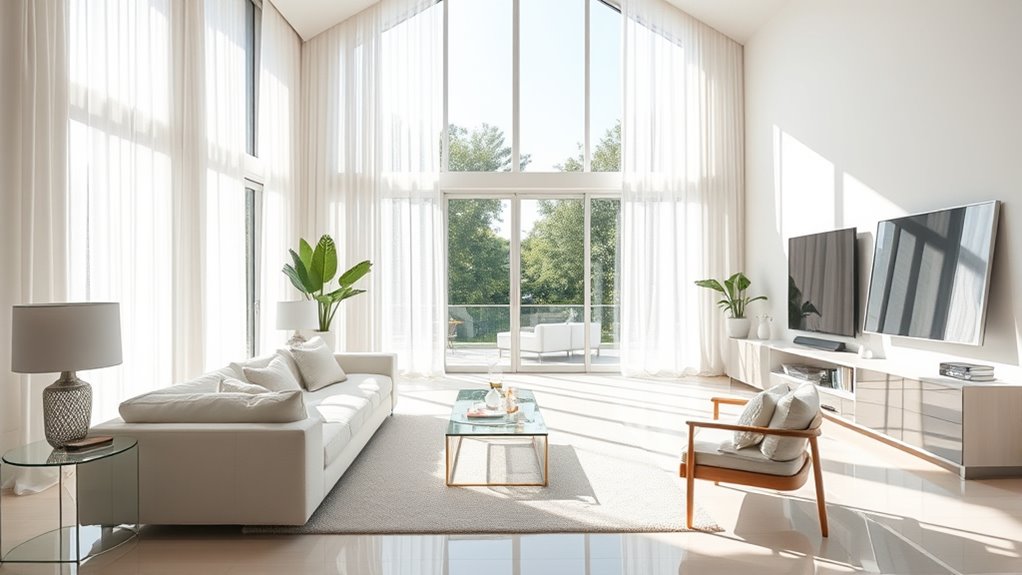
Natural light can transform any space, making it feel brighter, more inviting, and more open. When you optimize how sunlight fills your home, you create a lively atmosphere that lifts your mood and enhances your décor. One of the simplest ways to do this is by choosing the right window treatments. Light, airy curtains or blinds allow sunlight to filter in effortlessly, while sheer fabrics diffuse the light gently, reducing harsh glare. Avoid heavy drapes that block out daylight entirely; instead, opt for options that can be easily pulled back or adjusted to maximize natural illumination throughout the day. You might also consider installing layered window treatments—combining blinds with sheer curtains—to give you control over privacy and light levels without sacrificing brightness.
Reflective surfaces are another key element in boosting how sunlight disperses around your space. Mirrors are the most obvious choice, but their placement is vital. Positioning a large mirror opposite or adjacent to a window amplifies the amount of light bouncing into the room, creating a sense of spaciousness and vibrancy. You can also incorporate reflective furniture pieces—like glass-top tables or lacquered cabinets—that catch and reflect light, adding sparkle and depth. Even metallic accents in décor, such as picture frames or decorative objects, can serve as small reflectors that help distribute natural light more evenly.
Beyond just the furniture and accessories, consider the color scheme of your walls and décor. Light, neutral shades like whites, creams, or soft pastels reflect more sunlight, making your entire space feel brighter. Darker hues tend to absorb light, so if you’re aiming for maximum brightness, keep your color palette on the lighter side. Pair these colors with your window treatments and reflective surfaces to create a cohesive, luminous environment. Additionally, using reflective surfaces such as metallic or glossy finishes can further enhance this effect by bouncing light around the room.
Additionally, keep windows clean and unobstructed. Dirt, dust, or clutter can block sunlight and diminish its impact. Regularly cleaning your windows guarantees maximum transparency, so every ray of sunshine can brighten your room. Combining thoughtful window treatments, strategic placement of reflective surfaces, a bright color palette, and clean windows creates a synergy that amplifies natural light. When you master these decor tips, your home will feel more open, vibrant, and energizing — a true sanctuary that welcomes sunlight at every turn.
sheer curtains for natural light
As an affiliate, we earn on qualifying purchases.
As an affiliate, we earn on qualifying purchases.
Frequently Asked Questions
How Does Window Placement Affect Natural Light Distribution?
Your window placement considerably affects natural light distribution in your home. Larger windows let in more light, brightening your space, while the window orientation determines how much sunlight enters throughout the day. For example, south-facing windows bring in consistent sunlight, whereas east or west-facing ones capture morning or afternoon light. Properly positioning windows based on size and orientation guarantees ideal daylight, reducing the need for artificial lighting and creating a welcoming atmosphere.
Can Furniture Arrangement Impact Daylight in a Room?
Imagine waking up in a cozy, sunlit living room with furniture positioned to maximize daylight. Your furniture arrangement greatly impacts natural light, as strategic lighting placement and thoughtful furniture positioning prevent blockages and reflect sunlight around the room. For example, placing a sofa away from windows allows more light to flow freely, brightening your space and creating an inviting atmosphere. Proper furniture placement truly enhances your home’s natural brightness.
What Colors Reflect Light Best Indoors?
You should choose light, neutral colors like whites, creams, and soft pastels, as they reflect the most light indoors. Color psychology suggests these hues create a sense of openness and calm, making your space feel brighter. Incorporate light reflective surfaces such as mirrors, glossy finishes, and glass decor to amplify natural daylight. These elements work together to enhance brightness, making your room feel more airy and inviting.
How Do Window Treatments Influence Light Flow?
Window treatments, like curtain styles, notably influence light flow. Light, airy curtains let more sunlight in, brightening your space, while heavier drapes reduce glare and add privacy. Window tinting is another effective option; it filters sunlight, reducing heat and UV rays without blocking natural light. By choosing the right curtain styles and considering window tinting, you can control how much daylight enters, creating a warm, inviting atmosphere in your home.
Are There DIY Methods to Boost Natural Brightness?
Yes, you can boost natural brightness with DIY lighting hacks and reflective surface ideas. Use simple methods like painting walls a light color, adding mirrors to reflect sunlight, or placing white or metallic decor to amplify light. Rearrange furniture to maximize window exposure, install inexpensive sheer curtains, or create DIY window films. These small changes can markedly brighten your space without costing much and make your home feel more open and inviting.
large wall mirrors for living room
As an affiliate, we earn on qualifying purchases.
As an affiliate, we earn on qualifying purchases.
Conclusion
By implementing these decor tips, you can make your home brighter and more inviting. Remember, natural light can boost your mood and energy—studies show that well-lit spaces can increase productivity by up to 15%. So, don’t underestimate the power of simple changes like mirrors or light-colored walls. Embrace the sunlight, and watch your home transform into a warm, uplifting sanctuary that nurtures both your body and mind.
As an affiliate, we earn on qualifying purchases.
As an affiliate, we earn on qualifying purchases.
Fall Picks
fall essentials
As an affiliate, we earn on qualifying purchases.