To keep your home safe for pets, choose houseplants that are non-toxic and pet-friendly. Some great options include spider plants, Boston ferns, and certain succulents, which are harmless if your cats or dogs nibble on them. Use high shelves or hanging planters to prevent biting accidents, and always supervise your pets around new plants. Curious about more pet-safe greenies? Keep exploring the list to find the perfect indoor plants for your furry friends.

Get furniture and decor delivered free with Prime
- Fast, free delivery on millions of items
- Prime Video, Amazon Music and more included
- Member-only deals all year
Key Takeaways
- Spider plants are safe for both cats and dogs, making them a popular pet-friendly indoor plant choice.
- Boston ferns are non-toxic and suitable for homes with curious pets.
- Certain succulents, like haworthia and echeveria, are generally considered non-toxic for pets.
- Keep plants out of reach or hang them to prevent pets from nibbling or ingesting.
- Always verify plant toxicity before bringing new greenery into a pet-friendly home.
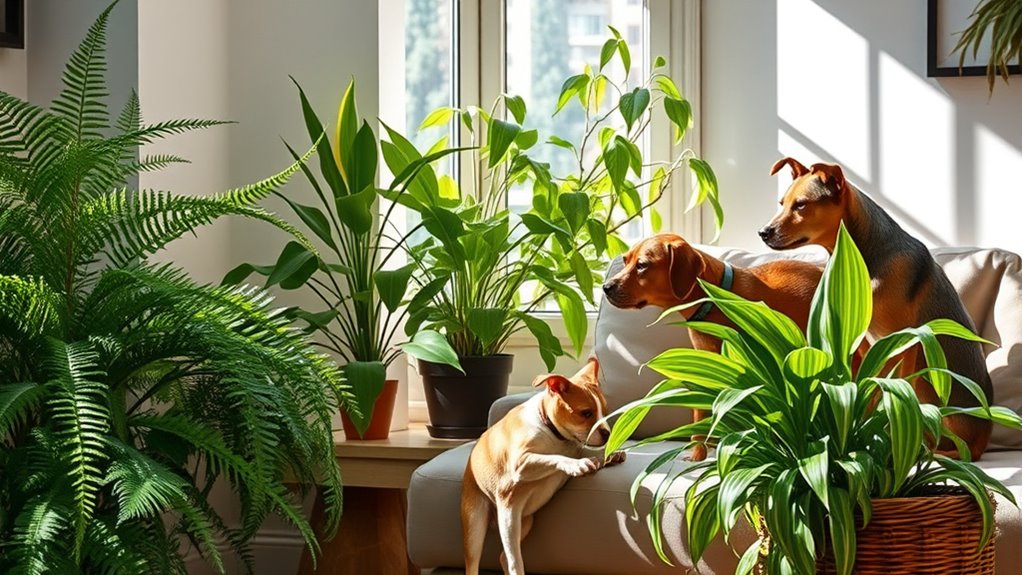
Bringing houseplants into your home can brighten your space and boost your mood, but if you have pets, you need to choose plants that are safe for them. Plant toxicity is a serious concern because many common houseplants can be harmful or even deadly if ingested by cats or dogs. Understanding pet plant safety helps you avoid accidental poisoning and keeps your furry friends healthy. Before bringing a new plant home, it’s essential to research whether it’s toxic to pets. Some plants contain compounds that can cause vomiting, diarrhea, or more severe symptoms, so always opt for non-toxic varieties when pets roam freely.
Choose pet-safe houseplants to keep your home bright and your furry friends healthy.
Knowing which plants are safe for pets is key to creating a pet-friendly indoor garden. For example, plants like spider plants, Boston ferns, and certain succulents are generally considered safe. These plants are not only beautiful but also pose little risk if your pet nibbles on a leaf or two. However, even with pet plant safety, it’s wise to monitor your pets around new plants and discourage them from chewing, just to be safe. Remember, individual pets may have sensitivities or allergies, so what’s safe for most might not be safe for all.
In addition to researching toxicity, you should also consider the overall environment your plants will be in. Some plants might be safe but can still cause minor stomach upset if large quantities are ingested. Keep plants out of reach of pets if they’re prone to chewing or swallowing leaves. Using hanging planters or placing plants on high shelves can prevent accidental ingestion. Alternatively, you can set boundaries by training your pets to stay away from certain areas, ensuring both your plants and pets stay safe.
It’s also helpful to understand how to identify body piercing complications early, so you can act quickly if issues arise. Recognizing signs such as redness, swelling, or unusual discharge can help prevent more serious problems. Having the contact information for an emergency pet poison control center can be a lifesaver. To prevent these issues, always verify the safety of your plants and avoid any with ambiguous toxicity status. Label your plants clearly, and educate everyone in your household about which plants are pet-safe.
Products Worth Considering

Ring Battery Doorbell Plus, Satin Nickel

Samsung 42-Inch Class OLED S90F 4K Smart TV (2025)

Philips Hue Festavia Globe Outdoor String Lights, 32 Bulbs, 91 ft
As an affiliate, we earn on qualifying purchases.
Frequently Asked Questions
Are There Any Non-Toxic Plants for Reptiles or Other Pets?
You should choose non-toxic plants for reptiles and other pets to prevent toxic plant symptoms. Reptile habitat plants like pothos, spider plants, and certain succulents are safe options. Always research specific plants before adding them to your pet’s environment, as some plants may appear harmless but can cause issues. Ensuring your pet’s environment has non-toxic plants helps keep them healthy and safe from potential hazards.
How Often Should I Water My Pet-Safe Houseplants?
You should water your pet-safe houseplants when the top inch of soil feels dry, usually once a week. Adjust the watering frequency based on your plant care schedule and the environment’s humidity and temperature. Avoid overwatering, as it can harm your plants and create mold. Regularly check soil moisture to keep your indoor greens healthy and safe for your pets, ensuring they thrive without risk.
Can Pet-Friendly Houseplants Improve Indoor Air Quality?
Absolutely, pet-friendly houseplants can enhance your indoor air quality by improving air purification and toxin removal. When you bring these plants into your home, you create a healthier environment, breathe easier, and foster a sense of calm. Their natural ability to filter pollutants, combined with the joy of caring for them, makes your space not only greener but also safer and fresher for both you and your pets.
Are There Any Toxic Effects if Pets Nibble on These Plants?
If your pets nibble on pet-friendly houseplants, toxicity symptoms are rare but possible. While these plants are generally safe, plant ingestion can still cause mild stomach upset, drooling, or vomiting in some pets. To keep your furry friends safe, monitor their behavior around plants, and consult your vet if you notice any unusual symptoms. Always choose plants specifically labeled as pet-safe to minimize risks of toxicity.
What Are Tips for Training Pets to Avoid Houseplants?
Did you know pets can take up to 15 repetitions to learn a new behavior? To train them to avoid houseplants, use positive reinforcement when they stay away and deterrent methods like citrus scents or double-sided tape. Consistency is key—reward good behavior immediately, and avoid punishment. Over time, your pet will associate the houseplants with positive experiences or deterrents, making them less likely to nibble or chew.
Conclusion
Just like a lush garden in a secret grove, these pet-friendly houseplants bring life and color without risking your furry friends. By choosing safe greens, you create a sanctuary where your cats and dogs can explore and relax, much like children playing in a safe backyard. Keep these plants nearby, and watch your home become a vibrant haven—your very own Eden—where beauty and safety grow side by side, ensuring peace of mind for everyone.