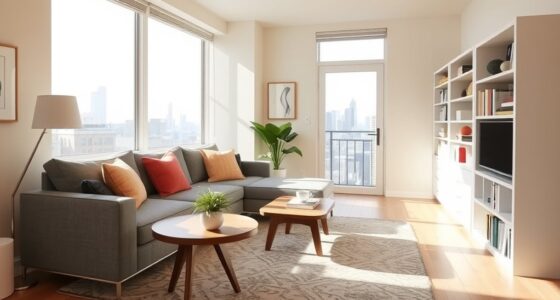
When choosing between open and closed storage, consider your style, organization habits, and how much effort you’re willing to maintain. Open shelves showcase decor and make your space feel larger, but require regular tidying. Closed storage keeps clutter out of sight and creates a sleek, tidy look with less upkeep. Think about what suits your needs and aesthetic preferences—more details will help you decide the best option for your space.
Open a free Amazon Business account
Business pricing, bulk buying and tax-exempt orders.
As an affiliate, we earn on qualifying purchases.
Key Takeaways
- Open shelves showcase decor and create a sense of openness, ideal for displaying favorite items and making small spaces appear larger.
- Closed storage offers a tidy, streamlined look by concealing clutter, suitable for those prioritizing organization and minimalism.
- Open shelving requires regular maintenance and styling effort, while closed units demand less upkeep and provide quick concealment of messes.
- Choose open shelves for easy access and personal displays, and closed storage for maximizing capacity and maintaining a clean environment.
- Consider your aesthetic preference, lifestyle, and maintenance willingness to determine whether open or closed shelving best fits your space.

When choosing between open and closed storage options, understanding their differences can help you make the best decision for your space and needs. Open shelves provide a great opportunity to showcase decorative accessories, giving your room personality and style. They make it easy to access everyday items and can create a sense of openness, making a room feel larger. However, because everything is visible, they demand a certain level of organization and tidiness. If you prefer a curated look, open shelves allow you to display your favorite books, plants, or art pieces, adding visual interest and character to your space.
Open shelves showcase decor and add style but require organization and tidiness.
On the other hand, closed storage offers a clean and streamlined appearance, hiding clutter from view. If you tend to accumulate items that aren’t particularly decorative or want to keep your space looking minimal and tidy, cabinets or drawers with doors are a smart choice. Closed storage helps you achieve a clutter-free environment, which can boost your mental clarity and reduce stress. It also protects your belongings from dust and damage, making it ideal for storing less attractive or fragile items. When contemplating space optimization, closed units can be designed to maximize storage capacity without sacrificing aesthetics, especially with built-in options or multi-functional furniture. Additionally, space optimization is a key benefit of closed storage, helping you make the most of your available area.
Deciding between these options depends largely on your lifestyle and the look you want to create. If you enjoy decorating your space with decorative accessories and want to keep things lively and personal, open shelving is likely the better fit. It invites you to curate your displays regularly and keeps your favorite items within easy reach. Conversely, if you prefer a more minimalist environment that emphasizes organization and cleanliness, closed storage provides a neat appearance that keeps everything out of sight.
Another factor to consider is maintenance. Open shelves tend to require more frequent tidying because everything is on display. If you’re someone who prefers a low-maintenance setup, closed storage might be more practical. It allows you to quickly conceal clutter and maintain a tidy look with minimal effort. Additionally, think about the amount of space you have. Open shelving can make small rooms seem more spacious when styled thoughtfully, while closed units can create a sense of order and simplicity in larger areas.
Ultimately, your choice should align with your aesthetic preferences, organizational needs, and how much effort you’re willing to put into upkeep. Both open and closed storage have their advantages, and selecting the right type depends on balancing decorative appeal with functionality and space optimization.
open shelving units for living room
As an affiliate, we earn on qualifying purchases.
As an affiliate, we earn on qualifying purchases.
Frequently Asked Questions
Which Storage Type Is Better for Small Spaces?
For small spaces, open shelves are usually better because they make the area feel larger and more accessible. They fit well with modern or minimalist decorating styles and are budget-friendly since they often cost less than closed storage options. You can easily customize or rearrange open shelves to suit your space, style, and needs, making them a practical choice for maximizing limited space without sacrificing style or function.
How Do Open Shelves Impact Room Cleanliness?
Think of open shelves as a garden exposed to the breeze; dirt accumulation is more visible, and dust quickly settles, making cleanliness harder to maintain. You’ll see dust and crumbs easily, so regular cleaning is essential. While they create an open feel, they demand more upkeep to keep your space tidy. If you prefer a neater look with less dust visibility, closed shelves might be your better choice.
Are Closed Shelves More Secure Than Open Ones?
Closed shelves are generally more secure than open ones because they hide items, reducing theft and tampering concerns. If you’re worried about security concerns, closed cabinets offer better protection. Additionally, they can enhance your space’s aesthetic appeal by providing a clean, streamlined look. You’ll feel more confident that your belongings are safe and organized, all while maintaining a stylish, clutter-free environment.
Can Open Shelves Be Customized Easily?
Yes, open shelves can be customized easily to match your decor and enhance shelf aesthetics. You can paint or stain them, add decorative brackets, or incorporate unique hardware. Adjusting shelf height or adding accessories allows you to personalize the space further. Open shelving offers flexibility, making it simple to create a look that reflects your style and keeps your decor fresh and visually appealing.
What Materials Are Best for Durable Closed Shelves?
For durable closed shelves, you should consider materials with high durability, like solid wood, metal, or high-quality MDF. Solid wood offers strength and longevity, making it ideal for heavy items. Metal shelves are highly resistant to wear and rust, perfect for industrial or high-use spaces. MDF is cost-effective and sturdy when sealed properly. Your choice depends on your needs, but these shelf material options provide excellent durability for closed storage.
closed storage cabinets with doors
As an affiliate, we earn on qualifying purchases.
As an affiliate, we earn on qualifying purchases.
Conclusion
Choosing between open and closed shelves depends on your space and style. Open shelves invite display and accessibility, making your items feel part of the room’s personality. Closed cabinets hide clutter and keep things tidy, offering a sleek look. Think of open shelves as your personal gallery, while closed storage is your secret stash. By balancing both, you create a space that’s both functional and inviting—like a well-curated room that’s open to friends but still keeps some surprises hidden.
multi-functional storage furniture
As an affiliate, we earn on qualifying purchases.
As an affiliate, we earn on qualifying purchases.
As an affiliate, we earn on qualifying purchases.
Evergreen bestsellers Picks
bestsellers
As an affiliate, we earn on qualifying purchases.