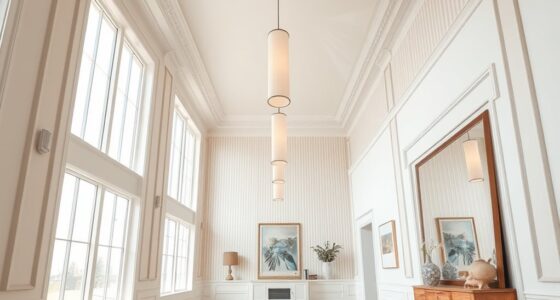

Choosing the right hues for your home depends on the mood you want to create in each space. Blues and greens promote calm and focus, perfect for bedrooms or offices. Warm colors like red, orange, and yellow energize and boost motivation, ideal for kitchens or living areas. Neutral tones offer balance, while soft pastels create tranquility. Dark shades add elegance and drama. Keep exploring to discover how to use color psychology effectively in every room of your home.
Get ready for Prime Big Deal Days — try Prime free
Exclusive member deals on October 6–7, plus fast free delivery. Cancel anytime.
As an affiliate, we earn on qualifying purchases.
Key Takeaways
- Select calming blues and greens for bedrooms and offices to promote relaxation and mental clarity.
- Use warm hues like red, orange, and yellow in kitchens and living rooms to energize and boost mood.
- Incorporate neutral tones such as beige, gray, or soft white for versatile, cohesive, and harmonious spaces.
- Add soft pastels to create tranquil environments that reduce stress and enhance serenity.
- Use dark shades like navy or emerald as accent colors to add elegance and depth without overwhelming the space.
blue and green calming bedroom decor
As an affiliate, we earn on qualifying purchases.
As an affiliate, we earn on qualifying purchases.
The Impact of Blues and Greens on Tranquility and Focus

Have you ever noticed how certain colors can instantly make a room feel more calming or help you concentrate? The psychological effects of blue are well-known for promoting tranquility and mental clarity. Blue hues can lower stress levels and create a peaceful atmosphere, making them ideal for bedrooms or home offices. Meanwhile, the calming influence of green has a soothing effect that encourages relaxation and focus. Green, especially softer shades, connects you with nature, helping to reduce anxiety and improve mood. Using these colors thoughtfully can transform your space into a haven for relaxation or productivity. When you incorporate blues and greens, you’re not only beautifying your home but also fostering a sense of calm and concentration essential for everyday life.
warm color LED lighting for living room
As an affiliate, we earn on qualifying purchases.
As an affiliate, we earn on qualifying purchases.
Warm Hues: Reds, Oranges, and Yellows to Energize Your Space

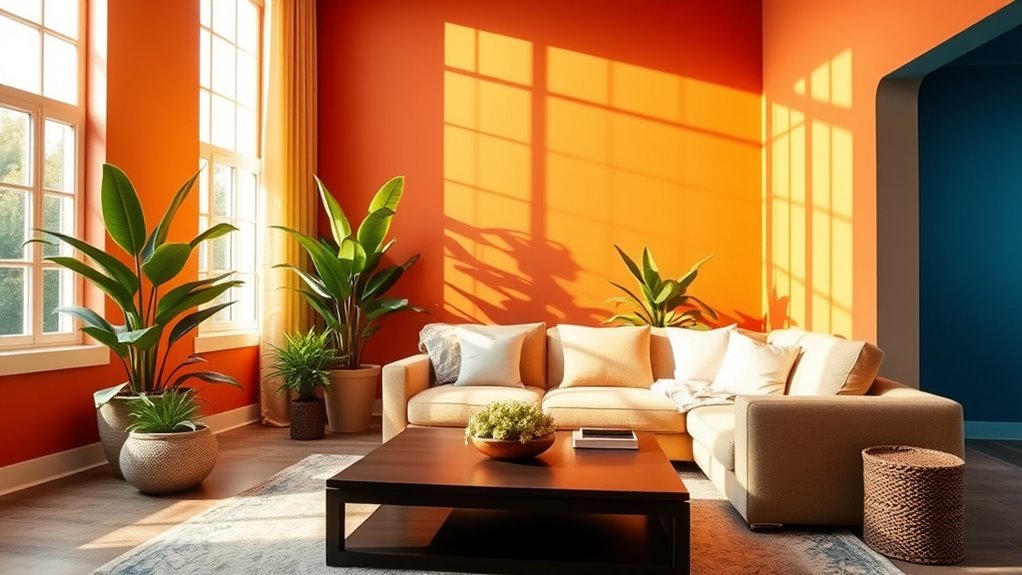
Warm hues like reds, oranges, and yellows have a powerful ability to energize and invigorate a space. They create a lively atmosphere that can boost your mood and motivation. When choosing color combinations, consider pairing these vibrant shades with neutral tones to prevent overwhelming the room. Incorporate lighting effects, such as warm LED lights or natural sunlight, to enhance their energetic vibe. Bright lighting can amplify the warmth of reds and oranges, making the space feel more dynamic. Use these hues in areas like kitchens or living rooms where energy and activity are desired. Remember, balance is key—too much red or yellow can feel chaotic, so mix in softer accents for harmony. This approach will maximize the energizing effects of warm hues effectively. Additionally, understanding how color temperature adjustments influence the perception of these warm colors can help fine-tune the mood to suit your space.
neutral tone wall paint beige gray white
As an affiliate, we earn on qualifying purchases.
As an affiliate, we earn on qualifying purchases.
Neutral Tones for Balance and Versatility
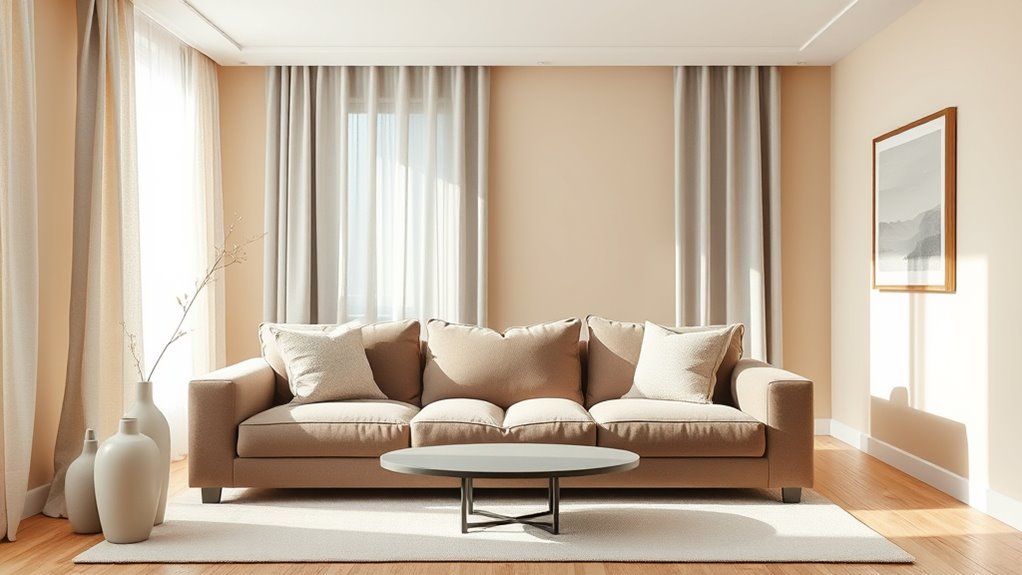
Neutral tones such as beiges, grays, and soft whites serve as the foundation for a versatile and balanced home decor scheme. These hues create a calming backdrop that easily pairs with other colors and textures. You can achieve a cohesive look through monochromatic schemes, using different shades of the same neutral for depth and interest. Incorporate neutral accessories like pillows, rugs, and art to add subtle contrast without overwhelming the space. These tones also make it simple to update your decor over time, as they complement various styles and color accents. With neutral colors, you establish a flexible environment that feels harmonious and inviting, allowing you to switch up accent pieces and personal touches effortlessly. Additionally, choosing energy-efficient cloud server solutions can enhance your home’s sustainability and security, aligning with a mindful and eco-friendly lifestyle.
pastel color bedroom accessories
As an affiliate, we earn on qualifying purchases.
As an affiliate, we earn on qualifying purchases.
Soft Pastels to Create Gentle and Calm Environments
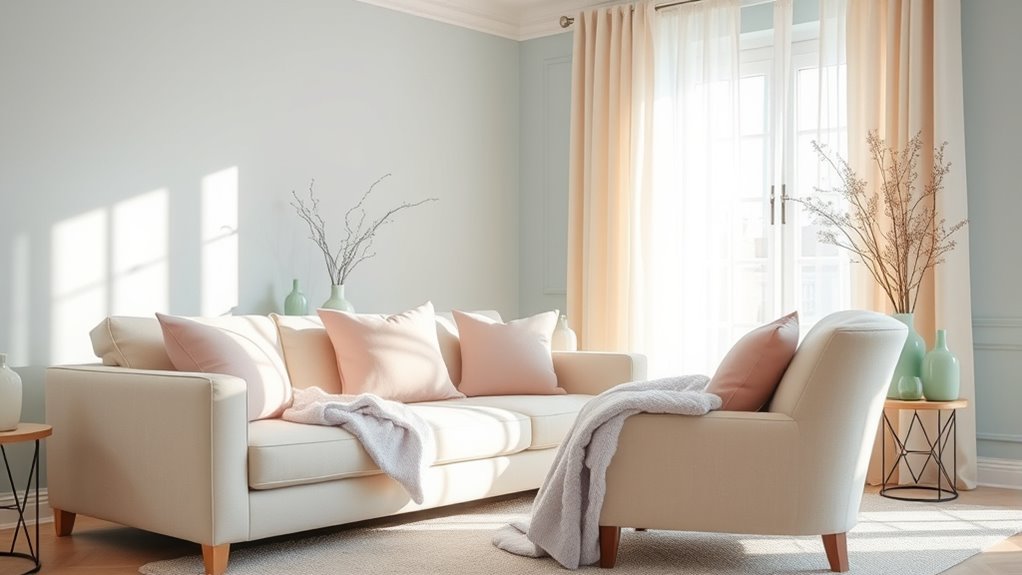
Soft pastels create soothing color palettes that promote relaxation in any space. You can enhance your relaxation areas with gentle accents and decor that foster calmness. These subtle hues make it easy to craft a peaceful and inviting environment. Incorporating calming color psychology principles can further amplify the serene atmosphere of your home.
Soothing Color Palettes
When you choose pastel colors for your home, you create an environment that instantly feels calming and inviting. These soothing palettes evoke positive color symbolism, promoting tranquility and comfort. Soft hues like pale blues, gentle pinks, and mint greens help enhance your mood, making spaces feel more relaxing. Incorporating these colors can subtly influence your emotions and create a sense of harmony. To maximize their effect, consider these options:
- Use light pastel walls to foster serenity in bedrooms or living rooms
- Add pastel accents through accessories for gentle visual interest
- Combine multiple soft hues for a balanced, peaceful atmosphere
- Understanding color psychology can help you select hues that promote specific feelings and well-being in your home.
Enhancing Relaxation Spaces
To create a calming atmosphere in relaxation spaces, incorporating soft pastel colors is highly effective. These gentle hues promote mood enhancement by evoking feelings of tranquility and comfort. Using color psychology, pastels like light blue, lavender, or blush can help reduce stress and encourage mindfulness. Their subtle tones create an environment that feels welcoming and serene, making it easier to unwind after a busy day. Soft pastels also reflect natural light well, amplifying the sense of openness and peace. When selecting colors for these spaces, focus on shades that resonate personally with you, ensuring the environment supports relaxation and mental clarity. Additionally, understanding how color psychology influences mood can help you choose hues that foster a more restful atmosphere. Overall, pastel hues serve as a simple yet powerful tool to foster a soothing ambiance in any relaxation area.
Gentle Accents and Decor
Incorporating gentle accents and decor with soft pastel hues can transform your home into a calm, inviting retreat. These colors evoke tranquility and comfort, making spaces feel more soothing. To enhance this effect, consider using artificial lighting that complements pastel shades, such as warm LED lights, to amplify their calming qualities. Understanding color symbolism helps you select hues that promote relaxation; for example, light blue symbolizes serenity, while soft pink encourages warmth. You can add subtle accents like pastel throw pillows, art pieces, or decorative vases to create a gentle atmosphere.
- Use warm artificial lighting to enhance pastel tones
- Mix different pastel shades for depth and interest
- Incorporate decor that reflects calming color symbolism
Dark Shades for Drama and Sophistication
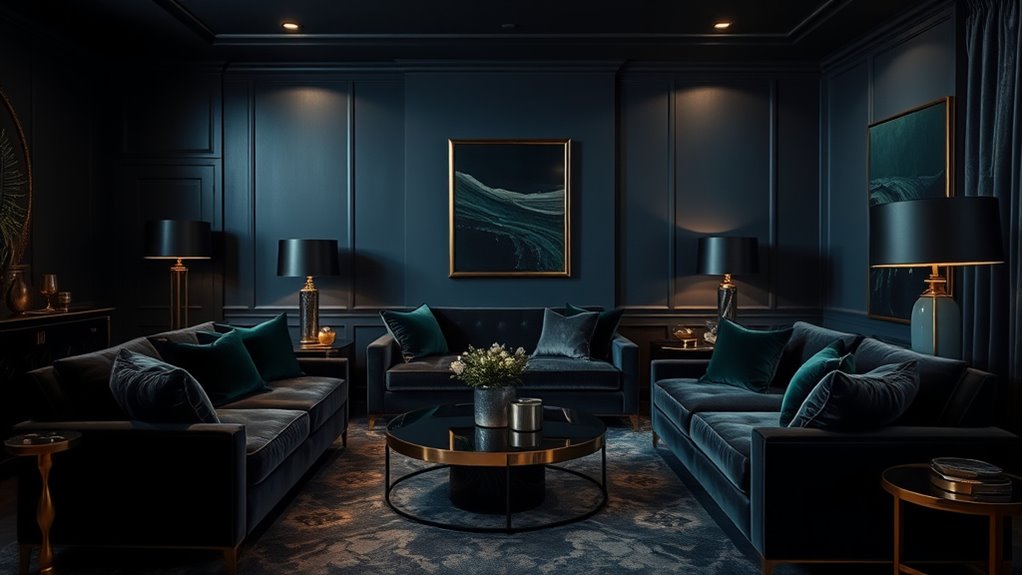
Dark shades can instantly add drama and sophistication to your home decor, creating a bold and elegant atmosphere. When you incorporate deep hues like navy, charcoal, or emerald, you evoke a sense of luxury and refinement. These colors set a dramatic ambiance that commands attention without overwhelming the space. Use dark shades on accent walls, furniture, or accessories to create visual interest and depth. Pair them with lighter or metallic accents to balance the richness and prevent the room from feeling too heavy. Dark colors work especially well in rooms meant for relaxation or entertaining, as they foster intimacy and elegance. By thoughtfully selecting dark shades, you can transform your space into a sophisticated retreat that exudes confidence and style. Incorporating color psychology into your choices can enhance the mood and atmosphere you want to create.
Bright Colors to Inspire Creativity and Playfulness

Bright colors can instantly energize your home and spark creativity. In color psychology, vibrant hues like yellow, orange, and lime green are known to boost mood and foster playfulness. When choosing bright colors, consider how they influence the room ambiance—these shades create lively, inviting spaces perfect for brainstorming or unwinding with family. To maximize their effect, incorporate these ideas:
- Use bold accent walls to define creative zones
- Add colorful accessories like cushions or artwork
- Balance bright hues with neutral furniture for harmony
- Incorporate natural elements like landscaping to enhance the overall ambiance
Color Combinations and Accents for Dynamic Rooms
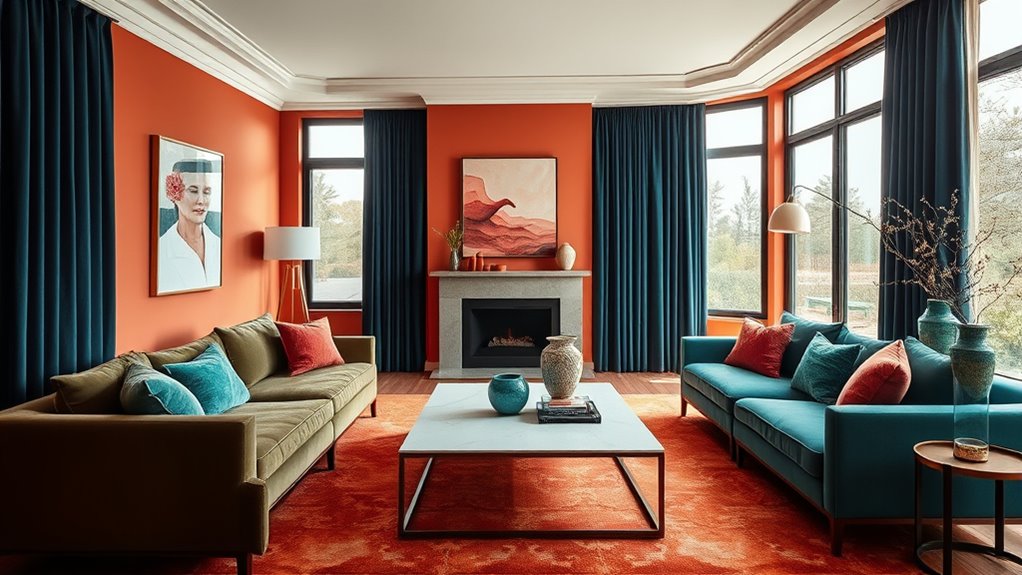
Pairing colors thoughtfully can turn a lively room into a visually stimulating space. Using color blocking creates bold, eye-catching effects by combining contrasting hues in large sections. Accent walls also add depth and focus, highlighting a specific area with a different hue. To maximize impact, consider these color combinations:
| Complementary | Analogous | Triadic |
|---|---|---|
| Blue and orange | Blue, teal, green | Red, yellow, blue |
| Bright yellow and purple | Orange, red, pink | Green, violet, orange |
| Black and gold | Green, yellow, blue | Purple, orange, green |
Mixing these strategies with accent walls or color blocking can energize your room, making it dynamic and engaging without overwhelming the space.
Cultural and Personal Significance of Colors in Decor
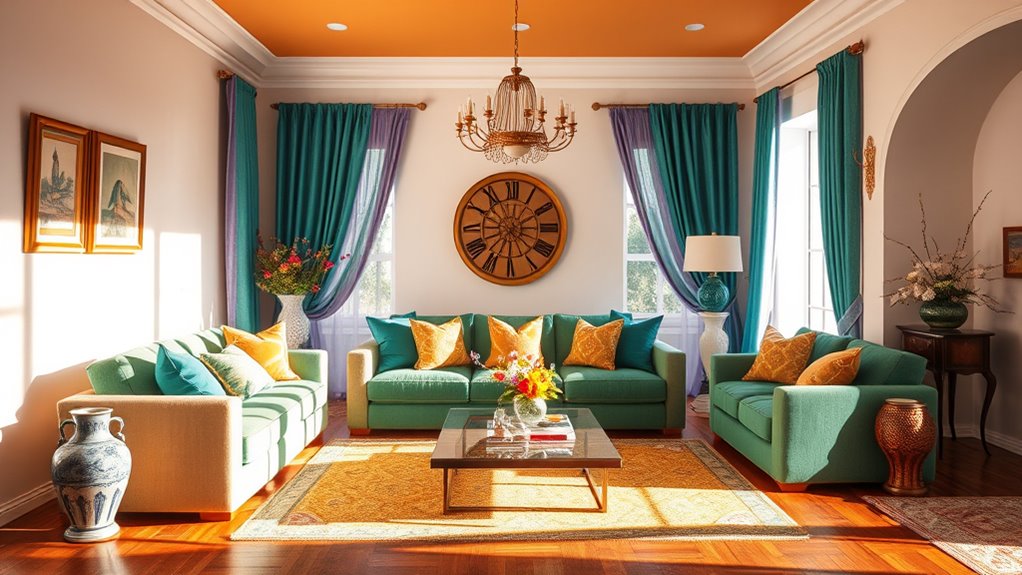
Colors carry different meanings across cultures and personal experiences, shaping how you feel in your space. Understanding these historical and cultural associations can help you choose decor that truly resonates with you. Your personal background influences which colors feel meaningful and welcoming in your home. For example, electric bike horsepower can inform the energy and vibrancy a color might evoke in a room.
Historical Color Meanings
Throughout history, different cultures have assigned unique meanings to various hues, shaping how you choose and interpret colors in your home. Medieval color symbolism often linked colors to social status and morality, such as purple representing royalty and wealth. Ancient dye techniques, like indigo or saffron, influenced the availability and symbolism of certain hues, making some colors rare and valuable. For example, red was associated with power and passion, while white symbolized purity and peace. These historical meanings continue to influence modern decor choices, giving each color a deeper cultural significance. Additionally, dyeing techniques played a crucial role in the rarity and symbolism of certain colors, impacting their cultural value and perception. Understanding these origins helps you make more intentional decisions, whether aiming to convey status, tradition, or emotion through your home’s palette.
Personal Cultural Influences
Your cultural background and personal experiences greatly influence how you perceive and use colors in home decor. Cultural symbolism shapes the meanings you assign to certain hues—red might represent luck in Chinese culture, while white signifies mourning in some Western traditions. These associations affect your color choices and how you decorate each room. Additionally, your personal color preferences are shaped by memories, beliefs, and individual tastes, making your decor unique. Understanding these influences helps you create a space that feels authentic and meaningful. When selecting colors, consider both cultural symbolism and personal significance to craft a home that reflects your identity and values. This mindful approach guarantees your decor resonates emotionally and culturally, making your living environment truly yours.
Tips for Testing and Choosing the Right Colors for Your Home

Choosing the right colors for your home can feel overwhelming, but testing them beforehand makes the process easier. Using paint testing methods helps you see how colors interact with your space’s lighting and furniture. Keep in mind that color symbolism varies across cultures, so consider the emotional impact you want each room to have. To ensure you pick the perfect hues, try these tips:
- Apply small paint patches on different walls to observe how colors look at various times of day
- Use large swatches or sample boards to compare shades side by side
- Incorporate your favorite colors into accessories first, then test how they feel in the room’s overall ambiance
Testing allows you to confidently select colors that truly reflect your style and create the right mood.
Frequently Asked Questions
How Do Color Choices Influence Mood and Emotional Well-Being?
Your color choices directly influence your mood and emotional responses through color perception. Bright, warm hues like yellow or orange can energize and uplift you, while cool shades like blue or green promote calmness and relaxation. By selecting colors that align with your emotional needs, you create an environment that fosters positivity and well-being, making your home a space where you feel more balanced and comfortable every day.
What Are the Best Colors for Small or Dark Rooms?
Imagine your small or dark room as a blank canvas craving sunlight. Opt for light reflecting paints in soft hues like creamy whites or pale pastels to bounce light around like a mirror. Use illusion techniques such as vertical stripes or strategic mirrors to expand space visually. These choices brighten your room, making it feel more open and inviting, transforming shadows into a welcoming glow.
How Can I Incorporate Multiple Colors Without Clashing?
To incorporate multiple colors without clashing, focus on color coordination and balance. Start with a neutral base to create harmony, then add accent colors that complement each other. Use a color wheel to choose hues that are adjacent or harmonious, and limit bold shades to a few key areas. Keep the overall palette cohesive, and guarantee each color supports the mood you want to set in the room.
Are There Colors That Promote Better Sleep and Relaxation?
You’ll find that soothing hues and sleep-promoting shades like soft blues, gentle greens, and muted lavenders help create a calming environment. These colors reduce stress and promote relaxation, making them ideal for bedrooms. Incorporate these shades through wall paint, bedding, or accessories to enhance your sleep quality. Avoid bright, stimulating colors, and instead opt for tranquil tones that foster a peaceful atmosphere.
How Do Cultural Meanings Affect Color Selection in Decor?
You might think color choices are universal, but cultural symbolism and regional preferences deeply influence decor. In some cultures, red signifies luck and prosperity, while in others, it can symbolize danger. These meanings shape your color selection, making your space resonate emotionally with your heritage or community. By understanding these cultural nuances, you can create a home that feels personally meaningful and respectful of different traditions.
Conclusion
By choosing the right hues, you can turn your home into a canvas of emotion and personality. Think of colors as the silent storytellers of your space, whispering calm, energy, or sophistication. Trust your instincts and test different shades—your perfect palette is waiting to be uncovered. When you master color psychology, your home becomes a reflection of your soul, a symphony of hues that speak directly to your heart.
Fall yard work Picks
leaf blowers
As an affiliate, we earn on qualifying purchases.