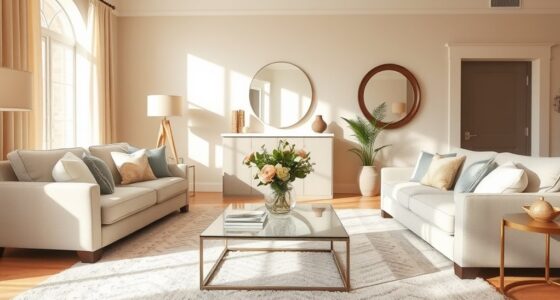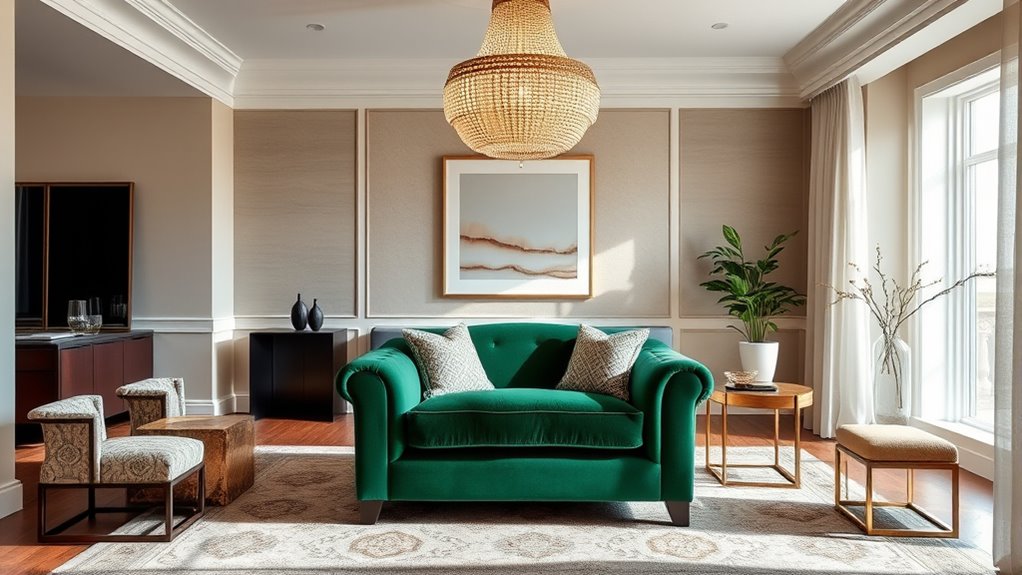

To anchor your room’s design effectively, start by identifying a practical or aesthetic element that naturally draws attention, like a large window, artwork, or statement furniture. Use colors, lighting, and placement to emphasize this focal point, ensuring it balances with the rest of the space. Keep the overall layout simple and cohesive, distributing colors and accents thoughtfully. If you keep these principles in mind, you’ll create a harmonious and inviting room—continue to discover how to perfect your focal point.
Key Takeaways
- Select a prominent element like artwork, a large window, or statement furniture as the room’s focal point.
- Ensure the focal point’s color and size create visual interest without overwhelming the space.
- Balance the focal point with complementary decor and subtle accents for harmony.
- Position the focal point strategically to guide natural eye movement and enhance flow.
- Use contrast and color coordination to make the focal point stand out effectively.
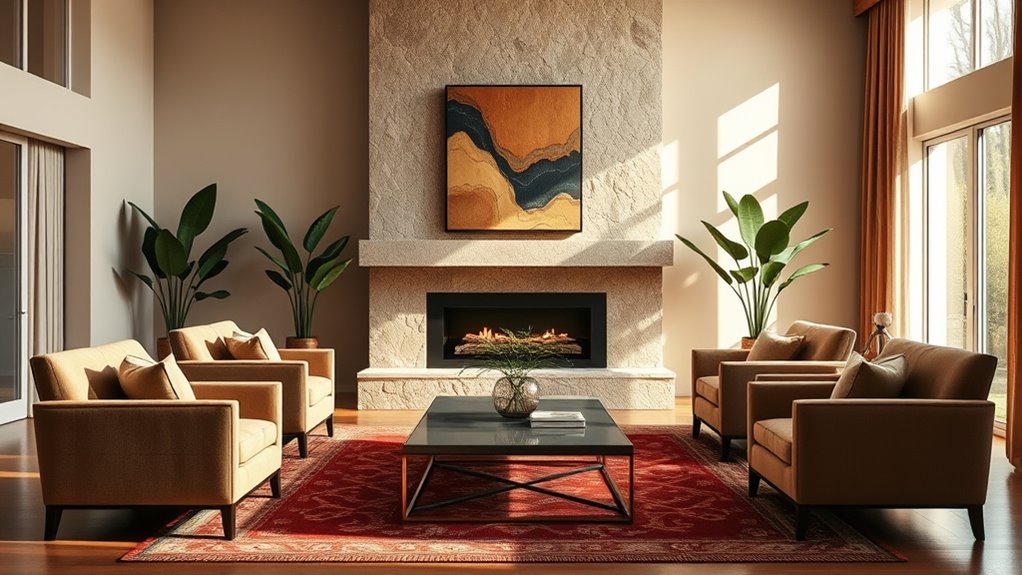
Selecting a focal point is essential to creating a compelling and balanced composition, whether you’re capturing a photograph, designing a painting, or planning a space. In interior design, your focal point acts as the visual anchor that draws attention and guides the eye around the room. When choosing this element, consider how it will contribute to the overall visual balance. A well-placed focal point provides harmony, preventing the space from feeling chaotic or cluttered. It also sets the tone for the entire room, influencing your color coordination and decor choices. For example, if you select a bold fireplace as your focal point, you’ll want to balance its visual weight with complementary colors and accessories that support its prominence without overwhelming the space.
Your choice of focal point should reflect both practicality and aesthetic appeal. Think about what naturally draws your eye when you enter a room—perhaps a large window with a stunning view, a piece of artwork, or a statement piece of furniture. Once identified, use color coordination to enhance its impact. If your focal point boasts vibrant hues, keep the surrounding decor in subdued or neutral tones to avoid clashing and to allow the focal element to stand out. Conversely, if your focal point has a more muted or monochromatic palette, you can incorporate pops of color in nearby accessories to create a lively, cohesive look.
Achieving visual balance is key when establishing your focal point. This doesn’t mean everything must be symmetrical, but rather that the weight of visual elements is evenly distributed across the space. You can do this by balancing a large, colorful art piece with smaller, simpler decor elsewhere in the room. Using color thoughtfully helps reinforce this balance—bright or dark hues should be distributed carefully to avoid disproportionate emphasis. For example, if your focal point features a striking red accent wall, incorporate subtle red accents in other parts of the room to create harmony, but avoid overwhelming the space. Additionally, understanding how navigation and mapping work in smart home systems can help you plan the layout for optimal focal point placement and overall flow.
In essence, your focal point anchors the room’s design and influences how the rest of the decor is arranged. By carefully selecting an element that captivates attention and thoughtfully coordinating colors around it, you establish a sense of order and aesthetic appeal. Remember, the goal is to create a space that feels unified, inviting, and visually engaging—your focal point is the key to achieving that.
Frequently Asked Questions
How Do I Select a Focal Point for Small or Multi-Purpose Rooms?
To select a focal point in small or multi-purpose rooms, consider your space planning carefully. Look for a natural feature like a fireplace, artwork, or window that creates visual hierarchy. If none exists, add a statement piece like a bold piece of furniture or art. make certain it draws attention and guides the eye, helping unify the room’s design without overcrowding, making the space feel intentional and balanced.
Can a Focal Point Be Changed Easily Over Time?
Changing a focal point is easier than shifting a mountain, thanks to focal point flexibility and design adaptability. You can swap out artwork, rearrange furniture, or add new lighting to refresh your room’s main feature. With versatile decor choices, you can evolve your space over time without a complete overhaul. This way, your room stays fresh, dynamic, and perfectly aligned with your changing style or needs.
What Are Common Mistakes to Avoid When Choosing a Focal Point?
Avoid choosing a focal point that disrupts visual balance or creates clutter. Don’t pick something too busy or overpowering, as it’ll overwhelm the space. Instead, select a feature that complements the room’s size and style. Make sure it’s a natural eye-catcher without competing elements. This helps maintain harmony and prevents clutter, ensuring your room feels cohesive and inviting. Keep it simple, balanced, and intentional.
How Does Lighting Influence the Effectiveness of a Focal Point?
Lighting greatly influences the effectiveness of your focal point by setting the right lighting ambiance. When you highlight your focal point with focused or layered lighting, it becomes more visible and draws attention effortlessly. Avoid harsh or inconsistent lighting, as it can diminish focal point visibility. Instead, use a mix of ambient, task, and accent lighting to create a balanced lighting ambiance that enhances your focal point’s prominence.
Should the Focal Point Match the Room’s Overall Theme or Contrast?
Go with the saying, “opposites attract.” Your focal point should either match the room’s overall theme for decor harmony or contrast to create visual interest. Think of it as a balancing act—if your room is calm and neutral, a bold contrasting focal point can make it pop. This contrast adds visual balance, making your space lively without feeling chaotic. Trust your style and aim for harmony or eye-catching contrast.
Conclusion
Remember, your focal point is the superhero of your room—capable of transforming chaos into calm with a single glance. When you choose it wisely, it’s like giving your space a personality so magnetic that even your socks will want to stay! So, pick something bold, eye-catching, and true to you—because a great focal point isn’t just a design choice, it’s the secret weapon that turns an ordinary room into an extraordinary sanctuary.