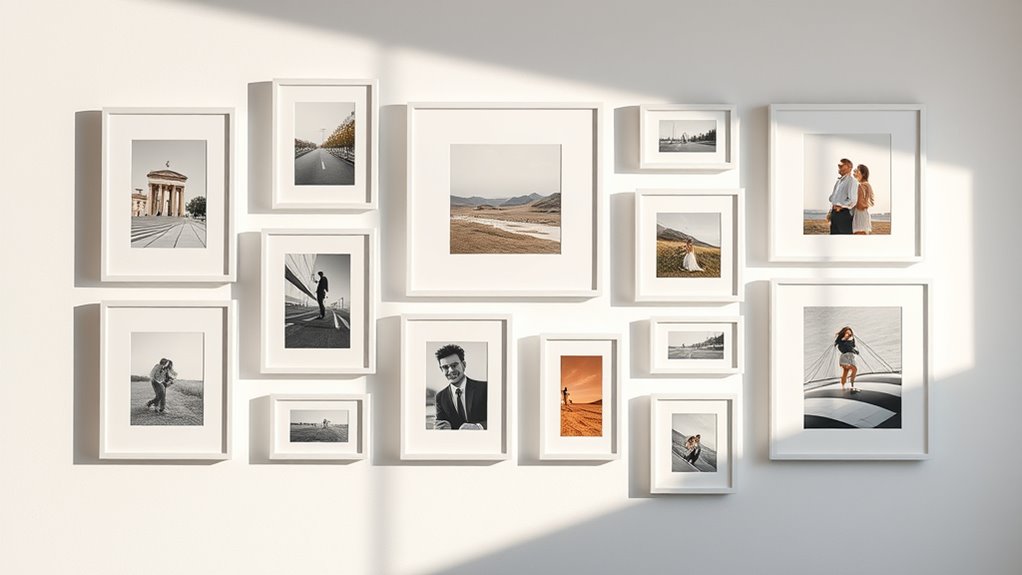

To create a gallery wall, first choose a well-lit spot that fits your space and style. Select artwork and frames that reflect your personality, then measure the wall and plan your layout with paper templates or sketches. Arrange and experiment with different configurations before hanging, ensuring proper spacing and alignment. Adjust frames for a polished look and add personal touches. If you want to master every detail, there’s more to explore in the full process.

Get furniture and decor delivered free — and shop member deals
- Fast, free delivery on millions of items
- Access to Prime Big Deal Days deals on October 6–7
- Prime Video, Amazon Music and more included
Key Takeaways
- Measure your wall space and plan the layout, choosing between grid, salon, or freeform styles.
- Arrange artwork on the floor or use paper templates to visualize spacing and composition before hanging.
- Mark key points on the wall with painter’s tape or light pencils to guide frame placement.
- Hang frames at eye level, maintaining consistent spacing (2-4 inches) for a balanced look.
- Step back regularly to assess and adjust alignment for a polished, cohesive gallery wall.
As an affiliate, we earn on qualifying purchases.
Choosing the Perfect Location for Your Gallery Wall
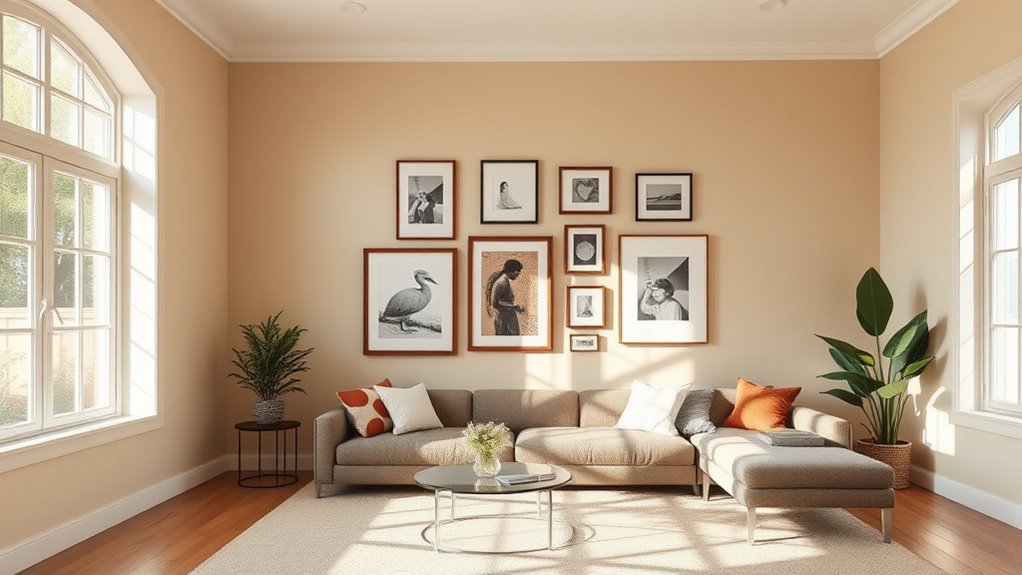
Finding the right spot for your gallery wall can make all the difference in how it enhances your space. You want to choose a wall with good lighting options that highlight your artwork without causing glare or fading. Natural light often works best, so consider placing your gallery near windows, but avoid direct sunlight. Pay attention to wall color choices; neutral or light-colored walls tend to make artwork stand out, while darker walls can add drama if styled thoughtfully. Think about the room’s purpose and how the wall will be viewed—eye level is usually ideal. Avoid crowded or cluttered areas, and ensure the space has enough room to breathe. The right location sets the tone for your entire gallery, making it a focal point you’ll love. Additionally, understanding the lighting environment can help preserve your artwork and enhance its visual impact over time. Proper lighting considerations are crucial for safeguarding your art and creating an inviting display space. Considering wall space and available room dimensions can also help in designing a balanced and attractive gallery wall. Being mindful of ambient light levels can further optimize your display and protect your artwork from potential damage. It’s also helpful to consider lighting placement to ensure even illumination across your entire gallery.
As an affiliate, we earn on qualifying purchases.
Selecting Frames and Artwork That Reflect Your Style
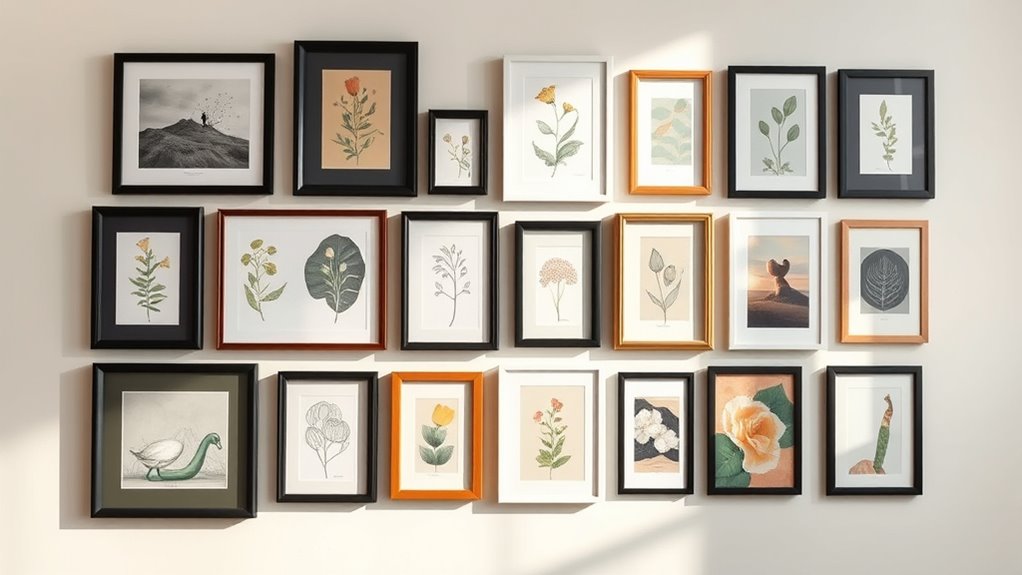
Once you’ve chosen the perfect spot for your gallery wall, the next step is selecting frames and artwork that truly reflect your personal style. Think about frame styles that complement your decor—sleek modern, ornate vintage, or minimalist metal. Choose artwork themes that resonate with you, whether it’s family photos, abstract art, or travel mementos. Visualize your wall filled with:
Create a personalized gallery wall with frames and artwork that mirror your unique style and passions.
- Frames with bold borders or delicate filigree
- Black-and-white photography or colorful paintings
- Mix of different frame sizes and materials
- Art that showcases your hobbies or passions
- Coordinated artworks with a common color palette
Incorporating Free Floating arrangements can add a dynamic and modern touch to your gallery wall, allowing artwork to appear as if it’s effortlessly floating on the wall. Selecting the right frames and artwork sets the foundation for a gallery wall that’s uniquely yours. For a cohesive look, consider visual balance when arranging your pieces, ensuring that the overall display feels harmonious and inviting.
As an affiliate, we earn on qualifying purchases.
Planning Your Layout: Measuring and Sketching
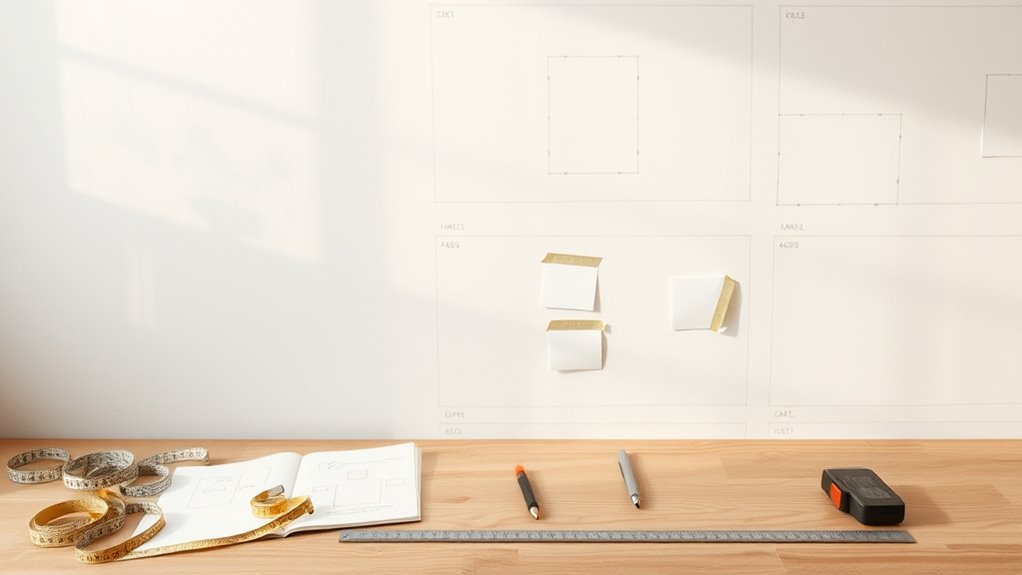
Have you ever wondered how to guarantee your gallery wall looks perfectly balanced? Start by measuring your wall height to determine the ideal placement for your artwork. Use a tape measure to mark key points and visualize the overall layout. When planning, consider consistent frame spacing—usually 2 to 4 inches between pieces—to create harmony. Sketch your design on paper, experimenting with different arrangements before committing to the wall. Keep in mind that spacing should complement the wall size and artwork scale, ensuring nothing feels cramped or disconnected. Taking these measurements and sketches helps you anticipate how your gallery will look, making the actual hanging process much smoother. Proper planning ensures your gallery wall is both visually appealing and well-balanced.
As an affiliate, we earn on qualifying purchases.
Arranging Your Pieces Before Hanging
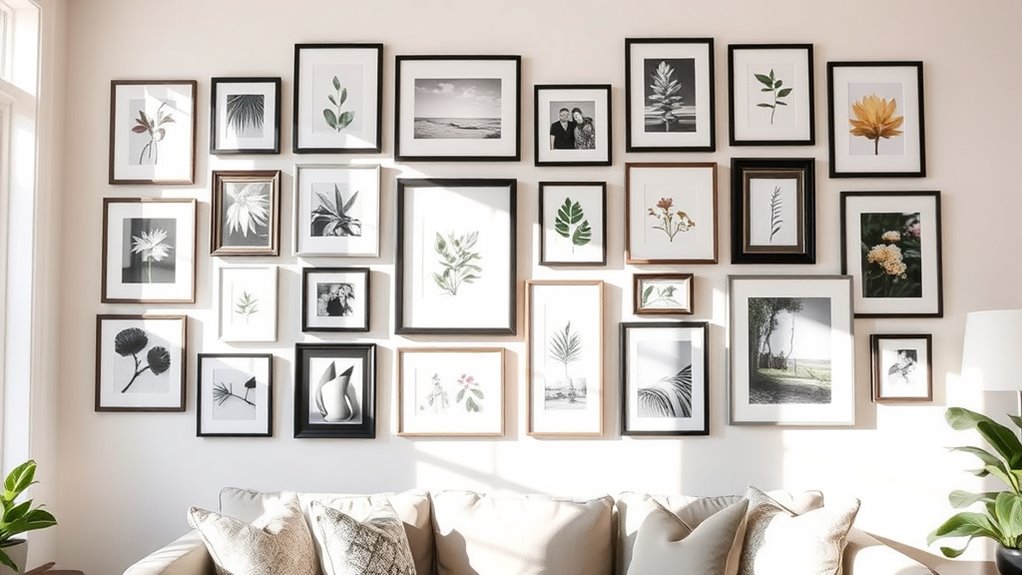
Before hanging, try using paper templates to see how each piece will look on your wall. This helps you visualize the final arrangement without making holes in the wall. Remember to balance your layout so it feels harmonious and visually appealing. Incorporating simple organizing strategies can also keep your gallery wall looking neat and well-coordinated. Considering visual balance during planning ensures a cohesive and attractive display.
Visualize With Paper Templates
Creating paper templates is a simple yet effective way to plan your gallery wall layout. Start by cutting out paper pieces that match your artwork’s sizes, then arrange these on your wall using tape. This allows you to experiment with different configurations without making holes. As you work with your paper templates, imagine:
- Lining up frames in a tight grid or loose arrangement
- Playing with vertical and horizontal alignments
- Swapping pieces to find the best flow
- Adjusting spacing for balance and harmony
- Visualizing how each piece fits into the overall design
- Employing attention to detail to ensure your layout is precise and visually appealing
- Considering visual balance to create a cohesive and attractive display
- Incorporating precise measurements to enhance your planning process and achieve a professional look
Using layout sketches with paper templates helps you see your gallery wall come together before committing. It’s a practical step that saves time and guarantees your final arrangement looks just right.
Balance Your Layout Design
Once you’ve arranged your paper templates and experimented with different configurations, it’s time to focus on balancing your layout. Achieving visual harmony means distributing visual weight evenly and emphasizing focal points. Use the table below to guide your placement:
| Top Row | Middle Row | Bottom Row |
|---|---|---|
| Large art | Symmetrical pieces | Smaller accessories |
| Focal piece | Balance with surrounding pieces | Neutral spaces |
| Heavy frames | Mix sizes | Light items |
| Bright colors | Complementary artworks | Subtle accents |
| Vertical alignments | Horizontal balance | Asymmetrical elements |
This structure helps ensure your gallery wall feels cohesive, with focal points drawing attention and supporting pieces enhancing the overall harmony. Proper balance makes your layout visually appealing and inviting.
Tips for Creating Symmetrical and Asymmetrical Layouts
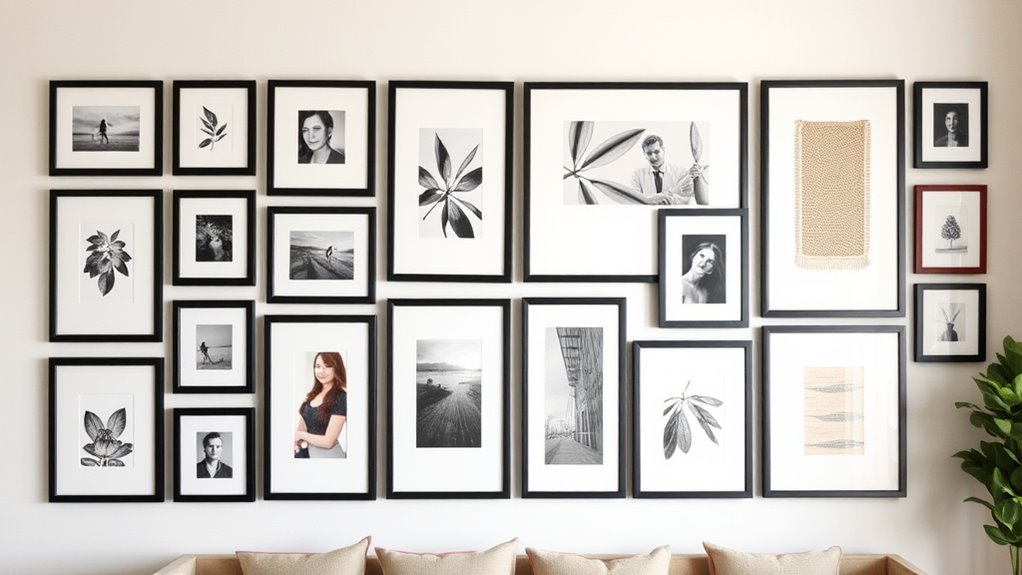
Whether you prefer a balanced, formal look or a more dynamic, eclectic vibe, understanding how to arrange your artwork is key. For symmetrical balance, align pieces so they mirror each other across a central axis, creating a sense of order. For asymmetrical harmony, mix different sizes and shapes while balancing visual weight to keep the layout engaging without feeling rigid. To visualize, imagine:
Arrange artwork with symmetry for order or asymmetry for visual interest, balancing sizes and shapes thoughtfully.
- Centering a large piece with smaller artworks around it
- Using matching frames for a cohesive look
- Arranging varied sizes in a grid pattern
- Balancing a bold print with subtle accents
- Creating visual flow through staggered heights and spacing
Choosing between symmetrical and asymmetrical layouts depends on your style, but both require attention to balance and harmony to look polished and intentional. Incorporating visual balance principles can help ensure your gallery wall feels cohesive and well-composed.
Preparing Your Wall and Tools for Hanging
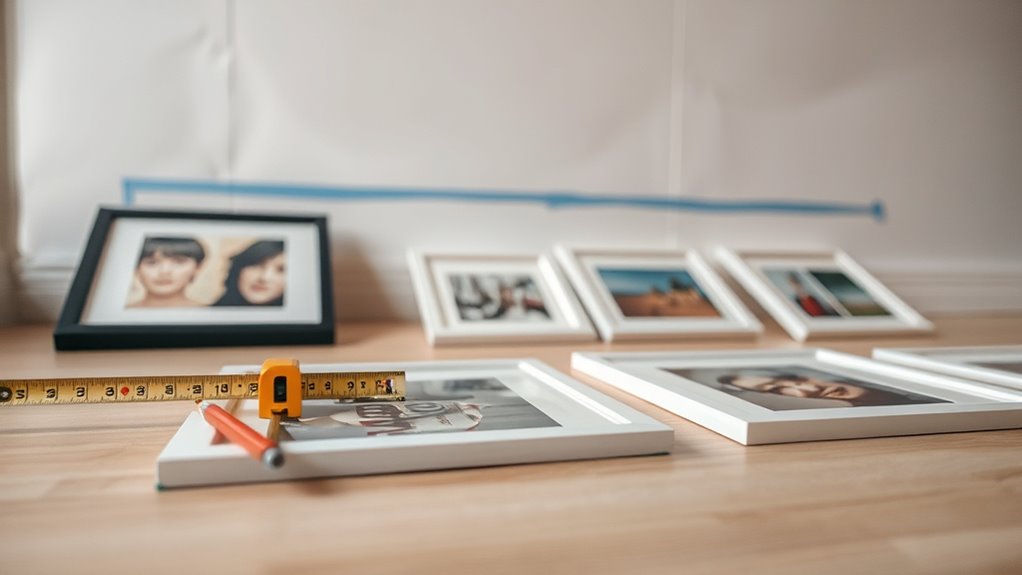
Before hanging your artwork, it’s essential to prepare your wall and gather the right tools. Start by clearing the space and inspecting your wall for any damage or imperfections. Use a measuring tape to determine the desired height and spacing for your frames, ensuring symmetry or balanced asymmetry. For heavier pieces, have wall anchors ready to provide extra support and prevent damage. Mark your spots lightly with a pencil, keeping measurements accurate. Make sure you have a level to keep everything straight and a hammer or screwdriver for installation. Double-check your measurements before drilling or hammering to avoid unnecessary holes. Proper preparation makes hanging easier and helps you achieve a professional-looking gallery wall. Additionally, consider incorporating smart home technology such as motion-activated lighting or integrated speakers to enhance your display area and create a more engaging environment. Using proper hanging techniques can further ensure your artwork stays secure and visually appealing over time. Incorporating home maintenance tips like checking wall integrity and using the right hardware can also help preserve your gallery wall and prevent accidents. Remember, investing in quality hardware and wall assessment can make all the difference in creating a lasting display.
Hanging and Adjusting Your Frames for a Polished Look
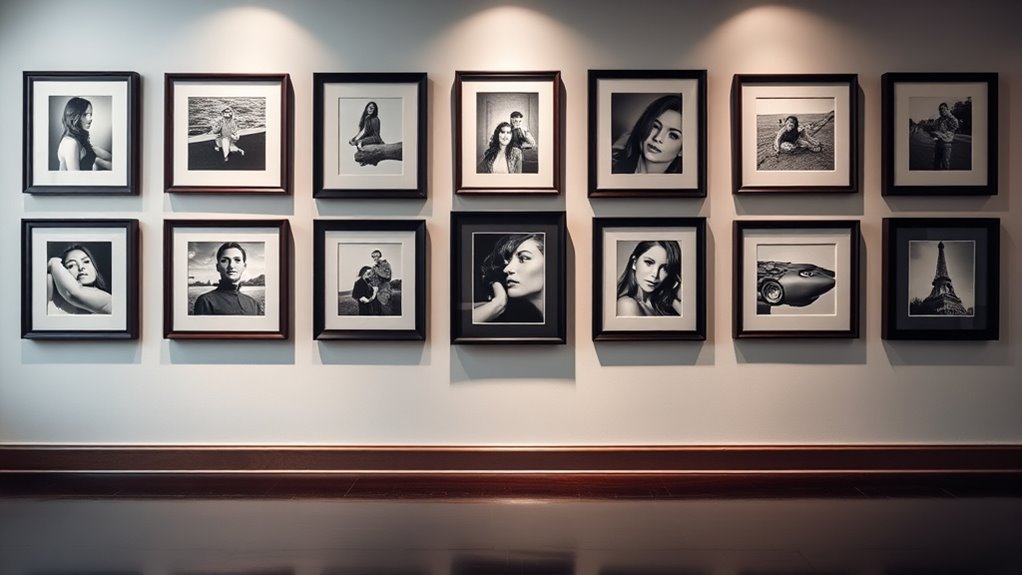
To achieve a polished look, carefully hang each frame at the right height and alignment. Use proper hanging techniques to guarantee stability and visual harmony. Pay attention to frame spacing, keeping it consistent to create a cohesive display. Adjust your frames by stepping back frequently, checking their alignment with a level, and making small tweaks. Visualize the arrangement by imagining:
- Evenly spaced frames forming a balanced grid
- Level lines that guide your eye smoothly across the wall
- Frames aligned along a common baseline or center point
- Consistent distances between neighboring frames
- Slight adjustments to perfect symmetry and visual flow
These details help prevent a cluttered or haphazard appearance, giving your gallery wall a professional, refined finish. Take your time to fine-tune each frame for the best result.
Adding Final Touches and Personalizing Your Gallery Wall
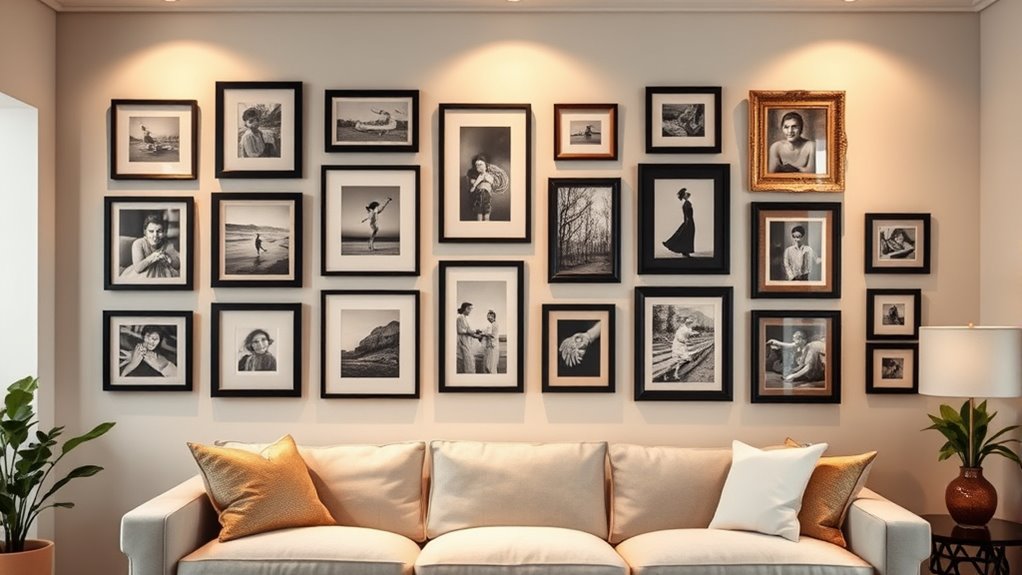
Once you’ve hung and aligned your frames, it’s time to add final touches and personalize your gallery wall to truly make it your own. Incorporate personal touches like meaningful photos, quotes, or artwork that reflect your style and memories. Decorative accents such as plants, small sculptures, or unique wall hangings can add depth and texture to the display. Consider using varying frame styles or colors to create visual interest, or arrange items asymmetrically for a modern look. Don’t be afraid to experiment with layering or overlapping pieces for added dimension. These finishing details help your gallery wall feel curated and intentional, transforming it from a simple arrangement into a reflection of your personality and taste. Paying attention to visual balance and harmony can enhance the overall aesthetic and make your gallery wall truly stand out. Additionally, incorporating wall layout principles can ensure your arrangement maintains proper spacing and alignment, resulting in a polished appearance. Understanding composition techniques can further help you create a cohesive and visually pleasing display. To achieve a balanced visual harmony, consider the distribution of colors, shapes, and sizes throughout your arrangement.
Maintaining and Updating Your Gallery Over Time
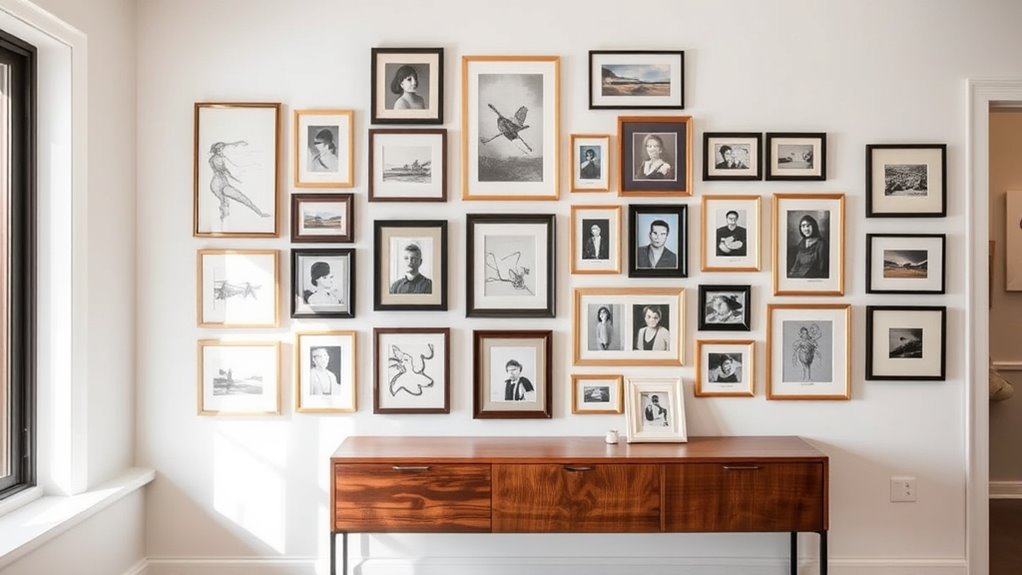
Maintaining and updating your gallery wall guarantees it stays fresh and meaningful over time. To keep it vibrant, consider rotation ideas that showcase new artwork or photos, giving your space a refreshed look. Seasonal updates are also a great way to reflect the changing time of year, adding holiday-themed pieces or seasonal colors. When updating, you might:
- Swap out older frames for new ones
- Incorporate current photos or artwork
- Add small decorative items like plants or sculptures
- Change the arrangement for a new visual flow
- Incorporate seasonal or themed pieces for variety
- Remember that consistent storytelling reinforces your personal style and keeps your gallery engaging. These small tweaks help preserve the gallery’s relevance and personal touch, ensuring it remains a dynamic focal point in your home. Regular updates keep your space engaging and meaningful over time, and utilizing effective display techniques can enhance the overall aesthetic.
Frequently Asked Questions
How Do I Choose the Right Theme or Style for My Gallery Wall?
To choose the right theme or style for your gallery wall, consider your existing decor and personal taste. Opt for a cohesive color scheme that complements your room’s palette, and select framing styles that match your aesthetic—whether modern, vintage, or eclectic. Mix and match thoughtfully, ensuring the overall look feels balanced. Trust your instincts and pick pieces that resonate with you, creating a personalized and stylish focal point.
What Are Common Mistakes to Avoid When Creating a Gallery Wall?
Avoid overcrowding your gallery wall, like packing too many frames in one area, which can make it feel chaotic. Keep an eye on inconsistent spacing, like uneven gaps between pieces, that disrupts visual harmony. To prevent these mistakes, plan your layout carefully, use templates, and maintain balanced spacing. This guarantees your display looks intentional and inviting, rather than cluttered or disorganized.
How Can I Incorporate Different Art Mediums Into One Layout?
To incorporate different art mediums into one layout, embrace art medium mixing and focus on eclectic style integration. You can combine paintings, photographs, textiles, and prints by balancing their sizes, colors, and textures. Use frames that complement each other to create cohesion, and arrange pieces thoughtfully to highlight their uniqueness while maintaining harmony. Experiment freely, trusting your eye to blend diverse mediums into a stunning, personalized gallery wall.
What Is the Best Way to Hang Heavy or Large Frames Safely?
To hang heavy or large frames safely, start by using wall anchors designed for your wall type to guarantee strong support. Distribute the weight evenly by securing multiple hooks or hooks placed strategically along the frame’s top and bottom. Always double-check the weight capacity of your hardware and avoid overloading. This approach ensures your frames stay secure and prevents accidents or damage.
How Often Should I Update or Change My Gallery Wall?
You should update your gallery wall every 6 to 12 months to keep it vibrant and engaging. Consider rotation frequency based on seasonal updates or special occasions, swapping out artwork or photos to reflect current interests or holidays. Regularly rejuvenating your gallery wall helps maintain visual interest and personal relevance. Keep an eye on your space’s vibe, and don’t be afraid to experiment with new frames or themes as seasons change.
Conclusion
Now that you know how to choose, plan, hang, and personalize your gallery wall, it’s time to bring your vision to life. Measure with care, arrange with confidence, and adjust until it feels just right. Celebrate your creativity, display your memories, and update your space whenever inspiration strikes. With each step, you transform blank walls into a reflection of your style, your story, your unique art—making your home truly yours.
Fall Picks
fall essentials
As an affiliate, we earn on qualifying purchases.