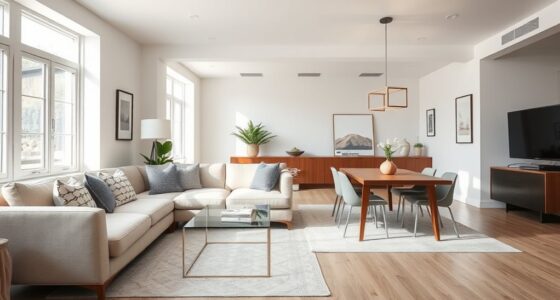
To choose the perfect color scheme for your living room, start by considering the mood you want to create—calm with blues or energy with warm tones. Assess your space’s natural light and size to pick colors that enhance or reflect it. Think about your style and current trends, then select a dominant hue complemented by accents. Incorporate furniture, decor, and lighting to bring your palette to life. For expert tips on refining your choices, keep exploring these ideas.
Key Takeaways
- Assess natural light and room size to select colors that enhance space and brightness.
- Choose a dominant color that sets the mood, and incorporate complementary or contrasting accents for balance.
- Consider your personal style and desired atmosphere to ensure colors reflect your personality and promote comfort.
- Opt for timeless palettes like gray or beige for lasting versatility and easy integration with evolving trends.
- Use accessories, wall art, and accent walls to add visual interest and flexibility, testing colors in natural light before finalizing.
As an affiliate, we earn on qualifying purchases.
Understanding Color Psychology and Its Impact on Mood
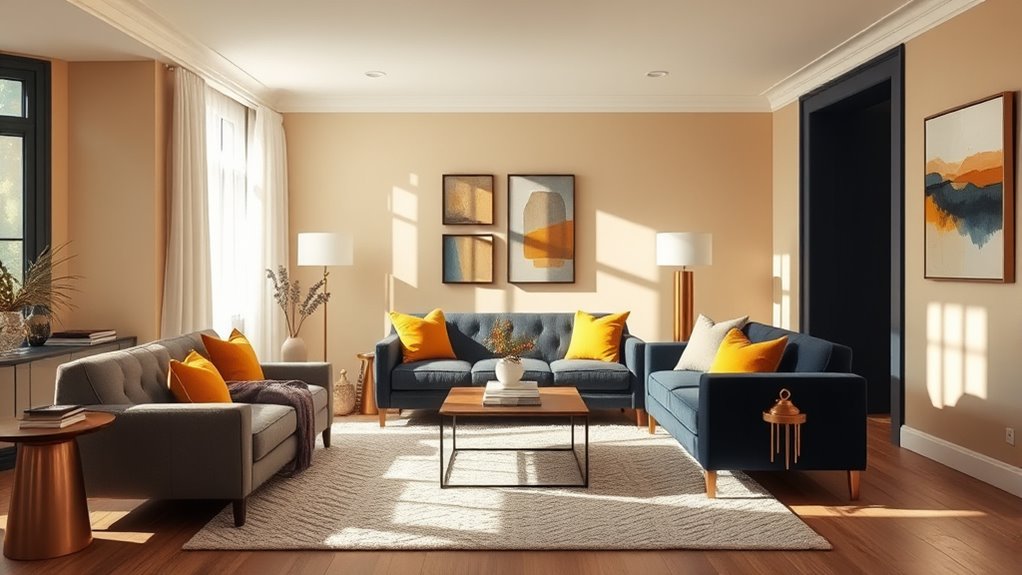
Since colors can influence emotions, understanding color psychology is essential when choosing a living room palette. Different colors evoke specific psychological effects and carry strong color associations that can shape your mood. For example, blue often promotes calmness and relaxation, making it ideal for unwinding after a busy day. On the other hand, warm hues like red or orange can energize the space, fostering enthusiasm and warmth. Knowing these psychological effects helps you select colors that align with your desired atmosphere. Color associations can also influence how comfortable and welcoming your space feels. Your choices can boost comfort, stimulate conversation, or create a serene retreat. Additionally, understanding how contrast ratio impacts image quality can help you optimize your home entertainment setup to enhance visual comfort and enjoyment. Recognizing the importance of lighting conditions can further enhance the overall ambiance, ensuring that your color choices look their best in different lighting environments. Incorporating knowledge of Gelato flavors and their visual appeal can inspire your color palette to evoke a sense of indulgence and delight in your living space. Furthermore, considering current market trends can help you select colors that are both timeless and fashionable, elevating your decor. By understanding color associations, you can craft a living room that enhances your mood and reflects your personality—making your space both functional and emotionally supportive.
As an affiliate, we earn on qualifying purchases.
Assessing Your Living Room’s Natural Light and Space
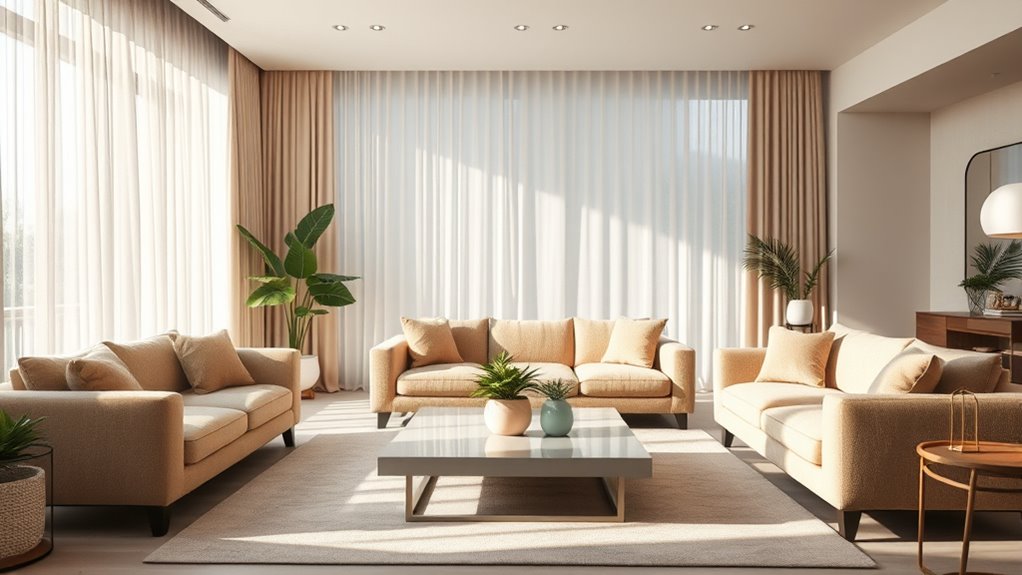
Understanding how your living room’s natural light and space influence your color choices can make a significant difference in creating a harmonious environment. Bright, naturally lit rooms can handle deeper, richer hues, while spaces with limited sunlight benefit from lighter, reflective colors to brighten the area. Pay attention to wall textures—smooth walls can make colors appear more vibrant, whereas textured walls add depth that can influence your palette. Ceiling designs also matter; a high ceiling might accommodate darker shades, making the room feel cozy, while a lower ceiling benefits from lighter tones to create openness. Assess the size of your space and how light interacts with it daily. Recognizing Free Floating principles and their impact on spatial perception can help you select colors that enhance your room’s natural features and create the desired atmosphere.
As an affiliate, we earn on qualifying purchases.
Defining Your Personal Style and Design Preferences

Understanding your personal style helps you choose colors that truly reflect who you are. Think about the designs and colors you feel drawn to and why they appeal to you. This clarity will guide you in creating a living room that feels authentic and inviting. Exploring home décor inspiration can further help you identify the palettes and styles that resonate with your unique taste. Additionally, considering color psychology can assist in selecting hues that evoke the mood and atmosphere you desire for your space.
Identifying Your Style
Have you ever considered what kind of atmosphere you want your living room to evoke? Identifying your style starts with understanding your personal preferences and how they influence your space. Think about how furniture placement impacts the overall vibe—whether you prefer a cozy, intimate setup or an open, airy feel. Lighting considerations also play a key role; natural light can enhance a minimalist look, while layered lighting can add warmth to a more traditional style. Reflect on your daily routines and the mood you want to create. Your style should reflect your personality and make you feel comfortable. By clarifying these elements, you’ll better understand the colors and accents that will bring your vision to life.
Reflecting Personal Tastes
To truly shape your living room’s color scheme, you need to reflect on your personal tastes and design preferences. Your personal taste influences the colors you feel comfortable with and the mood you want to create. Understanding your color preferences helps guarantee the space feels authentic and inviting. Consider how different hues make you feel; for example, calming blues or energizing yellows. Use the table below to identify your preferences:
| Warm Colors | Cool Colors |
|---|---|
| Reds & Oranges | Blues & Greens |
| Bright & Energetic | Calm & Relaxing |
| Cozy & Inviting | Invigorating & Serene |
| Traditional | Modern |
| Bold Statements | Subtle Tones |
Matching your personal taste to your color choices creates a harmonious, personalized living room. Additionally, selecting the right paint sprayer tips can help you achieve a flawless finish that complements your chosen color scheme.
As an affiliate, we earn on qualifying purchases.
Exploring Popular Color Palettes and Trends

You’ll find that popular color combinations, like soft neutrals or bold accents, can instantly refresh your living space. Timeless palette choices, such as shades of gray or beige, offer versatility that lasts. Exploring current trends helps you balance fresh ideas with classic styles to create a cohesive look. Incorporating eco-friendly fabrics can also add depth and personality to your color scheme. Additionally, understanding color psychology can guide you in selecting hues that evoke the desired mood and atmosphere in your living room. Being aware of current design trends can further inspire your choices and help keep your space feeling modern and inviting. Considering water-inspired color palettes, like blues and aquas, can evoke a calming ambiance reminiscent of tranquil waters.
Trending Color Combinations
Staying current with trending color combinations can instantly refresh your living room’s look and create a stylish, cohesive space. Popular trends often draw from the color wheel, pairing complementary colors for striking contrast. For example, soft greens paired with muted pinks or deep blues combined with warm oranges are eye-catching yet balanced. These combinations bring energy and harmony without overwhelming the senses. To visualize, consider the following palette options:
| Color 1 | Color 2 | Accent/Details |
|---|---|---|
| Sage Green | Blush Pink | Gold accents |
| Navy Blue | Terracotta | Cream highlights |
| Mustard Yellow | Charcoal Gray | White trim |
| Coral | Teal | Light beige |
Experiment with these trending combinations for a fresh, modern living room.
Timeless Palette Choices
While trending color combinations can give your living room a fresh look, timeless palettes offer enduring style that never goes out of fashion. To choose a classic scheme, start with the color wheel, which helps you understand how colors relate. Neutral shades like beige, taupe, and gray create versatile, sophisticated backdrops. For a more vibrant yet timeless look, consider pairing complementary colors—colors opposite each other on the wheel—such as navy and coral or soft green and warm terracotta. These combinations naturally balance each other, adding visual interest without feeling trendy. Additionally, understanding psychological effects of colors can help you select hues that promote comfort and harmony in your space. Sticking to a well-chosen palette ensures your living room remains stylish and inviting for years, regardless of changing design trends. Timeless palettes provide a foundation that’s both elegant and adaptable.
Creating a Cohesive Color Scheme With Furniture and Decor

To create a cohesive color scheme with your furniture and decor, start by selecting a dominant color that sets the tone for the room. This color should complement your wall murals and window treatments, creating visual harmony. Choose furniture in shades that either match or subtly contrast with your main hue, ensuring everything feels unified. Incorporate accent pieces like throw pillows, rugs, or artwork that pick up on the dominant or secondary colors. When selecting wall murals, pick designs that enhance your color palette without overwhelming it. For window treatments, opt for curtains or blinds in coordinating tones to tie the room together. Consistency in your color choices across furniture and decor helps craft a balanced, inviting space that feels thoughtfully curated. Additionally, considering interior design basics can help you develop a well-rounded and harmonious color scheme. Incorporating color theory principles can further guide you in selecting complementary and contrasting shades to achieve visual interest and balance. Understanding how celebrity lifestyles influence popular decor trends can also inspire your choices and add a touch of sophistication to your space.
Balancing Bold and Neutral Tones for Versatility
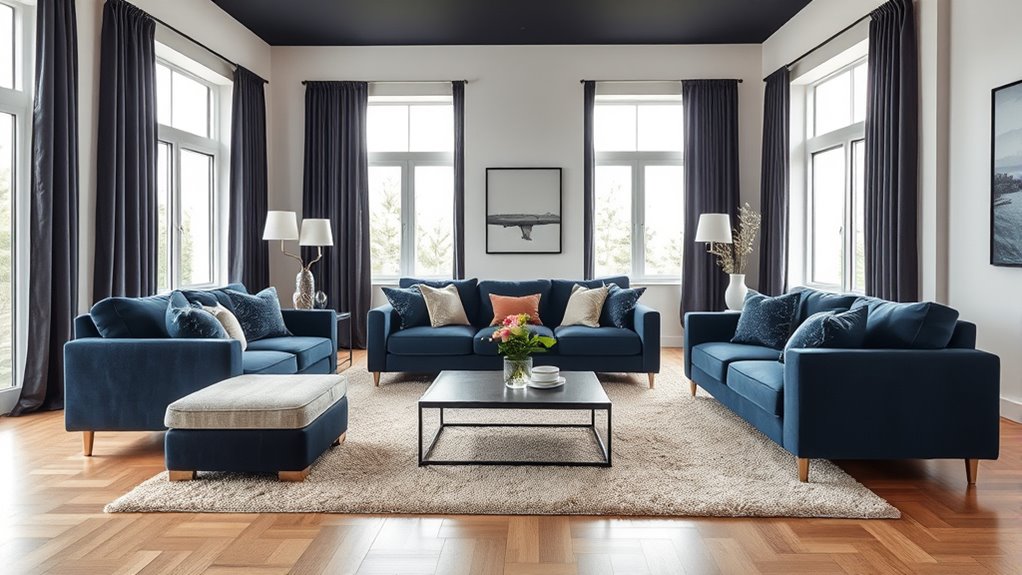
Balancing bold and neutral tones creates visual interest and keeps your living room engaging. It also allows you to switch up decor and accessories without overhauling the entire space. By mastering this balance, you’ll enjoy a versatile room that feels fresh and cohesive. Incorporating visual harmony through thoughtful color choices enhances the overall aesthetic and promotes a sense of comfort in your living area. Additionally, understanding color psychology can help you select hues that evoke the desired mood and atmosphere. Recognizing furniture placement principles can further improve the room’s flow and appeal. Understanding how character development in design elements influences a space can help you create a more inviting environment.
Creating Visual Interest
Creating visual interest in your living room involves thoughtfully combining bold and neutral tones to keep the space dynamic yet versatile. One effective approach is color blocking, where you pair contrasting hues in defined areas, creating focal points without overwhelming the room. This technique adds depth and energy, making your space feel lively yet balanced. Monochromatic schemes also enhance interest by using varying shades of a single color, offering sophistication and cohesion. Mixing textures and finishes within these schemes further amplifies visual appeal, ensuring that your living room doesn’t feel flat. By carefully balancing bold pops of color with neutral backgrounds, you create a space that’s engaging and adaptable, perfect for both relaxing and entertaining.
Enhancing Flexibility
In a living room, blending bold and neutral tones effectively enhances flexibility, allowing the space to adapt to different moods and functions. Achieving the right color contrast helps create visual interest without overwhelming the room’s versatility. Use neutral shades on larger surfaces like walls or furniture, providing a calming backdrop. Incorporate bold accents through accessories or artwork to add personality and vibrancy. Lighting effects play a vital role in this balance—bright lighting can highlight bold colors, while softer lighting emphasizes neutral tones. This interplay ensures your living room remains adaptable, whether you’re hosting guests or relaxing alone. By thoughtfully combining bold and neutral hues, you create a dynamic environment that effortlessly shifts from lively to tranquil, making your space both versatile and inviting. Additionally, understanding how visual contrast influences perception can help you better plan your color scheme for maximum impact, especially when considering air quality and its subtle effects on mood and ambiance.
Tips for Combining Multiple Colors Effectively
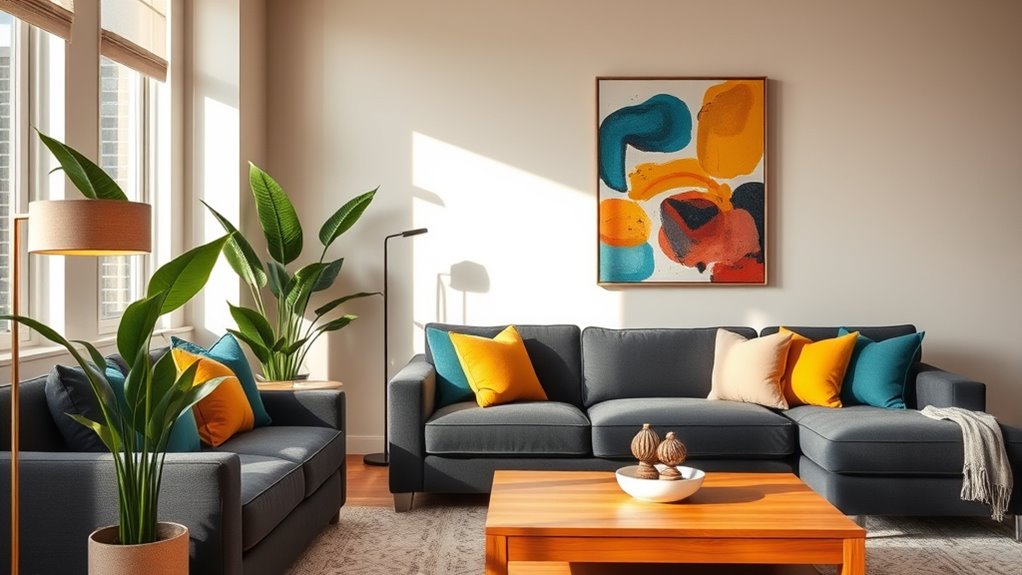
Combining multiple colors in your living room can create a vibrant and inviting space, but it requires careful planning to avoid visual chaos. To master color blending and achieve harmonious contrasts, consider these tips:
Mix multiple colors thoughtfully to create a lively, balanced living room.
- Choose a dominant color and use it as a base to anchor your palette.
- Incorporate 2-3 accent colors that complement the main hue without clashing.
- Balance bold colors with neutral shades to prevent overwhelming the senses.
Using Accent Walls and Accessories to Add Color

Using accent walls and accessories is an effective way to introduce pops of color without overwhelming your living room. An accent wall draws attention and creates a focal point, so choose a bold or complementary hue that enhances your overall color scheme. Decorative accessories, like throw pillows, rugs, artwork, and vases, offer flexible options to add color and personality. Mix and match these accessories to reflect your style and keep the space lively. When selecting accent walls and accessories, consider your existing furniture and wall colors to guarantee harmony. These elements allow you to experiment with vibrant shades or subtle tones without committing to large-scale changes, making it easy to update your living room’s look as your taste evolves.
Selecting Durable and Suitable Paint Finishes
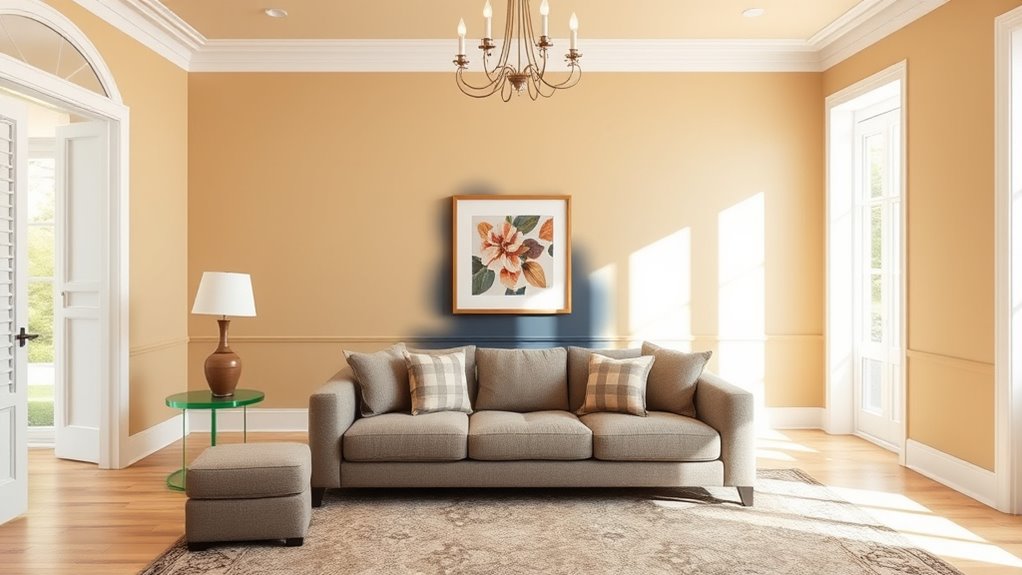
Choosing the right paint finish is essential to guarantee your living room remains beautiful and functional over time. Your choice depends on durability considerations and the specific look you want. Paint finish options include:
- Matte: Ideal for hiding imperfections, but less durable against scrapes.
- Eggshell: Offers a soft sheen and better durability, suitable for most walls.
- Satin or Semi-Gloss: Highly durable and easy to clean, perfect for high-traffic areas or walls near furniture and fixtures.
When selecting a finish, consider how much wear and tear the surface will endure. For instance, semi-gloss finishes provide excellent durability for busy spaces, while matte finishes work well in low-traffic zones. Choosing wisely guarantees your living room stays vibrant and resilient.
Practical Steps for Testing and Finalizing Your Color Choices

Before committing to a color, it’s important to test how it looks in your living room’s specific lighting conditions. Use paint testers to see how colors blend with your existing décor and natural light. Place testers on different walls or create small swatches to observe how the shade changes throughout the day. This helps you avoid surprises once the entire wall is painted. Consider a table like this to compare options:
| Color Option | How It Looks in Your Space |
|---|---|
| Soft Beige | Warms up the room, good in natural light |
| Cool Gray | Modern, calming effect |
| Deep Blue | Adds depth, might feel overwhelming |
| Light Green | Refreshes the space, feels airy |
| Muted Taupe | Versatile, complements various styles |
Use this process to refine your choices, ensuring your final decision is spot-on.
Frequently Asked Questions
How Do I Choose a Color Scheme That Complements My Existing Furniture?
To choose a color scheme that complements your existing furniture, start with furniture color coordination by identifying dominant hues. Opt for an accent wall color that contrasts or harmonizes with your furniture to add visual interest. Consider the room’s natural lighting, and pick shades that enhance your décor. Test paint swatches before committing, ensuring your chosen colors create a balanced, inviting space that showcases your furniture beautifully.
What Are the Best Colors for Small or Dark Living Rooms?
For small or dark living rooms, opt for light reflecting paints like soft whites, pastels, or warm neutrals. These colors bounce light around the space, creating the illusion of more room and brightness. Avoid dark shades that can make the area seem cramped. Instead, keep the palette simple and bright to enhance natural light, making your living room feel more open, airy, and inviting.
How Can I Incorporate Seasonal Color Changes Into My Scheme?
Think of your living room as a garden that blooms through the seasons. You can easily incorporate seasonal color changes by adding seasonal accent colors through accessories like pillows, throws, and artwork. Adjust these elements as the seasons change, bringing fresh energy and warmth to your space. This simple switch keeps your living room feeling vibrant and in sync with the outside world, without a full overhaul.
What Are Common Mistakes to Avoid When Selecting Wall Colors?
When selecting wall colors, avoid common mistakes like choosing colors that clash or don’t complement your furniture or decor. Also, don’t overlook the impact of incorrect lighting; it can distort your chosen hues and create unexpected color clashes. Always test paint samples in different lighting conditions and consider how the colors will interact with your room’s natural and artificial light. This helps guarantee your wall colors look great every time.
How Do I Ensure My Color Choices Stay Timeless Over Trends?
Ironically, chasing trendy colors might make your living room feel outdated faster than you think. To guarantee your choices stand the test of time, focus on color longevity and opt for trend-proof palettes. Stick with neutral shades or classic hues like navy, beige, or gray. These timeless options blend seamlessly with changing decor styles, giving your space a sophisticated look that doesn’t scream “dated” after a season.
Conclusion
Choosing the perfect color scheme transforms your living room from ordinary to extraordinary. Remember, your space reflects who you are—so trust your instincts and experiment boldly. Like a painter with a blank canvas, you hold the power to create a welcoming, vibrant haven. Embrace the journey, and let your colors tell your story. After all, isn’t your home worth a splash of your unique personality? Immerse yourself and make your living room truly yours.