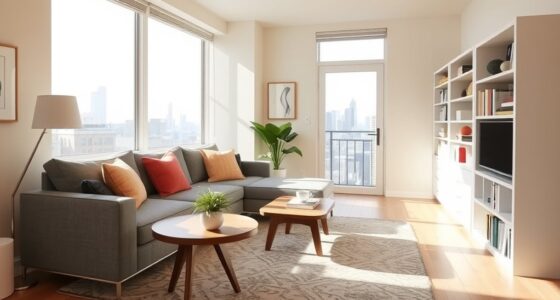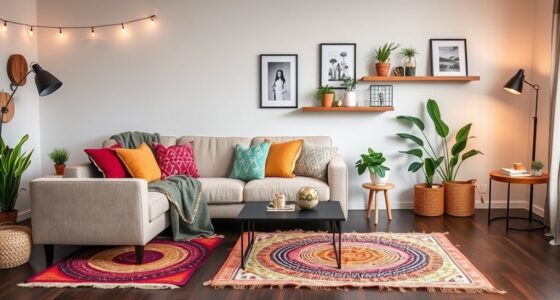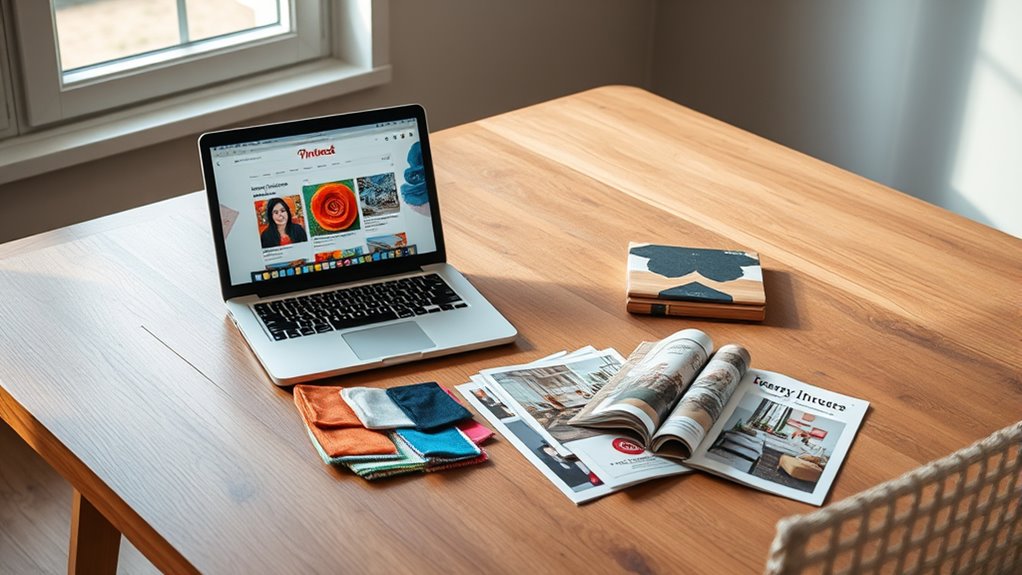

To use Pinterest for creating mood boards for your home decor, start by searching for themes, colors, and textures that inspire you. Pin images that capture your desired style to your board, experimenting with different combos of colors and textures. As you add more pins, patterns and ideas emerge, helping you refine your vision. If you keep exploring, you’ll discover how to bring all these elements together into a cohesive and personalized space.
Key Takeaways
- Create themed boards on Pinterest to organize your home decor inspiration by style, room, or color palette.
- Pin images that reflect your desired mood, colors, textures, and furniture to visualize your overall design concept.
- Experiment with different combinations of textures and hues by adding diverse pins to see how they work together.
- Use the “sections” feature within boards to group related ideas, refining your vision step-by-step.
- Continuously update and revise your mood boards to ensure your decor choices remain cohesive and aligned with your evolving style.
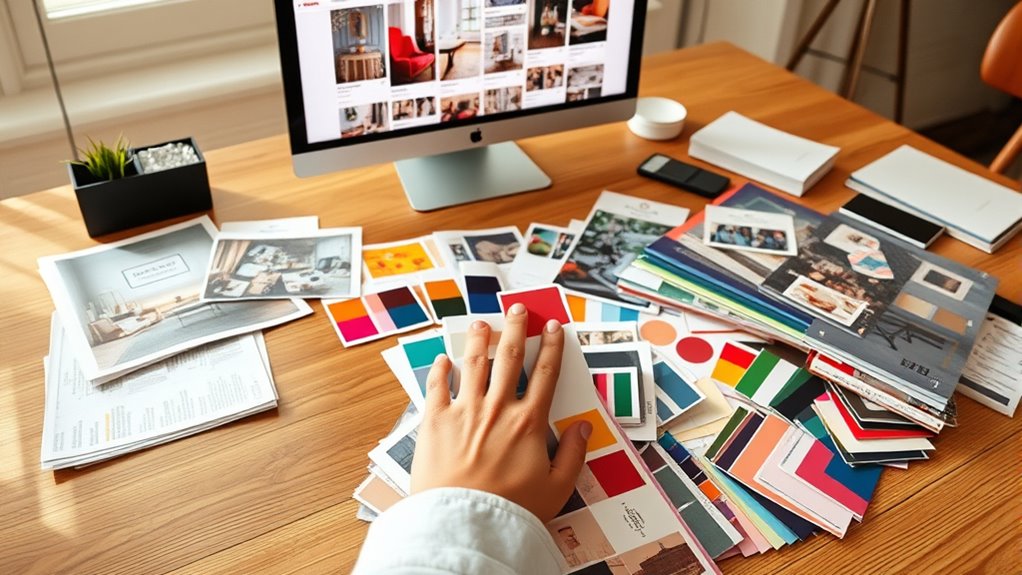
Have you ever wondered how designers bring their ideas to life before creating a final product? It all starts with a mood board — a visual tool that captures the essence of your vision. When you’re using Pinterest for home decor inspiration, you’re fundamentally building a digital mood board that guides your design process. One of the first steps is selecting a cohesive color palette, which sets the tone for the entire space. Think about the mood you want to evoke: calm and serene, energetic and vibrant, or sophisticated and muted? Once you decide on your color palette, you can start pinning images that reflect those hues. This helps you see how different shades work together and guarantees your room’s overall feel remains harmonious.
A mood board starts with choosing a cohesive color palette that sets your space’s tone.
Texture selection is equally important in creating a compelling mood board. As you browse Pinterest, pay attention to various textures — from soft, plush fabrics to sleek, smooth surfaces. Mixing textures adds depth and interest to your design, so look for images that showcase different materials like velvet, wood, metal, and woven textiles. Incorporating these into your mood board helps you visualize how tactile elements will complement your chosen color palette. Combining contrasting textures creates a layered, inviting atmosphere, while consistent textures can provide a sleek, modern look. The key is to gather images that inspire you and demonstrate how textures can work in harmony within your space. Additionally, understanding Free Floating elements can help you create a more relaxed and open design that feels organic and unstructured.
Using Pinterest, you can easily experiment with different combinations of colors and textures without the commitment of physical samples. Create themed boards for different styles or color schemes, pinning images of furniture, fabrics, wall treatments, and accessories. As you add more pins, you’ll start to see patterns emerge, guiding you toward a cohesive design. Don’t be afraid to include some unconventional textures or bold color pairings — these unexpected elements can add personality and uniqueness to your space. The process is about discovering what resonates with you and visualizing how all these elements will come together in your home.
Ultimately, creating a mood board on Pinterest allows you to clarify your vision before you start buying or renovating. The careful selection of a color palette and textures helps guarantee your design feels intentional and balanced. It’s a flexible, dynamic way to experiment, refine, and inspire yourself along the way. So, as you compile images and organize your ideas, remember that your mood board is a reflection of your personal style — a roadmap that guides your decor journey from concept to reality.

Inspirational Vision Board Kit – Complete Set with Vision Board Book & Felt Board, Motivational Pictures & Quotes to Map Your Goals & Dreams – The Perfect Supplies to Visualize Goal Setting & Success
- Manifest Your Future: Map goals and stay motivated
- Complete Vision Board Kit: Includes felt board, pins, tapes, and book
- All-In-One Supplies: Ready to spark success and creativity
As an affiliate, we earn on qualifying purchases.
As an affiliate, we earn on qualifying purchases.
Frequently Asked Questions
How Do I Organize My Pinterest Boards Effectively?
To organize your Pinterest boards effectively, focus on pin organization and board categorization. Start by creating specific boards for different decor styles or rooms, like “Modern Living Room” or “Boho Bedroom.” Regularly review and delete irrelevant pins, and use clear, descriptive titles. Group similar boards together for easy navigation, and add detailed descriptions to help you find ideas quickly. This approach keeps your inspiration streamlined and accessible.
Can I Collaborate With Others on My Mood Boards?
Imagine a vibrant tapestry woven with your ideas and others’—yes, you can collaborate on your mood boards. Pinterest makes it easy to invite friends or design team members to share ideas, turning your mood boards into collaborative projects. Just click the “Collaborate” button, and let the sharing of inspiration flow freely. This way, you create a dynamic, collective vision that reflects everyone’s creative touch effortlessly.
What Are Some Common Mistakes to Avoid?
To avoid common mistakes, steer clear of visual clutter by limiting the number of pins you include, which keeps your mood board focused. Also, make certain your theme remains consistent; mixing too many styles can confuse your vision. Regularly review and refine your board, removing unrelated images. By doing so, you create a clear, inspiring guide that accurately reflects your desired home decor style without overwhelming or diluting your ideas.
How Do I Choose a Cohesive Color Palette?
Imagine you’re designing a cozy living room. To select a cohesive color palette, pick 2-3 main colors that match well and create palette harmony. Use color matching techniques like complementary or analogous schemes to guarantee your shades blend seamlessly. Start with a favorite hue, then build around it. This approach keeps your mood board balanced and visually appealing, making your decor feel unified and inviting.
How Often Should I Update My Mood Boards?
You should update your mood boards every few months to maintain visual consistency and reflect your evolving style. Regular updates help you stay inspired and guarantee your decor ideas stay fresh. Keep an eye on new trends and personal preferences, and don’t be afraid to refresh your boards when your taste or project scope changes. This way, your Pinterest boards remain a true reflection of your home’s evolving aesthetic.

HYBLOM Vintage Color-Mixing Chart Metal Tin Sign – Classroom Watercolor Painting necessity Poster, Art Gallery, Home Decor, and Painting Lovers 8×12 Inches
- Comprehensive Artist Guide: Includes watercolor tips and techniques
- Durable Vintage Design: Made from high-quality aluminum
- Inspires Creativity: Perfect for art rooms and classrooms
As an affiliate, we earn on qualifying purchases.
As an affiliate, we earn on qualifying purchases.
Conclusion
Creating a mood board with Pinterest makes decorating your home easier and more fun. Did you know that 70% of users say Pinterest helps them discover new ideas? By curating images that reflect your style, you can visualize your dream space and stay inspired throughout your decorating journey. So go ahead, start pinning, and watch your vision come to life—your perfect home is just a few clicks away!

Tokblind Blackout Roller Shade Fabric Sample Swatch (Multicolor)
- Includes multiple fabric samples: Various color and texture options
- Sample only: Does not include a complete roller shade
As an affiliate, we earn on qualifying purchases.
As an affiliate, we earn on qualifying purchases.
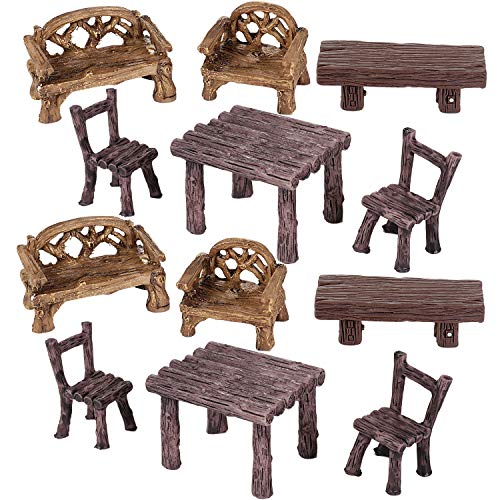
Skylety 12 Pieces Garden Furniture Ornaments Miniature Table and Chairs Set Village Micro Resin Bench Chair for Fairy Garden Accessories Home Micro Landscape Decor(Vintage Style)
- Set Includes: 12 garden furniture ornaments
- Material: Resin, durable and waterproof
- Miniature Size: Compact for micro gardens
As an affiliate, we earn on qualifying purchases.
As an affiliate, we earn on qualifying purchases.