To choose the right coffee table, start by evaluating your room’s size, layout, and lighting to find a proportionate and harmonious piece. Consider the shape—round for softer, more flexible spaces or rectangular for structured layouts—and match the style and materials to your decor for cohesive appeal. Don’t forget functionality, such as storage or mobility, to make your space both practical and stylish. Keep exploring to discover how these elements come together perfectly.
Key Takeaways
- Measure your room and furniture to select a coffee table that fits comfortably without obstructing movement or flow.
- Choose a table height that aligns with your sofa cushions (16-18 inches) for ergonomic comfort and visual harmony.
- Pick a shape that complements your space’s layout—round for soft curves, rectangular for structured arrangements.
- Match the table’s style, materials, and textures with your existing decor to create a cohesive and harmonious look.
- Incorporate practical features like storage or mobility options to enhance functionality and suit your lifestyle needs.

31.5" Round Coffee Table with Storage, Mid Century Modern Coffee Tables with Fluted Base, Wooden Circle Accent Center Table for Living Room Small Space Apartment Office (Walnut)
- Stylish Mid-Century Modern Design: Elegant round fluted wooden tabletop
- Ample Storage with Hidden Cabinet: Sliding cabinet for concealed essentials
- Durable Veneered Wood Construction: Strong, stable, and smooth finish
As an affiliate, we earn on qualifying purchases.
As an affiliate, we earn on qualifying purchases.
Assessing Your Room’s Dimensions and Layout
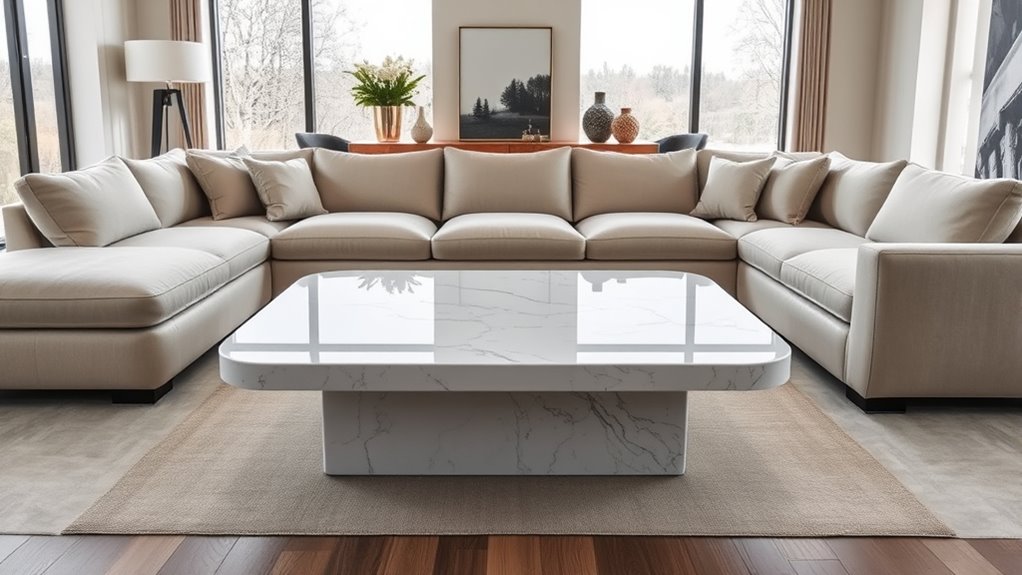
Before selecting a coffee table, you need to understand your room’s size and layout. Consider how much space is available and how the furniture fits together. Room lighting plays a role—bright, airy spaces can handle larger tables, while darker rooms may benefit from smaller, lighter pieces. Also, evaluate your wall color; neutral walls offer more flexibility in style and size, whereas bold or dark hues might influence your table choice to create balance. Measure the available floor space carefully, leaving enough room for comfortable movement around the table. Think about the flow of your furniture arrangement and how the table will complement your existing setup. Additionally, understanding space planning principles can help you select a coffee table that enhances the room’s functionality and aesthetic harmony. Incorporating smart home automation features, such as voice-controlled lighting or adaptable furniture arrangements, can further optimize your space for both style and convenience. Taking into account your room’s lighting conditions can also guide you toward choosing a table that complements the natural and artificial light in your space. Considering ergonomic design principles can ensure your coffee table is both stylish and comfortable for everyday use.
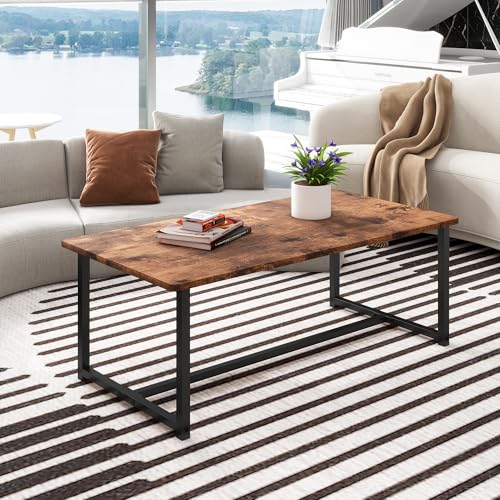
VERFARM 35.4" Rectangular Coffee Table for Living Room, Modern Industrial Style Coffee Table Center Table with Metal Frame for Small Space, Apartment, Office, Easy Assembly, Brown
- Sturdy Construction: Engineered wood with metal frame for stability
- Dimensions: 17.7"D x 35.4"W x 16.5"H
- Compact Design: Ideal for small spaces and apartments
As an affiliate, we earn on qualifying purchases.
As an affiliate, we earn on qualifying purchases.
Determining the Ideal Height and Proportion

Choosing the right height and proportion guarantees your coffee table fits comfortably in your space. Keep standard height guidelines in mind, aiming for a table that’s about the same height as your sofa cushions. Balancing proportions and prioritizing accessibility will make your space both functional and inviting. Additionally, considering projector placement can help ensure your furniture arrangement complements your overall setup and viewing experience.
Standard Height Guidelines
The ideal height for a coffee table typically falls between 16 and 18 inches, ensuring it complements your sofa without overwhelming it. This range aligns with standard height guidelines and considers ergonomic considerations, making it comfortable for everyday use. Staying within these height standards helps you avoid awkward angles when reaching for items or resting your feet. If your sofa is lower or higher than average, adjust the table height accordingly to maintain a balanced look. Remember, the goal is to create a seamless flow between your seating and the table, so it feels natural to reach and interact. Choosing a table within these height guidelines promotes a harmonious interior design aesthetic and enhances functionality in your space. An understanding of ergonomic comfort considerations can further help you select a table that supports both style and practicality. Additionally, considering the size and shape of your room can ensure your coffee table fits well without crowding the area. Incorporating standard height guidelines can also aid in achieving a cohesive and functional living area.
Proportional Balance Tips
Achieving visual harmony with your coffee table depends on understanding proportional balance. The ideal height usually aligns with the seat height of your sofa, creating a cohesive look that feels balanced. Taller tables can serve as bold artistic expressions or cultural symbolism, making them focal points, while shorter tables foster intimacy and accessibility. To determine the right proportion, consider the table’s size relative to your space; a table that’s too large can overpower, while one that’s too small may seem insignificant. Aim for a table that complements the scale of your furniture, enhancing the room’s overall aesthetic. Remember, proportional balance isn’t just about size—it reflects your personal style and can subtly showcase cultural symbolism, adding depth to your space. Understanding plant properties can also influence your choice of materials, as certain woods or finishes interact differently with room lighting and temperature, further affecting its visual impact.
Comfort and Accessibility
When selecting the right coffee table height, comfort and accessibility should be top priorities. An ergonomic comfort level guarantees you can reach for items easily without straining. To find the perfect height, consider these tips:
- The table should be roughly the same height as the armrest of your sofa or chairs.
- Keep enough clearance—about 12-18 inches—so you can comfortably place your legs underneath.
- Prioritize accessibility features like rounded edges or lower heights for easier reach, especially for children or those with mobility concerns.
- Ensuring that your coffee table aligns with sleep hygiene principles, such as creating a comfortable and functional living space, can enhance your overall relaxation and well-being.
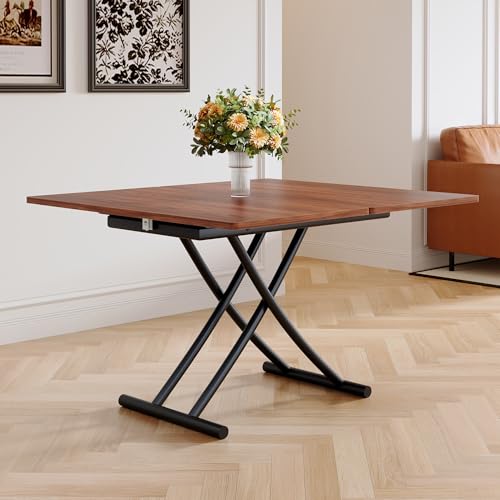
Vohward Adjustable Height Coffee Table, 4-in-1 Folding Dining Table, Walnut
- Multifunctional 4-in-1 Design: Transforms into multiple table types
- Adjustable Height & Expandable Top: Smooth height adjustment and expandable surface
- Space-Saving with Mobility: Hidden caster wheels for easy repositioning
As an affiliate, we earn on qualifying purchases.
As an affiliate, we earn on qualifying purchases.
Exploring Different Shapes for Functionality and Style

Choosing the right shape for your coffee table can considerably influence both its functionality and style. Geometric shapes like squares and rectangles offer clean lines, maximizing surface area and fitting well in structured spaces. Organic forms, such as round or irregular shapes, soften the look and promote flow, making your space feel more inviting. Consider how each shape impacts movement and usability: outdoor-kitchen essentials can also inspire innovative table shapes that enhance outdoor living areas. Additionally, selecting a shape that aligns with your interior design style can create a cohesive and harmonious look in your room. Understanding home layout considerations can help you choose a shape that best complements your space and lifestyle. Incorporating eco-friendly materials in your table choice can also support sustainable living, especially when selecting eco-conscious furniture options. Recognizing space planning principles ensures your coffee table enhances rather than disrupts your room’s overall harmony.

Coffee Table, 39.4" Mid Century Modern Coffee Tables for Living Room, Coffee Table with Storage Open Shelf, Fluted Table with Sliding Cabinet Door, 2-Tier Rustic Wood Desktop, Walnut
- Spacious 39.4-inch Top Surface: Generous surface for daily essentials
- Open Shelf for Storage: Store magazines, toys, and more
- Mid-Century Modern Design: Elegant walnut veneer finish
As an affiliate, we earn on qualifying purchases.
As an affiliate, we earn on qualifying purchases.
Matching Materials and Finishes to Your Decor

To create a cohesive look, consider how your coffee table’s materials and finishes complement your existing palette. Matching textures and finishes helps your table blend seamlessly or stand out as a statement piece. By paying attention to these details, you can enhance the overall style of your space with confidence. Incorporating smart appliances and connected features can also subtly influence your decor choices, creating a modern and harmonious environment.
Harmonizing With Existing Palette
Matching your coffee table’s materials and finishes to your existing decor creates a cohesive look that enhances your space. To achieve this, focus on color coordination and style harmony. Consider these steps:
- Match the finish with other furniture, like wood tones or metallic accents, to create visual consistency.
- Choose materials that complement your color palette, such as glass for neutral tones or dark wood for richer hues.
- Guarantee the style of your coffee table aligns with your decor’s theme—modern, rustic, or traditional—for seamless integration.
- Incorporate visual cues from your space to guide your selection and ensure harmony between your coffee table and the overall decor.
- Utilizing knowledge of precious metals and their finishes can help you select textures and materials that reflect your overall interior style.
Coordinating Textures and Finishes
When selecting a coffee table, paying attention to textures and finishes guarantees your piece complements your existing decor. Matching fabric textures and metal finishes creates a cohesive look. For example, pairing a leather sofa with a table that has a matte metal finish adds subtle harmony, while a glass top with a sleek metal base can evoke modern elegance. Consider how your fabric textures—like plush rugs or woven cushions—interact with the table’s surface. Use this table to guide your choices:
| Texture/Finish | Recommended Pairing |
|---|---|
| Soft fabric | Wooden or matte metal for warmth |
| Smooth fabric | Glossy or polished metal for contrast |
| Textured fabric | Brushed or aged metal for depth |
| Fabric patterns | Solid finishes to balance visual interest |
| Metal finishes | Warm brass or matte black to suit decor |
Additionally, incorporating AI-trained materials into your design process can help visualize how different textures and finishes will look together, ensuring a harmonious final result.
Selecting a Coffee Table That Complements Your Seating Arrangement

Choosing a coffee table that complements your seating arrangement starts with considering the size and scale of your furniture. If your sofas and chairs are bulky and traditional, a rustic charm coffee table with a sturdy, natural look works well. For sleek art deco pieces, opt for a more geometric, streamlined table. To guarantee harmony, keep these tips in mind:
- Match the table height to your seating for comfortable use.
- Choose a size that leaves enough space around for movement.
- Select a shape that balances your layout—round tables soften angular furniture, while rectangular ones suit linear arrangements.
Incorporating Storage Options for Practicality

Adding storage options to your coffee table enhances both its functionality and your living space’s organization. Depending on your decorating style, you can choose from open shelves, drawers, or hidden compartments that blend seamlessly with your design. For optimal document management, incorporating dedicated storage helps you keep essentials close at hand without sacrificing style. To further improve your space, consider multi-purpose furniture that combines style and utility. For example, tables with built-in storage can serve as both a surface and a practical solution for organizing your belongings. For minimalist or modern styles, sleek tables with built-in storage keep clutter out of sight while maintaining a clean look. If you prefer a cozy, rustic feel, opt for wooden tables with drawers or baskets. Budget considerations play a role too; versatile storage solutions like ottomans or multi-purpose tables often offer affordability and practicality. Incorporating these features helps you keep essentials close at hand without sacrificing style, ensuring your living area remains tidy and tailored to your aesthetic preferences.
Considering Mobility and Flexibility in Your Choice
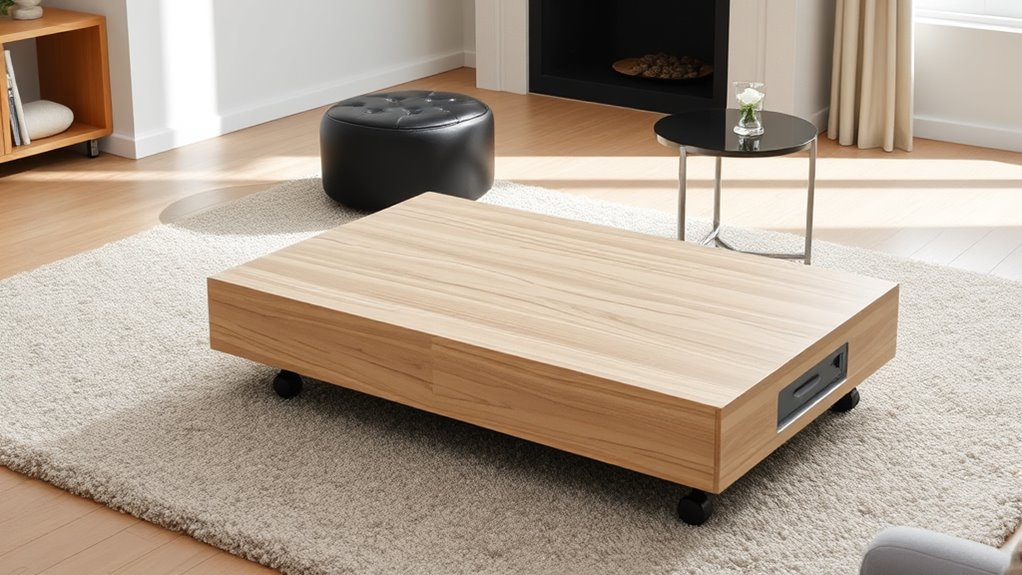
Mobility and flexibility are key factors to contemplate when selecting a coffee table that adapts to your changing needs. If you want versatile mobility options, consider tables with wheels or lightweight designs that make rearranging effortless. Flexible placement is also essential; choose pieces that can easily shift within your space without hassle. Here are some ways to prioritize these features:
- Opt for tables with casters or wheels for easy movement.
- Select lightweight materials like acrylic or thin metal for portability.
- Consider nesting or multi-piece sets that can be rearranged or expanded as needed.
- Be mindful of piercing care and hygiene to ensure your furniture stays in good condition and safe from damage.
- Additionally, choosing furniture with easy-to-clean surfaces can help maintain hygiene and prolong the lifespan of your pieces.
Balancing Aesthetic Appeal With Maintenance and Durability

While an attractive coffee table can instantly enhance your living space, it’s equally important to contemplate how easy it is to maintain and how durable it will be over time. You want a piece that balances aesthetic appeal with practicality. Consider color coordination to ensure the table complements your existing décor without overwhelming the room. Materials like hardwood or metal often offer better durability with less upkeep, fitting into your budget considerations. If you prefer a stylish look, opt for surfaces that resist scratches and stains, making cleaning easier. Remember, investing in a durable piece might cost more upfront but can save you money and effort long-term. Ultimately, choose a coffee table that harmonizes with your style while remaining functional for everyday use.
Making the Final Decision: Tips for a Perfect Fit
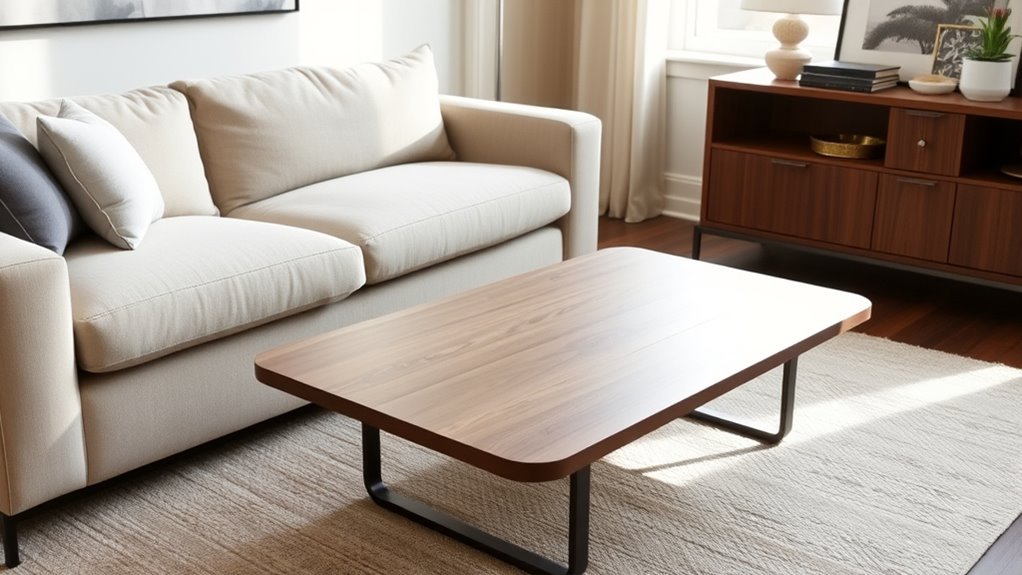
To make the final decision, start by measuring your space carefully and considering how the coffee table will fit with your existing furniture. Think about room flow and whether you want it to serve as a centerpiece or complement other decorative accents. Next, evaluate these key factors:
Begin by measuring your space and considering how the coffee table complements your furniture and decor.
- Size and shape—ensure it leaves enough room for movement and matches your layout.
- Style—choose a design that harmonizes with your decor and enhances the overall aesthetic.
- Lighting options—consider how the table interacts with lighting, like placing it near statement lamps or highlighting decorative accents.
This helps create a balanced look and functional space. Remember, the right coffee table ties everything together, making your room feel cohesive and inviting.
Frequently Asked Questions
How Do I Choose a Coffee Table That Fits a Small or Narrow Space?
To fit a coffee table in narrow spaces, opt for compact designs that don’t overwhelm the room. Look for tables with slim profiles, such as rectangular or oval shapes, which maximize functionality without crowding. Consider multi-purpose options like storage tables, and keep the size proportionate to your space. Prioritize simplicity and clean lines to make your small area feel open and inviting.
What Are the Best Materials for a Family-Friendly, Durable Coffee Table?
For a family-friendly, durable coffee table, opt for materials like hardwood or metal, as they offer excellent durability considerations. These materials resist scratches and dents, making them ideal for active households. Additionally, choose low-maintenance options such as laminate or sealed wood, which are easy to clean and maintain. Avoid delicate surfaces like glass, which can chip or break easily, ensuring your table stays looking great despite daily use.
How Can I Incorporate a Coffee Table Into a Modern, Minimalist Decor?
To incorporate a coffee table into your modern, minimalist decor, opt for sleek, simple designs that embrace Scandinavian aesthetics. Choose a table with clean lines and neutral tones, avoiding ornate details. Pair it with minimalist accessories like a small plant or a geometric tray to keep the space uncluttered. This approach highlights functionality and style, creating a cohesive, calming environment that emphasizes simplicity and elegance.
What Are Some Space-Saving Ideas for Large or Open-Plan Rooms?
To save space in large or open-plan rooms, opt for multipurpose furniture like ottomans with storage or foldable tables. Use decorative accents strategically to define zones without cluttering. Consider a coffee table with built-in shelves or drawers to maximize functionality, and choose pieces that complement your decor yet stay lightweight and flexible. These ideas help you maintain an open feel while adding practical storage and style.
How Do I Select a Coffee Table That Complements Eclectic or Vintage Decor Styles?
To choose a coffee table that complements eclectic or vintage decor, look for pieces that mix textures and vintage accents. Opt for tables with distressed finishes, ornate details, or unique materials like reclaimed wood or metal. Combining different styles and finishes adds visual interest, making your space feel curated and personalized. Make sure the table’s design echoes the eclectic or vintage vibe, creating harmony while showcasing your distinctive style.
Conclusion
By taking the time to contemplate your space, style, and needs, you’ll find a coffee table that feels like it was made for you. Remember, it’s all about finding that sweet spot where form meets function—don’t settle for a piece that doesn’t fit just right. When you choose wisely, your coffee table will not only look great but also stand the test of time, proving that sometimes, the best things come in small packages.