To layer rugs for a stylish, cozy look, start with a large, neutral base rug to anchor your space. Then, add smaller rugs on top at slight angles or overlapping for visual interest. Mix different textures like plush, shaggy, or flat-weave, and coordinate colors within a similar palette to create harmony. Play with placement and layering to develop a relaxed vibe. Keep exploring for tips on blending textiles and making your space truly inviting.
Prime for Young Adults — start your free trial
Fast free delivery, streaming and member deals for eligible 18–24 year olds.
As an affiliate, we earn on qualifying purchases.
Key Takeaways
- Start with a large, neutral base rug to anchor the space.
- Layer smaller rugs at varying angles, slightly overlapping for a relaxed, cozy vibe.
- Combine different textile textures (plush, flat-weave, jute) to add tactile interest.
- Use complementary or contrasting colors thoughtfully to create visual harmony.
- Secure layers with rug padding and experiment with overlapping to achieve a polished, inviting look.
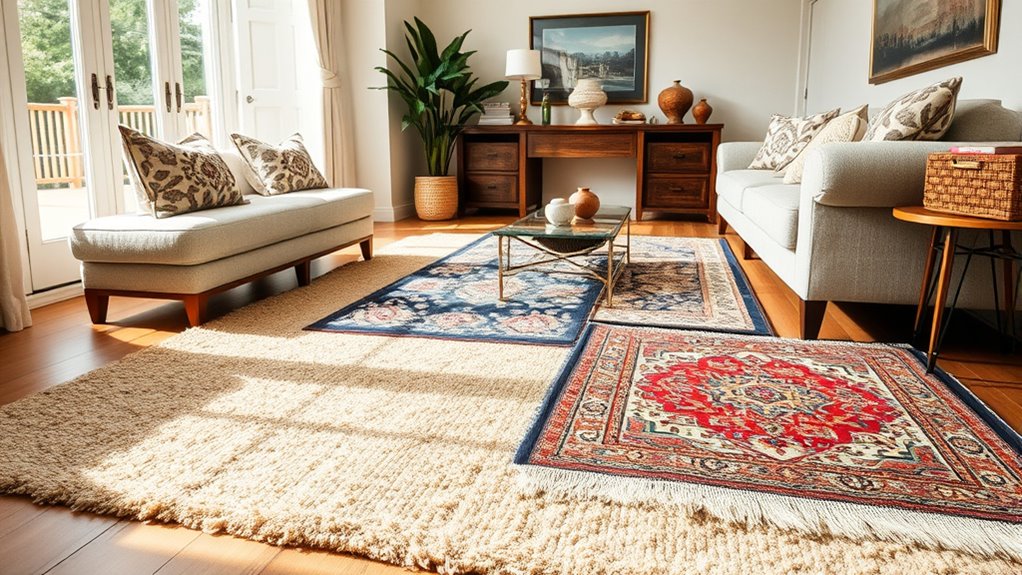
Layering rugs instantly adds depth and personality to any space, transforming a simple room into a cozy, inviting retreat. When you choose to layer rugs, you create a dynamic visual effect that makes your room feel more curated and comfortable. To master this look, you’ll want to pay close attention to textile textures and color coordination. These elements are key to achieving a harmonious yet interesting arrangement that feels intentional and stylish.
Layering rugs adds depth and personality, creating a cozy, curated space with textured interest and thoughtful color harmony.
Start by selecting rugs with varied textile textures. Combining plush, shaggy rugs with flat-weave or jute rugs adds tactile interest and prevents your layered setup from looking flat or monotonous. Think about mixing materials like soft wool with rougher sisal or jute. This contrast not only boosts visual appeal but also invites touch, making your space more inviting. When layering, don’t be afraid to play with texture—this creates a richer, more nuanced look that draws the eye and adds warmth, especially in colder months.
Next, focus on color coordination. The goal is to create cohesion without being overly matchy. Choose rugs within a similar color family or those that complement each other through a shared hue or tone. For example, pairing a neutral beige rug with a patterned one that features subtle hints of the same beige or cream ensures they work well together. Alternatively, you can go for a pop of contrast, such as layering a bold, deep-colored rug over a more subdued base, but make sure the shades still relate to each other. It’s about balancing harmony and visual interest; too many clashing colors can render the layered look chaotic instead of chic.
When arranging your rugs, start with a larger, neutral base rug and layer smaller accents on top. Position the larger rug so it anchors the space, then add smaller rugs at varying angles or overlapping slightly to create a relaxed, layered effect. Keep the edges of the top rugs slightly askew for an effortless, lived-in vibe. Pay attention to how the colors and textures interact—ensure that the layered rugs don’t compete but rather complement each other. This careful coordination enhances the overall aesthetic and makes your space feel thoughtfully designed. Additionally, incorporating rug padding can help keep your layers in place and maintain a polished look over time.
In the end, successful rug layering hinges on your ability to blend textile textures and coordinate colors intentionally. By doing so, you craft a space that’s richly textured, visually appealing, and undeniably cozy. With a little experimentation and attention to detail, you’ll turn your room into a stylish haven that feels both stylish and welcoming.
As an affiliate, we earn on qualifying purchases.
Frequently Asked Questions
How Do I Choose Rug Colors That Complement My Decor?
You should choose rug colors that enhance your decor through smart color coordination. Opt for hues that match or complement your existing palette, like neutrals with pops of color. Incorporate pattern mixing by pairing solid rugs with patterned ones, ensuring the colors tie together seamlessly. This approach creates visual interest and harmony, making your space feel cozy and stylish. Trust your instincts and experiment to find combinations that reflect your unique style.
What Materials Are Best for Layered Rugs?
Imagine you’re layering a plush wool rug over a jute one in your living room. For layered rugs, choose materials with varying rug thickness and durability. Wool provides softness and resilience, while jute adds texture. These materials complement each other, creating a cozy yet durable layered effect. Opt for natural fibers like sisal or cotton as well, balancing comfort and longevity, ensuring your layered rugs stay beautiful through daily wear.
How Can I Prevent Rugs From Slipping When Layered?
To prevent rugs from slipping when layered, you should use the right rug pad options and anti-slip solutions. Place a non-slip rug pad underneath each rug, especially between layers, to keep them secure. You can also apply anti-slip tape or pads to the back of your rugs. This provides extra grip, prevents movement, and keeps your layered look safe and stylish all day long.
What Rug Sizes Work Best for Layering?
Think of your rug setup as a garden—size options matter. You’ll want a larger rug as your base, like a lush lawn, typically 8×10 or 9×12, to anchor the space. Smaller rugs, such as 5×8 or 6×9, act as accents or layers on top. Use layering techniques by varying sizes and textures to create visual interest, ensuring each rug complements the others for a cozy, stylish look.
How Do I Maintain and Clean Layered Rugs?
To maintain and clean layered rugs, vacuum regularly, ideally once a week, to keep dirt and dust at bay without damaging the layers. For stain removal, act quickly—blot spills with a clean cloth and use mild detergent or specialized rug cleaner for stubborn stains. Rotate your rugs periodically to prevent uneven wear, and follow care instructions to preserve their beauty and longevity.
As an affiliate, we earn on qualifying purchases.
Conclusion
By layering rugs thoughtfully, you create a warm, inviting space that beckons you to kick off your shoes and settle in. Imagine the soft textures underfoot, the subtle patterns blending seamlessly, and the cozy atmosphere wrapping around you like a favorite blanket. With each carefully placed rug, you craft a haven that’s both stylish and snug—an oasis of comfort where every step feels like a warm embrace. Your home becomes a sanctuary of texture, color, and charm.
non-slip rug padding for layered rugs
As an affiliate, we earn on qualifying purchases.
As an affiliate, we earn on qualifying purchases.
cozy shaggy rugs for living room
As an affiliate, we earn on qualifying purchases.
As an affiliate, we earn on qualifying purchases.
NFL season / tailgating Picks
team gear
As an affiliate, we earn on qualifying purchases.