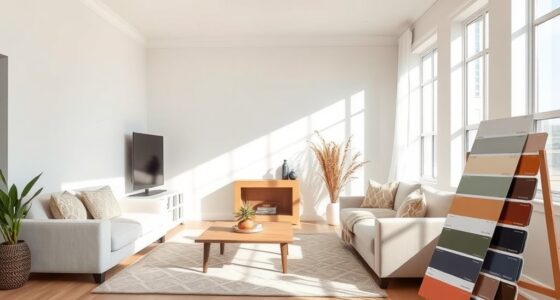
To refresh your space without buying anything new, start by visualizing the mood you want—cozy, bright, or energetic—and experiment with furniture placement. Consider how natural light, color schemes, and lighting influence the vibe, then move pieces to create better flow and focal points. Small tweaks, like shifting a chair or repositioning a lamp, make a big difference. Keep adjusting until your space feels just right—more ideas on transforming your room await below.
Listen free for 30 days with Audible
Thousands of audiobooks and originals — cancel anytime.
As an affiliate, we earn on qualifying purchases.
Key Takeaways
- Envision the desired mood and sketch layout options to visualize new arrangements before moving furniture.
- Consider existing color schemes and lighting to highlight focal points and create a balanced, inviting environment.
- Experiment with furniture placement near windows and lamps to optimize natural light and cozy ambiance.
- Focus on maintaining functionality and flow by adjusting key pieces for easier access and improved room use.
- Make small, deliberate tweaks and step back regularly to assess and refine your setup without purchasing new items.
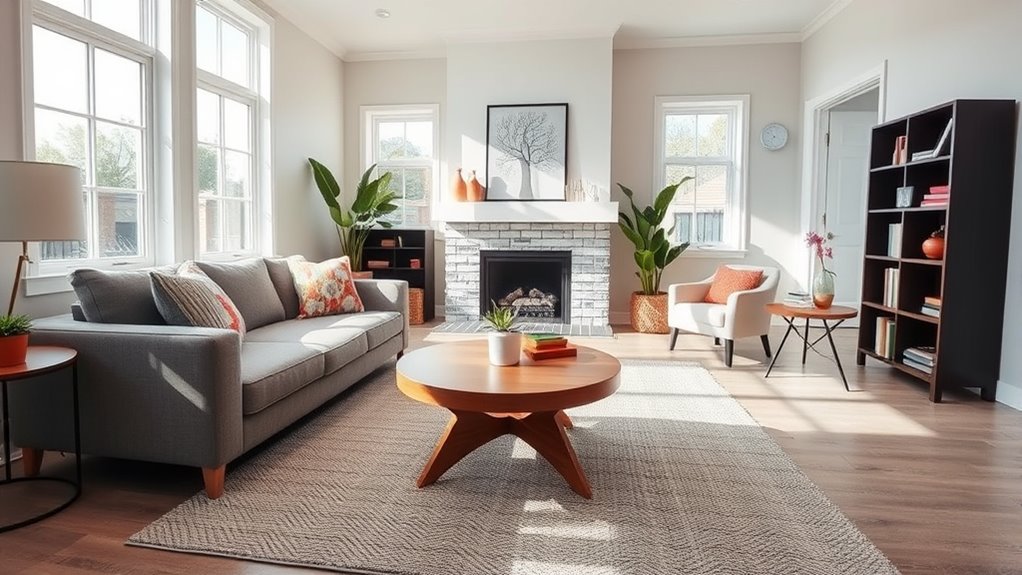
Rearranging furniture can transform a room’s look and feel, but it often feels overwhelming without a clear plan. Before you start shifting pieces around, take a moment to envision the mood you want to create. Think about how different arrangements can influence the room’s overall vibe—do you want it to be cozy and inviting or bright and energetic? Considering your existing color schemes is key; changing furniture placement can highlight certain hues or create new visual focal points. If your walls are neutral, strategically positioning furniture near colorful accents like cushions or artwork can make these elements pop. Conversely, if your room already has bold colors, aim for arrangements that balance or tone down the intensity, perhaps by placing darker furniture against lighter walls.
Rearranging furniture influences mood and highlights colors for a balanced, inviting space.
Lighting options play an essential role in the success of your redecoration. As you experiment with different arrangements, pay attention to how natural light flows through the space. Moving a sofa closer to a window might make the room feel more open and airy during the day, while repositioning a reading chair near a lamp can create a cozy corner for evenings. Incorporate lamps, sconces, or even string lights to enhance the mood and complement your new layout. When you’re adjusting furniture, consider how light interacts with different parts of the room—sometimes, simply shifting a piece can dramatically change the ambiance by emphasizing or softening shadows and highlights.
Start by sketching out your room’s layout on paper or using a digital tool. This helps you visualize the potential arrangements without lifting a finger. Focus on creating clear pathways for easy movement and accessibility, especially if you have a busy household. Experiment with placing your main furniture pieces—such as the sofa, chairs, and tables—in different configurations, keeping in mind how the arrangement affects both functionality and aesthetics. Don’t forget to consider furniture placement, which can significantly influence the room’s flow and overall look. By playing with these elements, you’ll discover new possibilities that refresh your space without spending a dime.
Finally, take your time and step back often. Rearranging is as much about trial and error as it is about intention. Be willing to shift things around until it feels just right. Small adjustments, like changing the angle of a chair or repositioning a side table, can make a big difference in how the room looks and feels. With a thoughtful approach to color schemes and lighting options, you can breathe new life into your space and enjoy a fresh environment that truly reflects your style—no new furniture needed.
As an affiliate, we earn on qualifying purchases.
Frequently Asked Questions
How Can I Create More Space With Existing Furniture?
To create more space with your existing furniture, start by rearranging pieces to maximize open areas and improve flow. Use decorating accents to draw attention upward, making the room feel taller and more spacious. Consider adjusting furniture height or placing multi-functional pieces strategically to free up floor space. Moving larger items against walls or into corners also helps open the center of the room, making it feel larger and more inviting.
What Tools Do I Need for Safe Furniture Moving?
For safe furniture moving, verify your tool checklist includes gloves, a dolly, and moving straps. Follow safety tips like lifting with your legs, clearing pathways, and asking for help. Using the right tools prevents injuries and protects your furniture. Always inspect your tools before starting, and communicate clearly with helpers. With proper tools and safety practices, you’ll move furniture smoothly and safely, avoiding accidents and damage.
How Do I Decide the Best Furniture Layout?
To decide the best furniture layout, start by considering your room’s color coordination and furniture styles. Think about how different pieces complement each other and create a cohesive look. Arrange furniture to maximize space and functionality, keeping pathways clear. Experiment with different configurations until you find one that feels balanced and inviting. Don’t forget to vary furniture styles for visual interest, ensuring your space reflects your personality and suits your needs.
Can Rearranging Furniture Improve Room Lighting?
Think of your room like a stage; rearranging furniture can spotlight natural light and enhance artificial lighting. I once moved a tall bookshelf away from a window, and suddenly, the room glowed with sunlight. By repositioning furniture, you can maximize natural light, reduce shadows, and improve artificial lighting, making your space feel brighter and more inviting without adding anything new. Small changes can make a big difference in your room’s ambiance.
How Often Should I Revisit My Furniture Arrangement?
You should revisit your furniture arrangement every few months or when your decorating style changes. Regular adjustments keep your space lively and functional. It also helps with furniture maintenance by preventing wear in high-traffic areas. As your decorating style evolves, rearranging allows you to refresh your space without buying new pieces. Staying flexible with your layout guarantees your room remains comfortable, stylish, and well-maintained over time.
multi-purpose floor plan sketchpad
As an affiliate, we earn on qualifying purchases.
As an affiliate, we earn on qualifying purchases.
Conclusion
You might think rearranging furniture won’t make much difference, but it truly can refresh your space without spending a dime. Don’t let the idea that only new decor can transform your home hold you back. With a little creativity and effort, you’ll find that moving things around creates a fresh vibe and makes your space feel new again. So go ahead—give it a try, and enjoy the surprising results!

Lepro LED Desk Lamp for Home Office, 9.5W 750LM Touch Desk Light, Black
- Lighting Modes: 5 modes with 5 brightness levels
- Eye Care Lighting: Frosted shade reduces flicker
- Space-Saving Design: Sleek and minimalist for any desk
As an affiliate, we earn on qualifying purchases.
As an affiliate, we earn on qualifying purchases.
decorative throw pillows for sofa
As an affiliate, we earn on qualifying purchases.
As an affiliate, we earn on qualifying purchases.
Fall Picks
fall essentials
As an affiliate, we earn on qualifying purchases.