
TL;DR

Get furniture and decor delivered free with Prime
- Fast, free delivery on millions of items
- Prime Video, Amazon Music and more included
- Member-only deals all year
A Hunker report describes a DIY bird feeder made from a repurposed glass jar, wooden spoon, wire and jute. The spoon serves as a perch, while the jar holds seed; the report also recommends regular cleaning and careful placement near windows.
Hunker has outlined a DIY bird feeder made from a repurposed glass jar and a wooden spoon, with the spoon fixed along the jar to provide a perch. The project offers a way to reuse household materials, while the report stresses that feeder placement and regular cleaning matter for birds’ safety and upkeep.
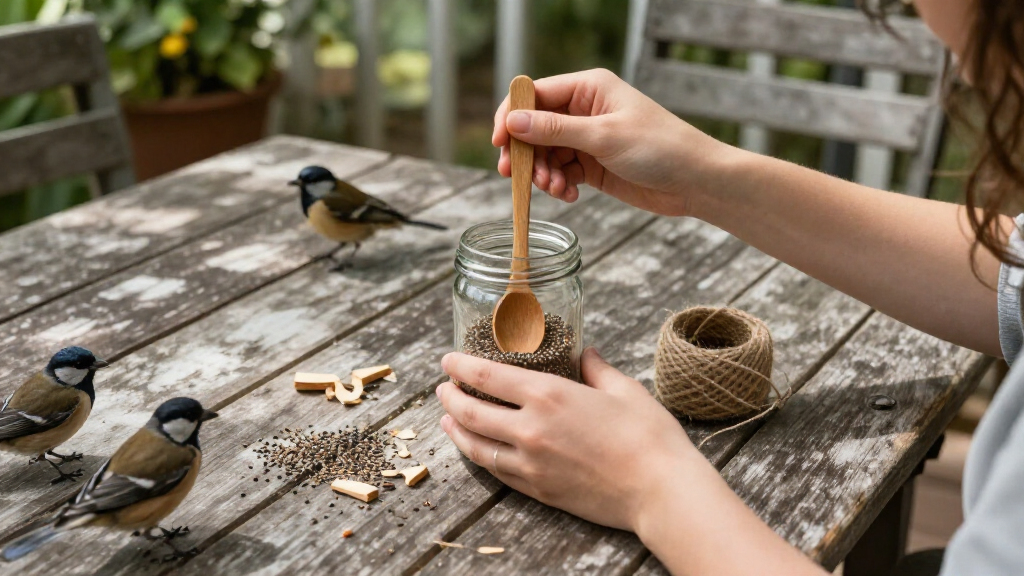
The design uses a Mason jar or another glass food jar as the seed container. A wooden spoon is attached lengthwise, with its bowl extending beyond the jar’s open end so a bird can perch while feeding. Garden wire wrapped around the top and bottom of the jar helps hold the spoon in place, according to the Hunker instructions.
The listed materials also include jute, bendable aluminum wire and decorative wooden beads, along with a glue gun, scissors, paint brushes and paint suitable for glass. The report describes wrapping jute around the garden wire and using aluminum wire and beads to make a hanging handle. Once the paint and adhesive are dry, the jar can be filled with bird seed and hung from a hook.
Hunker says the feeder can be useful in a compact outdoor area and can be left outside year-round, but advises cleaning it regularly, particularly when colder weather brings more birds to feeders. Its suggested placement is either within three feet of a window or 30 feet away, rather than at an intermediate distance, to reduce the risk of bird collisions. The report also recommends nearby native plants and trees that can provide birds with shelter.
Reuse Materials, Mind Bird Safety
The project combines household reuse with a practical feeding station, but its value depends on more than appearance. A feeder that is accessible and maintained can offer birds a source of seed; a dirty feeder or a poorly chosen location may create problems instead. Hunker specifically highlights recurring cleaning and window placement, making those care steps part of the project rather than optional finishing details.
The jar-and-spoon format may suit small yards, patios or other limited spaces, though the source does not provide measurements, capacity figures or evidence comparing it with commercial feeders. The design is presented as a DIY option, not as a tested product or a guarantee that birds will visit. The type of seed, local bird species and conditions around the hanging spot can all affect how useful it is.
Products Worth Considering

Arlo Pro Wireless Security Camera, 2K HDR, 6th Generation, 4-Camera Kit

Coway Mighty AP-1512HH(W) Air Purifier, White

Philips Hue White and Color Ambiance Smart Light Starter Kit with Bridge and 4 A19 Bulbs
As an affiliate, we earn on qualifying purchases.
How the Jar Feeder Is Built
The instructions begin by fixing the spoon to the side of the jar, with the spoon bowl extending past the opening. Wire secures the spoon at two points, after which jute is attached around the wire for a decorative finish. The handle is assembled from bendable aluminum wire and wooden beads, and glass-safe paint can be used to decorate the container.
Hunker credits Anna King of makinghomematters with demonstrating the DIY. The article frames the feeder as a way to reuse a Mason jar or food jar and notes that feeding birds may be especially useful in winter, when food sources can be limited. It does not give a build time, a specific jar size, a prescribed seed blend or detailed instructions for how much adhesive to use.
“The wooden spoon “acts as a perch for birds.””
— Hunker report
Build Details Still Unspecified
The source does not report whether the design has been independently tested, how much seed the jar holds or how long the adhesive and wire remain secure outdoors. It also does not specify exact dimensions, a particular bird seed or a cleaning method. The instructions call for regular cleaning but do not set a schedule, which may depend on weather, use and local conditions.
There is no reported data on how many birds use this feeder or whether paint color changes visitation. Hunker suggests that color may encourage birds to return, but the supplied material does not cite research supporting that claim. Readers should treat the project as a household DIY design, not as a verified wildlife-care standard.
Prepare and Maintain the Feeder
Anyone making the feeder can follow the listed assembly steps, then wait for paint and glue to dry fully before adding seed and hanging it. The source advises choosing a location at one of the stated distances from a window, with nearby plants or trees where birds can seek cover.
After installation, the next task is ongoing maintenance: check the feeder and clean it regularly, with particular attention during colder periods when more birds may visit. The report provides no monitoring results or future product update; whether birds use a particular feeder will depend on its setting, available seed and local wildlife.
Key Questions
What materials are needed for the jar bird feeder?
The Hunker instructions list a glass jar, wooden spoon, garden wire, jute and bendable aluminum wire, plus two decorative wooden beads. They also call for a glue gun, scissors, paint brushes, glass-suitable paint and bird seed.
How does the wooden spoon work in the design?
The spoon is attached lengthwise to the jar, with its bowl projecting beyond the open end. That bowl serves as a perch beside the seed opening, according to the report.
Where should the feeder be placed near a window?
Hunker recommends placing it within three feet of a window or 30 feet away to help reduce collision risk. The source does not give other placement measurements.
Does the feeder need regular cleaning?
Yes. The report says to clean the feeder regularly, especially when colder weather brings more birds to it. It does not specify a cleaning interval or method.
Will painting the jar attract more birds?
Hunker suggests choosing a colorful paint that may encourage birds to return, but the supplied report provides no research or test results showing that color changes visitation.
Source: hunker.com