
TL;DR

Get furniture and decor delivered free with Prime
- Fast, free delivery on millions of items
- Prime Video, Amazon Music and more included
- Member-only deals all year
Ideal Home has published six practical recommendations for drying laundry indoors while limiting moisture build-up: remove more water in the wash, space garments out, improve airflow and manage humidity. The advice includes using a heated airer or dehumidifier where suitable, but the source does not present these steps as a guarantee against damp or mould.
Ideal Home has published six recommendations for people drying laundry indoors during cold or wet weather, focusing on reducing water in clothes and helping moisture leave the room. The advice matters because wet washing releases moisture indoors, which can contribute to condensation when ventilation and moisture removal are limited; the article does not claim that following its tips will prevent damp or mould in every home.
The report recommends running an extra spin cycle before hanging clothes, provided the machine’s spin speed is suitable for the items. It says this can be especially useful for heavier fabrics such as towels, jeans and bedding, which may retain more water. Less water left in the load can mean less moisture released as clothes dry.
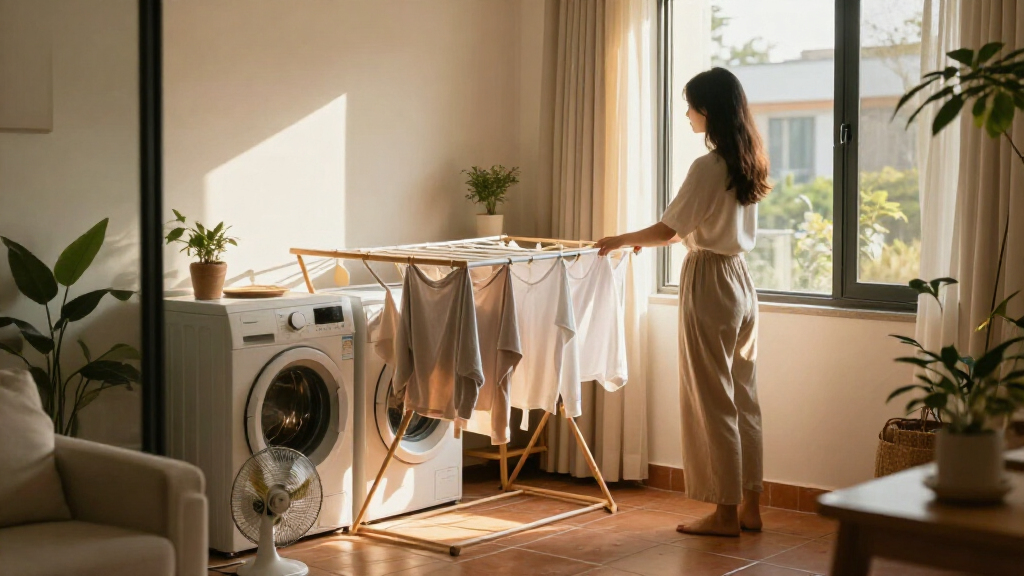
It also advises leaving space between garments on the airer so air can circulate. Sleeves should be spread out, shirts opened and trouser legs kept from overlapping. Lauren Roelofs, a laundry expert at Brabantia, says avoiding an overcrowded rack is a simple way to help clothes dry more evenly. For heavier items, she recommends turning them halfway through drying to reduce damp patches.
The other recommendations are to use a heated clothes airer if useful, pair the drying area with a dehumidifier, position the airer away from walls and ventilate the room. Lakeland buying lead Catrin Parry says a dehumidifier can remove excess moisture from the air, while a heated airer helps dry clothes. The source’s sixth point is to ventilate, though the supplied text cuts off before giving its full explanation.
Managing Moisture During Indoor Drying
Indoor drying can add water vapour to a home, particularly when several loads are drying in a small or poorly ventilated room. That makes the advice relevant to households without outdoor drying space or a tumble dryer, and to people trying to limit the conditions that can lead to condensation and damp.
The recommendations address different parts of the problem: a stronger spin reduces water in the laundry, spacing and placement support airflow, and ventilation or a dehumidifier can help manage moisture in the room. These are practical measures, not a substitute for finding and addressing persistent damp. The source gives no test results showing how much each step reduces humidity or mould risk.
Products Worth Considering

Dyson W1 PencilWash Cordless Wet and Dry Floor Cleaner with Dock

LEVOIT Vital 200S-P Smart Air Purifier for Large Rooms

Samsung 75-Inch M80H Series Mini LED 4K Smart TV (2026)
As an affiliate, we earn on qualifying purchases.
Why Laundry Adds Indoor Moisture
The Ideal Home report frames the advice around cold and wet weather, when drying washing outdoors may be difficult. It notes that indoor airers are often used by people who do not have a tumble dryer or are concerned about the cost of running one.
The article also distinguishes between drying clothes and removing moisture from a room. A heated airer may help garments dry, but the report says it does not itself remove moisture released into the air. Its recommended combination of air circulation, ventilation and dehumidification reflects that distinction. The source includes product examples, but the core advice is about drying habits and room conditions.
“One of the simplest ways to speed things up is to avoid overcrowding your drying rack. Leaving space between garments allows air to circulate, helping clothes dry more evenly.”
— Lauren Roelofs, laundry expert at Brabantia
Limits of the Indoor Drying Advice
The supplied source text ends partway through its sixth recommendation, on ventilating the room. It does not provide the full explanation or the complete list in the original article, so the precise wording and any further detail on ventilation cannot be confirmed from the material provided.
The report also does not quantify the effect of each recommendation, specify ideal humidity levels or establish that any one measure prevents mould. Outcomes will depend on factors such as the room, weather, ventilation, load size and building condition. Persistent condensation or visible mould may have causes beyond laundry drying, which this advice does not assess.
Practical Steps for the Next Load
For the next indoor load, the report’s suggestions are to use a suitable extra spin, spread clothes across the airer and leave room for air to move around it. Keep the rack slightly away from walls, and consider ventilation or a dehumidifier where appropriate. A heated airer is another option, but the source cautions that it does not remove room moisture by itself.
Readers seeking the full sixth tip or the article’s product recommendations would need to consult Ideal Home’s original report. The supplied material gives no announced follow-up or further milestone.
Key Questions
What is the main advice for drying clothes indoors?
Reduce water and improve airflow: the report recommends an extra spin when suitable, spacing clothes out, positioning the airer well, and managing moisture through ventilation or a dehumidifier.
Does a heated clothes airer remove moisture from the room?
No. The report says a heated airer helps dry clothes, but does not remove moisture released into the air. It recommends pairing an airer with a dehumidifier to remove excess room moisture.
Why leave space between clothes on a drying rack?
Space allows air to circulate, which the report says can help garments dry more evenly. It also recommends spreading out sleeves and avoiding folded-over trouser legs.
Does the source provide all six recommendations?
The supplied text gives five detailed recommendations and begins a sixth about ventilating the room, but it cuts off before the explanation is complete.
Source: idealhome.co.uk