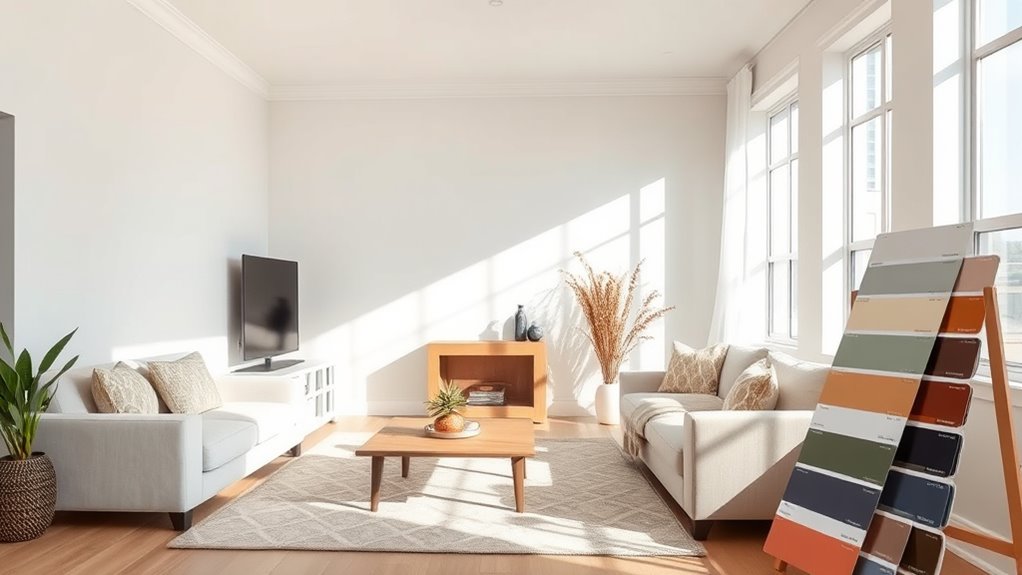

To avoid surprises with your wall color, it’s essential to understand undertones and how lighting affects them. Look at paint swatches in different settings and at various times to see how their subtle hues change. Check for warm or cool tones that match your decor and desired mood. By paying attention to undertones early on, you can choose colors that stay true to your vision. Keep exploring, and you’ll discover more tips to perfect your color selections.
Key Takeaways
- Test paint swatches in your room under different lighting conditions to reveal true undertones.
- Match undertones with existing decor and furniture for a cohesive look.
- Identify if the undertone is warm or cool to select colors that create your desired mood.
- Observe how natural and artificial light affect the color to avoid surprises after painting.
- Consider the color’s temperature and undertone to ensure it complements your space and vision.
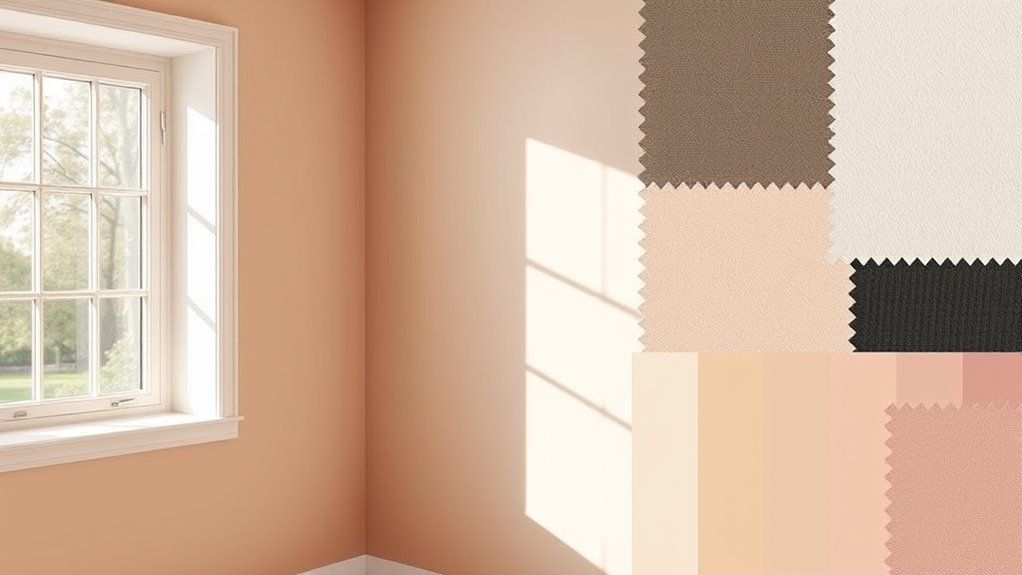
Have you ever struggled to find the perfect wall color because it looks different on the swatch than on your wall? If so, you’re not alone. Many people discover that colors can appear entirely different once applied, mainly because of undertones. Understanding paint undertones is essential for choosing shades that truly match your vision. One of the first steps is grasping the concept of color temperature. Colors are broadly categorized as warm or cool based on their undertones. Warm colors, like yellows, reds, and oranges, tend to make a space feel cozy and inviting. Cool colors, such as blues, greens, and purples, often create a calming, invigorating atmosphere. Recognizing this difference helps you narrow down your options and avoid surprises when the paint dries. Additionally, understanding the impact of lighting conditions on undertones can prevent color mismatches. Next, focus on undertone identification. Every color has a subtle hue beneath its main shade, which can influence how it interacts with your room’s lighting and existing decor. For example, a gray paint might have a blue undertone that makes it appear cooler or a beige undertone that lends warmth. To identify undertones accurately, you need to observe how the paint looks in various lighting conditions—natural light during the day versus artificial light at night. Holding a paint swatch against your wall and examining it in different settings can reveal its true undertone. Sometimes, the undertone is not immediately obvious, so it’s helpful to look at the color alongside other items in your room, like furniture or curtains, to see if it complements or clashes. Another tip is to test small samples before committing to a full gallon. Paint a large swatch on your wall, and check it at different times of the day. This allows you to see how the color’s undertone behaves with the room’s lighting and surrounding colors. When selecting a paint, pay attention to the undertone identification process—try to match it with your existing decor or desired mood. If you’re aiming for a warm, inviting space, choose colors with warm undertones. If you prefer a cool, tranquil environment, opt for shades with cool undertones. Being aware of color temperature helps you make more informed choices and ensures your wall color aligns with your overall design goals. Ultimately, understanding color temperature and undertone identification empowers you to pick wall colors that won’t surprise you once they’re on your wall. By paying close attention to these details, you ensure your chosen shade stays true to your vision and creates the ambiance you desire. Recognizing the subtle differences in undertones saves you time, money, and frustration, making the entire painting process more enjoyable and stress-free.
Frequently Asked Questions
How Do Undertones Affect Paint Durability Over Time?
Undertones don’t directly impact paint longevity, but they influence color consistency over time. If your chosen undertones clash with your lighting or environment, the paint may appear uneven or dull faster, making it seem like it’s not lasting. To guarantee color consistency and enhance paint longevity, pick shades with undertones that complement your space. Proper preparation and quality paint also help maintain vibrant, consistent color over the years.
Can Lighting Change How Undertones Appear on Walls?
Lighting effects and color temperature can definitely change how undertones appear on your walls. When you switch between warm and cool lighting, the undertones might look different, making colors seem warmer, cooler, or even more neutral. You should test your paint samples under various lighting conditions to see how they change throughout the day. This way, you’ll choose colors that look great in your specific lighting and avoid surprises.
Are Certain Undertones Better for Small or Large Rooms?
Certain undertones work better for small or large rooms because they influence color harmony and visual balance. Light, cool undertones like soft blues or greens make small rooms feel more spacious and open, while warm, deep undertones such as rich browns or reds add coziness to large spaces. Choose undertones that complement your room’s size to create a balanced, inviting atmosphere that enhances the overall design.
How Do I Match Undertones With Existing Furniture or Decor?
Imagine your furniture and decor as a vibrant garden, waiting to harmonize. To match undertones, consider complementary color schemes that highlight your pieces’ hues. Look at textures and finish options to add depth and cohesion, ensuring your walls enhance rather than clash. You’ll create a seamless flow, making your space feel intentional and inviting. Trust your eye to find undertones that naturally sync, transforming your room into a beautifully coordinated sanctuary.
What Tools Can I Use to Identify Undertones Accurately?
You can use color matching tools like a colorimeter or digital color sensors to identify undertones accurately. Additionally, consult undertone guides available online or in paint stores, which help you compare your existing furniture or decor colors with paint options. These tools and guides make it easier to match undertones, ensuring your wall colors complement your space seamlessly and avoid surprises when you select new paint.
Conclusion
By mastering paint undertones, you hold the key to transforming your space into a harmonious haven. Think of choosing wall colors like selecting the perfect melody for a song—you want every note to blend seamlessly. When you understand undertones, your walls won’t surprise you; instead, they’ll whisper the story you want your home to tell. So, trust your instincts and let your color choices dance effortlessly in perfect harmony.