
To decorate a combined living/dining space, define zones with furniture placement and large rugs that anchor each area. Use cohesive color schemes, matching textures, and artwork to create visual harmony. Maximize storage with multi-functional furniture and vertical shelves to keep clutter hidden. Incorporate flexible pieces like extendable tables and layered lighting to enhance flow and comfort. Personalize each zone with decor that reflects your style, and continue exploring how strategic touches can transform your space.
Key Takeaways
- Use furniture arrangement and rugs to define zones while maintaining visual cohesion.
- Choose neutral color palettes and matching decor to create harmony across living and dining areas.
- Incorporate hidden and multi-functional storage solutions to keep the space organized and clutter-free.
- Utilize layered lighting and adaptable furniture to enhance comfort and flexibility in each zone.
- Add personalized artwork and decor to unify the space and reflect individual style.
Define Zones With Furniture Placement and Rugs
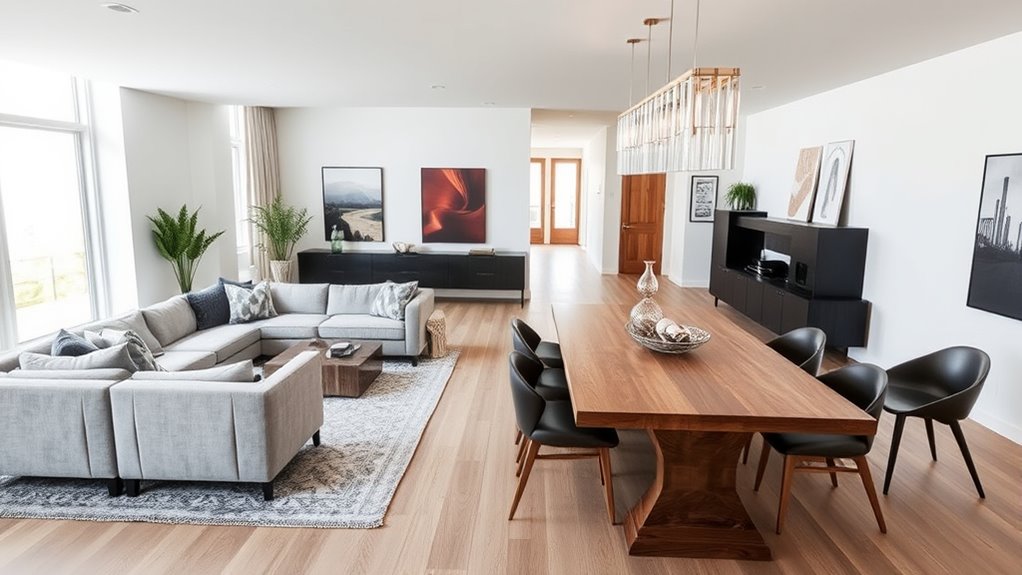
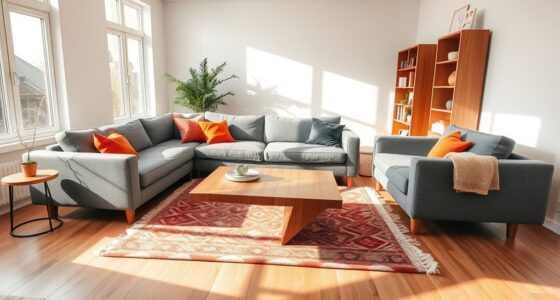
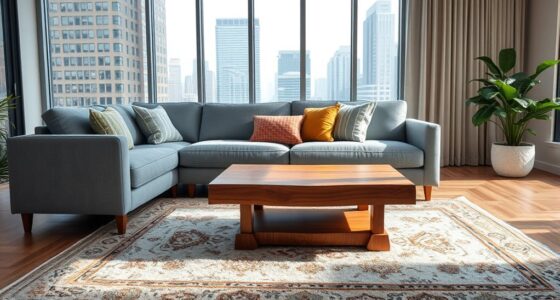
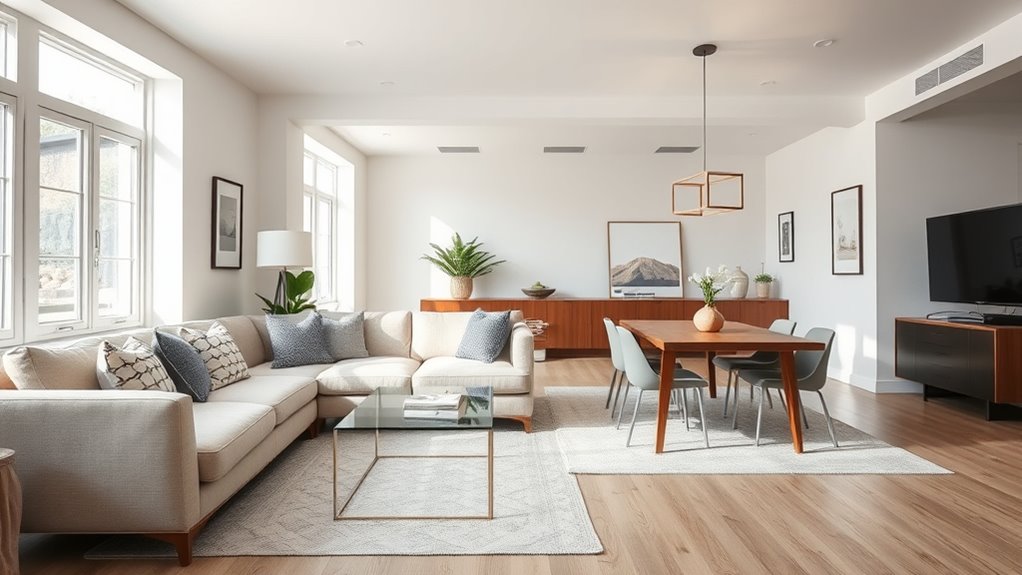
To effectively define zones in an open floor plan, start by carefully arranging furniture to create natural boundaries. Focus on strategic furniture arrangement, placing sofas and chairs to form intimate seating areas. Use area rugs to anchor each zone, providing visual separation without walls. For example, position a large rug under your living room seating to distinguish it from the dining space. Make certain furniture placement promotes easy movement and conversation flow. Avoid cluttering each zone; keep the arrangement functional and inviting. Play with different rug sizes and shapes to emphasize specific areas. Additionally, incorporating precise furniture placement can greatly enhance the clarity and functionality of each zone. Properly zone planning with thoughtful furniture positioning and selecting appropriate area rugs helps establish clear, functional zones that enhance your open floor plan’s overall design and usability. Incorporating spatial awareness into your layout can further optimize the flow and balance between different zones. Considering smart home automation can also support zone management by adjusting lighting and climate to suit each area’s use.
Use Cohesive Color Schemes and Textures
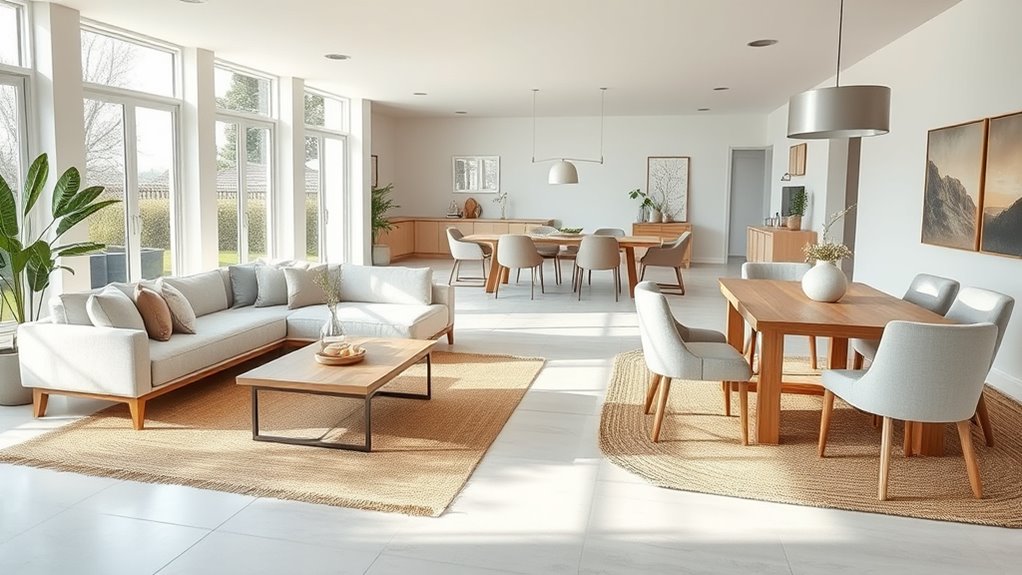
Using a cohesive color scheme and consistent textures ties your open floor plan together, making each zone feel connected yet distinct. Choose a neutral color palette for walls and larger furniture, then add decorative accents like cushions, throws, or curtains in matching tones. Incorporate wall art with similar hues to unify the space visually. Textures also matter—mix sleek surfaces with cozy fabrics to create depth without clutter. To help visualize, here’s a quick comparison:
| Zone | Color & Texture Approach |
|---|---|
| Living Area | Soft, neutral tones with plush textiles and bold wall art |
| Dining Area | Coordinating colors, smooth wood surfaces, and decorative accents |
| Transition Zone | Subtle color shifts, varied textures, and complementary wall art |
Additionally, implementing visual harmony through these elements enhances the overall flow of your open layout.
Maximize Storage Without Cluttering
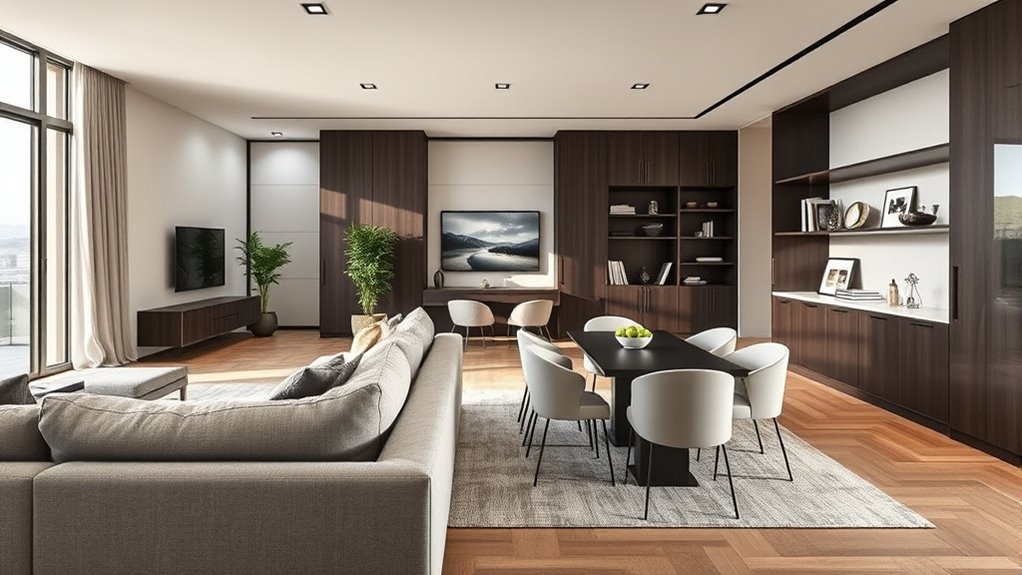
A cohesive color scheme and consistent textures create a unified look, but they can also make a space feel crowded if storage isn’t thoughtfully integrated. To avoid this, look for hidden storage options that blend seamlessly into your decor, like ottomans with compartments or built-in shelves. Multi-purpose furniture is a game-changer; choose items like beds with drawers or coffee tables with storage to keep clutter out of sight. Vertical storage solutions, such as wall-mounted shelves or tall cabinets, also maximize space without sacrificing style. Keep surfaces clear by storing seldom-used items out of sight, maintaining a clean, open feel. Incorporating simple storage solutions can further enhance organization without adding visual clutter. Additionally, understanding Youngster Choice can inspire creative ways to keep personal belongings organized and out of sight. For example, using multi-functional furniture can serve multiple purposes and save space. With smart choices like hidden storage and multi-purpose furniture, you’ll keep your open floor plan functional and inviting without the chaos.
Incorporate Flexible and Multi-Functional Pieces
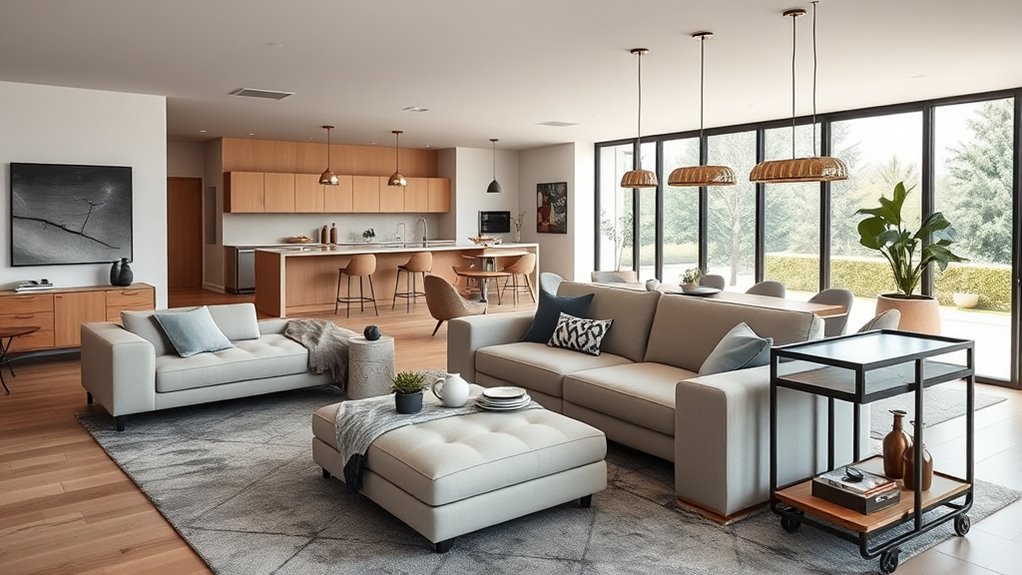
Incorporating flexible and multi-functional pieces into your open floor plan allows you to maximize space and adapt to your changing needs. Multi-purpose furniture, like a sofa bed or extendable dining table, helps you save room while maintaining style. Adaptable storage solutions, such as ottomans with hidden compartments or wall-mounted shelves, keep clutter at bay without sacrificing aesthetic appeal. These pieces offer versatility, enabling you to transform your space easily for different activities or guests. When choosing multi-functional furniture, prioritize quality and ease of use, so your home remains functional and inviting. Additionally, selecting ambient-light‑friendly furniture and screens can enhance your space’s versatility for entertainment and daily activities. Incorporating space-saving features can further optimize your layout and improve overall flow. By integrating adaptable storage options, you ensure your open floor plan stays organized and flexible, creating a seamless, stylish environment that adjusts effortlessly to your lifestyle.
Enhance Flow With Lighting and Visual Cues
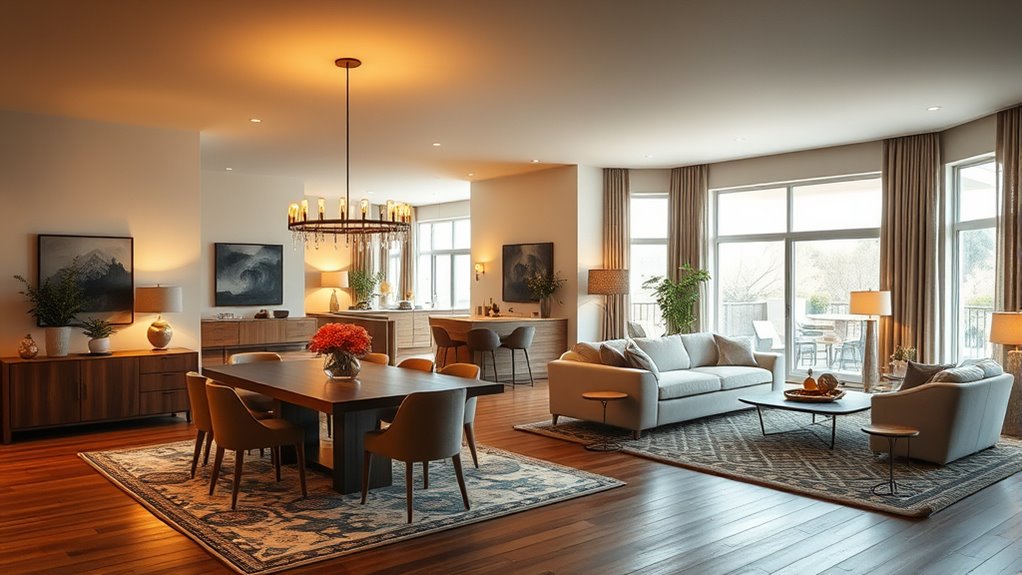
To improve flow, use layered lighting to create different zones and highlight key areas. Coordinate colors and decor to guide the eye smoothly from one space to another. Employ spatial zoning techniques to define distinct functions without disrupting the open feel. Incorporating smart appliances can further enhance functionality and visual cohesion within the space.
Layered Lighting Strategies
Layered lighting creates a dynamic and inviting atmosphere in open floor plans by using multiple light sources at different levels. Incorporate an ambient glow to softly illuminate the entire space, making it feel warm and cohesive. Add task illumination in specific areas like the kitchen counter or dining table to provide focused light where you need it most. Use ceiling fixtures, wall sconces, and table lamps strategically to differentiate zones without disrupting flow. This layered approach enhances functionality while guiding the eye naturally through the space. You can also adjust lighting intensity to match different activities, creating a seamless progression from lively gatherings to cozy evenings. Incorporating layered lighting strategies helps optimize both functionality and visual appeal, making your open floor plan visually appealing and practical. Additionally, selecting appropriate lighting fixtures that complement your decor style can further elevate the overall ambiance and ensure a cohesive look throughout your space. To maximize efficiency and safety, consider integrating lighting controls such as dimmers and smart switches to easily modify lighting levels as needed.
Color Coordination Techniques
Using color coordination alongside lighting enhances the flow and cohesion of your open floor plan. Start with a harmonious color palette that unifies your space, choosing shades that complement each other and create visual harmony. When selecting your palette, consider the mood you want to evoke and how different colors interact under various lighting conditions. Incorporate consistent color schemes across furniture, walls, and decor to establish a seamless transition between zones. Use lighting to accentuate your chosen colors, highlighting key areas with warm or cool tones that enhance the palette selection. This combination of coordinated colors and strategic lighting guides the eye naturally through the space, making it feel connected and inviting. Additionally, understanding how paint finishes influence the appearance of colors under different lighting can help you achieve the desired visual effect. Effective color harmony guarantees your open floor plan remains visually balanced and cohesive.
Spatial Zoning Methods
Effective spatial zoning in an open floor plan relies on strategic lighting and visual cues to define distinct areas. Use layered lighting—such as pendant lights over the dining zone and softer lamps in the living area—to create separation without walls. Incorporate acoustic treatments like soft rugs or wall panels to reduce noise overlap and subtly signal different zones. Privacy screens or open shelving units serve as visual dividers, giving each space its own identity while maintaining flow. These elements guide your eye and movement naturally, making the space feel cohesive yet functional. By combining lighting, acoustic treatments, and visual cues like privacy screens, you enhance comfort and clarity, ensuring each zone is both inviting and purpose-driven.
Personalize Each Area to Reflect Your Style
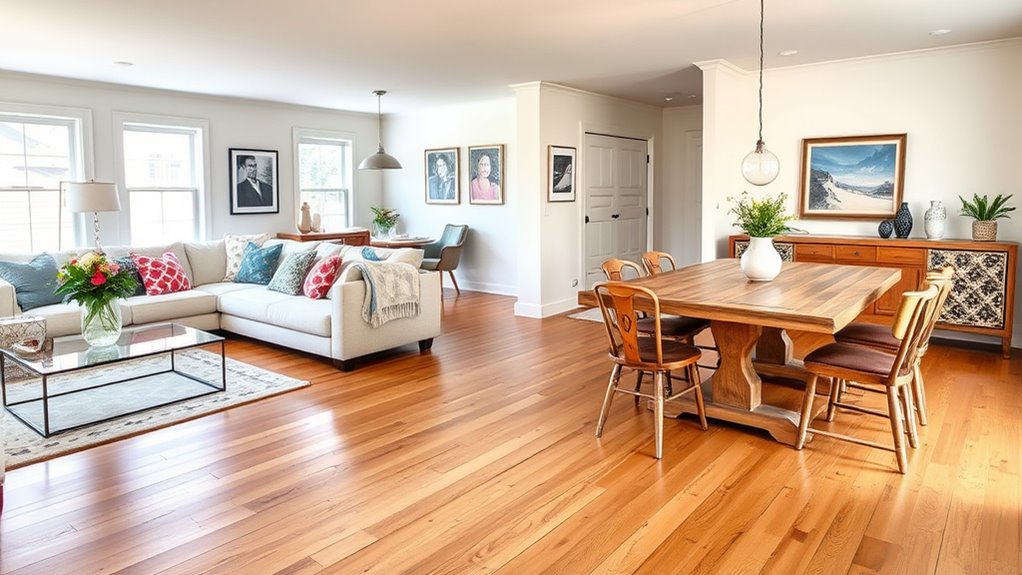
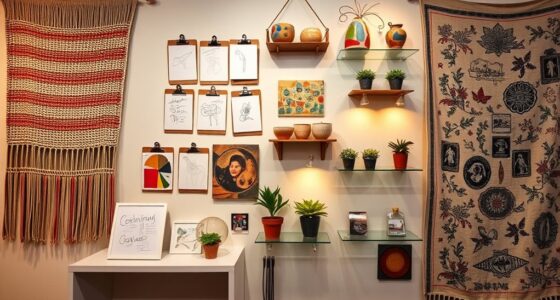
To truly make your open floor plan feel like home, each area should showcase your unique style. Thoughtful artwork placement adds personality and can unify spaces without cluttering. Use decorative accessories to reflect your interests and tie the room’s look together. For example, a collection of throw pillows or vibrant vases can highlight your personality. Incorporating personalized decor can further enhance the individuality of each space. Additionally, selecting furniture with multi-functional features maximizes practicality while maintaining style. Incorporating smart energy management solutions can also help optimize comfort and efficiency throughout your open layout, creating a more cohesive living environment. Being mindful of cookie preferences ensures your experience remains tailored and respects your privacy.
Frequently Asked Questions
How Can I Create Distinct Zones Without Physical Barriers?
To create distinct zones without physical barriers, focus on area division through furniture placement and rugs. Use a sofa or a bookshelf to visually separate the living and dining spaces, establishing clear boundaries. Incorporate different lighting or color schemes to enhance visual separation. By thoughtfully arranging furniture and accessories, you can define each zone while maintaining an open, cohesive feel, making your space both functional and inviting.
What Are the Best Ways to Unify Different Style Elements?
A house divided against itself cannot stand, so unify your space by focusing on color coordination and artwork selection. Choose a cohesive color palette that flows throughout both areas, tying different styles together. Incorporate artwork with complementary tones and themes to create harmony. Mixing styles is fine, but guarantee your artwork and colors echo each other, making your space feel intentional and connected rather than disjointed.
How Do I Choose the Right Rugs for Zoning?
To choose the right rugs for zoning, start with your area rugs, selecting sizes that define each space without overwhelming it. Consider pattern mixing to add visual interest—pair a solid rug in one zone with a patterned one in another for contrast. Focus on color coordination with your overall decor, and guarantee rugs are durable and easy to clean, so they stay beautiful while clearly marking each zone.
Which Multi-Functional Furniture Works Best for Small Spaces?
You should choose multi-functional furniture like convertible sofas and storage ottomans for small spaces. Convertible sofas easily transform from a couch to a bed, maximizing your seating and sleeping options without taking up extra room. Storage ottomans serve as both footrests and hidden storage, helping keep clutter out of sight. These pieces make your space more versatile and functional, ensuring you get the most out of limited square footage.
How Can Lighting Improve the Overall Coherence of the Space?
Lighting enhances your open space by creating a cohesive look. Use ambient lighting to guarantee the entire area is well-lit and inviting, making it feel unified. Statement fixtures, like a bold chandelier or unique pendant lights, draw attention and add personality, tying the zones together visually. Proper lighting improves flow, highlights key areas, and makes your combined living and dining space feel harmonious and well-designed.
Conclusion
Balancing openness with coziness is your secret in a combined living and dining space. By defining zones, you create structure amidst the flow, while personal touches add warmth to the sleek design. Think of it as a dance—each element moving in harmony yet standing out. When you blend functional furniture with thoughtful decoration, you craft a space that feels both spacious and inviting. Ultimately, it’s about making your home a canvas of organized chaos and personal charm.