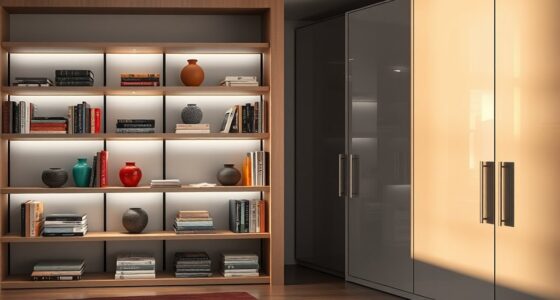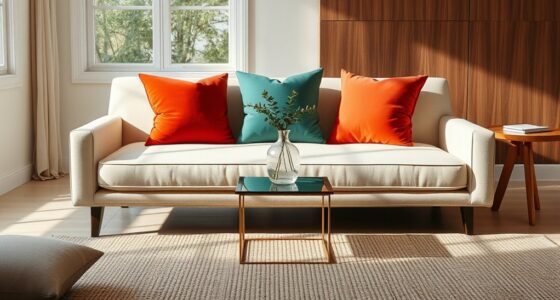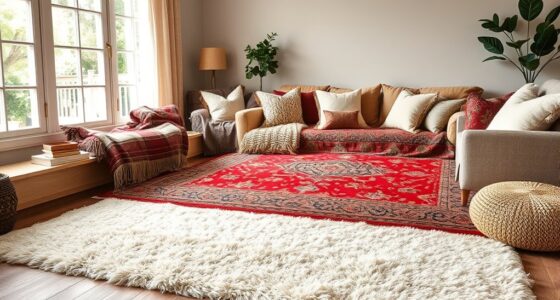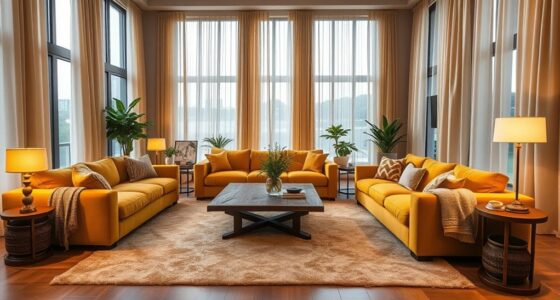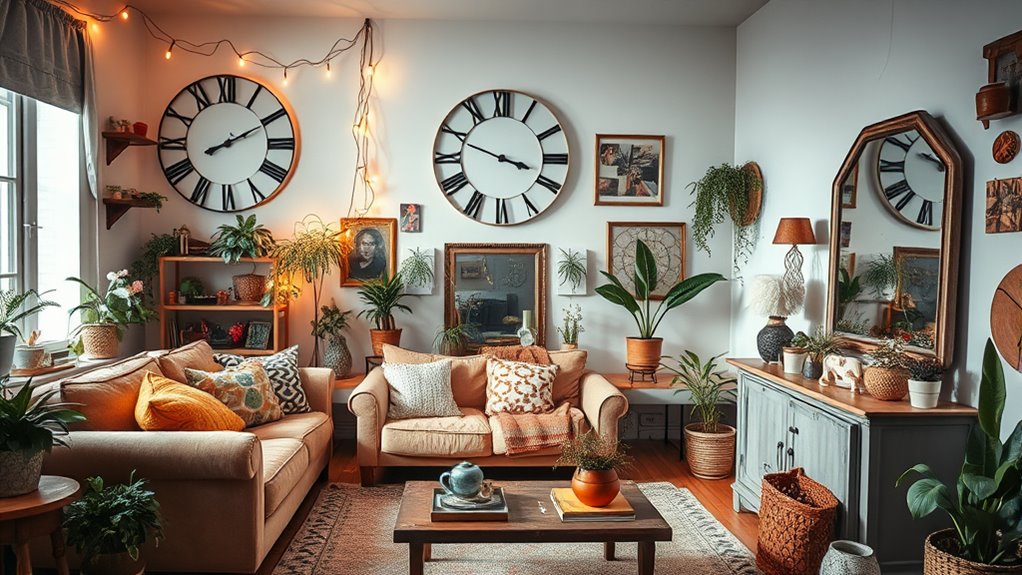
To avoid common home decor mistakes, steer clear of overcrowding your space with too much furniture and decor, which creates chaos. Pay attention to lighting by layering sources to add warmth and depth. Choose colors that complement each other and match your style, and guarantee furniture and materials suit the room’s scale and purpose. Maintain a cohesive theme, optimize practicality, and don’t rely solely on trendy items. Keep surfaces clutter-free for a harmonious, inviting home—continue for even more helpful tips.
Key Takeaways
- Avoid overcrowding surfaces and rooms with excessive furniture and decor to prevent visual clutter and maintain a spacious feel.
- Layer lighting with ambient, task, and accent sources to create warmth and depth, rather than relying solely on flat illumination.
- Choose furniture and materials that match the scale of your space and are durable for long-term comfort and style.
- Incorporate personal touches and cohesive color schemes to add warmth and harmony, avoiding sterile or chaotic environments.
- Prioritize practical storage and organization solutions to keep spaces functional, accessible, and free of clutter.
Overcrowding Your Space With Furniture and Decor
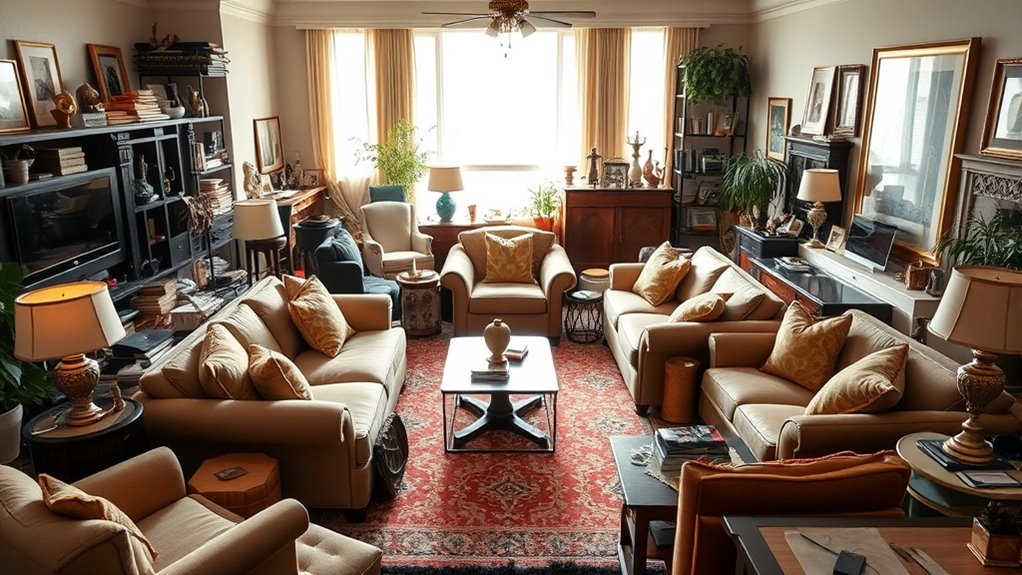
Overcrowding your space with furniture and decor can make even a large room feel cramped and chaotic. When planning your furniture arrangement, avoid filling every inch; instead, leave enough open space to breathe. Too many pieces can block pathways and hinder movement, creating a cluttered atmosphere. Similarly, piling on decorative accessories without restraint adds visual noise and distracts from your overall design. Focus on selecting a few statement pieces that complement each other and serve a purpose. Use furniture and decor intentionally, ensuring each item enhances the room without overwhelming it. Remember, less is often more. A well-balanced layout with strategic placement of furniture and carefully chosen accessories will make your space feel inviting, spacious, and calming. Additionally, understanding space planning principles can help optimize your room’s layout for both functionality and aesthetics. Being mindful of visual balance can further prevent clutter and promote a cohesive look, making your home feel more serene and organized. Incorporating furniture placement techniques can guide you in arranging items harmoniously across the room and improve overall spatial efficiency.
Ignoring Proper Lighting and Layering Light Sources
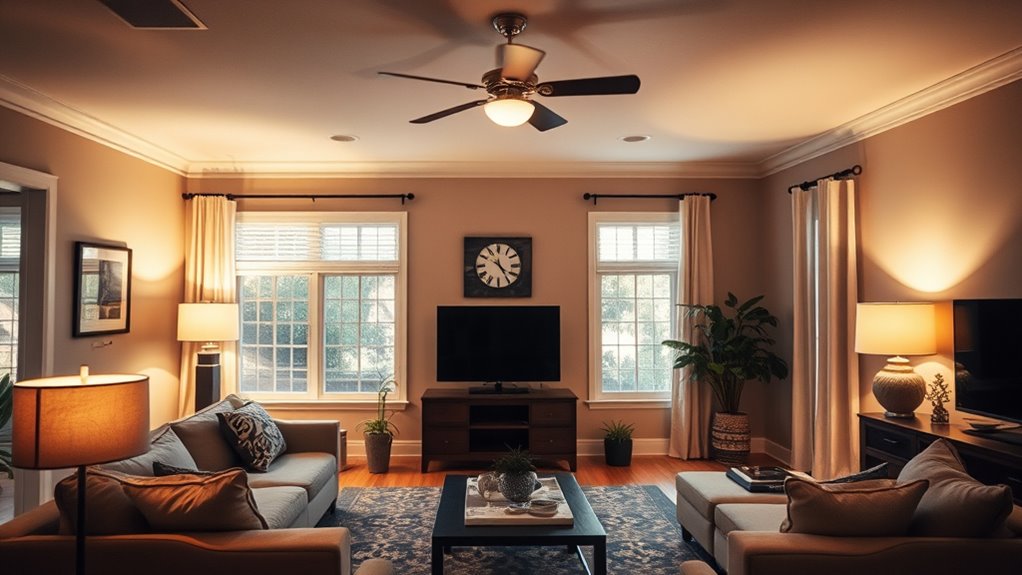
If you neglect proper lighting, your space can feel flat and uninviting. Layering different light sources, like ambient, task, and accent lighting, adds depth and warmth. Choosing the right intensity for each light guarantees your rooms are functional and cozy without being overwhelming. Incorporating smart lighting solutions can enhance your control and help you optimize the ambiance. Understanding lighting layering techniques ensures a balanced and inviting atmosphere in any room. Additionally, selecting essential oils for specific needs can further improve the overall environment and comfort of your home. Proper lighting also plays a crucial role in highlighting your decor and creating a welcoming vibe, especially when combined with proper illumination principles that consider room size and purpose.
Layering Different Light Types
When you ignore proper lighting and fail to layer different light sources, your space can feel flat and uninviting. To create a welcoming atmosphere, combine various lighting types. First, use ambient illumination—overhead fixtures or ceiling lights—to set the general mood. Second, add accent lighting, like wall sconces or table lamps, to highlight artwork or architectural features. Third, incorporate task lighting in areas like the kitchen or reading nook to ensure practical brightness. Proper layering prevents harsh shadows and dullness, making your space feel balanced and cozy. Incorporating lighting controls allows you to adjust light levels and customize ambiance throughout the day. Understanding lighting layering techniques helps in designing a harmonious environment where each light source plays a vital role. Using different lighting types prevents your space from feeling monotonous and enhances visual interest. Additionally, selecting the right lighting technology can improve energy efficiency and long-term cost savings. Integrating lighting maintenance routines ensures your fixtures perform optimally over time. When all three elements work together, your home gains depth, warmth, and visual interest. Avoid relying solely on one light source, and you’ll craft a more inviting, well-lit environment.
Choosing Appropriate Light Intensities
Choosing the right light intensity is essential for creating a comfortable and functional space. Too bright, and your room feels harsh; too dim, and it’s hard to see clearly. To get it right, consider natural illumination during the day and adjust with smart lighting options. Smart lighting allows you to customize brightness levels easily, ensuring your space adapts to different activities. For areas like the living room or kitchen, aim for a balanced mix of ambient and task lighting. Use dimmable fixtures to fine-tune light intensity based on time of day or mood. Proper lighting layering and control prevent your space from feeling flat or overly intense. Additionally, adaptive lighting can support circadian rhythms and enhance comfort throughout the day. Understanding lighting control systems can further optimize your lighting setup for convenience and energy efficiency. Ultimately, selecting appropriate light intensities enhances comfort, functionality, and ambiance in your home.
Choosing Colors That Don’t Complement Each Other
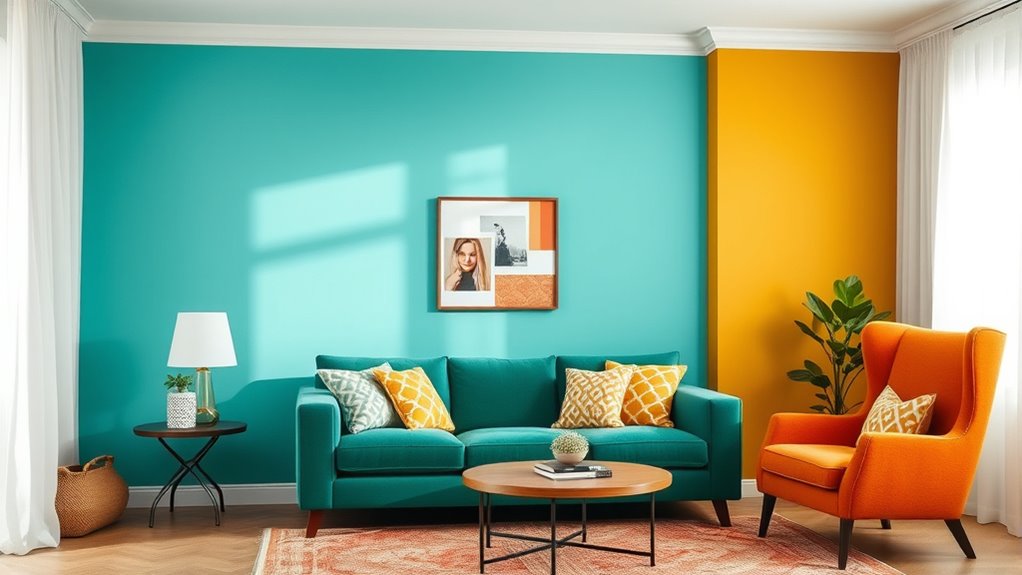
Choosing colors that clash or overwhelm your space can make it feel chaotic rather than inviting. Bright, uncoordinated hues may distract or tire the eyes, while ignoring your room’s purpose can create a disjointed feel. To avoid these mistakes, select color schemes that enhance your room’s function and create visual harmony. Incorporating appropriate color palettes can help you achieve a balanced and cohesive look that complements your overall decor. Paying attention to color harmony ensures that your choices contribute to a welcoming atmosphere rather than a disjointed one. Additionally, understanding basic principles of color psychology can guide you in selecting tones that evoke the desired mood in your space. Embracing a curious mindset about color combinations can lead to more inspired and harmonious decorating choices. Exploring color contrast can further enhance your understanding of how different hues interact and impact your room’s ambiance.
Clashing Color Schemes
Clashing color schemes can quickly turn a well-designed space into a visual chaos. When your colors don’t align with color harmony principles, your room feels disjointed. To avoid this, focus on three key areas:
- Paint selection: Choose shades that complement each other, sticking to a cohesive palette rather than contrasting wildly.
- Accent colors: Use accent pieces sparingly to tie different hues together without overwhelming.
- Color balance: Distribute colors evenly throughout the space for a unified look.
Failing to contemplate these aspects can make your decor feel jarring. When selecting paint, think about how each hue interacts with others, creating a harmonious environment rather than a confusing clash.
Overly Bright Combinations
Bright, uncoordinated color combinations can overwhelm a space and make it feel chaotic rather than inviting. If you choose colors that clash or don’t complement each other, your decor can seem jarring. Instead, use accent walls to introduce bold colors carefully, making sure they enhance the room without overpowering it. Avoid selecting bright hues for ceiling treatments that clash with wall colors, as this can create a disjointed look. Instead, opt for a cohesive palette with well-balanced contrasts. When colors work together harmoniously, they add visual interest without causing discomfort. Remember, the goal is to create a space that feels lively yet balanced, not chaotic. Thoughtful color choices and strategic accent walls can help you achieve a welcoming, polished look.
Neglecting Room Function
When you select colors that don’t suit a room’s purpose, it can undermine the space’s functionality and atmosphere. For example, choosing bold, vibrant hues in a bedroom may hinder relaxation, while muted tones in a home office can dampen productivity. To avoid this, consider:
- Using calming colors like blues or greens in bedrooms to promote rest.
- Incorporating warm, inviting shades in living rooms to encourage socializing.
- Ensuring color choices support storage organization and acoustic treatment, like soft wall colors that reduce noise or help hide clutter.
- Understanding the importance of room function in color selection to create a cohesive and effective space. Recognizing the role of color psychology can help you pick hues that align with your desired mood and purpose.
Neglecting room function can lead to poor storage solutions and inadequate acoustic treatment, making spaces less comfortable and less practical. Always select colors that reinforce the room’s purpose for a balanced, harmonious environment.
Neglecting Scale and Proportion in Design
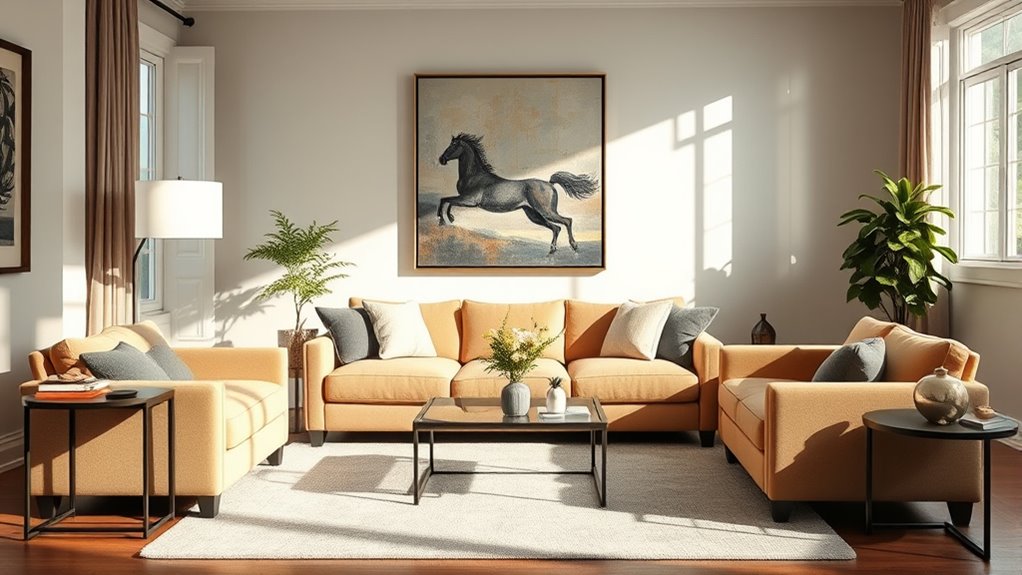
Ignoring scale and proportion can dramatically disrupt the harmony of your space, making furniture and decor feel out of place or awkward. To achieve a cohesive look, focus on scale harmony and proportion balance. Oversized furniture in a small room can feel overwhelming, while tiny accents in a large space can seem insignificant. Use this table to guide your choices:
| Item Size | Room Size |
|---|---|
| Large sofa | Spacious living room |
| Small side tables | Compact bedroom |
| Tall bookcases | High-ceiling areas |
| Wide artwork | Narrow walls |
| Delicate decor | Heavy furniture |
Matching the proportions of items to your space ensures visual comfort and unity. Proper scale and proportion keep your design balanced and inviting. Paying attention to visual harmony is essential in creating a well-designed space. Additionally, considering natural light can enhance the overall balance and ambiance of your decor.
Using Low-Quality or Inappropriate Materials
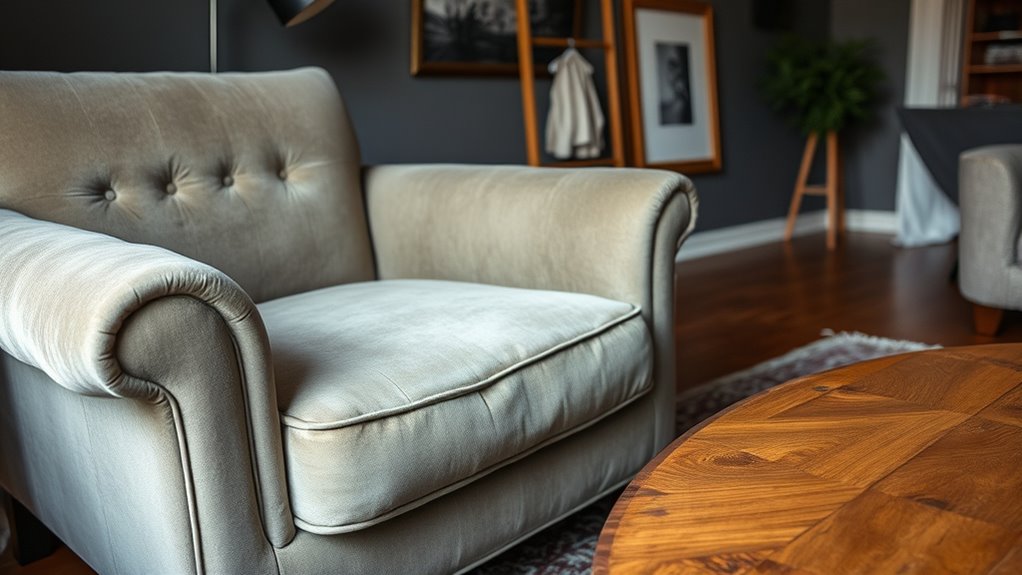
Using low-quality or inappropriate materials can considerably undermine your home’s overall look and durability. Poor material quality may cause furniture to wear quickly, surfaces to stain easily, or fixtures to break down sooner. To avoid this, consider these key points:
- Choose high-quality materials for durability, like solid wood or genuine stone, instead of cheap composites.
- Match materials to their function—use moisture-resistant surfaces in bathrooms and kitchens.
- Ensure material appropriateness with your overall decor style, so textures and finishes complement each other.
- Incorporate appropriate materials that are suitable for their intended environment to enhance longevity and maintain aesthetic consistency.
Skimping on quality or ignoring material suitability can lead to costly repairs and a less cohesive aesthetic. Prioritize material quality and appropriateness to create a space that’s both beautiful and long-lasting.
Failing to Personalize the Space
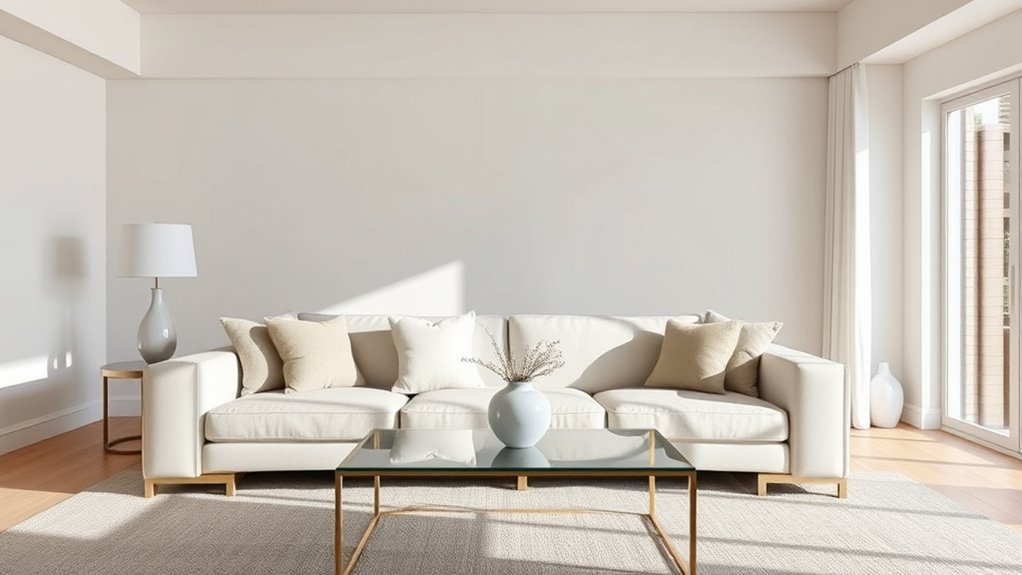
If you skip personal items or ignore your favorite colors, your space may feel generic and uninspired. Forgetting to add unique touches can make it hard for your home to truly reflect your personality. Personalizing your decor creates a space that feels welcoming and uniquely yours.
Overlooking Personal Items
Personal items are the key to making your home feel truly yours, yet many people overlook their importance when decorating. Without personal mementos and family photos, a space can feel sterile and impersonal. To avoid this mistake, consider displaying items like:
- Framed family photos on shelves or walls, showcasing your loved ones.
- Sentimental keepsakes, such as heirlooms or travel souvenirs, that tell your story.
- Unique decor pieces that reflect your hobbies or passions.
These personal touches add warmth and personality, making your space inviting and meaningful. Don’t forget to incorporate items that resonate with you, ensuring your home truly represents who you are. Personal items aren’t just decoration—they’re the heart of your space.
Ignoring Color Preferences
Have you ever decorated a room only to realize it doesn’t feel quite right? Ignoring your color preferences can lead to a space that misses the mark. Color psychology influences how you feel in a room, so choosing paint palettes that reflect your personality is key. Avoid using colors just because they’re trendy; instead, select hues that resonate with you. Consider this table to help align your choices:
| Your Preference | Suggested Color Palette |
|---|---|
| Calm & Relaxed | Soft blues, muted greens |
| Energetic & Bright | Bold reds, sunny yellows |
| Cozy & Warm | Earth tones, warm browns |
| Fresh & Invigorating | Crisp whites, vibrant accents |
Personalizing your space with colors you love creates comfort and harmony, making your home truly yours.
Forgetting Unique Touches
Ever notice how some rooms feel a bit bland or generic? You can fix that by adding unique touches that reflect your personality. Start with:
- Display quirky wall art that sparks conversations or makes you smile.
- Invest in custom furniture pieces that suit your style and fit your space perfectly.
- Incorporate personal mementos or favorite colors to create a space that’s truly yours.
Skipping these details can make your home look like everyone else’s. Personal touches make your space memorable and inviting. Quirky wall art adds character, while custom furniture ensures comfort and uniqueness. Don’t be afraid to showcase what makes you, well, you. These small additions turn a standard room into a reflection of your personality, making it warm, welcoming, and distinctly yours.
Overusing Trendy Items Without Longevity
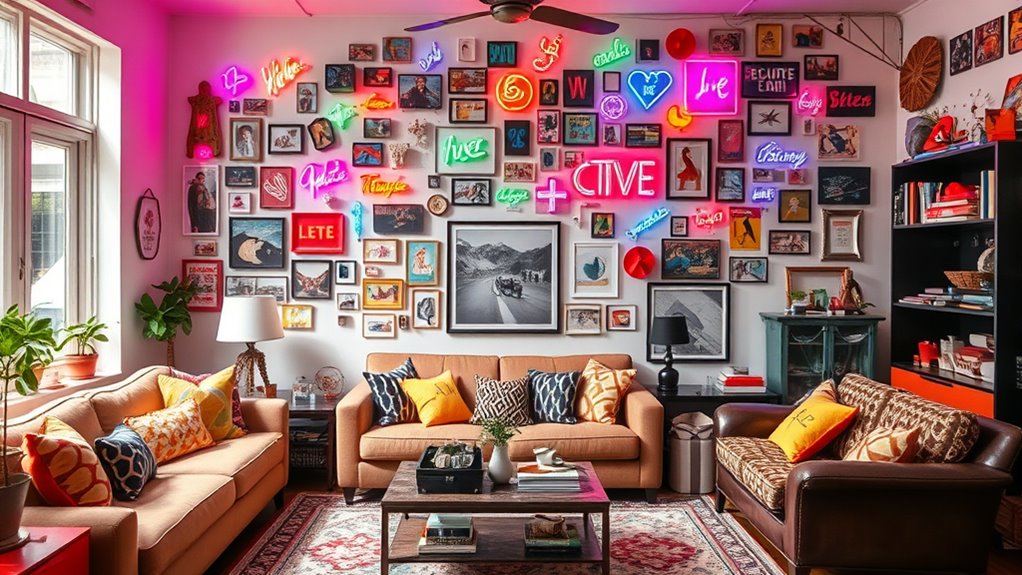
While trendy items can instantly update your space, overusing them can lead to a decor that feels fleeting and less cohesive over time. Relying heavily on temporary trends can overshadow your home’s timeless design, making it harder to incorporate classic furnishings later. Trendy pieces often lack longevity, and if they dominate your decor, your space may quickly feel outdated. Instead, balance trendy accents with timeless elements like neutral colors and quality materials. This approach guarantees your home remains stylish yet enduring, preserving its charm for years to come. By avoiding overindulgence in fleeting trends, you create a space that reflects your personality with a sense of stability and sophistication. Remember, true style endures when you mix the new with the classic.
Cluttering Surfaces and Storage Areas
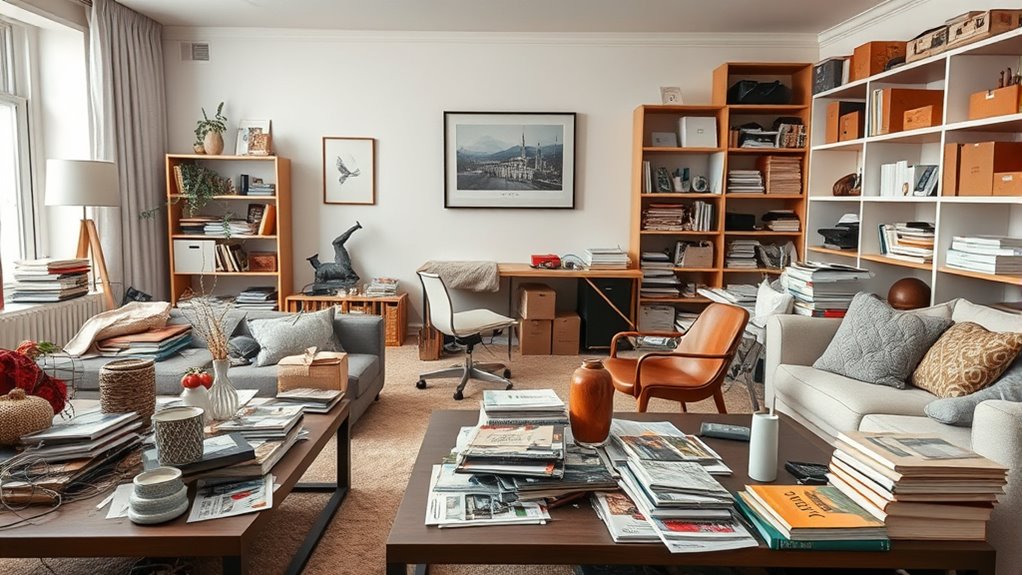
Cluttering surfaces and storage areas can quickly make your home feel chaotic and overwhelming. When surfaces are crowded, it’s hard to find what you need and enjoy your space. To improve surface organization, consider these simple steps:
- Clear off flat surfaces weekly, keeping only essentials or decorative items.
- Use storage solutions like baskets, trays, or wall-mounted shelves to keep items tidy.
- Designate specific spots for common items to avoid piling clutter.
These strategies help create a clean, inviting environment. Proper storage solutions reduce visual chaos and make daily routines smoother. Avoid overcrowding tables, countertops, and shelves, as they can detract from your home’s overall aesthetic. Staying intentional about surface organization keeps your space functional and relaxing.
Neglecting Functionality and Practicality
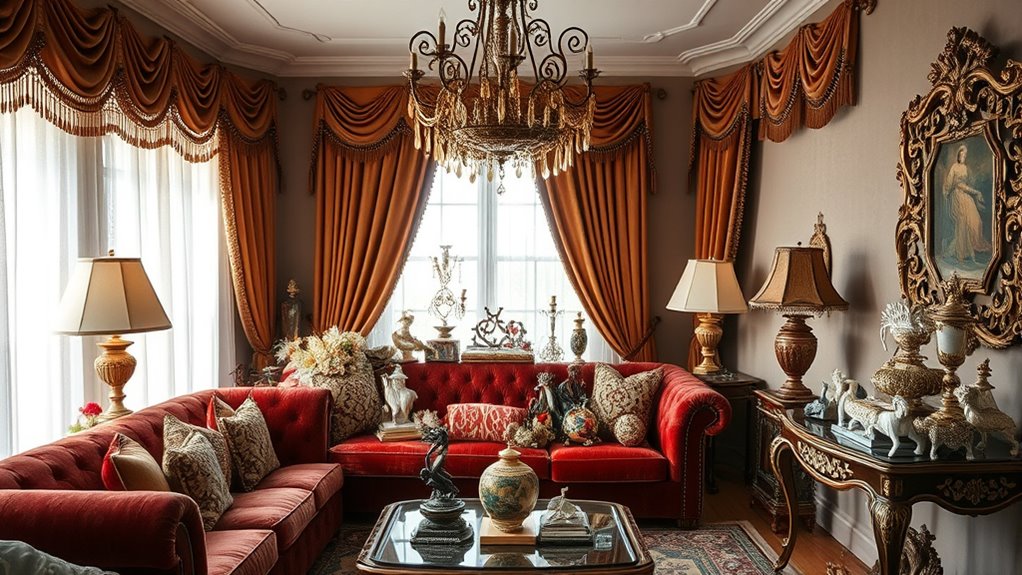
Focusing solely on aesthetics without considering how a space functions can lead to frustration and inefficiency. You need to balance beauty with practicality. Prioritize storage solutions that keep clutter out of sight while maintaining easy access. Incorporate wall art thoughtfully—choose pieces that enhance your space without blocking essential pathways or storage areas. Here’s a simple idea table:
| Functionality Aspect | Example | Tip |
|---|---|---|
| Storage solutions | Built-in shelves | Maximize vertical space |
| Wall art | Mirrors, large prints | Use to reflect light & create space perception |
| Accessibility | Clear walkways | Avoid placing furniture or decor that obstructs movement |
Skipping a Cohesive Design Theme
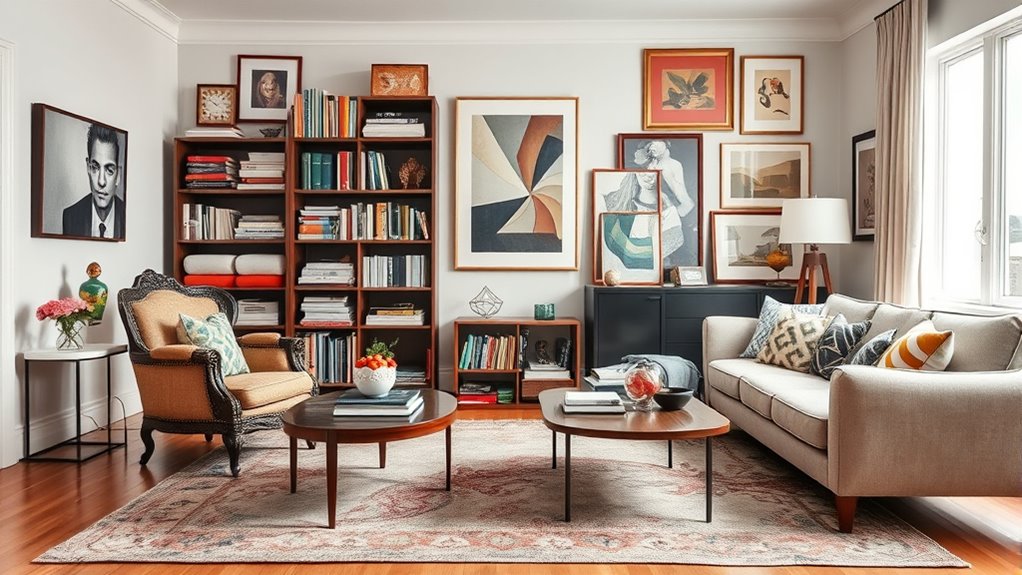
A lack of a cohesive design theme can make your home feel disjointed and chaotic. Without a clear vision, your space may look cluttered and unfocused. To achieve a cohesive theme and enhance design harmony, consider these points:
Without a clear theme, your home can feel chaotic and disjointed.
- Choose a consistent color palette that flows throughout each room.
- Select furniture and decor that share a similar style or era.
- Incorporate matching textures and materials to tie different elements together.
Frequently Asked Questions
How Do I Choose the Right Furniture Size for My Room?
To select the right furniture size, consider your room proportions and furniture scale. Measure your space carefully, leaving enough room for movement and other furniture. Opt for pieces that fit comfortably without overwhelming the room. Visualizeehow each item will complement your space, avoiding overly large or tiny furniture. This approach guarantees your room feels balanced, functional, and inviting, making your decorating effort both stylish and practical.
What Are Some Tips for Selecting Complementary Color Palettes?
Want your space to truly shine? Start with color harmony by choosing a palette that balances warm and cool tones. Use color wheel principles, like complementary or analogous schemes, to create a cohesive look. Keep in mind, subtle variations in shades add depth and interest. Trust your instinct, but don’t be afraid to experiment—your perfect palette is waiting to be discovered, making your home both inviting and visually stunning.
How Can I Effectively Layer Lighting in My Home?
To effectively layer lighting in your home, start with ambient lighting as your base, then add accent lighting to highlight artwork or architectural features. Incorporate layered illumination by combining ceiling fixtures, table lamps, and wall sconces for balanced brightness. Use dimmers to control intensity and create mood. This approach guarantees your space feels warm, functional, and visually appealing, making every area inviting and well-lit.
What Materials Are Best for Durable and Stylish Home Decor?
Think of marble and reclaimed wood as your modern knights—durable and stylish. These materials excel in material durability and add aesthetic appeal to your home. Marble’s elegance withstands time, while reclaimed wood offers rustic charm and resilience. Using these materials guarantees your decor remains beautiful and enduring. Avoid trendy fads; stick with timeless choices that blend durability with style, creating a space you’ll love for years.
How Can I Incorporate Personal Items Without Cluttering?
You can incorporate personal items by displaying your collections thoughtfully, using stylish shelves or shadow boxes to keep things organized. Balance sentimental items with functional decor, like adding framed photos alongside decorative vases or plants. Keep surfaces clutter-free by rotating items periodically and grouping similar pieces together. This approach highlights your personality while maintaining a clean, cohesive look, ensuring your space feels personal without feeling overwhelming or cluttered.
Conclusion
By avoiding these common home decor mistakes, you set yourself up for a space that feels balanced and inviting. Remember, it’s often the little things that make a big difference—don’t let your design efforts go down the drain. Keep your style timeless, functional, and cohesive, and you’ll create a home that truly reflects you. When it comes to decorating, patience and attention to detail will help you steer clear of pitfalls and make your space shine.