When choosing the right tile for your kitchen, bath, or floor, consider the space’s function and style. Durable options like ceramic or porcelain work well for high-traffic areas, while natural stone adds elegance but needs more upkeep. Pay attention to grout color—matching creates a sleek look, contrasting emphasizes patterns. Keep maintenance in mind, and select tiles that match your aesthetic and lifestyle. If you keep exploring, you’ll find helpful tips to make your space both beautiful and practical.
Key Takeaways
- Consider the environment and usage to select durable, appropriate tile materials like ceramic, porcelain, or natural stone.
- Match grout color to tile for a seamless look or contrast for added pattern and definition.
- Choose low-maintenance glazed tiles for kitchens and baths to simplify cleaning and upkeep.
- Establish a regular cleaning and sealing routine based on tile type to preserve appearance and prevent stains.
- Balance style with practicality, ensuring the tile selection aligns with your aesthetic preferences and maintenance capabilities.
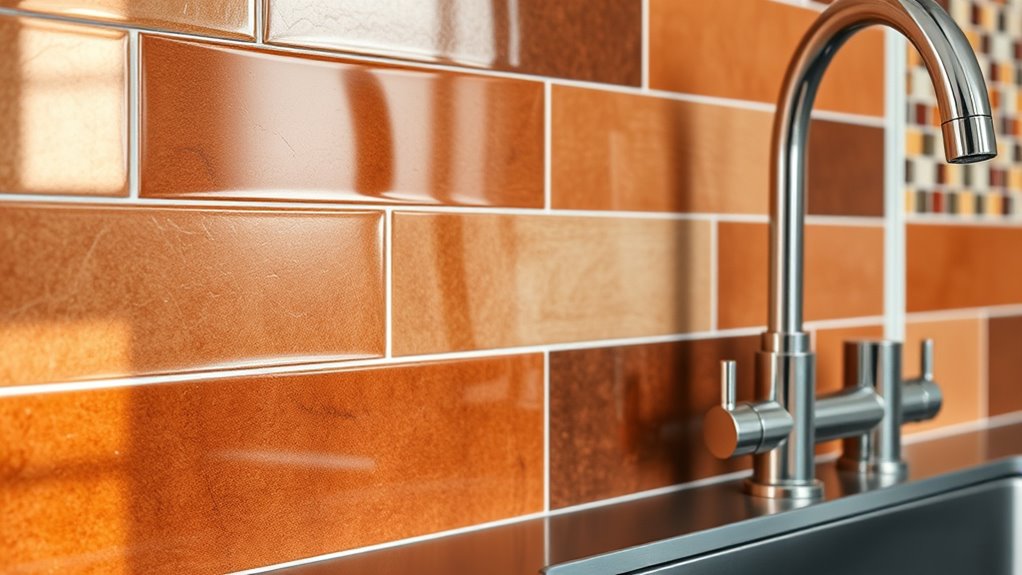
Have you ever wondered what makes tile such a versatile and appealing choice for home design? It’s the combination of durability, variety, and ease of customization that makes tile stand out. But to truly make the most of your tile investment, you need to pay attention to details like grout color and tile maintenance. These elements can influence not only the look of your space but also how much effort it takes to keep it beautiful over time.
Choosing the right grout color can dramatically change the overall appearance of your tile installation. If you want a seamless, modern look, go for a grout shade that closely matches your tile. This creates a smooth, unified surface that visually expands the space. On the other hand, if you prefer a more striking or textured effect, contrasting grout can add definition and highlight the pattern. Keep in mind that darker grout tends to hide stains and dirt better, which is a smart choice for high-traffic areas like kitchens and bathrooms. Conversely, lighter grout shades can reveal dirt more easily, requiring more frequent cleaning but offering a brighter, cleaner aesthetic. Your choice of grout color should align with your style preferences and your willingness to maintain the look.
Matching grout to tiles creates a seamless look, while contrasting grout adds definition and visual interest.
Tile maintenance is another essential aspect to consider when selecting your tile. Some materials, like glazed ceramic or porcelain, are low-maintenance and resistant to stains, making them perfect for busy households. Natural stone tiles, while beautiful, may need regular sealing and specific cleaning products to prevent damage. Additionally, advancements in nanotechnology applications are beginning to influence tile coatings, making them more resistant to stains and easier to clean. Whichever tile you choose, establishing a routine cleaning schedule helps preserve its appearance and longevity. Regular sweeping and mopping remove dirt and debris that can cause scratches or discoloration over time. Also, pay attention to grout cleaning; grout lines can trap dirt and mold if not properly maintained. Using appropriate cleaning solutions and occasional resealing can keep grout looking fresh and prevent staining. Remember, the right cleaning approach depends on your tile material and the environment it’s in.
Ultimately, selecting the right tile involves balancing style with practicality. Consider how much effort you’re willing to dedicate to upkeep and how different grout colors can complement your overall design. With thoughtful choices about grout and maintenance, your tile will not only enhance your space aesthetically but also stand the test of time. Proper care and a well-chosen grout color can make your tile look stunning for years to come, ensuring you enjoy a beautiful, functional home environment with less hassle.
Frequently Asked Questions
How Do I Maintain and Clean Different Types of Tiles?
To maintain and clean different types of tiles, you should regularly sweep or vacuum to remove debris. Use a mild detergent or specialized cleaner for your tile type, and avoid harsh chemicals. For grout cleaning and stain removal, apply a grout scrubber or baking soda paste. Rinse thoroughly and dry with a soft cloth. This routine keeps your tiles looking fresh and prevents damage over time.
Are There Eco-Friendly Tile Options Available?
Did you know that over 20% of tile products now incorporate sustainable materials? Yes, eco-friendly tile options are available, often made from recycled content and sustainable materials like bamboo or glass. You can choose tiles that reduce environmental impact without sacrificing style or durability. By opting for these eco-conscious choices, you’re helping conserve resources and support greener building practices, making your home both beautiful and environmentally responsible.
What Is the Best Tile for High-Traffic Areas?
For high-traffic areas, you should choose durable tiles like porcelain or natural stone, as they withstand wear and tear better. Consider durability considerations to guarantee your tile resists scratches and stains over time. Luckily, these tiles come in a wide range of aesthetic options, so you can find styles and finishes that match your decor. Opt for a textured surface or darker shades to hide dirt and maintain a fresh look longer.
How Long Does Tile Installation Typically Take?
The installation timeline varies depending on your project’s scope, but typically, it takes from one to several days. While the preparatory work—like measuring, removing old tiles, and surface prep—sets the stage, actual tile installation moves quickly once started. You can expect a straightforward kitchen or bathroom to finish within 2-3 days, but larger or intricate jobs may extend to a week. Planning ahead guarantees a smoother process.
Can I Mix Different Tile Styles in One Space?
Yes, you can mix different tile styles in one space. To make it work, focus on mixing patterns and textures thoughtfully, ensuring they complement each other. Use color coordination to tie everything together, perhaps by sticking to a cohesive color palette. This approach creates visual interest without overwhelming the room. Experimenting with various styles can add personality and charm, making your space uniquely yours.
Conclusion
Choosing the right tile truly transforms your space, blending style with durability. While some believe that matching tiles to every room’s vibe guarantees perfection, the real secret lies in balancing practicality with aesthetics. Trust your instincts, but also consider long-term wear and maintenance. After all, the best tile choice isn’t just about looks — it’s about creating a space you love to live in every day. So, go ahead, pick what feels right for your home!