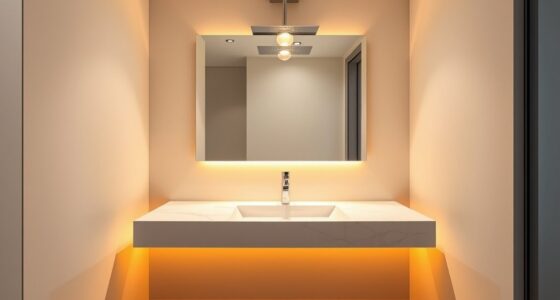
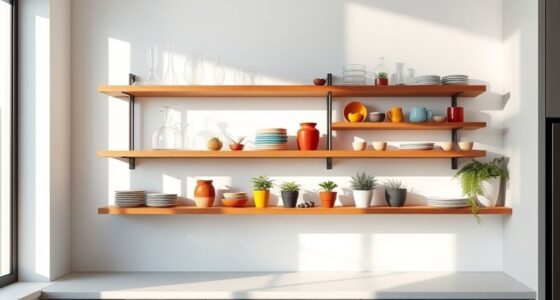
To create a stress-free home environment, focus on incorporating natural elements like large windows for sunlight, indoor plants, and natural textures to foster calmness. Choose ergonomic furniture that supports good posture and comfort, reducing physical strain. Keep your space organized and clutter-free to promote mental clarity and relaxation. Thoughtfully adding these elements transforms your home into a sanctuary of wellness and rejuvenation. Continue exploring how small changes can make a big difference in your daily well-being.
Get ready for Prime Big Deal Days — try Prime free
Exclusive member deals on October 6–7, plus fast free delivery. Cancel anytime.
As an affiliate, we earn on qualifying purchases.
Key Takeaways
- Incorporate natural light and greenery to connect indoor spaces with nature, promoting relaxation and reducing stress.
- Use natural textures, colors, and materials to create a calming atmosphere that supports mental well-being.
- Organize and declutter spaces with thoughtful storage solutions to enhance mental clarity and reduce anxiety.
- Choose ergonomic furniture, including supportive seating and properly aligned desks, to prevent physical discomfort.
- Design a sanctuary with personal touches and a clutter-free environment that encourages safety, relaxation, and rejuvenation.

Have you ever wondered how your environment influences your well-being? The way your home is designed can substantially impact your stress levels, mood, and overall health. Incorporating principles like biophilic design can help you feel more connected to nature, even inside four walls. Think about large windows that flood your space with natural light or indoor plants that bring a touch of greenery into your daily routine. These elements aren’t just aesthetic—they actively promote calmness and reduce anxiety. When you surround yourself with natural textures, colors, and materials, you create a soothing atmosphere that nurtures your mental health. Biophilic design taps into our innate need to connect with nature, making your home a sanctuary rather than a source of stress. Paying attention to natural elements in your space can significantly enhance your sense of well-being. Equally important is the furniture you choose. Ergonomic furniture isn’t just a trendy term; it’s essential for maintaining comfort and preventing physical strain. When you spend hours working or relaxing at home, poorly designed furniture can lead to aches, pains, and discomfort that add to your stress. Opt for chairs with proper lumbar support, desks that match your height, and mattresses that contour to your body’s shape. These choices support good posture and reduce fatigue, helping you feel more relaxed and energized throughout the day. Ergonomic furniture encourages good habits and minimizes the physical toll of daily activities, making your home a place that promotes well-being rather than undermines it. Creating a stress-free home environment is also about mindful organization and decluttering. When your space is tidy and thoughtfully arranged, your mind feels clearer and more at ease. Use storage solutions that keep clutter out of sight but within reach, and select decor that resonates with your personal style to foster a sense of comfort and belonging. The combination of biophilic elements and ergonomic furniture helps you craft a space that nurtures your body and mind. It’s about making intentional choices that prioritize your health—whether that’s through natural light, comfortable seating, or a clutter-free environment. In essence, designing for wellness isn’t just about aesthetics; it’s about creating a home that supports your physical and mental health every day. When you pay attention to natural elements and prioritize ergonomic comfort, you set the stage for reduced stress and greater well-being. Your environment should serve as a refuge, a place where you feel safe, relaxed, and rejuvenated. Small changes can make a big difference—so start by rethinking your space with these principles in mind, and enjoy the benefits of a truly stress-free home.
ergonomic office chair with lumbar support
As an affiliate, we earn on qualifying purchases.
As an affiliate, we earn on qualifying purchases.
Frequently Asked Questions
How Can Color Schemes Influence Stress Levels at Home?
Color schemes profoundly influence stress levels at home through color psychology and visual harmony. You can choose calming hues like blues and greens to promote relaxation, or warm tones like soft yellows for comfort. By creating visual harmony with cohesive colors, you reduce visual clutter, which helps lower stress. When you thoughtfully select and blend colors, your space becomes more peaceful, supporting your overall wellness and emotional balance.
What Are the Best Plants for Improving Indoor Air Quality?
Imagine your home as a invigorating gust of fresh air, revitalized by nature’s touch. Opt for air purifying plants like snake plants, pothos, or peace lilies—they’re low maintenance greenery that work quietly, absorbing toxins and releasing oxygen. These plants act as natural filters, clearing the air and creating a serene environment. With minimal care, they keep your space vibrant and healthy, turning your home into a sanctuary of clean, crisp air.
How Does Lighting Affect Mental Health and Relaxation?
Lighting greatly impacts your mental health and relaxation. Natural light boosts your mood and helps regulate your circadian rhythms, making you feel more energized and less stressed. Adjusting lighting intensity indoors can create a calming atmosphere; softer, dimmer lights promote relaxation, while brighter lights increase alertness. By optimizing natural light during the day and using gentle artificial lighting in the evening, you support your overall well-being and reduce stress.
What Acoustic Elements Promote a Peaceful Environment?
Think of your home as a serene lake, where calmness reigns. To keep that tranquility, incorporate sound masking to gently cover disruptive noises and install acoustic panels that act like soft cushions, absorbing excess sound. These elements work together to create a peaceful environment, reducing stress and promoting relaxation. By controlling sound, you foster a space where mental clarity and calmness flourish, much like a still, peaceful lake.
How Can Clutter Reduction Enhance Home Wellness?
Clutter reduction boosts your home wellness by creating a calm, organized space. Use smart storage solutions like bins, shelves, and multi-purpose furniture to keep items out of sight. Implement decluttering strategies regularly, such as sorting belongings and donating unused items. This minimizes visual chaos, reduces stress, and makes your home more inviting. When you maintain a clutter-free environment, you’ll feel more relaxed, focused, and in control of your space.
natural light indoor window treatments
As an affiliate, we earn on qualifying purchases.
As an affiliate, we earn on qualifying purchases.
Conclusion
Creating a stress-free home is like tending a delicate garden—you must nurture it with care, patience, and intention. When you prioritize natural light, clutter-free spaces, and calming colors, you cultivate an environment where stress can’t take root. Remember, even a small change, like adding a cozy nook or a plant, can transform your space into a sanctuary. Just as a garden flourishes with attention, so will your home become a haven of wellness and peace.
As an affiliate, we earn on qualifying purchases.
clutter storage solutions for home
As an affiliate, we earn on qualifying purchases.
As an affiliate, we earn on qualifying purchases.
NFL season / tailgating Picks
team gear
As an affiliate, we earn on qualifying purchases.