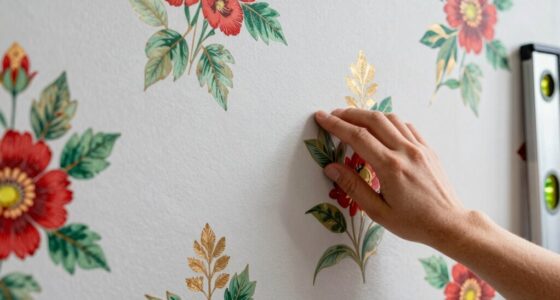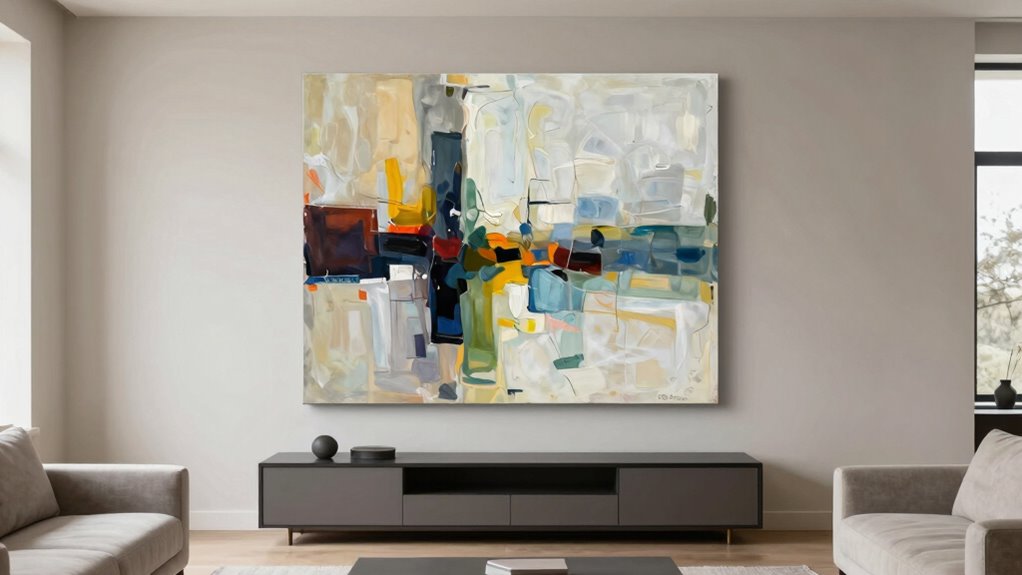

To hang art at the right height, aim for the center of the piece to be about 57-60 inches from the floor, which works well for most rooms. Adjust slightly for high ceilings, large art, or specific furniture heights to create balance. Consider your wall color and lighting to enhance the artwork’s impact. When you master these tips, you’ll discover how to make every room look polished and inviting.

Get furniture and decor delivered free with Prime
- Fast, free delivery on millions of items
- Prime Video, Amazon Music and more included
- Member-only deals all year
Key Takeaways
- Hang art at eye level (57-60 inches from the floor) for optimal viewing comfort.
- Adjust height based on room function and furniture placement for visual harmony.
- Consider wall color; lighter walls may require slightly higher placement, darker walls enhance contrast.
- Use proper lighting to highlight artwork without causing glare or shadows.
- Balance art height with room scale and ceiling height to maintain aesthetic proportion.

Have you ever wondered why some artwork feels just right on a wall while others seem out of place? The key often lies in choosing the right hanging height, which can dramatically influence how a piece interacts with the space. When you’re considering where to place art, think about how gallery lighting plays a role—proper lighting highlights the piece and can create a sense of harmony. Light that’s too harsh or too dim can diminish the artwork’s impact, so you want to position your art where lighting can complement its details without causing glare or shadows.
Another essential factor is your wall color choices. The hue and tone of your walls can either make your art pop or cause it to blend in too much. For instance, on a light-colored wall, hanging art slightly higher can prevent it from feeling disconnected from the space, while darker walls often work better with art hung at eye level to maximize contrast and visibility. Your goal is to create a visual flow that guides the viewer’s eye naturally across the room, which means adjusting the placement based on these background elements.
Wall color influences art placement: lighter walls elevate art slightly, darker walls at eye level enhance contrast and visibility.
As a rule of thumb, when hanging artwork in a living room or common area, your eye should naturally fall about 57 to 60 inches from the floor to the center of the piece. This height is generally comfortable for viewing and works well across various wall colors and lighting conditions. However, in rooms with high ceilings or large, statement art pieces, you might need to adjust slightly—either higher or lower—so the art doesn’t seem dwarfed or lost. Proper art placement can significantly enhance the overall aesthetic and balance of a room.
In bedrooms or more intimate spaces, you might want to hang art a little lower, especially if the furniture sits low or if you’re viewing from a seated position. Always consider how the furniture and the room’s overall design influence the ideal hanging height. You don’t want art to be too high that it feels disconnected or too low that it crowds the furniture.
Ultimately, finding the right height for hanging art involves balancing gallery lighting, wall color choices, and the specific context of each room. Pay attention to how natural and artificial light plays across your walls during different times of day, and adjust accordingly. When you get it right, your artwork will look perfectly integrated, elevating your space rather than competing with it. Understanding art display principles can also help you make more informed decisions about placement for a truly cohesive look.
As an affiliate, we earn on qualifying purchases.
Frequently Asked Questions
Should Art Be Hung Higher in Rooms With High Ceilings?
Yes, in rooms with high ceilings, you should hang art slightly higher to fill the space effectively. Use gallery lighting to highlight the artwork and create visual balance. Opt for frame styles that complement the room’s decor and draw attention upward. When hanging art, consider the eye level and overall room height, ensuring the pieces feel intentional and cohesive without overwhelming the space.
How Does Furniture Placement Affect Artwork Height?
Furniture placement directly influences how you hang artwork, so consider art pairing and frame selection carefully. You want the art to complement the furniture, aligning the center of the piece with eye level or slightly above. Use the same principles for art pairing and frame selection—balance, proportion, and harmony—to create a cohesive look. Adjust the height based on furniture height and arrangement, ensuring your artwork enhances the space effortlessly.
Is There a Different Standard Height for Children’s Rooms?
Yes, children’s rooms often require different art placement to suit their height and activity level. You should hang artwork lower, typically at a child’s eye level, to create better visual balance and make it more engaging. This way, kids can easily appreciate the art, and the room feels inviting. Adjusting the height guarantees the art complements the space and enhances the room’s overall visual harmony tailored for children’s needs.
How Do Ceiling Height and Room Size Influence Art Placement?
Imagine your ceiling as the sky and your walls as the land—your art’s placement should mirror this harmony. When ceiling height and room size vary, consider lighting and wall color coordination to create balance. In rooms with high ceilings, hang art higher to avoid overwhelming the space, while in smaller rooms, keep pieces lower to foster intimacy. Adjust placement based on these factors for a cohesive, inviting atmosphere.
What Are Tips for Hanging Art in Oddly Shaped Spaces?
When hanging art in oddly shaped spaces, you should consider wall textures and lighting. Use wall textures to create visual interest and guide eye movement, positioning artwork to complement these features. Pay attention to lighting considerations, ensuring your pieces are well-lit without glare or shadows. Adjust placement to balance the irregular shape, and consider using multiple smaller pieces rather than one large artwork to fill the space harmoniously.
As an affiliate, we earn on qualifying purchases.
Conclusion
Now that you know the right height for hanging art, you’re ready to transform any room. Imagine hanging a large piece above your sofa, with the center at eye level—instantly, your living room feels more inviting. Take the time to measure and consider your space’s unique features. When you hang art thoughtfully, it becomes a mesmerizing focal point, showcasing your style and making your home truly feel yours.
As an affiliate, we earn on qualifying purchases.
wall mounting hardware for artwork
As an affiliate, we earn on qualifying purchases.
As an affiliate, we earn on qualifying purchases.
Halloween Picks
halloween
As an affiliate, we earn on qualifying purchases.