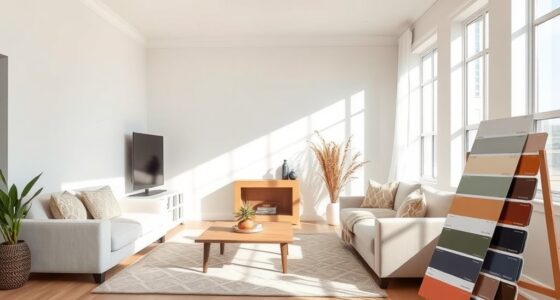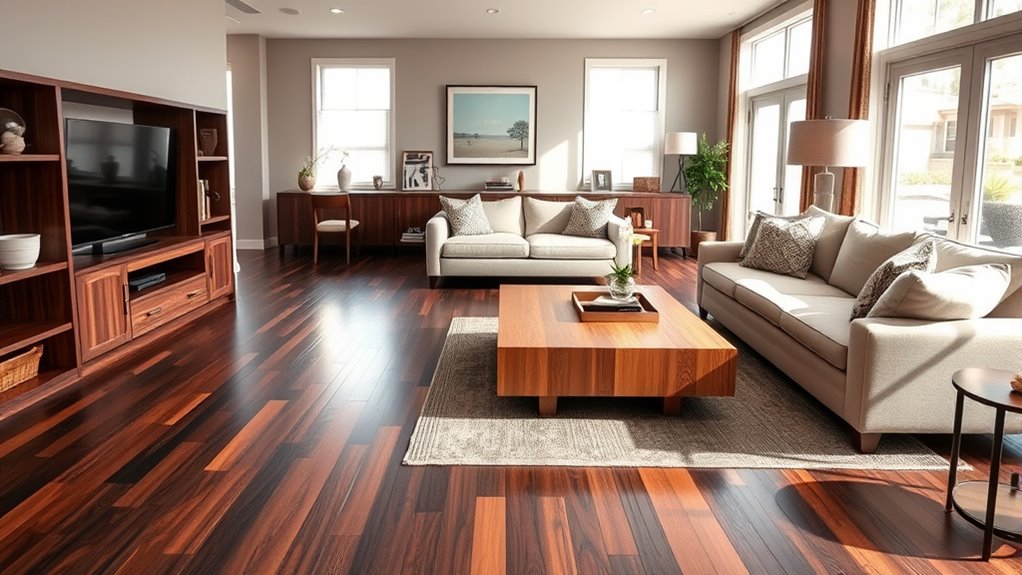

To coordinate different wood finishes, start by identifying their underlying undertones—warm, cool, or neutral—and plan your mix accordingly. Balance darker, heavier pieces with lighter ones to create visual harmony, and consider using unifying elements like textiles, metal fixtures, or rugs to connect contrasting tones. Carefully place furniture so the tones complement each other without clashing, ensuring a cohesive look. Keep exploring, and you’ll discover even more tips to perfect your space.
Listen free for 30 days with Audible
Thousands of audiobooks and originals — cancel anytime.
As an affiliate, we earn on qualifying purchases.
Key Takeaways
- Identify dominant wood undertones (warm, cool, neutral) to guide harmonious pairing choices.
- Mix warm and cool woods intentionally, using unifying elements like textiles or metallic accents.
- Balance furniture scale and placement to prevent visual heaviness or disjointedness.
- Incorporate complementary design elements such as fabrics, rugs, or fixtures for cohesion.
- Focus on subtle contrasts and thoughtful distribution to create a cohesive, visually appealing space.
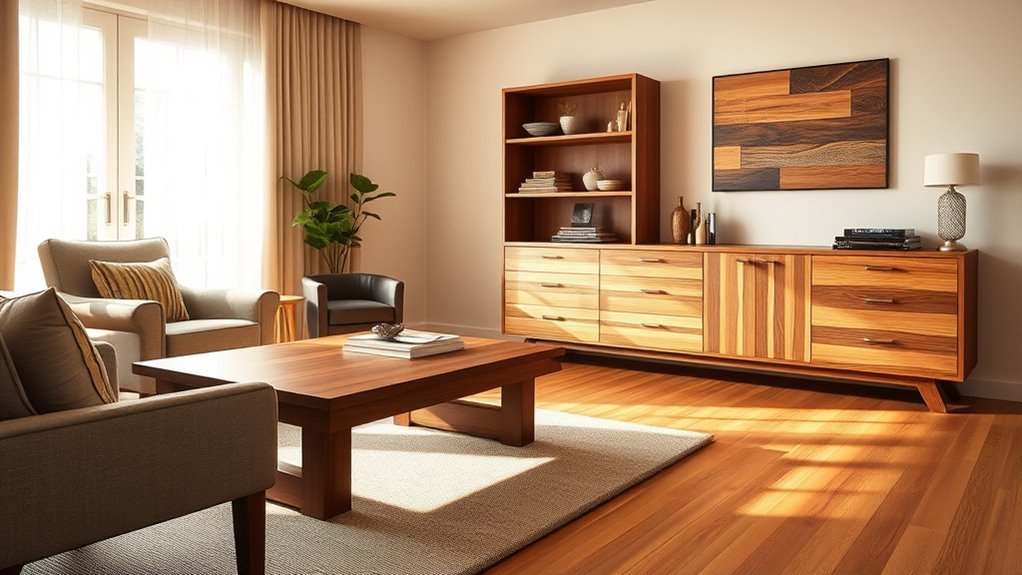
Mixing wood tones can add depth and visual interest to your space, but it requires a thoughtful approach to avoid a cluttered or mismatched look. When you’re working with different finishes, understanding color pairing is essential. Different woods have distinct undertones—warm honey, cool ash, rich mahogany—and knowing how these interact helps you create a cohesive environment. To achieve this, start by identifying the dominant wood tone in the room. Once you’ve chosen your main finish, select secondary pieces that complement or contrast purposefully. For instance, pairing a dark espresso table with lighter oak chairs can create a striking yet balanced effect. The key is to guarantee the hues work together rather than clash, which can happen if you mix too many contrasting shades without considering their undertones.
Focusing on furniture harmony is vital. You want your pieces to look intentionally curated rather than randomly assorted. Think of the room as a palette where each piece adds to the overall picture. If your sofa has warm cherry wood accents, choose side tables or a coffee table in a matching or complementary tone. This doesn’t mean everything has to be the same color, but they should share similar warmth or coolness. For example, pairing cool-toned ash or grayish woods with navy or cooler-colored accents can create a soothing, unified look. Conversely, if you prefer a more eclectic style, you can intentionally mix warm and cool woods, but do so with a plan—perhaps by introducing a unifying element like textiles, rugs, or wall art that ties the different tones together.
Another tip is to consider the scale and placement of furniture pieces. Larger furniture in darker woods can anchor the room, while lighter pieces can brighten and open up the space. Distributing these tones thoughtfully prevents the room from feeling visually heavy or disjointed. When you’re mixing woods, it’s also helpful to incorporate other design elements—like metal fixtures or fabric patterns—that can serve as visual bridges. This creates layers of interest without overwhelming the eye. Paying attention to color undertones and how they influence the overall harmony can make a significant difference. Ultimately, your goal should be to create a harmonious flow, where each wood tone plays a part in the overall aesthetic, rather than competing for attention. With careful color pairing and attention to furniture harmony, you’ll craft a space that’s both dynamic and cohesive.
As an affiliate, we earn on qualifying purchases.
Frequently Asked Questions
Can Mixing Wood Tones Make a Room Appear Cluttered?
Mixing wood tones doesn’t have to make your room look cluttered if you focus on balance and harmony. When you carefully select finishes that complement each other, you create visual interest without adding clutter. Use a consistent color palette or similar undertones to unify different woods. This approach helps your space feel coordinated and intentional, rather than chaotic or busy, ensuring your room remains inviting and well-designed.
What Are the Best Lighting Options for Highlighting Mixed Wood Finishes?
Ever wonder how to make mixed wood finishes pop? You should use accent lighting to highlight the different tones and textures, creating visual interest. Natural daylight is your best friend—let it flood the room to enhance the wood’s true colors during the day. Combine these with carefully placed spotlights or adjustable fixtures to bring warmth and depth, making each wood finish stand out beautifully.
How Do I Choose Complementary Colors for Different Wood Tones?
To choose complementary colors for different wood tones, focus on color harmony by selecting hues that enhance each finish. Use contrast techniques, such as pairing warm woods with cool-toned accents, to create visual interest. Consider a neutral palette to balance diverse wood shades or incorporate accent colors that pick up on underlying undertones. This approach helps your room feel cohesive while allowing each wood tone to stand out beautifully.
Are There Specific Wood Types That Work Better Together?
You’ll find that certain wood types naturally complement each other perfectly, making your space pop like a masterpiece. For ideal wood pairing, opt for lighter woods like oak or maple with darker options like walnut or mahogany, focusing on finish compatibility. These combinations create a balanced, harmonious look. Keep in mind, sticking to similar undertones and textures guarantees your wood finishes blend seamlessly and elevate your room’s style effortlessly.
How Can I Incorporate Mixed Wood Tones Into Small Spaces?
You can incorporate mixed wood tones into small spaces by choosing space-saving furniture with varied finishes that add visual interest without clutter. Opt for multi-functional storage pieces in different wood shades to create contrast and warmth. Keep the overall palette light and cohesive, balancing darker and lighter tones. This approach maximizes style and functionality, making your small room feel more open and inviting while showcasing diverse wood finishes seamlessly.
mixed wood furniture accent pieces
As an affiliate, we earn on qualifying purchases.
As an affiliate, we earn on qualifying purchases.
Conclusion
So, go ahead and mix those wood tones—you’ll end up with a stunning, eclectic space that screams “designer”… or at least, a room that looks like a furniture store threw up. Who knew blending different finishes could be so effortlessly chaotic? Just remember, in the world of design, sometimes the best look is a little bit mismatched. Embrace the irony—you might just create a space that’s perfectly imperfect and uniquely yours.
As an affiliate, we earn on qualifying purchases.
As an affiliate, we earn on qualifying purchases.
Fall Picks
fall essentials
As an affiliate, we earn on qualifying purchases.