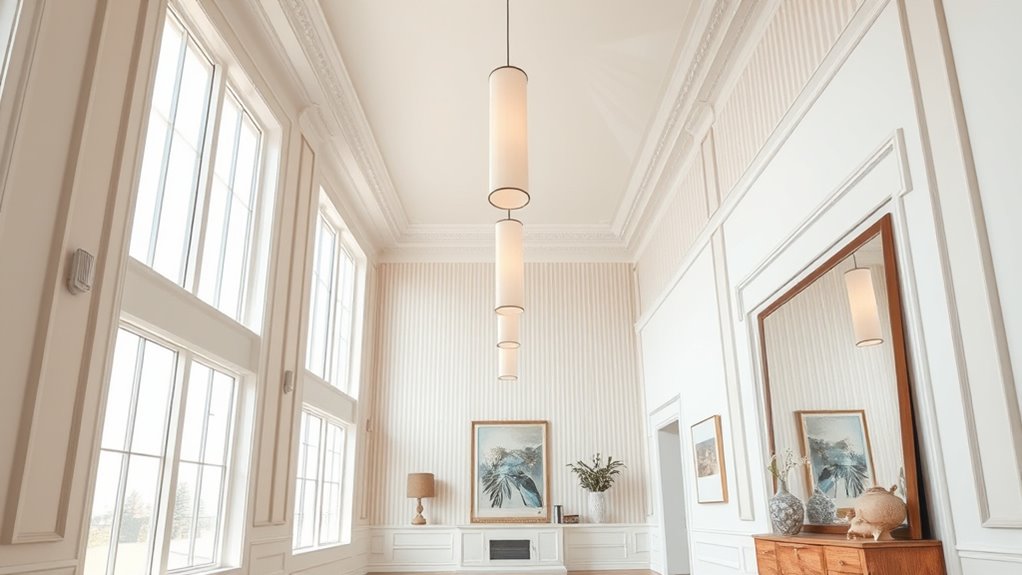

To make your ceilings look higher, choose light wall colors like whites and pastels that reflect more light and create an open feel. Incorporate vertical patterns such as stripes or wallpaper to draw the eye upward. Use strategic lighting, like sconces or high chandeliers, to emphasize vertical space. Keep furniture low and streamlined, and add mirrors to reflect light and give the illusion of height. Explore these tips further to transform your space effortlessly.
Key Takeaways
- Use light wall colors and ceiling shades slightly darker than walls to create an open, airy feel.
- Incorporate vertical stripes or patterns to draw the eye upward visually.
- Install elongated pendant lights or high-hanging fixtures to emphasize height.
- Maximize natural light with large windows or skylights to make the space feel more expansive.
- Keep furniture low and avoid bulky pieces to prevent blocking vertical lines and ceiling space.

Ever wish your room felt more spacious? One of the simplest ways to create that illusion is by making your ceilings appear higher. It might seem like a challenge with low ceilings, but with a few clever tricks, you can transform the space into an airy, open environment. Start by paying close attention to your wall color. Light hues like soft whites, pastels, or cool neutrals reflect more light and help open up the room visually. Painting the walls in a single, consistent color without dividing lines or contrasting trims prevents the eye from focusing on the ceiling’s height, which can make the space seem more expansive. If you prefer a bit of contrast, consider painting the ceiling a shade slightly darker than the walls—this creates a subtle boundary that tricks the eye into perceiving a higher ceiling.
Light, uniform wall colors and darker ceilings create the illusion of higher, more spacious rooms.
Lighting design plays a critical role in elongating your room’s perceived height. Incorporate layered lighting to draw the eye upward. Use wall sconces, recessed lighting, or track lights directed toward the ceiling to cast light upward, emphasizing vertical space. Avoid hanging fixtures that hang too low or draw attention to the ceiling’s lower profile. Instead, opt for elongated, slim pendant lights or chandeliers installed higher than usual, which adds visual height and draws the gaze upward. Skylights or large windows also flood the room with natural light, further enhancing the sense of space and height. Proper lighting not only brightens the room but also creates shadows and highlights that add depth, making the ceiling seem taller. Additionally, choosing appropriate lighting fixtures can significantly impact the room’s vertical perception.
Another trick involves the use of vertical lines and patterns. Vertical stripes on walls or wallpaper with linear patterns guide the eye upward, giving the impression of greater height. Keep furniture low and streamlined, avoiding bulky or tall pieces that can cut off the vertical flow of the room. Mirrored surfaces or glossy finishes reflect light and open up the space, making ceilings appear higher. When arranging furniture, leave some space between larger pieces and the ceiling to avoid crowding the upper part of the room, which can make it feel cramped.
Ultimately, you want to create a harmonious balance among wall color, lighting, and decor choices. By painting your walls in light, reflective shades and designing your lighting to emphasize upward movement, you can make a significant difference. Small adjustments, like choosing the right fixtures and strategic placement of mirrors, can elevate your room’s perceived height without the need for extensive renovations. With these tricks, your space will feel less cramped and more open—giving you the feeling of soaring ceilings in a room that once seemed limited.
Frequently Asked Questions
Can Furniture Placement Affect Perceived Ceiling Height?
Yes, furniture arrangement can influence perceived ceiling height. By choosing taller furniture and placing it against the walls, you create vertical lines that draw the eye upward, making the room feel taller. Avoid bulky pieces that clutter the space, and opt for pieces that complement the room proportions. Proper furniture placement enhances the sense of height and openness, making your room feel more spacious and balanced.
Do Ceiling Fans Make Ceilings Seem Lower or Higher?
Ceiling fans can sometimes make ceilings seem lower, but they also act as a visual trick to redirect attention upward. By choosing fans with sleek, minimalist designs, you enhance lighting effects that draw the eye higher. This creates a rhythm, lifting the room’s perceived height. Proper lighting and fan placement work together, using visual tricks to open up space and make your ceilings appear taller and more expansive.
How Do Window Treatments Influence Room Height Perception?
Window treatment styles considerably influence how tall your room feels. Opt for floor-length curtains or drapes to draw the eye upward, creating an illusion of height. Choose light-colored fabrics that let in ample natural light, which brightens the space and makes ceilings seem higher. Avoid bulky or heavy drapes that can weigh down the room. By selecting the right window treatments, you’ll enhance your room’s vertical perception effortlessly.
Are There Specific Paint Colors That Create an Illusion of Height?
Yes, you can use specific paint colors to create the illusion of height. Light, cool shades like soft blues, pale grays, or off-whites leverage color psychology to evoke a sense of spaciousness. Opt for colors that provide visual contrast between walls and ceilings to draw the eye upward, making your room feel taller. Avoid dark or heavy hues, which tend to make ceilings seem lower.
Can Incorporating Vertical Artwork or Decor Impact Ceiling Perception?
Yes, incorporating vertical artwork or decor can trick the eye into perceiving higher ceilings. When you place artwork or vertical decor along the walls, it draws attention upward, creating an illusion of increased height. Proper artwork placement emphasizes vertical lines, making your room feel more spacious. Use tall, narrow pieces or hang decor higher on the walls to enhance this effect, instantly giving your space a more open and airy feel.
Conclusion
By applying these simple tricks, you can instantly make your rooms feel more spacious and airy. Think of your ceilings as the sky—sometimes all they need is a little stretch to reach new heights. With just a few clever design choices, you’ll turn your low ceilings into a hidden canvas of endless possibilities. So go ahead, elevate your space and let your home breathe freely—because a room that feels taller is a room that feels more alive.