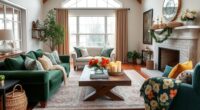
To create depth like a designer, start by thoughtfully arranging your furniture to encourage movement and layering, avoiding everything against the walls. Play with contrasting colors—darker shades recede while lighter tones come forward—and mix textures like plush throws with sleek surfaces to add tactile interest. Use layered lighting to highlight textures and shapes, casting shadows that deepen the space. Keep experimenting with these techniques, and you’ll discover how to transform your space into one full of dimension and life.
Key Takeaways
- Mix various textures such as smooth, rough, shiny, and matte to add tactile richness and visual interest.
- Use contrasting colors—darker recedes, lighter advances—to create layered depth within the space.
- Arrange furniture away from walls and incorporate floating pieces to establish visual layers and encourage movement.
- Layer decor elements like rugs, throws, and accessories to enhance dimensionality and guide the eye through the room.
- Utilize strategic lighting—ambient, task, and accent—to cast shadows and emphasize textures, amplifying depth.

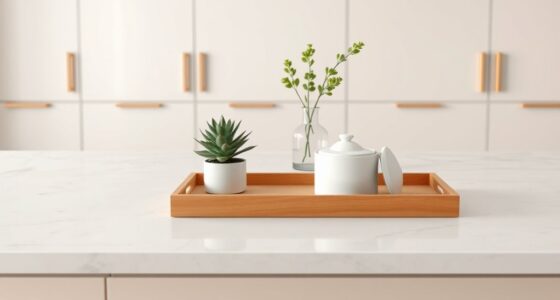
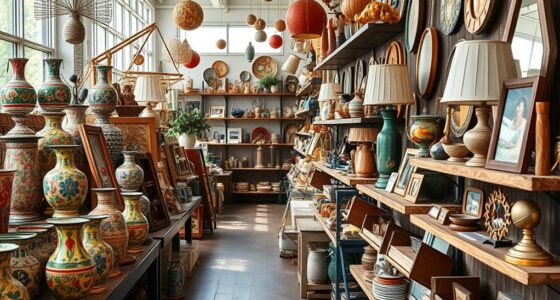
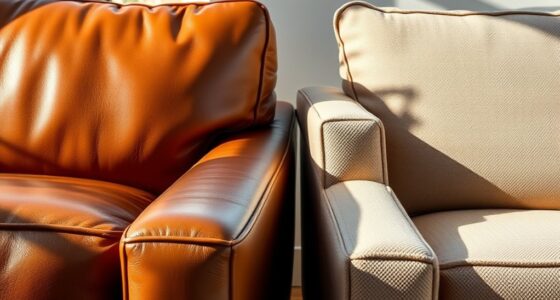
Have you ever wondered how to make your artwork or design feel more immersive? One of the most effective ways to achieve this is by creating depth in your space. When you focus on layering decor and textures, your room transforms from flat to dynamic, inviting you to explore every corner. A key aspect of this process is understanding how furniture placement influences depth. Instead of lining everything up against the walls, consider positioning your furniture in a way that encourages movement and visual interest. For example, floating a sofa in the middle of the room with a rug underneath can add a sense of dimension, making the space feel larger and more inviting. Furniture arrangement also plays a crucial role in establishing visual layers and guiding the flow of the room. Color contrast also plays a fundamental role in creating depth. By using contrasting hues strategically, you can highlight certain areas and make objects stand out. Darker shades tend to recede, while lighter tones come forward, so balancing these can give your room a layered effect. For instance, a deep navy wall can make lighter-colored furniture pop, drawing your eye into the space. Incorporate pops of vibrant color against neutral backgrounds to add visual interest and prevent the room from feeling flat. This contrast guides your gaze throughout the space, giving it a layered, multi-dimensional feel. Textures are another essential element. Combining smooth, rough, shiny, and matte surfaces adds tactile richness and visual depth. Think about placing a plush throw on a sleek leather sofa or mixing woven baskets with glossy ceramics. These varied textures catch and reflect light differently, further enhancing the sense of depth. When you layer different textures, you create a tactile journey that invites your touch and eyes to explore the space more fully. Positioning furniture thoughtfully—such as placing a textured armchair near a smooth glass table—can also emphasize the layers and add complexity to the design. Lighting is an often overlooked but indispensable tool for creating depth. Use a mix of ambient, task, and accent lighting to highlight different textures and areas. A well-placed lamp or wall sconce can cast shadows that add dimension, emphasizing the layered arrangement of your decor. Combining lighting with contrasting colors and varied textures will amplify the feeling of depth, making your space feel richer and more immersive. In essence, mastering furniture placement, leveraging color contrast, and mixing textures allow you to craft a space that feels alive and multidimensional. By thoughtfully layering these elements, you turn a simple room into a beautifully immersive environment where every detail invites closer inspection and appreciation.

Made for Living: Collected Interiors for All Sorts of Styles
As an affiliate, we earn on qualifying purchases.
As an affiliate, we earn on qualifying purchases.
Frequently Asked Questions
How Do I Choose Color Schemes That Enhance Depth?
You can enhance depth by selecting color schemes with strong color harmony and contrasting accent tones. Start with a neutral base to create a sense of calm, then add accent tones in deeper or brighter shades to create visual interest. Use complementary or analogous color schemes to build harmony, while incorporating pops of contrasting colors to highlight focal points and add dimension. This approach makes your space feel layered and inviting.
What Lighting Techniques Best Highlight Layered Decor?
Think of lighting as the brushstrokes that bring your layered decor to life. Use ambient lighting to cast a warm, even glow that sets the scene, while accent illumination acts like a spotlight, highlighting textured surfaces and layered pieces. Position lamps and spotlights strategically to create shadows and depth, making your decor pop. This dance of light transforms your space into a dynamic, inviting tapestry of textures and layers.
How Can I Incorporate Seasonal Textures Without Cluttering?
To incorporate seasonal textures without cluttering, focus on subtle seasonal accents like cozy throws, decorative pillows, or small accessories that complement your existing decor. Use texture mixing by combining smooth and rough surfaces for visual interest, but keep the palette cohesive. Rotate these accents seasonally, storing off-season items neatly, so your space feels fresh without feeling overwhelmed. This approach maintains balance while celebrating seasonal changes effortlessly.
What Are Budget-Friendly Options for Layering Decor?
Layering decor on a budget is like building a delicious sandwich—you want the flavors to complement each other. Start with affordable items like artificial plants for lush greenery, and mix in vintage accessories for character. Use these pieces in different heights and textures to add depth without overspending. Shop secondhand, DIY where possible, and prioritize quality over quantity to create a rich, layered look that feels intentional and stylish.
How Do I Balance Modern and Traditional Elements Effectively?
You balance modern and traditional elements by mixing antique accents with minimalist contrasts. Start by placing a vintage piece, like an ornate mirror, in a sleek, contemporary space. Keep the color palette simple to highlight the contrast, and avoid clutter. This approach creates harmony between the styles, making your room feel curated yet cohesive. Focus on maintaining balance, so neither style overwhelms the other, and enjoy a timeless, stylish look.
textured throw blankets for sofas
As an affiliate, we earn on qualifying purchases.
As an affiliate, we earn on qualifying purchases.
Conclusion
By layering decor and textures, you’re knitting a cozy, multidimensional tapestry that invites exploration. Think of your space as a rich landscape—each piece adds a new hill, valley, or hidden path. With thoughtful touches, your home becomes a vibrant journey, full of surprises and depth. Embrace the process, and watch your space transform into a enchanting sanctuary, where every detail invites you to pause, explore, and feel truly at home.

FRIXCHUR Crystal Ceiling Light Square Chandelier Modern LED Flush Mount
- Dining Room Ceiling Lights:Cool White(4500-6000K). Made of Polished…
- Ceiling Chandelier Size: L9.8"*W9.8"*H3.54", inner square L7.9" *…
- Small Chandelier Light Fixture: led bulb included,energy saving,bulb can…
As an affiliate, we earn on qualifying purchases.
As an affiliate, we earn on qualifying purchases.

The Complete Illustrated Guide to Furniture & Cabinet Construction: 1,000+ Step-by-Step Photos and Diagrams
As an affiliate, we earn on qualifying purchases.
As an affiliate, we earn on qualifying purchases.