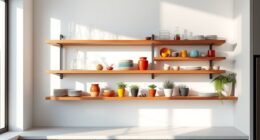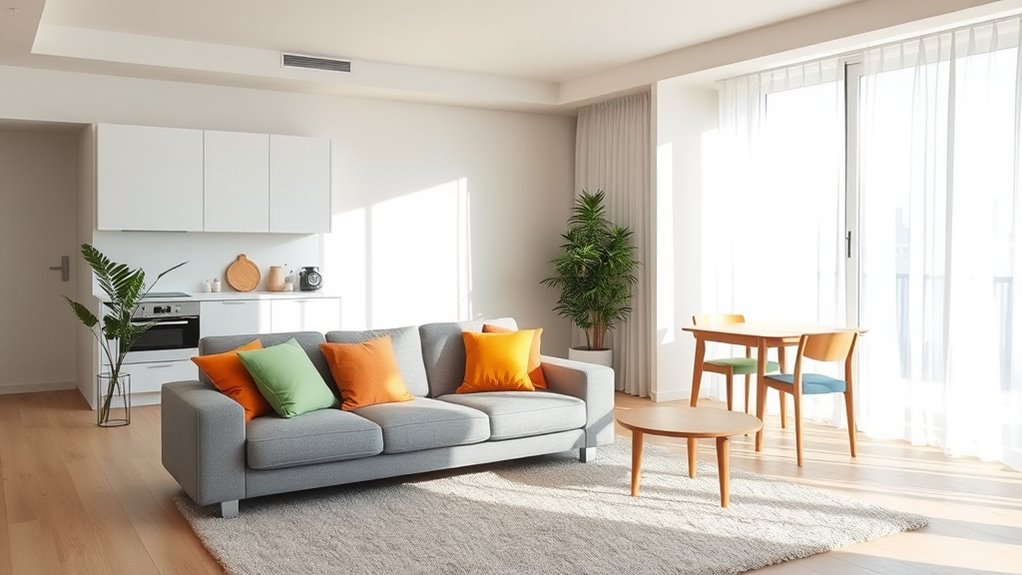

To define spaces in your studio apartment, strategically place furniture like sofas or bookshelves to create natural boundaries. Use area rugs and patterns to visually separate zones, and add room dividers or partitions for privacy. Incorporate different colors and layered lighting to highlight each area, and leverage vertical elements like tall shelving or hanging plants to maximize space. If you keep exploring, you’ll uncover more creative ways to make your layout both functional and inviting.
Key Takeaways
- Use furniture placement, like sofas and bookshelves, to naturally divide different zones within the open space.
- Incorporate area rugs and layered floor coverings to define and anchor each functional area.
- Apply color blocking and patterns to visually distinguish zones and create visual interest.
- Utilize vertical dividers, such as open shelving or sliding screens, for flexible space separation.
- Implement layered lighting and strategic placement to highlight different zones and enhance spatial clarity.
Using Furniture to Create Distinct Zones
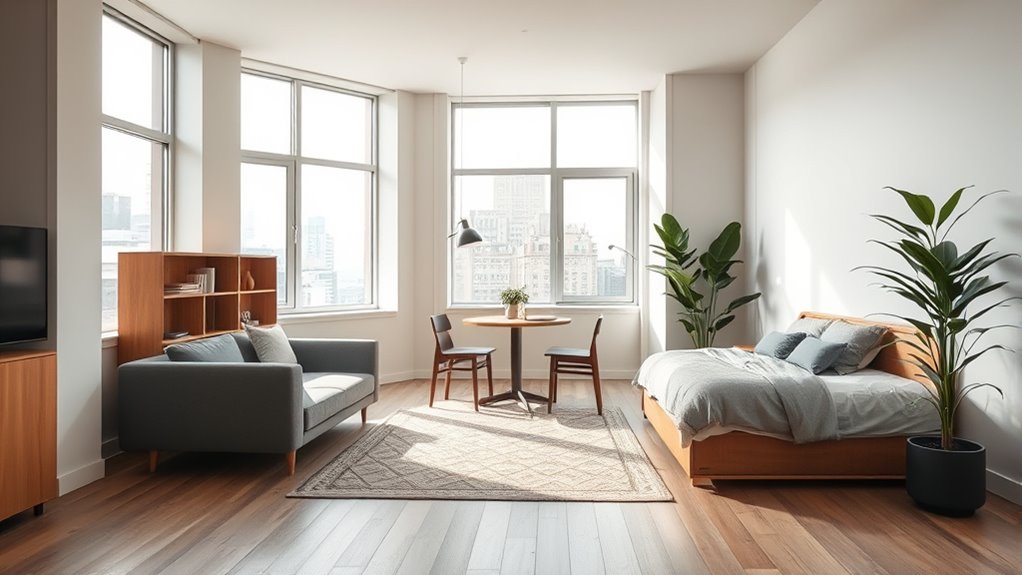
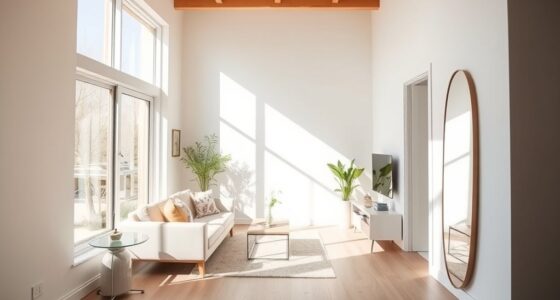
Even in an open-concept space, you can define distinct zones by strategically arranging furniture. Start by choosing pieces that serve as natural dividers, like a sofa or bookshelf, to create visual boundaries. Use decorative accessories, such as vases or artwork, to enhance each zone’s character while maintaining cohesive color coordination. This approach helps your space feel organized without feeling cramped. Position your furniture to foster flow, ensuring each area is functional yet connected. For example, a sectional sofa can separate the living area from the dining space. Remember, consistent color schemes across accessories and furniture unify the zones, making the entire space look intentional and well-designed. Incorporating contrast ratio considerations in your lighting and décor choices can further emphasize different zones and create a dynamic visual experience. Thoughtful furniture placement and decorative accessories are key to defining zones in an open layout. Additionally, incorporating energy-efficient European cloud solutions can inspire a modern, innovative ambiance that complements your interior design. Understanding spatial planning principles can further optimize your layout for both aesthetics and functionality. Being mindful of furnishing placement ensures your space remains balanced and inviting, while integrating smart home fitness technology can add a modern touch that supports your wellness lifestyle.
Incorporating Area Rugs for Visual Separation
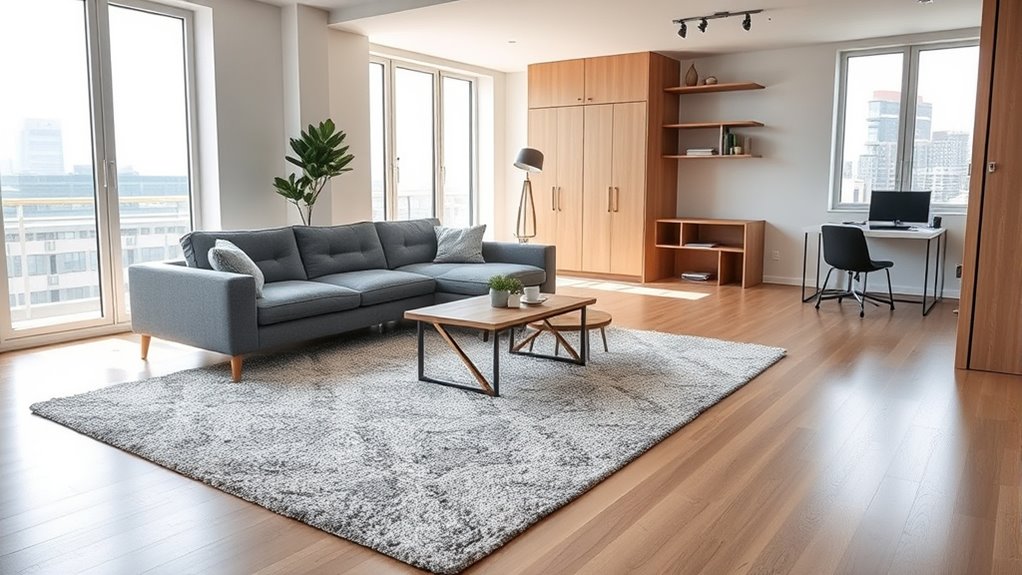
To effectively use area rugs for visual separation, start by choosing the right rug size to define each zone clearly. Layering rugs with different textures can add depth and interest, making each space feel distinct yet cohesive. Keep these points in mind to create a balanced and inviting open-concept layout. Incorporating creative expression through your rug choices can also help personalize your space and foster a sense of belonging.
Choosing the Right Rug Size
Choosing the right rug size is essential for creating a cohesive and functional open concept space. The right size anchors your furniture and defines zones, making your apartment feel intentional. When selecting an area rug, consider these rug placement techniques:
- Center your rug under the main seating to create a cozy gathering spot.
- Guarantee the rug extends beyond furniture edges to unify the space.
- Play with area rug patterns to add visual interest without overwhelming.
- Match rug sizes to room dimensions, avoiding tiny rugs that get lost or oversized ones that dominate.
- Remember that visual separation can be enhanced by layering rugs, especially in open layouts.
- Incorporating rugs into interior design thoughtfully can elevate the overall aesthetic and add texture to your space.
- Understanding at-home beauty tech, such as LED masks and microcurrent devices, can inspire creative ways to personalize your living space through innovative decor elements.
- Proper maintenance and cleaning of your rugs will ensure they remain attractive and last longer, enhancing your home’s overall comfort and style.
- Additionally, selecting appropriate rug materials can improve durability and comfort, tailoring your space to your lifestyle needs.
Layering With Textures
Adding layers of texture through area rugs can transform an open concept space from simply defined zones to visually engaging areas. Textural layering creates tactile contrast, making each zone feel distinct yet cohesive. Choose rugs with different pile heights, patterns, or materials to add depth and interest. For example, a plush shag rug under your seating area offers softness and comfort, while a flat-woven runner in the kitchen or entryway provides durability and visual separation. Mixing textures not only enhances aesthetic appeal but also helps define your spaces without physical barriers. Incorporating durable materials and versatile textures can also inspire creative rug choices that withstand wear and enhance your space’s functionality. Additionally, selecting rugs with easy-care features can simplify maintenance in high-traffic areas. To optimize space definition, consider the layering techniques that combine different textures effectively, utilizing both textural contrast and functional design principles to create a harmonious environment.
Employing Room Dividers and Partitions
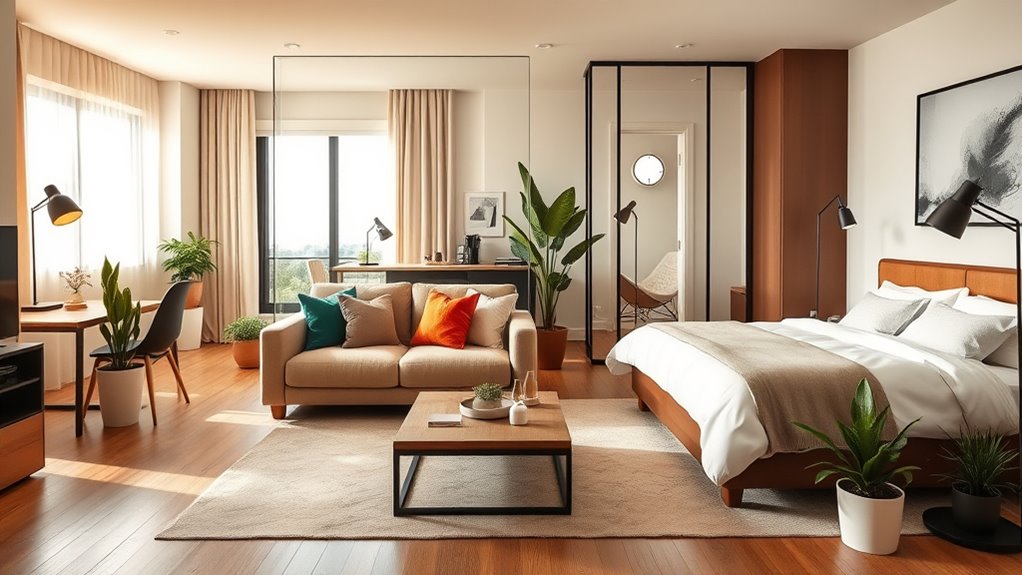
Choosing the right room divider can instantly redefine your space, so consider both style and function. Creative partition ideas, like sliding screens or open shelving, add personality while maintaining openness. Think about how each option complements your lifestyle and aesthetic to create a seamless flow. Incorporating visual and auditory cues can further enhance the sense of separation and clarity within your studio. Additionally, selecting dividers with functional benefits can improve privacy and organization without sacrificing style.
Choosing the Right Divider
Selecting the right room divider can dramatically enhance your open-concept space by creating distinct zones without sacrificing the feeling of openness. Consider these options:
- Wall mounted screens provide a sleek, modern look that can be easily moved or adjusted.
- Sliding panels add flexibility, allowing you to open or close spaces as needed.
- Transparent or semi-transparent partitions maintain light flow, keeping your apartment airy.
- Multi-functional dividers serve as storage or display areas, maximizing your limited space.
Choosing the right divider depends on your style and needs. Wall mounted screens work well for a minimalist vibe, while sliding panels offer versatility. Think about how each option makes you feel—whether it’s cozy, private, or open—and select the one that best suits your lifestyle.
Creative Partitioning Ideas
Creative partitioning ideas can transform your open-concept space into functional zones that reflect your style. Consider using artistic murals as visual dividers—these add personality while subtly defining areas like the sleeping zone or workspace. Room dividers such as folding screens or bookshelves also work well, offering flexibility and style. For a natural touch, create indoor gardens that serve as calming buffers between spaces, bringing in greenery and fresh air. You can even combine these elements—position a lush indoor garden behind a decorative screen or mural—blurring the lines between zones while adding visual interest. These practical room dividers help you personalize your studio, making each area feel intentional and cozy without sacrificing the open feel.
Utilizing Color and Pattern to Define Spaces

When it comes to defining distinct areas within an open-concept space, color and pattern are powerful tools that can subtly guide the eye and create visual separation. You can use color blocking to designate areas—think bold walls or rugs that anchor your living or dining zones. Pattern mixing adds energy and personality, helping each space feel unique yet cohesive. To evoke emotion, consider:
- Choosing warm hues to create cozy, inviting corners.
- Using contrasting patterns to energize a workspace.
- Incorporating soft, muted tones for calming bedrooms.
- Combining geometric and organic patterns for visual interest.
Additionally, selecting appropriate visual cues can enhance the overall flow and make defining spaces more intuitive, especially when considering the precious metals IRA market trends and investment options that influence financial planning within your living space. Recognizing the importance of inner guidance can also help you create a space that truly resonates with your personal style and needs, and understanding home staging techniques can further refine the way you visually organize and define your environment. Incorporating design principles can provide a structured approach to balancing color and pattern effectively.
Implementing Lighting Strategies for Different Areas

Effective lighting is essential for defining and enhancing different areas within an open-concept space. You can start by layering ambient lighting, such as ceiling fixtures or wall sconces, to create a soft, overall glow that unifies the space. For specific tasks like reading or cooking, incorporate task illumination with adjustable lamps or focused pendant lights. Use dimmers to control light intensity, allowing you to switch between cozy and bright atmospheres easily. Highlight distinct zones with targeted lighting, ensuring each area has adequate illumination for its purpose. Remember, proper placement and variety in your lighting choices help visually separate spaces without physical barriers, making the entire apartment feel more organized and inviting. Incorporating smart lighting systems can further enhance convenience and customization in your space.
Adding Vertical Elements to Maximize Space
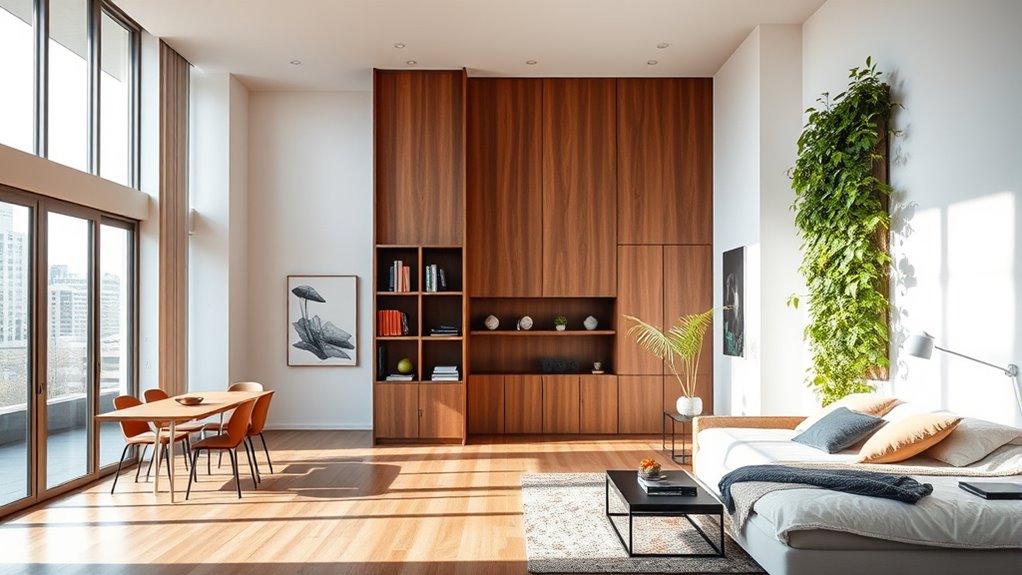
Adding vertical elements is a smart way to maximize space in an open-concept layout. By leveraging height, you create visual interest and functional zones without sacrificing floor space. Consider these options:
Vertical elements boost space and style, creating functional zones and visual interest without sacrificing floor area.
- Use vertical shelving to display books, décor, or essentials, keeping surfaces clear and organized.
- Hang plants to add greenery and life without taking up valuable surfaces, making your space feel fresh.
- Install tall storage units that stretch upward, providing ample storage while maintaining an open feel.
- Hang artwork or mirrors vertically to draw the eye upward, enhancing the sense of height and openness.
These strategies help define zones, add personality, and make your studio feel larger and more inviting. Vertical elements turn plain walls into powerful design tools.
Incorporating Multi-Functional Furniture

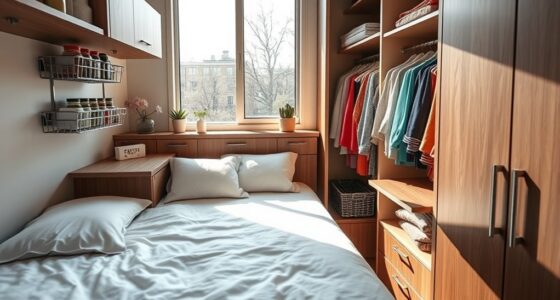
Vertical elements help define and maximize your open space, but to truly optimize functionality, incorporating multi-functional furniture is key. These pieces serve dual purposes, offering smart storage solutions while saving space. For example, a sofa bed provides seating during the day and a bed at night, reducing the need for extra furniture. Look for items that blend seamlessly with your color coordination to create a cohesive look. Storage ottomans, fold-out desks, and wall-mounted beds are excellent choices that keep clutter at bay while maintaining an open feel. Multi-functional furniture ensures you make the most of every square foot, making your studio feel spacious and organized without sacrificing style or comfort.
Creating Visual Flow With Consistent Design Themes

Creating a seamless visual flow in your open-concept living space begins with establishing a consistent design theme. Choose a cohesive color palette that reflects your mood—calming blues or energizing yellows—based on color psychology. This creates harmony and makes your space feel inviting. Incorporate acoustic treatments, like rugs or wall hangings, to reduce noise and enhance comfort, reinforcing a sense of unity. To evoke emotion and make your space memorable, consider these steps:
Create harmony in your open living space with a unified color palette, textures, and consistent design elements for a memorable atmosphere.
- Select a dominant color that sets the tone.
- Use matching or complementary accessories throughout.
- Incorporate textures that add depth and warmth.
- Maintain consistent design elements, like patterns or materials, across zones.
Frequently Asked Questions
How Can I Make Small Open Spaces Feel Cozy?
To make small open spaces feel cozy, you should focus on adding cozy textiles like plush throws and soft rugs, which create a warm, inviting atmosphere. Incorporate warm lighting, such as table lamps or string lights, to soften the space and enhance intimacy. Keep your furniture well-arranged to define areas clearly, and use curtains or room dividers subtly to create cozy nooks without sacrificing the open feel.
What Are the Best Colors for Defining Different Areas?
You should choose colors based on color psychology and your desired ambiance. Warm hues like soft yellows and earthy tones create inviting zones, while cool shades such as blues and greens promote calm and separation. Using contrasting color schemes helps visually define each area, making your studio feel more structured. Incorporate these colors through rugs, furniture, or accent walls to subtly delineate spaces while maintaining flow.
How Do I Choose Functional Furniture for Limited Space?
You should choose multi-functional furniture that maximizes your limited space by offering storage and versatility, like fold-out beds or ottomans with hidden compartments. Focus on space-saving solutions such as wall-mounted desks or beds that can be tucked away. Opt for pieces with clean lines and neutral colors to keep your area feeling open. Prioritize furniture that serves more than one purpose to make your studio both functional and clutter-free.
Can Plants Help in Visually Separating Zones?
Yes, plants can help visually separate zones in your studio apartment. Indoor greenery adds natural texture and color, creating subtle boundaries. You can use decorative dividers, like a row of potted plants or tall planters, to define spaces without closing them off. Combining decorative dividers with indoor greenery enhances the aesthetic appeal while providing functional separation, making your apartment feel more structured and inviting.
What Are Some Budget-Friendly Ways to Create Distinct Spaces?
Like a modern-day Daedalus, you can craft clever, budget-friendly solutions to define your space. Use multifunctional furniture—such as a sofa bed or storage ottomans—to create zones without extra cost. DIY room dividers, like hanging curtains, repurposed bookshelves, or open shelving, help segment areas effectively. These affordable ideas add structure and style, making your studio feel more organized and intentional without breaking the bank.
Conclusion
Just as Da Vinci mastered the art of blending elements into a harmonious whole, you can define your studio’s spaces with thoughtful design. By using furniture, color, and lighting strategically, you create a flowing yet distinct environment. Embrace your inner artist, shaping your open concept living space into a masterpiece that reflects your personality. With these techniques, you’ll turn a single room into a beautifully curated sanctuary—proof that even in simplicity, greatness can be achieved.