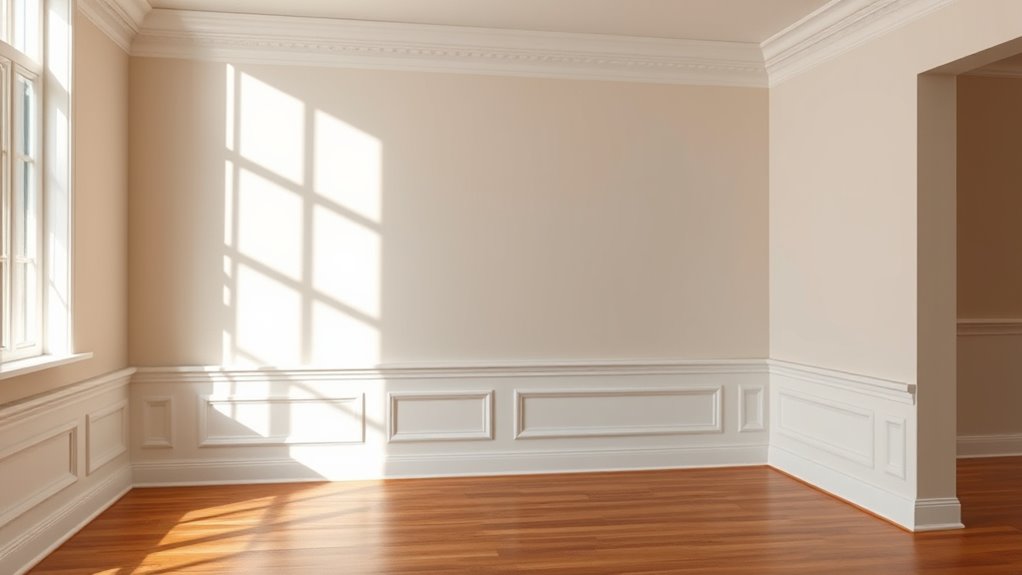

Crown molding and baseboards instantly boost your room’s style and character by adding architectural detail that draws the eye. They define space, improve proportions, and create a polished look that makes your room feel more upscale. With choices in style, material, and finish, you can craft a cohesive design that reflects your taste. Keep exploring to discover how selecting the right trim can transform your space into an elegant, well-balanced environment.
Key Takeaways
- Crown molding and baseboards add decorative detail, transforming simple walls into elegant architectural features.
- They define room boundaries, improving visual proportions and creating a sense of spaciousness.
- Various styles and finishes allow for cohesive design, enhancing overall aesthetic appeal.
- Material choices and proper installation elevate room sophistication and ensure durability.
- These trims unify decor elements, adding refinement and a polished look to interior spaces.

Adding crown molding and baseboards can dramatically transform the look of your room, giving it a polished and finished appearance. These elements serve as decorative details that elevate the overall design, turning simple walls into architectural accents that catch the eye. When you choose the right style and finish, you’ll notice how instantly the space feels more refined and cohesive. Crown molding, for example, adds a touch of elegance by framing the ceiling and creating a visual segue between walls and ceiling. Baseboards, on the other hand, ground the room, hiding imperfections where the wall meets the floor and adding a sense of proportion. Both features work together to define the room’s character and style. Additionally, selecting the appropriate architectural details can enhance the room’s visual impact and style cohesion.
Adding crown molding and baseboards transforms walls into elegant, cohesive architectural accents.
You have a wide array of options for decorative details that can be incorporated with crown molding and baseboards. From simple, clean lines to intricate, ornate designs, your choices influence the room’s mood. If you prefer a modern look, sleek, minimal trim with sharp edges will give your space a fresh, contemporary feel. For a more traditional vibe, detailed moldings with decorative carvings or dentil patterns can evoke timeless elegance. The key is to select architectural accents that complement your overall decor and personal taste. When installed correctly, these trims aren’t just decorative—they serve as a framing device that enhances the height and proportions of your room, making it feel more spacious and well-designed.
Frequently Asked Questions
What Materials Are Best for Crown Molding and Baseboards?
You should choose materials like wood, MDF, or polyurethane for crown molding and baseboards. Wood offers excellent material durability and a classic look, but it can be pricier. MDF provides great aesthetic versatility, is affordable, and easy to paint, though it’s less durable. Polyurethane combines durability with versatility, resisting moisture and damage. Consider your budget and style preferences to pick the best option for your space.
How Do I Choose the Right Style for My Room?
Think of your room as a blank canvas, waiting for a frame that complements its soul. To choose the right style, consider your decor style compatibility—sleek lines suit modern spaces, while ornate designs fit traditional looks. Also, keep room size considerations in mind; tall, elaborate crown molding might overwhelm a small room, so opt for simpler profiles. Let your room’s personality guide your choice, creating harmony and elegance.
Can Crown Molding and Baseboards Increase My Home’s Value?
Yes, crown molding and baseboards can increase your home’s value by enhancing its interior design and overall appeal. These home improvement details add sophistication and style, making your space more attractive to potential buyers. Well-chosen trim reflects your attention to detail and can elevate the look of any room. Investing in quality crown molding and baseboards is a smart way to boost your home’s market value and interior aesthetic.
What Tools Are Needed for Professional Installation?
To install crown molding and baseboards professionally, you’ll need essential tools like a miter saw for accurate cuts, a tape measure for precise measurements, a level to ensure proper alignment, a nail gun or hammer with finishing nails, and a caulking gun for sealing gaps. Keep installation tips in mind, such as cutting at the correct angles and securing trim tightly. These tools and tips help attain a polished, professional look in your room.
How Do I Maintain and Clean Crown Molding and Baseboards Effectively?
You might notice dust settling on your crown molding and baseboards, but a gentle dusting preserves their beauty. Regularly use a microfiber cloth or a soft brush for dusting, and occasionally opt for decorative paint techniques like touch-ups to keep them looking fresh. When cleaning, avoid harsh chemicals—just warm water and mild soap suffice. This routine keeps your trim spotless, highlighting their elegant detail and transforming your space effortlessly.
Conclusion
Remember, a little trim goes a long way in transforming your space. Crown molding and baseboards add character, depth, and a polished look that elevates any room. Don’t underestimate the power of these simple details—they can make your home feel more complete and inviting. As the saying goes, “The devil is in the details,” so take the time to add those finishing touches. Your space will thank you for it!