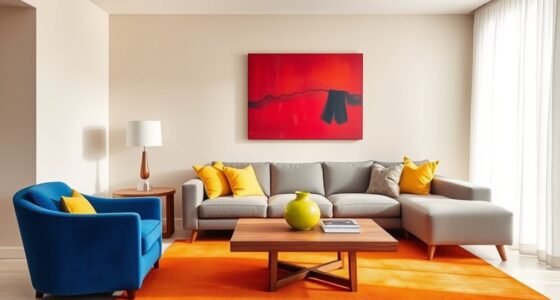
To decorate with pastels in grown-up spaces, pair soft colors with neutrals like beige or gray for an elegant backdrop, and add contrast with deeper shades such as navy or forest green. Incorporate pastel furniture pieces as focal points, and use accessories like vases or lamps for subtle accents. Focus on balanced color schemes and strategic placement to create a calm, sophisticated vibe. Keep exploring for more ideas to elevate your space with these gentle hues.
Key Takeaways
- Pair pastels with neutrals or darker shades for a sophisticated, balanced look.
- Incorporate pastel furniture as focal points with clean lines for a modern aesthetic.
- Use pastel accessories like vases and lamps to add subtle visual interest.
- Enhance pastel schemes with natural light and reflective surfaces to brighten the space.
- Focus on creating calm, stylish environments by thoughtfully pairing colors and strategic placement.
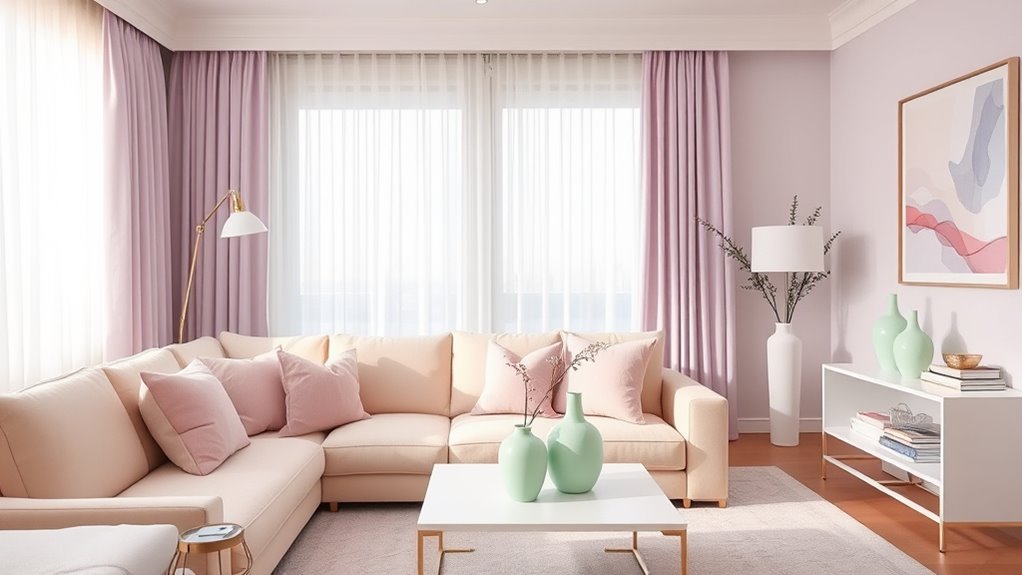
Have you ever considered how pastels can effortlessly brighten and soften your living space? These gentle hues bring a calming vibe that’s surprisingly versatile for grown-up rooms. When you start decorating with pastels, one of the first things to think about is color pairing. Pastels work beautifully with neutrals like beige, gray, or crisp white, creating a sophisticated backdrop that feels fresh yet understated. You can also mix pastels with deeper shades—navy, charcoal, or forest green—to add depth and contrast without losing the softness. The key is balancing the lightness of pastels with darker accents that anchor the space, giving it an elegant, mature feel.
Pastels pair beautifully with neutrals and deep shades for a sophisticated, balanced look.
Furniture accents are a simple yet impactful way to incorporate pastels into your decor. Think of a pastel-colored armchair, a soft pink or mint green sofa, or even pastel-colored throw pillows. These accents serve as focal points that lift the entire room without overwhelming it. When choosing furniture, opt for clean lines and simple shapes to keep your space looking modern and stylish. Pastel furniture pieces can be paired with natural wood finishes or metallic accents—like gold or brushed brass—to elevate the look and add a touch of sophistication. This combination creates a balanced aesthetic that’s both inviting and refined.
To make the most of pastels, consider the placement of color accents. Light pastel shades work well on larger pieces, such as sofas or statement chairs, while smaller accessories like vases, picture frames, or lamps can feature pastel hues to subtly tie the room together. Mix and match different pastel tones in your accessories to add visual interest, but keep the overall palette cohesive to avoid a cluttered appearance. Monochromatic pastel schemes—using various shades of the same color—also hold a modern appeal and make your space feel harmonious.
Lighting plays a vital role in decorating with pastels, too. Soft, natural light enhances the gentle quality of these colors, making your space feel airy and inviting. If you’re working with artificial lighting, choose warm bulbs that complement the pastel palette, preventing the colors from appearing dull or washed out. Incorporate reflective surfaces like mirrors or glossy finishes to bounce light around the room, further emphasizing the softness and brightness of your pastel scheme. Additionally, energy-efficient lighting can help maintain a sustainable and eco-friendly ambiance in your decor.
Ultimately, decorating with pastels is about creating a space that feels calm, stylish, and grown-up. With thoughtful color pairing and strategic furniture accents, you can craft a room that exudes sophistication while maintaining a serene, welcoming vibe. Pastels aren’t just for nurseries or springtime—they’re a versatile choice that can elevate your entire living space with subtlety and grace.
As an affiliate, we earn on qualifying purchases.
Frequently Asked Questions
How Can I Incorporate Pastels Into a Modern Minimalist Design?
You can incorporate pastels into a modern minimalist design by using color blocking with soft hues on walls or furniture, creating clean, bold sections. Mix textures like matte paint with smooth fabrics or sleek metals to add depth without clutter. Keep your palette simple and restrained, allowing the pastels to stand out subtly. This approach maintains a sleek, contemporary look while softening the space with gentle, sophisticated colors.
Are Pastels Suitable for High-Traffic Areas in a Home?
Pastels can work well in high-traffic areas if you choose durable paints designed for frequent cleaning. You should opt for washable, stain-resistant pastel paints to maintain their soft look. Regularly clean pastel walls with gentle, non-abrasive cleaners to keep them fresh. While they may show wear over time, proper paint selection and maintenance make pastels a practical and stylish choice for busy spaces in your home.
What Are the Best Complementary Colors for Pastel Palettes?
You should choose complementary colors based on color wheel harmony to enhance your pastel palette. Soft neutrals like beige or gray work well for a subtle, sophisticated look, while contrasting pastel shades such as mint green with blush pink create a lively, balanced vibe. Incorporate deeper shades like navy or charcoal for contrast, and remember that contrasting pastel shades add visual interest without overwhelming the space.
How Do I Choose the Right Pastel Shade for My Space?
You should start by shade matching with your existing furniture and decor to guarantee harmony. Consider color psychology—choose pastels that evoke the mood you want, like calming blues or energizing pinks. Test samples in different lighting to see how they look throughout the day. Trust your instincts, and select a shade that makes you feel comfortable and reflects your personal style for a sophisticated, grown-up space.
Can Pastels Be Used Effectively in Small Rooms?
Using pastels in small rooms is like filling a tiny jar with delicate flowers—you want just enough to brighten, not overwhelm. You can make it work by balancing pastel shades with clever color schemes and lighting strategies. Add mirrors or ample natural light to reflect brightness, and choose softer, muted pastels to avoid a cramped feel. This approach creates an inviting, airy space that feels larger and more harmonious.
As an affiliate, we earn on qualifying purchases.
Conclusion
Just like a gentle dawn breaks the darkness, incorporating pastels into your space transforms it into a serene retreat. By embracing these soft hues, you evoke the calming spirit of a Monet watercolor or a whisper of spring’s first bloom. Remember, decorating with pastels isn’t just about color—it’s about creating a sanctuary where tranquility and elegance intertwine, inviting you to savor moments of quiet beauty each day. Let your space become your own timeless masterpiece.
As an affiliate, we earn on qualifying purchases.
As an affiliate, we earn on qualifying purchases.