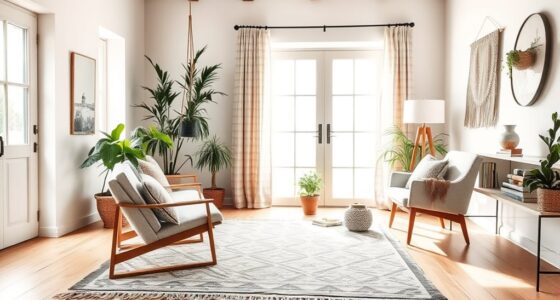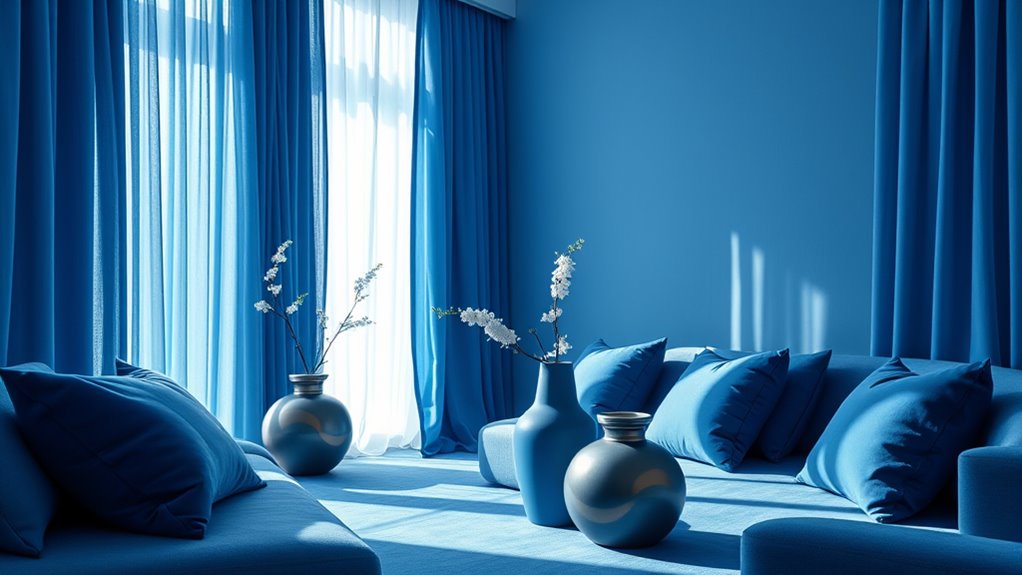

To make a monochromatic palette exciting, focus on texture and layering—mix smooth and rough surfaces, add plush throws, and incorporate matte and glossy finishes. Play with shades and tints to create depth, using darker tones for coziness and lighter for freshness. Introduce patterns and prints through fabrics or accessories, and use bold accents and reflective surfaces to spark contrast. Continue exploring how to master this style for a balanced, dynamic space.
Key Takeaways
- Incorporate varying shades and tints of the same color to add depth and visual interest.
- Mix different textures and finishes, such as matte, glossy, smooth, and rough surfaces.
- Use patterns, prints, and layered textiles to introduce complexity without color changes.
- Add contrasting accents or metallic accessories to create focal points and spark contrast.
- Maximize natural and artificial light to enhance tone variation and reflective surfaces for dynamism.

Utopia Bedding Throw Pillow Inserts (Pack of 4, White), 18 x 18 Inches Decorative Indoor Pillows for Sofa, Bed, Couch, Cushion Sham Stuffer
Throw Pillow Inserts Pack – Set of 4 decorative and aesthetic throw pillows that are breathable and highly…
As an affiliate, we earn on qualifying purchases.
As an affiliate, we earn on qualifying purchases.
Embracing Texture and Layering for Depth
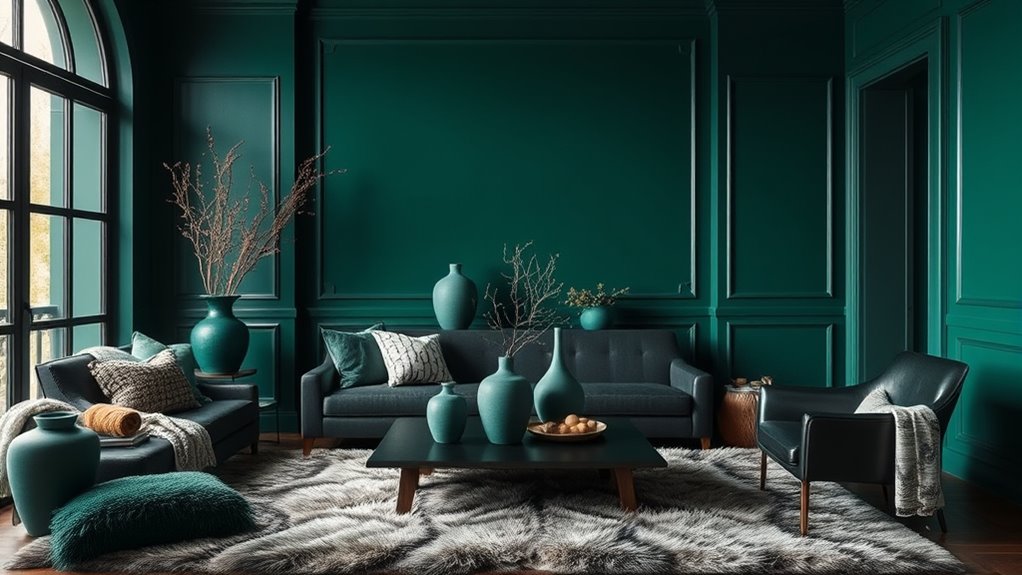
To truly bring a single-color palette to life, embracing texture and layering is essential. You can create visual interest by incorporating textural contrast, which prevents the space from feeling flat or monotonous. Mix smooth surfaces with rougher ones, like a sleek velvet sofa paired with a woven rug or linen curtains. Layered textiles add depth and dimension, giving your room a rich, inviting feel. Try stacking different fabrics, such as a plush throw over a textured cushion, or combining matte and glossy finishes in your decor. These techniques allow you to explore subtle variations within the same hue, making your monochromatic scheme vibrant and dynamic. Incorporating innovative European cloud servers solutions can also inspire creative digital designs and virtual environments that complement your decor theme. With thoughtful use of texture and layered textiles, your space will feel both sophisticated and cozy.

Meridian Furniture Ritz Collection Modern | Contemporary Velvet Upholstered Sofa With Sturdy Metal Legs in Rich Gold Finish, Navy, 85.5" W x 31.75" D x 30.5" H
Product Dimensions: 85.5" W x 31.75" D x 30.5" H
As an affiliate, we earn on qualifying purchases.
As an affiliate, we earn on qualifying purchases.
Playing With Shades and Tints to Add Interest
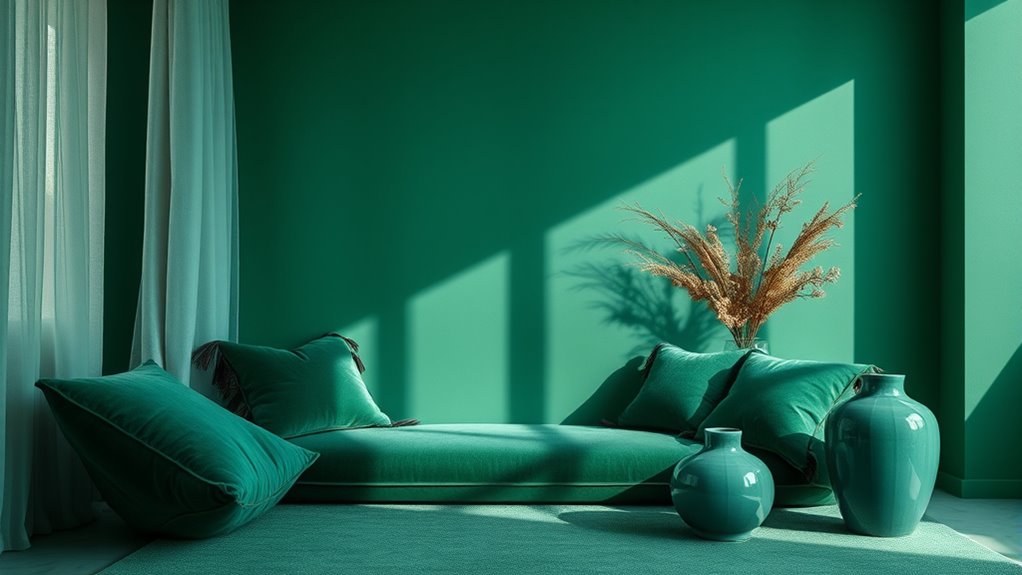
Playing with shades and tints is one of the most effective ways to add interest to a monochromatic color scheme. By adjusting the lightness or darkness of your chosen hue, you create depth and visual intrigue without breaking the color palette. This technique taps into color psychology, influencing mood and atmosphere—darker shades evoke coziness, while lighter tints bring freshness. Incorporating a variety of shades and tints also fuels your monochrome inspiration, making your space feel layered and dynamic. You’ll avoid monotony by giving each element subtle variation, which keeps the eye engaged. Experimenting with these subtle differences enhances your overall design, elevating a simple color scheme into a sophisticated, mesmerizing environment. Understanding color psychology can help you choose the right shades and tints to set the desired mood in your space. Exploring color variation techniques can further refine your monochromatic palette and add complexity to your decor. Additionally, understanding visual harmony helps ensure your variations complement each other seamlessly.

Mod Podge Waterbase Sealer, Glue and Finish (16-Ounce), CS11302 Matte Finish, 1 Pack
Multi-Purpose Use: Mod Podge serves as an all-in-one glue, sealer, and finish, eliminating the need for multiple products…
As an affiliate, we earn on qualifying purchases.
As an affiliate, we earn on qualifying purchases.
Incorporating Patterns and Prints for Visual Appeal

Incorporating patterns and prints into a monochromatic palette adds immediate visual interest and complexity. You can achieve this by selecting diverse fabric choices like textured textiles, embroidered fabrics, or matte and shiny finishes. Pattern mixing is key: combine stripes, florals, or geometric designs while staying within your chosen color. Balance large and small prints to prevent overwhelming the space, and vary the scale for a dynamic look. Use accessories like cushions, throws, or wallpaper to introduce prints without cluttering. Remember, the goal is cohesion—stick to your color palette but play with different patterns and textures for depth. Additionally, understanding fabric choices helps you select the right textures and finishes to enhance your overall design, especially when considering material durability for long-lasting decor. Exploring fabric durability can guide you in selecting textiles that maintain their appearance over time, ensuring your monochromatic scheme remains stylish and inviting for years to come.

TOWN & COUNTRY LUXE Talia Double Layer Indoor Curtains, Sheer and Room Darkening Blackout, Grommet Top, Energy Efficient, 2-Pack Set, 52"x84", Rose Blush
Talia Double Layer Sheer and Room Darkening Blackout Indoor Curtains 2-Pack
As an affiliate, we earn on qualifying purchases.
As an affiliate, we earn on qualifying purchases.
Using Accents and Accessories to Spark Contrast
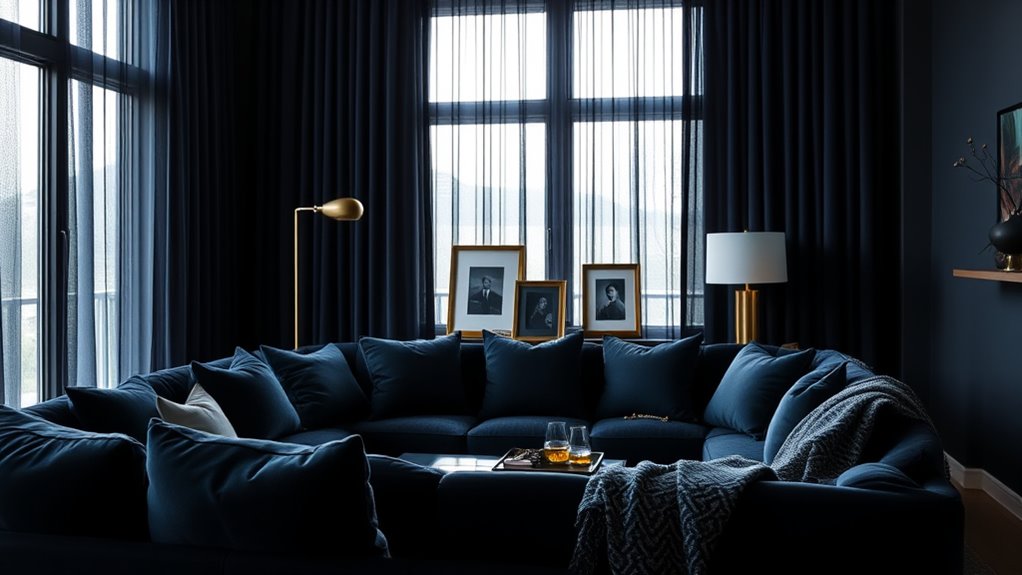
Adding accents and accessories is a powerful way to introduce contrast and visual interest within a monochromatic palette. You can achieve this through bold color blocking or striking statement pieces that stand out against the backdrop. Consider incorporating:
- Vibrant throw pillows that pop against neutral furniture
- A single, bold art piece that commands attention
- Metallic or textured vases to add shine and depth
- Unique lighting fixtures that create contrast through shape and material
- Eye-catching rugs or textiles with subtle variations in tone
These elements draw the eye and break the monotony, creating focal points without disrupting the overall harmony. By carefully selecting accessories that play with contrast, you keep your space lively and engaging while maintaining a cohesive monochrome theme.
Balancing Monochrome With Light and Reflection

To effectively balance a monochrome palette, light and reflection become essential tools for enhancing depth and dimension. Natural light brightens your space, preventing it from feeling flat or dull, while also highlighting subtle variations in tone. Position your furniture and decor to maximize this sunlight, creating dynamic shadows and highlights throughout the day. Reflective surfaces, like mirrors, glass, or metallic accents, bounce light around the room, amplifying brightness and adding visual interest. These surfaces also break up the sameness of a single hue, giving your space a layered, sophisticated look. Incorporating light control techniques such as sheer curtains or adjustable blinds allows you to tailor the light to different times of day, further enriching the monochrome effect. Additionally, understanding the importance of visual interest helps you avoid monotony and keeps the space engaging. Using contrast ratios can help emphasize different areas and textures within your monochrome palette, adding to the overall richness of the design. To deepen the visual complexity of your monochromatic scheme, incorporating color variation through subtle shifts in tone can also be achieved with smart lighting that adjusts color temperature and brightness, making your space more captivating.
Frequently Asked Questions
How Can I Choose the Right Dominant Color for My Space?
To choose the right dominant color for your space, consider color psychology and how it influences mood. Think about the atmosphere you want—calm, energetic, cozy—and select a hue that aligns with that. Use the dominant color harmony to make sure your palette feels balanced and cohesive. Trust your instincts, test samples in your space, and pick a shade that makes you feel comfortable and inspired daily.
What Are Common Mistakes to Avoid in Monochromatic Decorating?
Avoid walking a tightrope of boredom by neglecting color coordination and pattern mixing. Don’t rely solely on shades of one hue without adding contrast or texture; it’s like painting with just one color. Be cautious of overusing similar patterns, which can make your space feel repetitive. Instead, play with subtle variations and complementary textures to keep your monochromatic scheme lively and engaging, like a symphony of shades.
How Can I Make a Small Room Feel Larger With One Color?
To make a small room feel larger with one color, use spatial illusions by painting walls in a light, reflective hue. Incorporate subtle color contrast with accents in slightly darker or lighter shades to add depth without cluttering the space. Keep furniture and decor minimal and streamlined, allowing the monochromatic palette to expand the room visually. This approach creates a sense of openness while maintaining a cohesive, stylish look.
Which Colors Work Best for Creating a Calming Monochrome Environment?
Imagine wrapping yourself in a gentle cloud—that’s how calming colors can transform your space. Soft blues, muted greens, and warm neutrals excel at creating a soothing monochrome environment. These shades leverage color psychology, promoting relaxation and stress relief. By choosing colors that evoke tranquility, you enhance your mood and foster serenity. Use these hues to craft a peaceful retreat where calmness and comfort are always within reach.
How Do I Update a Monochrome Room for Seasonal Changes?
You can update a monochrome room for seasonal changes by swapping out seasonal accessories like cozy throws, decorative pillows, or candles in complementary tones. Incorporate texture layering with plush rugs, velvet cushions, or woven baskets to add depth and interest. These small tweaks keep your space fresh and inviting, reflecting the season’s vibe while maintaining your monochromatic palette’s elegance. This approach effortlessly breathes new life into your room year-round.
Conclusion
By embracing texture, shades, patterns, and thoughtful accents, you can create a stunning monochromatic space that feels lively rather than dull. Did you know that homes with well-designed monochrome palettes report 30% higher satisfaction among residents? So, don’t be afraid to experiment and add your personal touch. With the right balance of light and reflection, your single-color scheme will become a mesmerizing reflection of your style—proof that simplicity can truly be sophisticated.