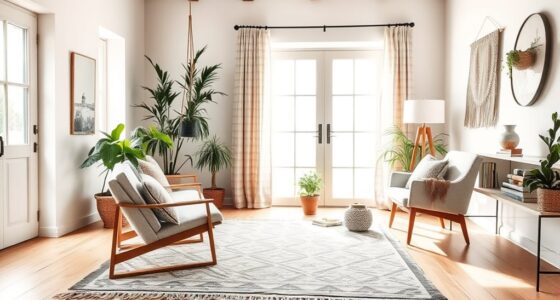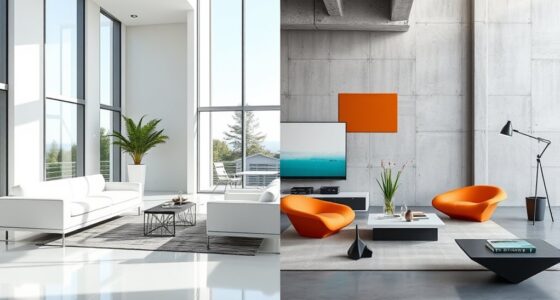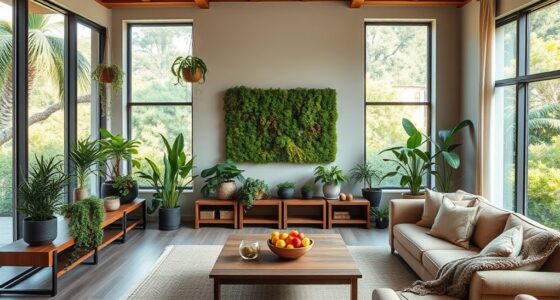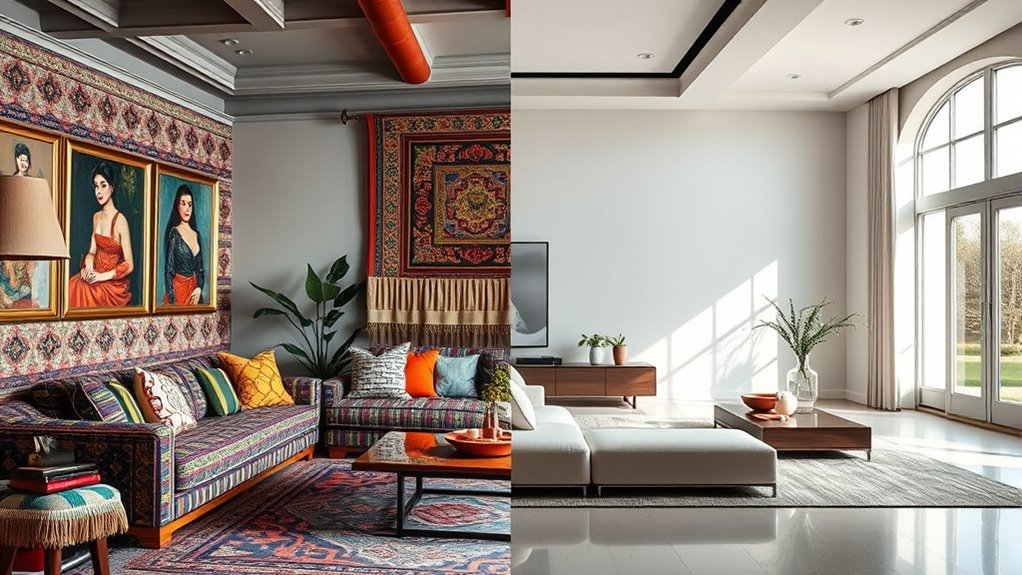

Choosing between maximalist and minimalist decor depends on your personality, daily routines, and aesthetic preferences. If you love bold colors, layered textures, and expressive decor, maximalism suits you. If you prefer calm, simple lines, and neutral tones, minimalism might be your match. Consider how much visual stimulation you need and how your space supports your lifestyle. Stay tuned to explore how to personalize each style for your perfect environment.
Key Takeaways
- Identify your preferred color palette: bold and vibrant for maximalism, neutral and subdued for minimalism.
- Consider your daily routines and need for clutter: layered, expressive spaces suit maximalism; clean, simple environments suit minimalism.
- Assess your space size: larger areas handle eclectic, layered decor better; smaller rooms benefit from streamlined minimalism.
- Reflect on your personality: if you love bold statements and rich textures, maximalism may be ideal; if you prefer calm and simplicity, minimalism fits better.
- Think about maintenance and functionality: minimalism offers easier upkeep; maximalism provides a dynamic, personalized ambiance.
Understanding the Core Principles of Maximalism and Minimalism

While both maximalism and minimalism aim to create visually appealing spaces, they do so through fundamentally different principles. Maximalism embraces bold color palettes, mixing vibrant hues and rich patterns to make a statement. It’s about expressing personality through a diverse array of decor elements. Furniture styles in maximalist spaces tend to be eclectic, combining vintage, modern, and ornate pieces for a layered look. In contrast, minimalism focuses on simplicity and restraint. Its color palettes are often neutral or monochromatic, promoting calm and order. Furniture styles lean toward sleek, clean lines with minimal ornamentation. Both styles prioritize aesthetics, but maximalism celebrates abundance and variety, while minimalism champions design simplicity and functionality. Understanding these core principles helps you identify which approach aligns with your taste. Additionally, energy-efficient cloud servers exemplify innovative solutions by maximizing performance while minimizing environmental impact, aligning well with sustainable design principles.
Identifying Your Personal Style and Preferences

Have you ever wondered what style truly reflects your personality and lifestyle? Discovering your preferences helps you choose between maximalist and minimalist decor. Start by examining your ideal color palettes—do you prefer bold, vibrant hues or soft, neutral tones? Next, consider your furniture arrangements—are you drawn to cluttered, layered setups or clean, open spaces? Finally, reflect on how much visual stimulation you enjoy daily; do you thrive in environments with diverse textures and patterns or prefer simplicity and calm? By identifying these key elements, you’ll better understand whether you lean toward maximalism or minimalism. This clarity makes it easier to craft a space that truly resonates with your personal style and supports your lifestyle.
Key Elements and Design Features of Each Decor Approach

Maximalist and minimalist decor styles each have distinct key elements and design features that define their aesthetic. Maximalist spaces embrace bold color palettes, mixing vibrant hues and rich patterns to create visual interest. Furniture styles tend to be eclectic, combining vintage pieces with modern accents, often layered with accessories, artwork, and textiles. In contrast, minimalist decor emphasizes neutral color palettes, featuring shades like whites, grays, and soft earth tones that promote calm and simplicity. Furniture styles are sleek and streamlined, with clean lines and minimal ornamentation. Each approach focuses on creating a specific mood: maximalism energizes the space with its abundance of elements, while minimalism fosters tranquility through pared-down design. Understanding these defining features helps you choose the style that aligns best with your personality and needs.
Tips for Blending Maximalist and Minimalist Elements
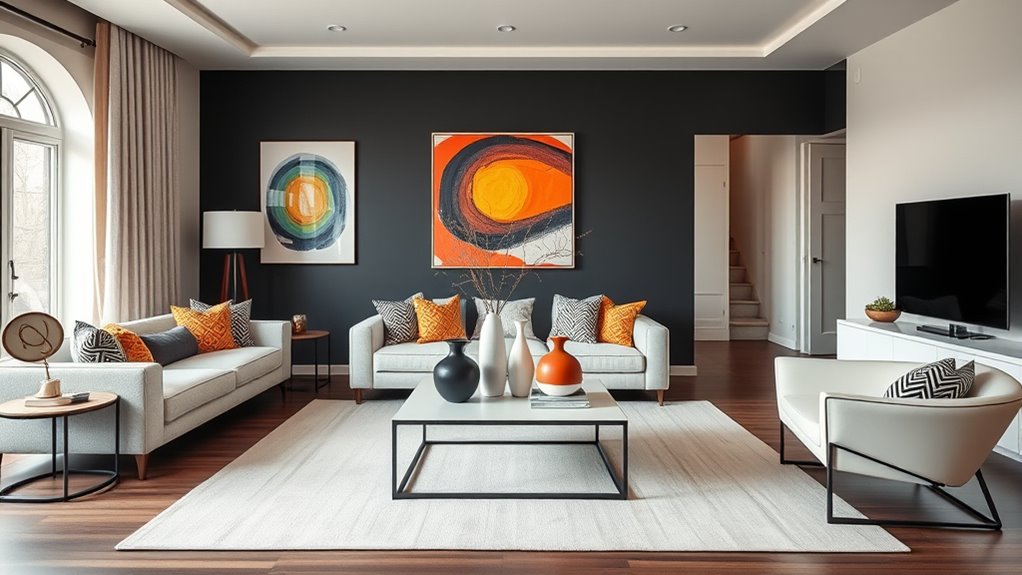
Blending maximalist and minimalist elements can create a dynamic and personalized space that balances energy with calm. To do this effectively, consider these tips:
- Focus on color coordination by choosing a neutral palette as a base, then add bold accents selectively to highlight your personality. Incorporate natural elements to bring a sense of harmony between the styles.
- Be intentional with furniture selection—combine sleek, minimalist pieces with statement items that bring personality without cluttering the room.
- Maintain visual harmony by balancing busy patterns or textures with simple, clean surfaces, ensuring the space feels cohesive rather than chaotic.
- Incorporate visual balance techniques to ensure that the interplay between maximalist and minimalist elements feels harmonious and intentional.
Making the Right Choice for Your Space and Lifestyle
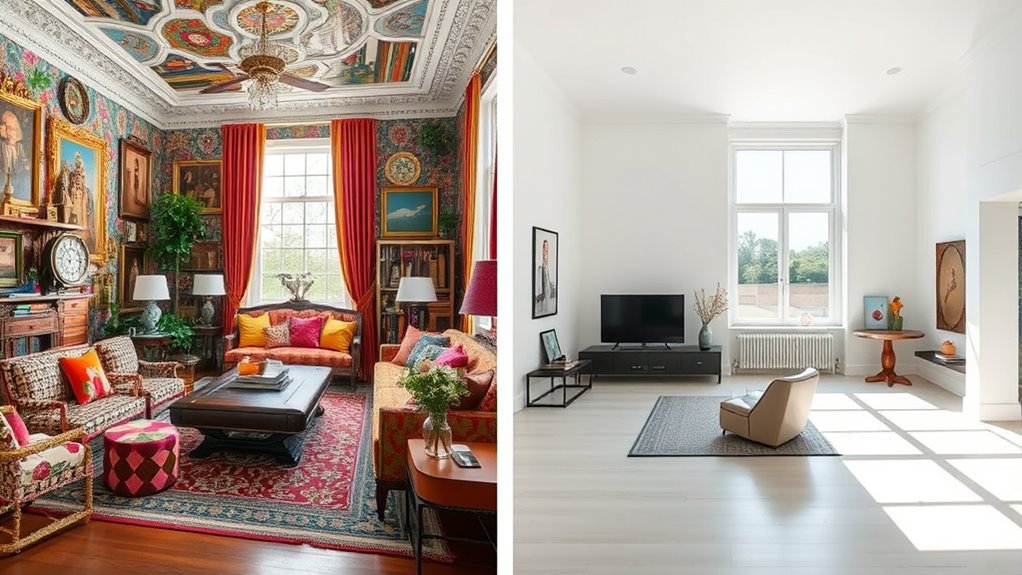
Choosing the right decor style depends on your space and lifestyle. Consider how color palettes influence the atmosphere—bold, vibrant hues suit maximalism, while neutral tones complement minimalism. Think about your daily routines: if you prefer a clutter-free environment, minimalism’s clean furniture arrangements might be ideal. For a lively, expressive space, maximalist arrangements with layered textures and rich colors work well. Reflect on the size of your rooms; smaller spaces benefit from streamlined furniture for an open feel, while larger areas can handle more eclectic arrangements. Your lifestyle also matters—if you entertain often, a flexible, inviting layout may be best. Ultimately, selecting a style that aligns with how you live guarantees your space feels authentic and comfortable.
Frequently Asked Questions
How Do I Incorporate Personality Into a Minimalist Space?
To incorporate personality into a minimalist space, start by adding art or decorative pieces that reflect your taste, using natural materials like wood or stone for warmth. Play with monochrome palettes for subtle elegance or introduce vibrant accents for energy. Mix artificial and natural elements thoughtfully to create visual interest. Keep clutter to a minimum, but let your unique style shine through with carefully chosen accessories that tell your story.
Can Maximalist Decor Work in Small Apartments?
Maximalist decor can work in small apartments if you focus on smart color coordination and strategic furniture placement. Use bold colors on accent walls or accessories to add personality without overwhelming the space. Arrange furniture to maximize open areas, keeping larger pieces against walls. Incorporate layered patterns and diverse textures thoughtfully, so your small apartment feels lively without feeling cluttered. Balance is key to achieving a vibrant, cozy maximalist look.
Which Style Is More Sustainable and Eco-Friendly?
You’ll find minimalism generally more sustainable and eco-friendly because it emphasizes using sustainable materials and eco-conscious furniture, reducing waste and consumption. Minimalist decor promotes longevity and simple designs that last, making it easier to choose environmentally friendly options. Maximalist styles, while vibrant, can lead to excess, but if you prioritize sustainable materials and eco-conscious furniture, both styles can be made eco-friendly. Ultimately, your choices shape the environmental impact.
How Do I Avoid Clutter in a Maximalist Design?
To avoid clutter in a maximalist design, you need clever storage solutions and strategic grouping. Imagine a space where every item has a purpose, neatly arranged in unique containers or shelves. Keep similar objects together to create visual harmony and prevent chaos. Regularly declutter, ensuring only meaningful pieces remain. With these techniques, your vibrant decor stays lively yet organized, inviting curiosity without overwhelming, making your space a mesmerizing, balanced masterpiece.
What Are Common Mistakes When Switching Styles?
When switching styles, you often make mistakes like neglecting to balance color or misplacing furniture. You might overload a space with too many vibrant hues or clutter the room with mismatched pieces. To avoid this, focus on balancing color schemes and carefully consider furniture placement. This helps create harmony, whether you’re embracing minimalism’s simplicity or maximalism’s boldness. Pay attention to flow and make sure each element complements the overall style.
Conclusion
Ultimately, choosing between maximalism and minimalism depends on your personality and lifestyle. Did you know that a recent survey found that 60% of people feel more relaxed in minimalist spaces? Whether you prefer bold, vibrant decor or simple, clean lines, your space should reflect what makes you feel most comfortable and inspired. Trust your instincts, experiment with both styles, and create a home that truly feels like yours.