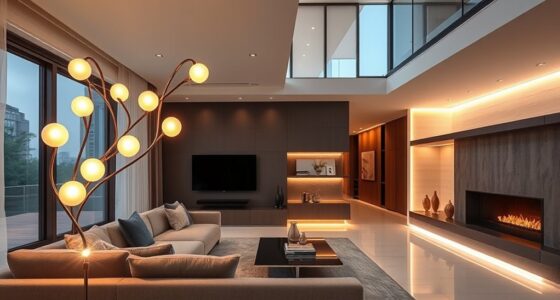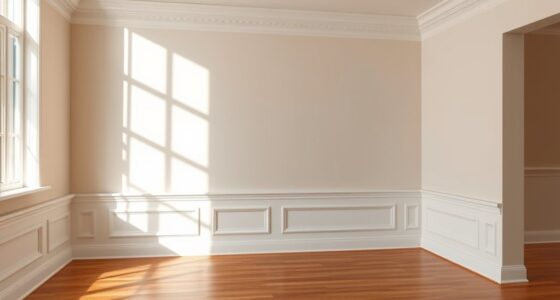
To master eclectic decor, start with a neutral base to keep things calm and balanced. Use a cohesive color palette, mixing bold and subtle hues throughout your space. Layer different textures and patterns to add visual interest, and select statement furniture pieces to anchor your design. Incorporate personal accessories and create focal points to guide the eye. Regularly edit your decor to maintain harmony and clarity, so you can create a stylish, personalized space that feels effortless—if you keep exploring, you’ll discover more tips to refine your style.
Key Takeaways
- Start with a neutral base and cohesive color palette to create harmony amid diverse styles.
- Choose statement furniture and vintage pieces to serve as focal points and add character.
- Layer textures, patterns, and accessories thoughtfully to enhance visual interest and depth.
- Balance decor elements by considering scale, proportion, and visual weight for a unified look.
- Regularly edit and refine your space, removing clutter and ensuring personal style remains cohesive.
Understanding Eclectic Style and Its Core Principles
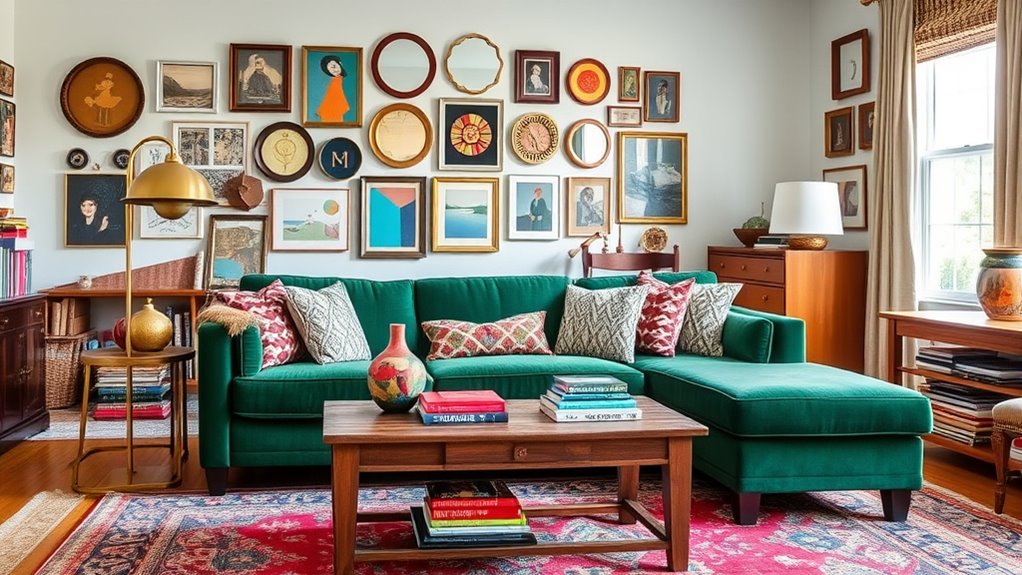
Eclectic style blends diverse design elements to create a cohesive, personalized space. At its core, it embraces a meditative calm, focusing on balance and harmony among different styles. You’ll find that a minimalist approach often guides this style, allowing each piece to stand out without overwhelming the senses. Instead of matching everything perfectly, you select contrasting textures, colors, and patterns that complement each other through deliberate pairing. The key is to curate a collection of pieces that reflect your personality while maintaining visual harmony. This approach encourages you to mix vintage with modern, bold with subtle, creating a space that feels both curated and spontaneous. By prioritizing simplicity within diversity, you achieve an inviting, tranquil environment that truly feels like your own. Incorporating sustainable design principles can also enhance this style by emphasizing eco-friendly and energy-efficient choices. Paying attention to design harmony ensures that even eclectic mixes feel intentional and balanced, making the overall space more cohesive and inviting.
Starting With a Neutral Base to Balance Your Space

Starting with a neutral base sets a strong foundation for your eclectic decor. It creates a calm backdrop that allows your diverse styles and pieces to stand out without feeling chaotic. Use neutral wall colors like beige, gray, or soft white to balance bold furniture or vibrant accents. This neutral foundation makes it easier to play with color contrast and avoid overwhelming the space. Incorporate lighting techniques to enhance your base—layer ambient, task, and accent lighting to highlight key features and create mood. Well-placed lighting ensures your space feels cohesive and inviting. By starting with a neutral base, you gain flexibility to mix patterns, textures, and styles while maintaining visual harmony. Additionally, understanding lighting techniques can help you optimize your space’s ambiance and cohesion. It’s the key to a balanced, eclectic look that feels intentional and polished.
Choosing a Cohesive Color Palette for a Harmonious Look

Once you’ve established a neutral base, selecting a cohesive color palette helps tie everything together. Focus on color coordination by choosing shades that complement each other and reflect your personality. When considering palette selection, stick to a core group of colors—perhaps a dominant hue, a few accent shades, and neutral tones—that create harmony across your space. Use lighter versions of your main colors to keep the room feeling open, and add darker accents for depth. Remember, color consistency** is key; repeating colors throughout different elements strengthens the overall look. Avoid clashing or overly vibrant combinations that may disrupt the flow. A well-chosen color palette provides a unified foundation, making your eclectic decor look intentional, balanced, and inviting. Incorporating Free Floating elements can also add a modern touch and enhance visual interest. Additionally, understanding Gold IRA Markets** can inspire a sense of stability and value, lending an unexpected layer of sophistication to your decor.
Mixing Textures and Patterns to Add Visual Interest
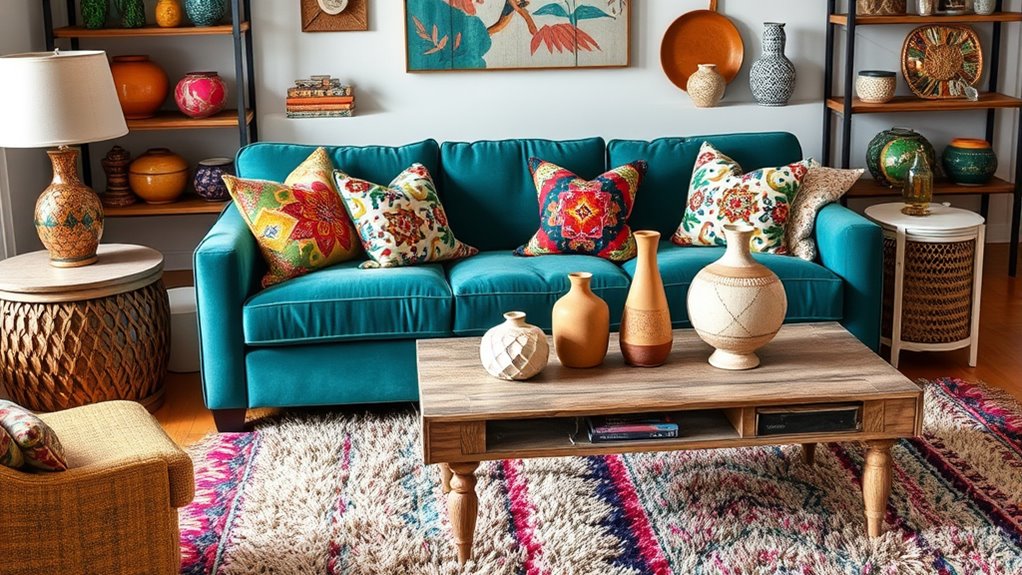
To create a vibrant, inviting space, start by layering different textures like plush rugs and smooth metals. Mix patterns thoughtfully—pair bold prints with subtle ones to keep the look cohesive. Remember to balance visual weight so no single element overwhelms the room, guiding the eye smoothly around your decor. Incorporating texture variety can enhance the depth and richness of your design, making your space feel more dynamic and engaging. Paying attention to decor balance ensures your design remains harmonious and visually appealing. Additionally, understanding market dynamics can inspire innovative ways to integrate trending styles into your decor. Developing a keen eye for attention to detail helps in fine-tuning the overall aesthetic and achieving a polished look. Furthermore, utilizing expert tips in decorating can provide valuable insights to elevate your style.
Layering Different Textures
Layering different textures and patterns can instantly elevate your decor by adding depth and visual interest. This technique creates a rich sense of tactile diversity, making your space feel more inviting. To achieve this, mix smooth surfaces with rougher ones, like velvet with wood or metal with linen. The goal is to create a balanced textural contrast that keeps the eye moving. Here’s a visual to help you picture it:
| Soft Textures | Hard Textures |
|---|---|
| Velvet cushions | Wooden coffee table |
| Linen curtains | Metal lampshade |
| Wool throw | Glass vase |
| Faux fur rug | Ceramic sculpture |
| Knit blanket | Iron wall art |
Additionally, incorporating limited-edition artwork can serve as a striking focal point that complements your layered textures, adding a sense of exclusivity and sophistication to the overall design. Incorporating varied materials can further enhance your ability to blend different styles seamlessly, especially when considering texture pairing techniques that emphasize contrast and harmony. Using layering principles helps to ensure a cohesive and visually appealing result.
Combining Patterns Strategically
Mixing patterns strategically can transform a room from ordinary to mesmerizing by adding visual interest and depth. To achieve this, focus on pattern pairing by selecting motifs that complement each other without clashing. Start with a unifying color palette to create cohesion, then vary the scale of your patterns—pair bold, large motifs with smaller, subtle ones. When motif mixing, consider balancing intricate designs with simpler patterns to prevent overwhelm. Mix florals with geometric shapes or stripes to keep the eye engaged. Remember, the key is contrast and harmony; don’t be afraid to experiment. Additionally, understanding how color harmony impacts visual balance can help you make more intentional choices. Incorporating texture variety into your decor can further enhance the layered look you’re aiming for. Experimenting with different pattern combinations can also inspire fresh and unexpected decor ideas. By thoughtfully combining patterns, you create a layered, dynamic space that feels both curated and lively, showcasing your unique style effortlessly.
Balancing Visual Weight
Balancing visual weight is essential when combining textures and patterns, as it prevents a space from feeling cluttered or unbalanced. You want to create harmony through artistic expression and celebrate cultural diversity without overwhelming your senses. To achieve this, distribute bold patterns and contrasting textures thoughtfully. Use a mix of heavy and light elements, ensuring no single piece dominates. Consider this table for guidance:
| Texture Type | Pattern Intensity | Placement Strategy |
|---|---|---|
| Smooth | Subtle | Background or walls |
| Textured | Bold | Focal points |
| Matte | Minimal | Balance with shine |
| Glossy | Intricate | Accent pieces |
| Natural | Simple | Grounding elements |
This approach helps maintain visual balance, making your space both dynamic and cohesive. Incorporating visual harmony principles ensures a well-balanced and aesthetically pleasing environment.
Selecting Statement Furniture Pieces to Anchor Your Design

Choosing the right statement furniture piece can instantly define your space and set the tone for your entire decor. This piece acts as an anchor, giving your eclectic style a focal point that ties everything together. Look for bold, unique furniture that stands out—such as an ornate armchair, a vintage credenza, or a sculptural sofa. These statement furniture pieces draw attention and create visual interest, anchoring your design without overwhelming it. Keep in mind that the goal is balance: your statement piece should complement your other decor elements while still standing out. Incorporating unique textures can further enhance the visual appeal and add depth to your space. Additionally, selecting furniture with sustainable materials supports eco-friendly choices and aligns with modern design values. Understanding the sustainability practices behind your furniture choices can help ensure your decor not only looks good but also supports environmental responsibility. Being aware of large number conversions can assist in budgeting and planning for premium or custom pieces, ensuring your selections fit within your financial framework. Moreover, researching Italian artisan craftsmanship can inspire you to find authentic, high-quality statement pieces that elevate your decor. By selecting a well-chosen statement furniture piece, you establish a strong foundation for your eclectic mix, making your space feel cohesive, inviting, and thoughtfully curated.
Incorporating Vintage, Modern, and Global Elements Seamlessly
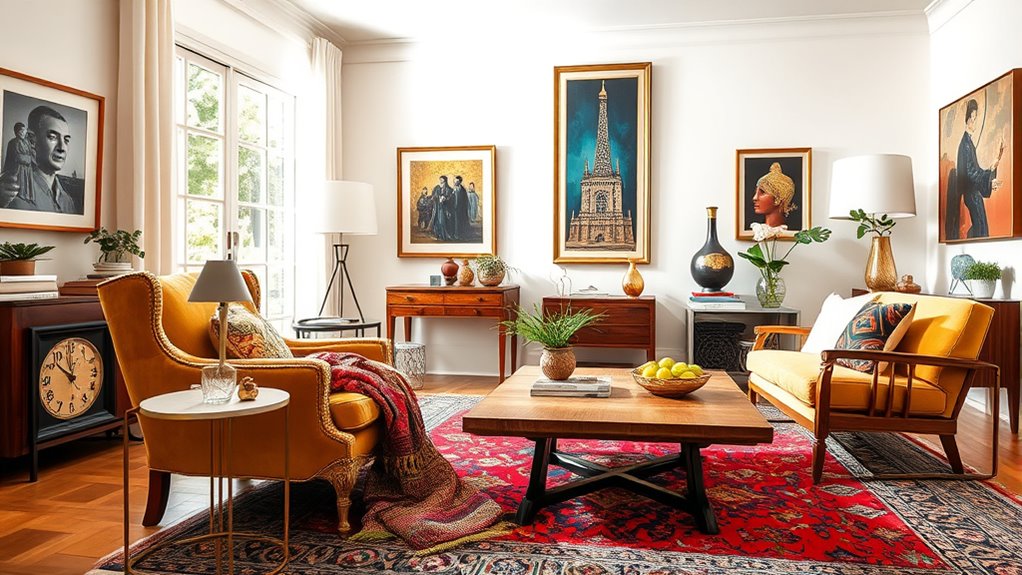
To create a cohesive eclectic space, you need to blend vintage, modern, and global elements thoughtfully so they complement rather than compete with each other. Start by selecting vintage furniture that adds character and warmth, but keep its style simple to avoid overwhelming the room. Incorporate global textiles—think vibrant rugs or patterned throws—to introduce color and cultural richness. Balance these with sleek, modern pieces that provide a contemporary foundation, ensuring the space feels fresh and updated. Pay attention to color palettes and textures; harmonize warm wood tones with bold textiles, and use modern accessories to tie everything together. By thoughtfully mixing these elements, you’ll craft a space that feels intentionally curated and effortlessly stylish.
Layering Accessories and Decor for a Personalized Touch

Layering accessories and decor transforms an eclectic space into a reflection of your personality. You can achieve this by adding decorative accents that tell your story, such as souvenirs, art pieces, or heirlooms. Mix different textures, shapes, and heights to create personalized vignettes on tables, shelves, or mantels. Don’t be afraid to overlap items slightly or combine contrasting styles—this adds depth and visual interest. Use a variety of materials like ceramics, metals, and textiles to layer textures and colors. The goal is to build a curated, inviting look that feels authentic. By thoughtfully layering your accessories and decor, you turn a generic space into a lively, cozy environment that’s uniquely yours.
Creating Focal Points to Guide the Eye Around the Room

Creating a focal point in a room instantly draws the eye and anchors your decor scheme. The focal point importance lies in guiding eye movement naturally around the space, preventing a cluttered or chaotic feel. When you establish a clear visual anchor—like a statement art piece, an eye-catching fireplace, or a bold piece of furniture—you create a destination for the eye to rest and explore. This helps balance eclectic elements, making the room feel cohesive rather than scattered. By strategically positioning your focal point, you control how viewers’ eyes move through the space, highlighting your favorite decor pieces. Remember, a strong focal point doesn’t have to be massive; it just needs to stand out enough to draw attention and set the tone for your entire room.
Maintaining Balance and Proportion in Your Arrangements

To create a cohesive look, you need to think about how your items distribute visual weight across the space. Pay attention to scale and size so that larger pieces complement smaller ones without overwhelming the room. Whether you choose symmetry or embrace asymmetry, maintaining balance guarantees your arrangements feel harmonious and intentional.
Visual Weight Distribution
Achieving visual balance in your decor starts with understanding how to distribute weight evenly across your arrangements. Focus on color coordination to guarantee that bold hues are balanced with neutral tones, preventing any one area from feeling too heavy. When arranging furniture, consider the visual weight of each piece; larger or darker furniture naturally draws more attention. Distribute these heavier items thoughtfully throughout the space, so no side feels overly dominant. Use smaller decor accessories to offset larger pieces and create a cohesive flow. Keep in mind that varied textures and colors can also influence perceived weight, so mix them strategically. By balancing color and furniture arrangement, you create a harmonious environment that feels thoughtfully curated and visually engaging.
Scale and Size Harmony
Maintaining scale and size harmony is essential for a balanced and cohesive decor. When mixing different styles, pay attention to scale contrast to prevent pieces from overwhelming or getting lost in a space. Incorporate size variation thoughtfully—pair large furniture with smaller accessories to create visual interest without chaos. Consistent proportions help your arrangement feel intentional and unified. For example, if you have a tall statement piece, balance it with smaller items that complement its height. Avoid cluttering a space with mismatched sizes that clash or create imbalance. By carefully considering scale and size, you ensure your eclectic decor feels harmonious, inviting, and well-proportioned, allowing each element to shine without competing for attention.
Symmetry and Asymmetry Balance
Have you ever wondered how to create a balanced look in your eclectic decor? Achieving harmony involves understanding symmetry in architecture and asymmetry in art. Symmetry offers a formal, organized feel by mirroring objects on either side of a center point. Asymmetry, on the other hand, creates visual interest through uneven arrangements that still feel balanced. To master this:
- Use symmetry for formal areas, like matching lamps on a console table.
- Incorporate asymmetry with varied artwork or furniture placement for a dynamic look.
- Mix both by pairing symmetrical pieces with asymmetrical accents to keep your space lively and proportionate.
Balancing these elements guarantees your decor feels cohesive without being monotonous, making your eclectic space engaging and well-proportioned.
Tips for Editing and Refining Your Eclectic Space
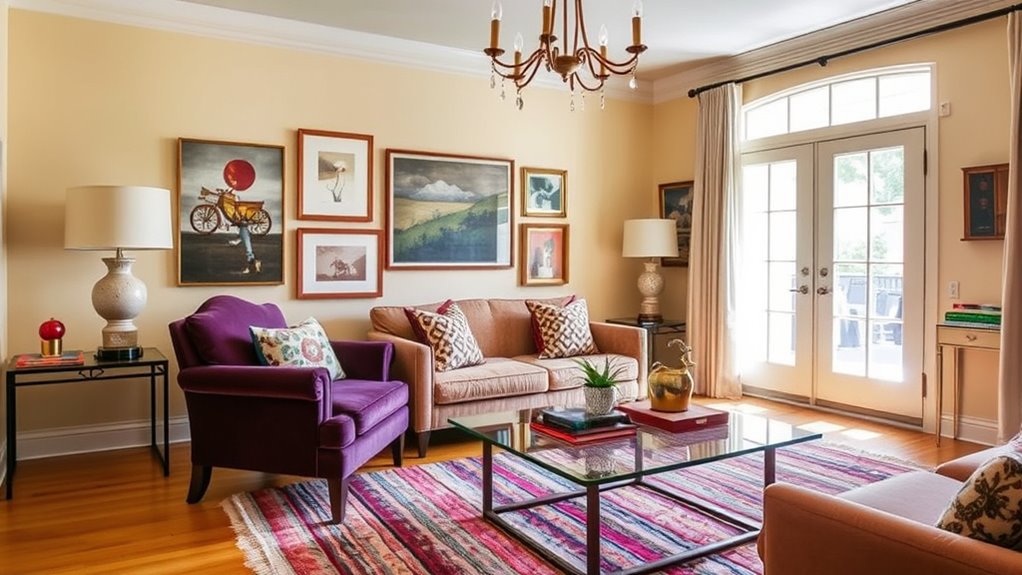
To create a cohesive eclectic space, you need to carefully edit and refine your decor choices. Focus on balancing artistic expression with color coordination to avoid visual chaos. Start by removing pieces that don’t contribute to your overall aesthetic or clash with your color palette. Aim for a harmonious mix where each item enhances the others. Use the table below to guide your editing process:
| Step | Tip |
|---|---|
| 1 | Prioritize your favorite pieces that reflect your personality. |
| 2 | Group similar colors to create visual flow. |
| 3 | Remove overly similar or redundant items for clarity. |
| 4 | Adjust scale and placement to improve balance. |
Refining your space is about editing details without losing your personal touch, making your eclectic style feel intentional and polished.
Frequently Asked Questions
How Do I Prevent My Eclectic Decor From Feeling Chaotic?
To prevent your eclectic decor from feeling chaotic, focus on color coordination and clutter control. Use a cohesive color palette to tie different styles together, and keep clutter to a minimum by organizing accessories and furniture thoughtfully. Balance bold patterns with neutral tones, and create visual harmony by repeating colors and textures throughout the space. This approach helps your eclectic mix look intentional, stylish, and inviting rather than overwhelming.
Can I Incorporate Seasonal or Trendy Pieces Into My Eclectic Style?
Think of your space as a vibrant garden where seasonal accents and trendy accessories are like colorful blooms that add excitement. You can certainly incorporate these elements into your eclectic style, but do so thoughtfully. Mix seasonal accents with your existing pieces, ensuring they complement your overall palette. Use trendy accessories sparingly, like statement flowers, so they enhance without overwhelming, keeping your decor lively yet harmonious.
What Are the Best Ways to Store or Display Eclectic Accessories?
To store or display eclectic accessories, you should create an artistic display using open shelves, vintage trays, or shadow boxes to showcase your unique pieces. Combine functional storage like baskets or drawers for items you want out of sight, while keeping decorative accessories visible. Mix and match containers and display surfaces to enhance your eclectic style, making your accessories both accessible and visually intriguing.
How Do I Choose the Right Lighting for an Eclectic Space?
You should choose lighting options that complement your eclectic style by mixing fixture styles, like vintage chandeliers with modern sconces. Consider layering different lighting sources—ambient, task, and accent—to add depth and interest. Opt for fixtures that reflect your personality and blend well with your accessories. Don’t be afraid to experiment with bold designs or unique materials, creating a vibrant, cohesive space that highlights your eclectic vibe.
Is It Okay to Mix Different Eras and Cultures in One Room?
Absolutely, you can mix different eras and cultures in one room. Embrace cultural fusion by blending vintage pieces with contemporary accents, creating a lively, personalized space. Focus on balance, so no single element overpowers others. Use a cohesive color palette or similar textures to unify diverse styles. This approach highlights your unique taste and makes your decor feel intentional, showcasing your ability to seamlessly integrate vintage and cultural influences.
Conclusion
Now that you’re armed with these tips, your space can become a masterpiece of eclectic charm. Remember, blending styles is like crafting a symphony—each piece plays its part to create harmony. Trust your instincts, experiment boldly, and let your personality shine through. With patience and a keen eye, you’ll turn your home into a stunning mosaic of your unique taste. After all, isn’t life more vibrant when it’s beautifully unpredictable?