
To successfully merge different decor styles, start with open conversations to understand each other’s preferences and find common ground. Balance modern with cozy elements, and use accessories or versatile furniture to combine aesthetics thoughtfully. Consider assigning specific zones or spaces to each style, and create a shared vision board to visualize your ideal look. Focus on harmony and respect for each other’s tastes; exploring these tips further can help you craft a cohesive, comfortable space together.

Get furniture and decor delivered free — and shop member deals
- Fast, free delivery on millions of items
- Access to Prime Big Deal Days deals on October 6–7
- Prime Video, Amazon Music and more included
Key Takeaways
- Communicate openly about individual styles to establish mutual understanding and respect.
- Use visual tools like shared vision boards to identify common themes and preferences.
- Incorporate versatile, neutral furniture that can complement multiple styles.
- Create designated zones or spaces for each person’s preferred decor to balance individuality and harmony.
- Focus on blending elements thoughtfully, prioritizing comfort and shared aesthetic goals.

Decorating as a couple with different tastes can be challenging, but it also offers a chance to create a space that reflects both of your personalities. When your personal style clashes, it’s easy to feel frustrated or stuck, but with the right approach, you can turn those differences into a design opportunity. The key lies in understanding that compromise strategies are essential to blending your styles seamlessly. Rather than trying to dominate or conform, focus on finding common ground and celebrating your unique preferences.
Balancing diverse styles requires understanding, compromise, and celebrating your unique preferences together.
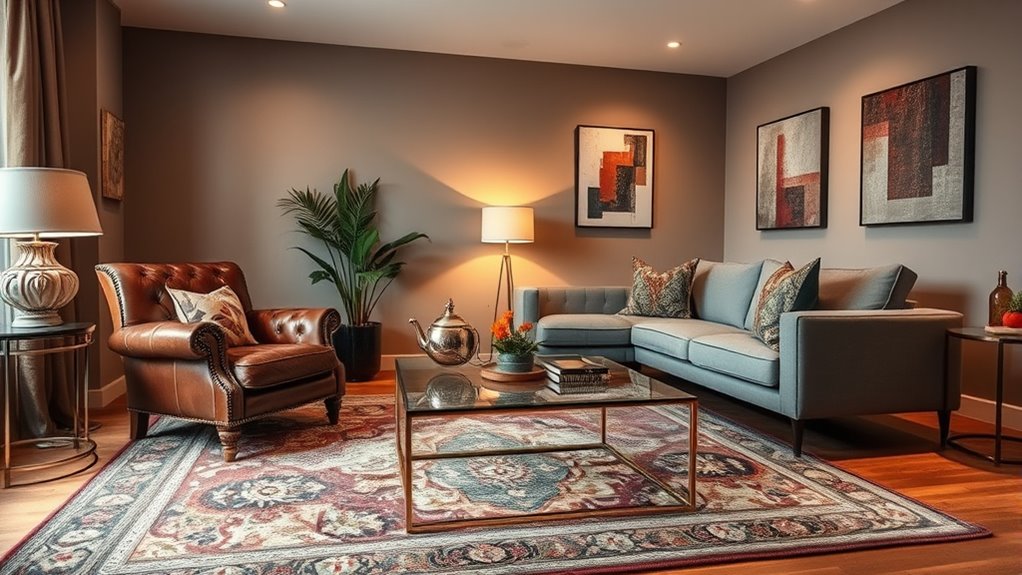
Start by having an open conversation about what each of you loves most about your individual styles. This helps set a foundation of mutual respect and understanding. For example, if one of you prefers modern minimalism while the other leans toward cozy, rustic decor, identify elements that can be combined. Maybe sleek furniture with warm textures or neutral colors accented by personal, sentimental accessories. This way, you create a balanced environment where both styles are visible and valued.
Compromise strategies don’t mean sacrificing your taste but rather integrating it thoughtfully. Consider dedicating specific spaces to each other’s preferences or establishing design zones within your home. For instance, you might agree that the living room leans toward one style, and the bedroom reflects the other. Incorporate versatile pieces that can serve multiple aesthetics, such as neutral-colored furniture that can be dressed up with accessories. This approach allows each of you to feel at home without feeling like your preferences are being erased.
Another effective tactic is to create a shared vision board. Collect images and ideas that inspire both of you, then identify overlapping themes or elements. This visual exercise helps clarify your combined style and makes it easier to choose decor that satisfies both tastes. When you shop for new pieces, keep this shared vision in mind. Prioritize quality and comfort, and look for items that can fit into your combined aesthetic without clashing. Additionally, understanding how to blend styles effectively can provide you with more tools to create a harmonious living space.
versatile neutral furniture for living room
As an affiliate, we earn on qualifying purchases.
As an affiliate, we earn on qualifying purchases.
Frequently Asked Questions
How Can We Compromise on Bold Versus Neutral Color Schemes?
You can compromise on bold versus neutral color schemes by creating a balanced color palette that includes both. Use neutral tones as a base for a calming, cohesive look, then add bold accent pieces for pops of personality. This approach fosters design harmony, ensuring both of your tastes are reflected. By blending these elements thoughtfully, you create a space that feels unified and personalized, satisfying both preferences seamlessly.
What Are Effective Ways to Blend Modern and Traditional Furniture Styles?
To blend modern and traditional furniture styles, start with a strategic furniture pairing that highlights each style’s unique charm. Use a style shift approach by placing statement pieces from each era together, creating a cohesive look. Balance sleek, modern lines with ornate traditional details, and unify the space with complementary colors and accessories. This method helps you achieve a harmonious mix that reflects both your tastes effortlessly.
How Do We Handle Disagreements Over Artwork and Decorative Accents?
When disagreements over artwork and decorative accents arise, focus on art curation by selecting pieces that reflect both of your tastes. Compromise by splitting the space or choosing complementary accents that blend styles. Communicate openly about your preferences, and consider rotating decorative accents periodically to keep the space fresh. Remember, balancing both viewpoints creates a personalized, harmonious home that celebrates your unique styles.
What Strategies Help Balance Minimalism With Maximalist Preferences?
You can balance minimalism and maximalist preferences by embracing decorative layering that highlights your individual styles while maintaining a cohesive look. Start with a clean, uncluttered base, then add bold accents or statement pieces that reflect your maximalist tastes. Use space optimization techniques to keep the room feeling open and airy, ensuring that the layered decor enhances rather than overwhelms, creating a harmonious blend of both styles you’ll love.
How Can We Incorporate Our Personal Hobbies Into the Shared Decor?
You can incorporate your personal hobbies into shared decor by creating dedicated spaces for your passions. Display personal hobby items like artwork, collectibles, or tools as focal points that reflect both your interests. Decorate with passions by choosing complementary colors and styles that suit both tastes, blending your hobbies seamlessly into the overall design. This approach makes your shared space feel personalized, lively, and uniquely yours.
shared vision board for home decor
As an affiliate, we earn on qualifying purchases.
As an affiliate, we earn on qualifying purchases.
Conclusion
Merging your different decor tastes might seem like a tall order, but with patience and open-mindedness, you can create a space that feels like home for both of you. Remember, compromise is the name of the game, and sometimes the best ideas come from blending your unique styles. When you work together, you’ll find that the whole is greater than the sum of its parts. After all, a house truly becomes a home when everyone’s voice is heard.
design zones for mixed decor styles
As an affiliate, we earn on qualifying purchases.
As an affiliate, we earn on qualifying purchases.
As an affiliate, we earn on qualifying purchases.
Fall Picks
fall essentials
As an affiliate, we earn on qualifying purchases.