
To hang wall art properly, start by positioning it around eye level, about 57-60 inches from the floor, adjusting for ceiling height and furniture. Keep consistent spacing between pieces, and use levels and secure hardware for a straight, stable display. Consider your wall color and lighting to enhance the artwork. For more tips on perfect placement and spacing, keep exploring how to create a balanced, cohesive look.
Key Takeaways
- Hang artwork at eye level, approximately 57-60 inches from the floor, adjusting for ceiling height and furniture placement.
- Maintain consistent spacing between pieces to create a cohesive and balanced display.
- Use a level and precise measurements to ensure artwork is hung straight and evenly spaced.
- Consider wall color and lighting to enhance artwork visibility and minimize glare or shadows.
- Choose appropriate hardware for the weight of each piece and ensure secure attachment for safety.
Determining the Ideal Height for Wall Art
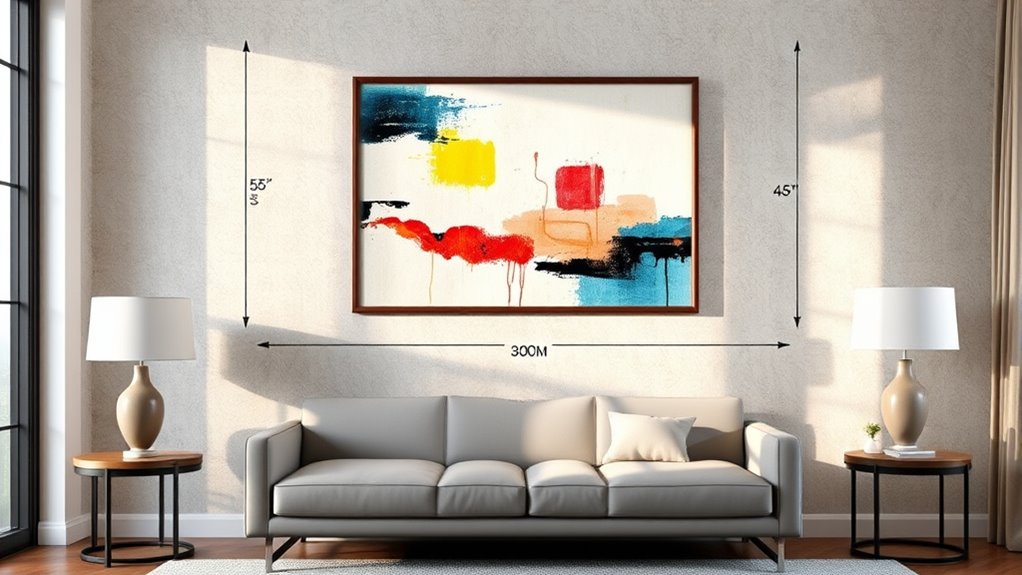
When hanging wall art, choosing the right height is key to creating a balanced and visually appealing display. Start by considering your wall color; lighter walls often benefit from art hung slightly higher to avoid overwhelming the space. Incorporate gallery lighting thoughtfully—aim to position your lighting to highlight the art without casting harsh shadows or glare, which can distort how the colors and details appear. As a general rule, center the artwork around eye level, approximately 57-60 inches from the floor, but adjust based on your ceiling height and furniture placement. Proper height guarantees your art complements the wall and room’s overall aesthetic, making it more inviting and harmonious. Remember, the right height enhances both the artwork and the surrounding elements, creating a cohesive look. Additionally, understanding visual balance can help you optimize the placement for a more pleasing arrangement. To achieve a harmonious display, consider the contrast ratio between your art and the wall to ensure the piece stands out without clashing. Paying attention to art proportions can further improve how well your wall art integrates with the space. Recognizing the appropriate spacing between multiple pieces can also contribute significantly to a well-composed gallery wall. Furthermore, considering lighting effects can dramatically influence how the artwork’s colors and details are perceived, enhancing the overall visual impact.
Spacing Tips for a Cohesive Display
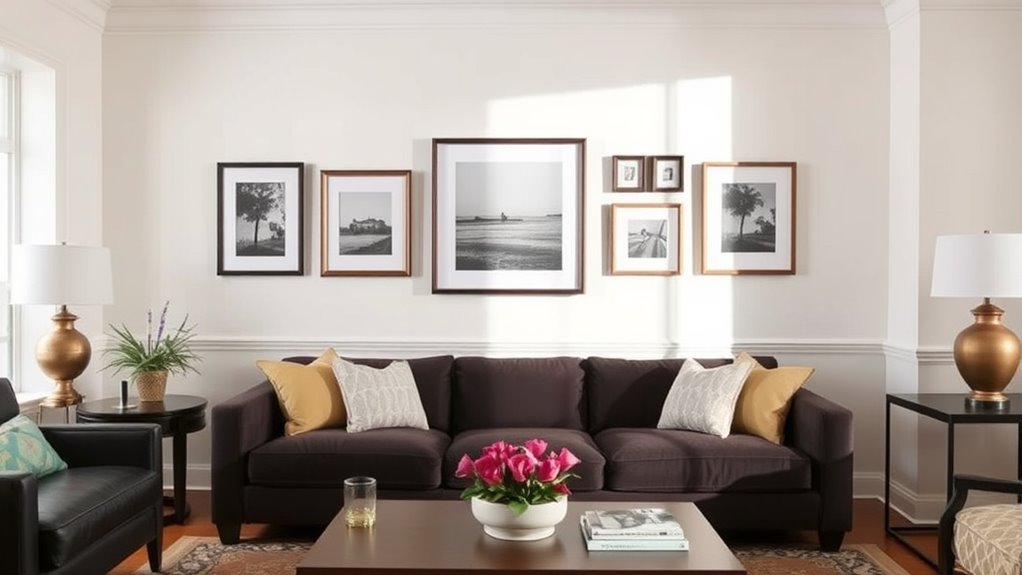
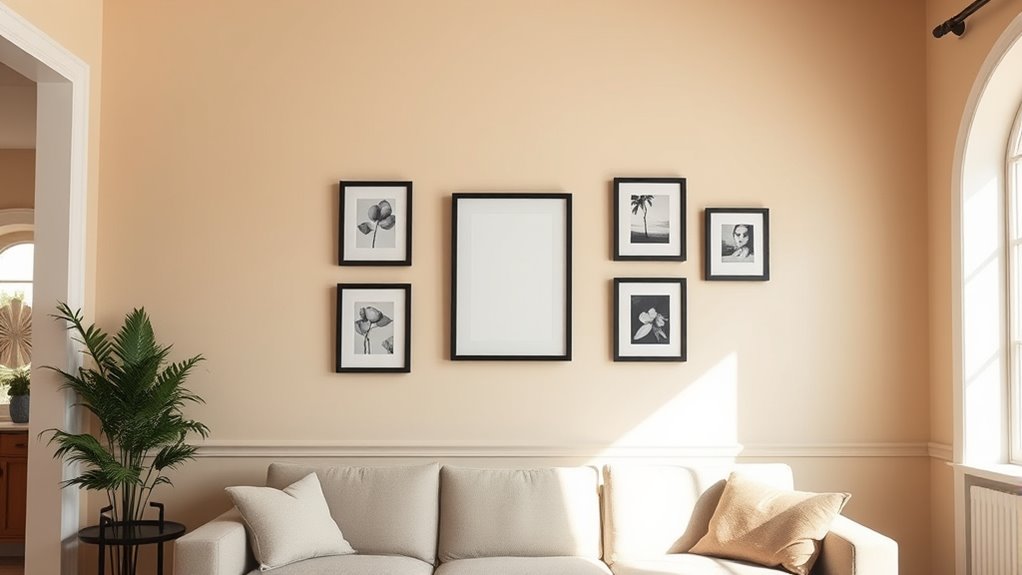
Achieving a cohesive wall art display relies heavily on proper spacing, which guides the viewer’s eye and creates harmony. To do this, consider the spacing between each piece—aim for consistent gaps that prevent clutter or gaps that feel disconnected. Incorporate gallery lighting strategically to highlight individual artworks and enhance overall flow. When selecting frame styles, choose a uniform or complementary set to unify the display; mixing wildly different frames can disrupt cohesion. Keep in mind that spacing isn’t just about distance but also about how the artwork interacts visually. Proper spacing allows each piece to stand out while contributing to the overall aesthetic. Additionally, understanding visual balance and how to distribute elements evenly can help achieve a harmonious arrangement. Paying attention to spacing techniques ensures that each piece complements the others without overwhelming the display. Recognizing the importance of artwork placement in relation to wall dimensions can further refine your setup. Being mindful of spacing consistency helps maintain a polished and professional look throughout your display. By paying attention to these details, you create a balanced, polished look that feels intentional and inviting.
Additional Tricks for Perfectly Hung Artwork
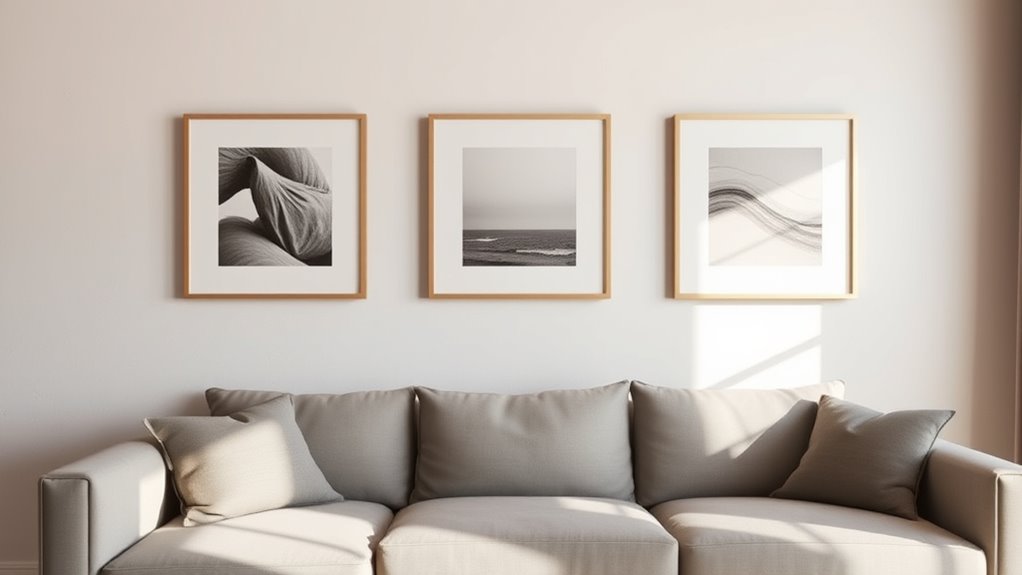
To guarantee your artwork hangs perfectly, using a few simple tricks can make a big difference. First, consider how gallery lighting shapes the display—proper lighting highlights your art and enhances frame styles. Position lights to avoid glare and shadows, and use adjustable fixtures for flexibility. When choosing frames, opt for styles that complement your space and artwork, ensuring they don’t overwhelm the piece. Use a level to keep everything straight and measure carefully to maintain consistent spacing. Additionally, attach hanging hardware securely, especially for heavier pieces. Incorporating smart energy management solutions can also help you optimize lighting and climate conditions in your space, enhancing the overall presentation. Being mindful of proper placement can further improve how your artwork complements your room’s design. Paying attention to wall space and layout can also help you achieve a balanced and aesthetically pleasing display. Ensuring your setup accounts for lighting design can make your artwork stand out and create a more inviting atmosphere, especially when considering display techniques to maximize visual impact.
Frequently Asked Questions
How Do I Hang Art on Uneven or Textured Walls?
To hang art on uneven or textured walls, start with proper wall preparation by cleaning the surface thoroughly. Use adhesive solutions like heavy-duty mounting strips or hooks designed for textured surfaces to guarantee secure attachment. For larger pieces, consider using picture hanging strips that conform to the wall’s texture, or install small, sturdy anchors. These solutions help you achieve a level display without damaging your wall.
What Tools Are Best for Precise Wall Art Placement?
You need measuring tools and level guides for precise wall art placement. Use a tape measure or ruler to mark exact spots, ensuring symmetry. A level guide helps to keep your art straight, preventing crooked hangs. Combining these tools, you align, measure, and verify, making your placement flawless. With accuracy and patience, you transform a simple wall into a curated display that reflects your style and attention to detail.
Can I Mix Different Frame Styles in One Display?
Yes, you can mix different frame styles in one display to create a dynamic and personalized look. Embrace frame diversity by combining vintage, modern, and ornate frames, which adds visual interest and reflects your unique style. To guarantee a cohesive arrangement, keep the spacing consistent and balance the sizes and colors. Mixing styles works best when you consider the overall theme and avoid clutter, creating a harmonious and eye-catching wall display.
How Do I Prevent Artwork From Falling Over Time?
To prevent your artwork from falling over time, make sure you use the right wall anchors for your wall type, ensuring a secure hold. Attach a sturdy picture wire to the back of the frame, and when hanging, double-check that the wire is properly secured and taut. Regularly inspect the hooks and anchors, tightening or replacing them if needed, to keep your art safe and stable.
What’s the Best Way to Hang Art in a Rental Space?
Did you know 85% of renters prefer removable solutions? To hang art in a rental, use wall anchors for stability and temporary hooks to avoid damage. These options let you display your favorite pieces without risking your security deposit. Always measure carefully, and consider adhesive strips for lighter art. This way, you can personalize your space while keeping walls intact for future tenants.
Conclusion
Now that you’ve mastered measuring, matching, and mounting, you’re ready to make your walls wonderful. Remember, the right height and harmonious spacing highlight your unique style. With a little patience and a keen eye, your art will always appear polished and perfect. So go ahead, get creative, and transform your space with confidence. Your walls will wow, welcoming guests with warm, wonderful, and well-hung art that truly reflects you.