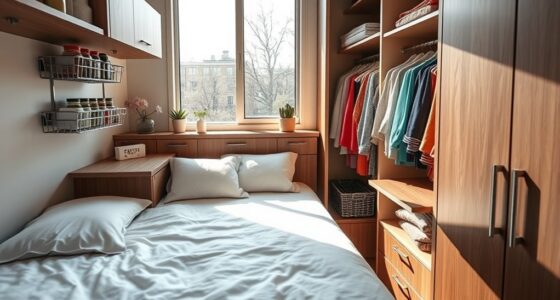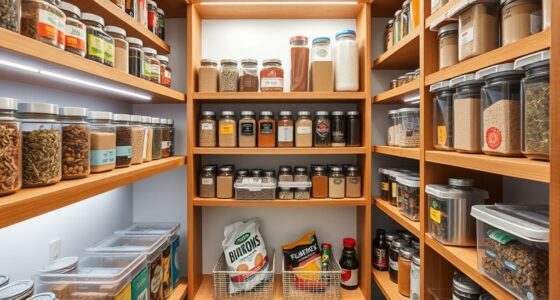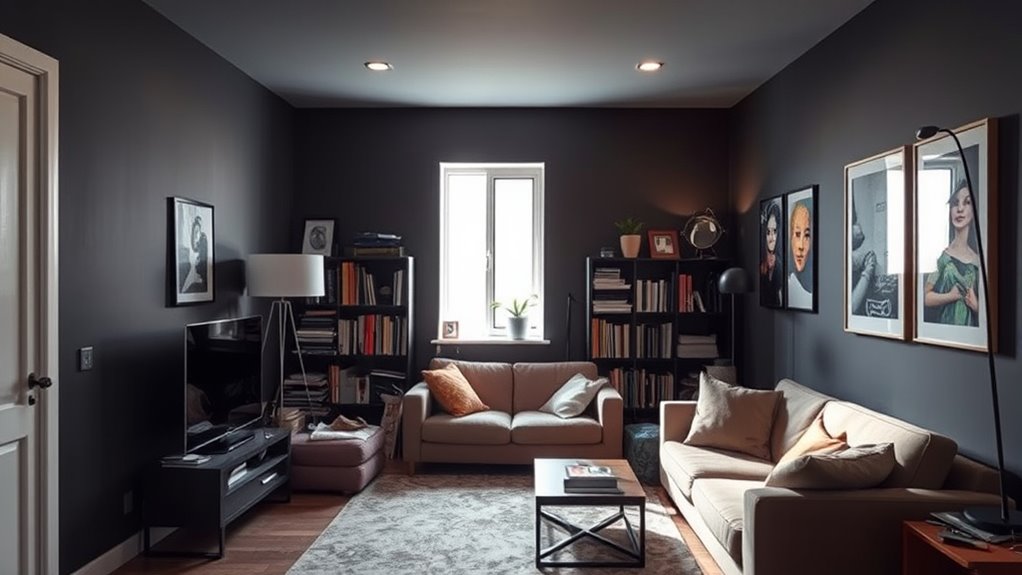

Avoid clutter by keeping surfaces clear and choosing multi-functional furniture to maximize space. Steer clear of bold, clashing colors and opt for light, neutral hues to open up the room. Be mindful of furniture size—neither too bulky nor too tiny—to maintain balance. Use vertical space and mirrors to create depth, and plan furniture placement to ensure good flow. Want to turn your small space into an open haven? Keep exploring for more helpful tips.
Key Takeaways
- Avoid cluttered surfaces by organizing items and using storage solutions to maintain a clean, spacious look.
- Use a cohesive color palette with light, neutral hues to open up the space and prevent visual overload.
- Choose appropriately scaled furniture that fits the room size, balancing function with openness.
- Maximize vertical space with tall shelves and mirrors to create the illusion of larger dimensions.
- Arrange furniture to promote flow and accessibility, preventing blockages and enhancing perceived room size.

Ever wonder why your small space feels cluttered or cramped despite your efforts? It’s often because of small decor mistakes that can make a room seem even tighter. One common mistake is ignoring the importance of color coordination. When you pick colors that clash or are overly bold without considering how they work together, your space can feel chaotic rather than cohesive. Instead, focus on creating a harmonious color palette. Light, neutral hues tend to open up a room, making it appear larger and more airy. If you want to add pops of color, do so sparingly—through accessories like pillows, rugs, or artwork—so it enhances rather than overwhelms. This careful color coordination helps your space feel unified and less cluttered, even if it’s small. Additionally, understanding the role of energy-efficient design can help optimize your small space by reducing visual clutter and improving overall comfort.
Another mistake many make is choosing furniture that isn’t scaled properly for the space. Oversized furniture can dominate a room and block pathways, making your small space feel cramped and uncomfortable. Conversely, furniture that’s too tiny may look out of place and make the room feel unbalanced. To avoid this, always consider furniture scaling. Measure your space before shopping, and opt for pieces that fit comfortably without overwhelming the room. Multi-functional furniture, like a sofa bed or an ottoman with storage, can maximize functionality without sacrificing space. Keep in mind, furniture should be proportional to the room’s size—think streamlined shapes and sleek designs that don’t add unnecessary bulk. Using appropriately scaled furniture not only improves flow but also creates a sense of openness, making your small space feel more inviting rather than cluttered.
In addition to color coordination and furniture scaling, pay attention to how you arrange your furniture. Avoid blocking windows or pathways, which can make the room feel smaller and more restrictive. Use vertical space for storage or decor to draw the eye upward, creating the illusion of height. Keep surfaces clear of clutter; too many items on tables or shelves can make a room seem busy and disorganized. Incorporate mirrors strategically to reflect light and give a sense of depth, further enhancing the feeling of spaciousness. Small decor mistakes, like neglecting these details, can quickly turn a cozy space into a cramped one. Instead, focus on thoughtful design choices—clarity in color and proportion, smart furniture placement, and mindful organization—and you’ll transform your small space into a stylish, comfortable retreat.
Frequently Asked Questions
How Can I Maximize Storage Without Cluttering My Small Space?
To maximize storage without clutter, opt for multifunctional furniture like beds with drawers or ottomans with hidden compartments. Use vertical storage solutions such as wall-mounted shelves or tall bookcases to free up floor space. Keep clutter at bay by regularly decluttering and organizing items efficiently. These strategies help you make the most of your small space, ensuring it remains functional and visually appealing without feeling crowded.
What Are Effective Ways to Create the Illusion of More Space?
To create the illusion of more space, you should incorporate mirrored furniture, which reflects light and makes the room feel larger. Utilize vertical storage to maximize height without cluttering the floor, keeping your space open and airy. Keep the color palette light and streamline your decor to avoid visual overload. These strategies help you make your small space feel more expansive and inviting.
Which Colors Are Best for Making a Small Room Feel Larger?
Light, neutral colors are your best choice for making a small room feel larger. Use wall paint in shades like soft whites, beiges, or pastels, which reflect more light and create a sense of openness. Color psychology shows these hues evoke calm and spaciousness. Avoid dark or busy colors that can make the space feel cramped. Instead, keep your palette simple and airy to maximize the illusion of space.
How Should Furniture Be Arranged for Optimal Space Utilization?
You should arrange furniture to enhance traffic flow and maximize space illusions. Place larger pieces against walls to free up central areas, and keep pathways clear for easy movement. Incorporate smart storage hacks like multi-functional furniture to reduce clutter. Use light color schemes and strategic lighting design to make the room feel larger. Avoid overcrowding by balancing furniture placement, ensuring each piece complements the room’s proportions and maintains an open, airy feel.
What Lighting Solutions Work Best in Compact Living Areas?
Think of lighting as the heartbeat of your space. Recessed lighting provides a sleek, unobtrusive glow that makes your room feel open and airy. Multi-purpose fixtures, like foldable lamps or adjustable wall sconces, add versatility without clutter. You should strategically place these lights to highlight key areas and create layers of illumination, making your small space feel larger and more inviting. Good lighting transforms a compact room into a cozy sanctuary.
Conclusion
Don’t let decorating dilemmas derail your small space style. By avoiding these common mistakes and adopting clever concepts, you can cultivate a cozy, clutter-free haven. Remember, thoughtful textures, strategic storage, and smart symmetry can make a significant difference. With a little planning and patience, your small space can become a stunning sanctuary. So, stay savvy, style smart, and turn tiny troubles into terrific triumphs. Your beautifully balanced, beautifully built space is just a few smart steps away!