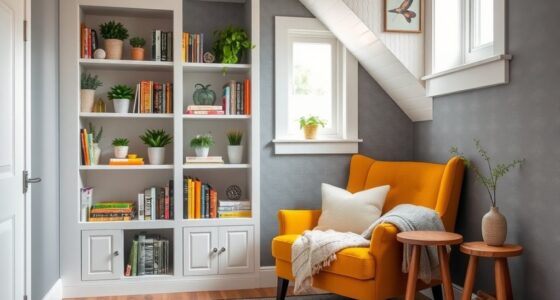
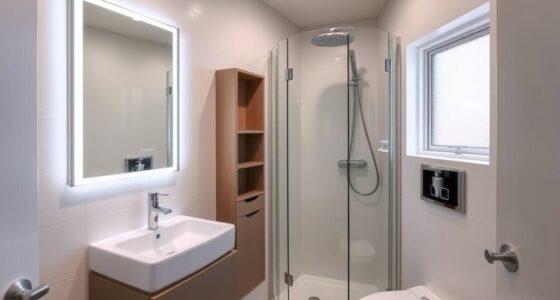
To make your small space feel bigger, focus on maximizing natural light through strategic window placement and minimal treatments like sheer curtains. Use light-colored walls and reflective surfaces such as mirrors to bounce light around the room. Incorporate layered lighting with fixtures that add warmth and dimension. Carefully choosing bright, functional furniture and avoiding dark or heavy window coverings will boost openness. Keep exploring how these tips can transform your space for an even brighter, more inviting feel.
Key Takeaways
- Use large, strategically placed windows to flood the space with natural light and connect indoors with outdoor views.
- Incorporate light-colored walls, furniture, and decor to reflect more light and create an airy atmosphere.
- Add mirrors and reflective surfaces opposite windows to maximize natural light reflection and visual depth.
- Opt for sheer or light window treatments that allow maximum sunlight entry while maintaining privacy.
- Layer ambient, task, and accent lighting with bright, energy-efficient fixtures to enhance brightness and perceived spaciousness.
Embrace Natural Light to Expand Your Space

Natural light can dramatically make a small space feel larger and more open. To maximize this effect, consider your window placement carefully. Position windows where they can capture the most outdoor views, such as facing a garden or open sky, to draw the eye outward. Large, strategically placed windows allow sunlight to flood in, brightening the room and creating a sense of spaciousness. Avoid blocking windows with heavy furniture or thick curtains that can restrict light flow. Instead, opt for minimal window treatments that let in plenty of natural illumination. These outdoor views not only enhance the room’s aesthetic but also make it feel connected to the outside, expanding your perception of space. Proper window placement is a simple yet powerful way to amplify natural light and open up your small space.
Choose Light Colors to Reflect Illumination

Using light colors on your walls, furniture, and decor helps reflect more light throughout your space. Incorporate pale shades, reflective surfaces, and light furnishings to maximize brightness. These choices make small rooms feel more open and airy. Additionally, selecting free floating accessories and decor can enhance the sense of openness without cluttering the space. Incorporating traditional Italian craftsmanship into your decor can also add a sense of warmth and authenticity to your bright, welcoming environment. Embracing artistic expression through your decor choices can further personalize and energize your space, making it feel more inviting. Integrating connected lighting technology can optimize illumination and adapt to your mood or activity, creating a smarter, more dynamic environment. Emphasizing light reflection techniques further amplifies natural brightness, especially in confined areas.
Use Pale Wall Shades
Light-colored wall shades can make a significant difference in small spaces by reflecting more illumination. Choosing pale wall shades creates a bright, airy atmosphere, making your room feel larger. Subtle color palettes such as soft beiges, light grays, or gentle pastels enhance natural light and prevent the space from feeling cramped. These shades bounce light around the room, reducing shadows and adding depth. To visualize, consider this table:
| Room Element | Effect of Pale Shades |
|---|---|
| Walls | Reflects light, enlarges space |
| Ceilings | Creates a sense of height |
| Furniture | Blends seamlessly for openness |
| Decor Accents | Pops subtly against light backgrounds |
Using light reflection techniques can further amplify the brightness and openness of your small space. Incorporating reflective surfaces like mirrors or glossy finishes can also help maximize light distribution. Stick with these shades to maximize brightness and open up your small space visually.
Incorporate Reflective Surfaces
In small spaces, incorporating reflective surfaces can substantially boost brightness by bouncing light throughout the room. Using reflective surfaces like mirrors or mirrored furniture creates an illusion of depth and openness. Place a large mirror opposite windows to maximize natural light reflection. Mirrored furniture, such as a sleek side table or a wardrobe, also amplifies light while adding a stylish touch. Keep the surfaces clean and free of clutter to enhance their reflective quality. Light-colored reflective surfaces work best, as they reflect more light and keep the space feeling airy. Avoid dark or matte finishes, which absorb light. Additionally, eco-friendly materials can be used to craft reflective surfaces, ensuring your decorating choices align with sustainability goals. Incorporating smart lighting controls can further optimize illumination levels and adapt the brightness to different times of day, enhancing the overall effect. Selecting appropriate surface materials can maximize reflectivity and durability in your design. To further enhance brightness, consider lighting placement strategies that direct light efficiently throughout the space.
Opt for Light Furnishings
Choosing light furnishings can considerably brighten your small space by reflecting more light. Your furnishing choices, such as sofas, tables, and storage units, should feature light colors like whites, creams, or pastels to maximize illumination. When selecting materials, opt for glossy or matte finishes that bounce light rather than absorb it. Light-colored fabrics and surfaces create an airy feel, making the room appear larger and more open. Avoid dark or heavy furnishings that absorb light and create a cramped atmosphere. Instead, focus on simplicity and uniformity in your furnishing choices, ensuring that each piece enhances the overall brightness. Incorporating simple organizing strategies can also help maintain a clutter-free environment that maximizes light reflection. Using appropriate materials that reflect light enhances the effectiveness of your lighting choices. Additionally, selecting light-colored textiles can further amplify the brightness and openness of your space. Paying attention to reflective surfaces such as mirrors and glass can significantly boost the distribution of light throughout the room. Utilizing light-reflecting surfaces like metallic accents or shiny decor can further enhance light diffusion. By carefully considering material selection and sticking to light hues, you’ll create a more inviting, spacious environment with improved light distribution.
Optimize Window Treatments for Maximum Brightness

Choose sheer or light fabrics for your window treatments to let in more sunlight. Maximize natural light entry by keeping coverings minimal and unobstructive. This simple approach boosts brightness and makes your small space feel more open. Additionally, selecting window treatments with light-filtering media can enhance the amount of natural light that enters while maintaining privacy. To further improve light diffusion, consider the quality of window cleaning services, which can ensure your windows are crystal clear and maximize the sunlight coming through. Incorporating seasonal events and promotions at local shops can also help you find stylish and functional window coverings that brighten your space. Being aware of toilet flushing mechanisms can help in maintaining a clean and efficient bathroom environment, indirectly contributing to overall home comfort. For optimal brightness, choosing festive dog sweaters with light-reflective details can add a cheerful, airy feel to your decor.
Choose Sheer or Light Fabrics
Have you ever wondered how to maximize natural light in a small space? Choosing sheer curtains or lightweight fabrics for your window treatments makes a big difference. These fabrics filter sunlight gently, brightening your room without blocking it out. Light diffusion helps create an airy, open feel that visually expands your space. Lightweight fabrics let in more light and add softness without heaviness. To help visualize, here’s a quick comparison:
| Fabric Type | Light Transmission | Room Effect |
|---|---|---|
| Sheer Curtains | High | Bright, airy, spacious |
| Light Drapes | Moderate | Warm, inviting |
| Heavy Fabrics | Low | Cozy, enclosed |
| No Curtains | Unlimited | Unobstructed sunlight |
Choosing the right fabric type can significantly influence how spacious your room feels. Select light fabrics and sheer curtains for a brighter, more open vibe.
Maximize Natural Light Entry
Maximizing natural light in a small space starts with selecting the right window treatments. Proper window placement plays a key role—position windows where they can catch the most outdoor lighting, like facing east or west. Choose treatments that allow light to filter through, such as sheer curtains or light blinds, and avoid heavy drapes that block sunlight. Keep window frames clear of obstructions to let in maximum daylight. Consider the outdoor lighting conditions—if your yard gets lots of sun, opt for treatments that can be easily adjusted to control glare. By prioritizing window placement and choosing treatments that enhance outdoor light entry, you’ll flood your space with natural brightness, making it feel larger and more inviting.
Use Minimal Window Coverings
To get the most natural light into your small space, it’s best to keep window coverings minimal. Opt for minimal window coverings that don’t block sunlight or clutter your view. Consider these window treatment alternatives to maximize brightness:
- Use sheer curtains or light fabrics that allow sunlight to filter through.
- Select roller blinds or shades that can be easily rolled up completely.
- Install cordless or no-window-covering options for a clean, unobstructed look.
- Keep window sills clear of objects to enhance light reflection and openness.
- Choosing minimal window coverings can also reduce clutter, which aligns with the principles of a Sceptic to question assumptions and optimize your environment. Additionally, selecting appropriate window treatments can help prevent UV damage to your furnishings while maintaining a bright atmosphere. Incorporating light-colored surfaces and decor can further enhance brightness by reflecting natural light throughout the space.
These choices help you optimize window treatments for maximum brightness, making your space feel larger and more inviting. Minimal window coverings are your best bet for creating a light-filled, airy atmosphere.
Incorporate Layered Lighting for Depth and Warmth

Layered lighting creates a sense of depth and warmth in small spaces by combining different light sources. By layering ambient illumination with task and accent lighting, you add dimension that makes a room feel larger and more inviting. Start with a central overhead light for general illumination, then add table lamps or wall sconces to provide softer, more intimate light. Use warm bulbs to create a cozy atmosphere, avoiding harsh glare. This mix of lighting types not only highlights different areas but also prevents your space from feeling flat or dull. When you incorporate layered lighting, you craft a dynamic environment that enhances the room’s size and charm, making it feel brighter, more open, and welcoming.
Use Mirrors to Amplify Light and Space

Mirrors are a powerful tool for making small spaces feel larger and brighter. Proper mirror placement can reflect natural and artificial light, instantly opening up a room. To maximize this effect, consider these reflection techniques:
Strategically placing mirrors enhances light and space, making small rooms seem larger and brighter.
- Position mirrors opposite windows to bounce sunlight throughout the space.
- Hang a large mirror on a focal wall to create a sense of depth.
- Use multiple smaller mirrors in a gallery style for increased light reflection.
- Place mirrors behind light fixtures to amplify their brightness and distribute light evenly.
Select Bright, Functional Light Fixtures

Choosing bright, functional light fixtures is essential for making small spaces feel open and inviting. Opt for fixtures that use energy efficient bulbs to save energy and reduce costs while maintaining ample illumination. Look for adjustable fixtures, such as goosenecks or fixtures with dimmer switches, so you can modify the light intensity based on your needs and mood. Wall-mounted sconces and ceiling-mounted lights help distribute light evenly, avoiding dark corners that can make a space feel cramped. Choose fixtures with clean, simple designs to prevent visual clutter. By selecting the right combination of brightness and flexibility, you create a well-lit environment that feels larger and more comfortable without overwhelming the space.
Strategically Place Lights to Highlight Key Areas

Strategically placing lights is key to emphasizing the most important areas in a small space. Proper lighting draws attention to focal points and creates a sense of depth. Consider these techniques:
- Use accent lighting to highlight artwork, shelves, or architectural features.
- Install task illumination over work areas like the kitchen counter or desk for practical use.
- Position wall sconces to brighten dark corners and add visual interest.
- Incorporate adjustable spotlights to direct light precisely where you need it.
Avoid Heavy or Dark Window Coverings

Heavy or dark window coverings can make a small space feel even more cramped and closed in. Opt for light, airy options instead. Choose sheer curtains or light-colored blinds to let in natural light and create an open feel. Avoid dark drapes and heavy curtains that block light and add visual weight. To help you compare, here’s a quick guide:
| Light Window Coverings | Heavy/Dark Window Coverings |
|---|---|
| Sheer curtains | Dark drapes |
| Light-colored blinds | Heavy curtains |
| Minimal fabric | Thick, opaque fabric |
| Lets in more light | Blocks out light |
Frequently Asked Questions
How Can I Maximize Natural Light in Small Rooms?
You can maximize natural light by keeping window areas clear of heavy curtains, opting for sheer or light-colored drapes that reflect more sunlight. Use artificial lighting strategically to complement the natural light, and add mirrors to reflect it further. Light reflection boosts brightness, making your space feel larger. Regularly clean windows to guarantee maximum sunlight enters, and position furniture to avoid blocking light sources, creating a bright, open atmosphere.
What Are the Best Color Palettes for Small, Bright Spaces?
You should opt for light, neutral color palettes to keep your space feeling open and airy. Incorporate subtle color contrast with soft whites, beiges, or pastels to add depth without overwhelming the room. Consider using an accent wall in a slightly darker shade to create visual interest and define areas, making your small space feel more dynamic yet cohesive. These choices enhance brightness and make the room appear larger.
Which Lighting Fixtures Are Most Effective in Tight Areas?
Think of your space as a tiny stage; the right lighting fixtures are your spotlight. You should use ambient lighting to evenly illuminate the room, making it feel larger, and add task fixtures where focused light is needed, like near a mirror or desk. Compact, wall-mounted sconces or slim track lighting work well in tight areas, providing ample light without crowding your space.
How Do I Choose Window Treatments That Enhance Brightness?
You should pick window treatments that maximize natural light and add a sense of openness. Opt for drapery styles like sheer curtains or light, flowing fabrics that don’t block sunlight. Choose curtain materials such as linen, voile, or lightweight cotton to keep the space feeling airy. Keep treatments simple and hung high to create the illusion of larger windows, which enhances brightness and makes your small space feel more expansive.
Can Strategic Furniture Placement Improve Light Distribution?
Yes, strategic furniture placement can improve light distribution. You should position mirrors across from windows to reflect natural light, making the space feel brighter and larger. Arrange furniture to avoid blocking windows and light sources, allowing light to flow freely throughout the room. By thoughtfully placing mirrors and arranging furniture, you’ll maximize light, creating an open, airy atmosphere that makes your small space feel bigger and more inviting.
Conclusion
By embracing natural light, choosing light colors, and strategically placing mirrors and fixtures, you can make your small space feel bigger and more inviting. Don’t let heavy curtains or dark coverings dim your home’s potential—think of it as your modern-day secret weapon for a brighter, more spacious feel. With a little effort, you’ll transform your space into a sunlit haven, where every corner shines like a radiant masterpiece, reminiscent of the golden age of elegance and charm.