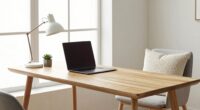
To create zones in a multifunctional room, assess how you currently use the space for work, relaxation, and entertainment. Define each area with distinct furniture arrangements, like placing a sofa for lounging and a desk in a corner for productivity. Use rugs to separate zones and layer lighting for different moods. Color coordination can enhance each space’s purpose, while personal touches make it inviting. If you want to explore more tips for optimizing your space, keep going!

Get furniture and decor delivered free with Prime
- Fast, free delivery on millions of items
- Prime Video, Amazon Music and more included
- Member-only deals all year
Key Takeaways
- Assess your space to identify distinct activities and optimal locations for each zone, ensuring accessibility and flow.
- Use larger furniture pieces, like sofas and desks, to define and separate different functional areas within the room.
- Incorporate varied lighting strategies, such as ambient and task lighting, to create distinct moods for each zone.
- Coordinate colors with soft, neutral tones for work areas and brighter shades for living spaces to enhance zone differentiation.
- Add personal touches, such as decor and smart appliances, to create a welcoming atmosphere while maintaining functionality in each zone.
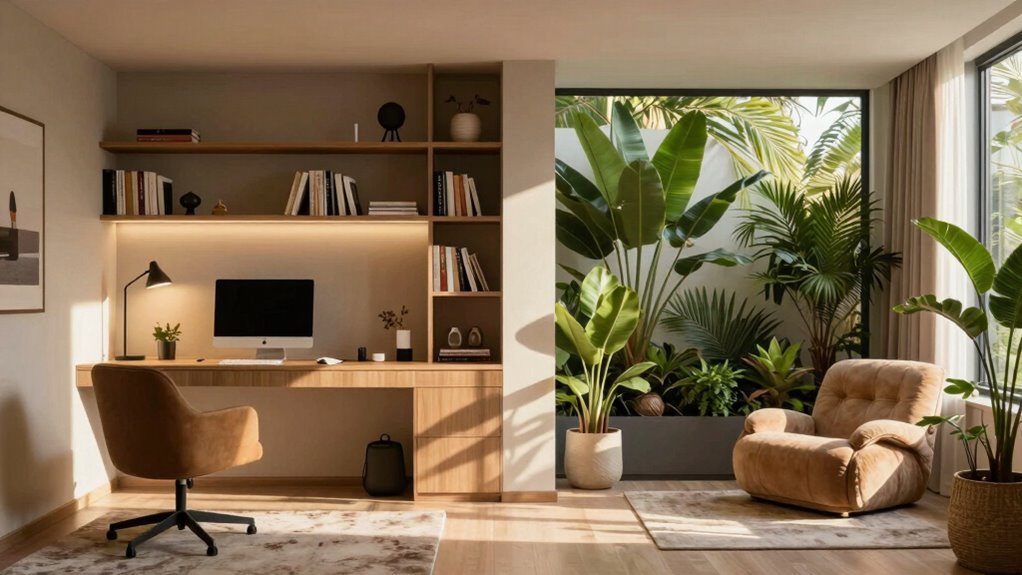
Creating distinct zones in a multifunctional room can transform the space into a more organized and inviting environment. You can achieve this by focusing on space division, which allows you to designate specific areas for various activities. Start by evaluating how you use the space. Do you work, relax, or entertain guests? Knowing this helps you determine where to create your activity areas.
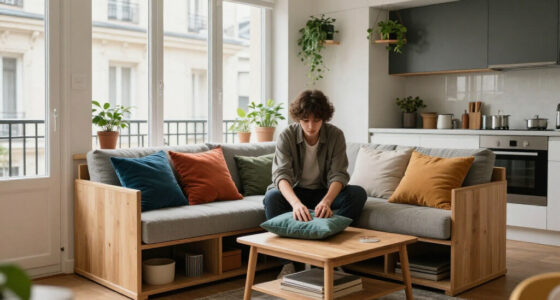
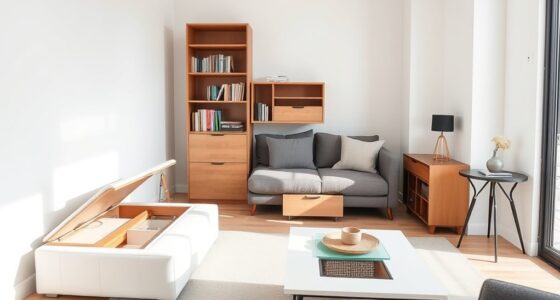
Next, consider your furniture arrangement. Use larger pieces to define zones. For example, position a sofa to create a cozy living area, and add a desk in a corner for a workspace. You can also use rugs to visually separate different zones. A well-placed rug can demarcate the living area from the workspace, making it easy to shift between activities without feeling cluttered.
Consider your furniture arrangement to define zones; a sofa can create a cozy living area while a desk marks your workspace.
Lighting strategies play a vital role in defining these zones as well. Use a combination of ambient, task, and accent lighting to set the right mood for each area. A floor lamp beside the sofa can create a warm reading nook, while a desk lamp on your workstation provides focused light for productivity. Dimmer switches are also a smart investment, letting you adjust the brightness according to your needs and the time of day.
Color coordination further enhances the sense of division in your multifunctional room. You don’t need to paint the walls different colors, but you can use various shades in your decor. For instance, soft, neutral tones in the workspace can promote concentration, while brighter colors in the living area can inspire energy and creativity. Accessories like cushions, throws, and artwork can also reflect these color choices, tying the room together while still distinguishing the zones.
Finally, don’t underestimate the power of personal touches. Incorporate items that reflect your personality, such as photos or decorative accessories, which can make the space feel more welcoming and personalized. These elements not only make the space feel welcoming but also help you feel more connected to each activity area. Additionally, integrating smart appliances like air purifiers or robot vacuums can help maintain a clean and comfortable environment in each zone. Incorporating space organization techniques can further enhance functionality and tidiness and create a more seamless flow throughout your multifunctional room.
As an affiliate, we earn on qualifying purchases.
Frequently Asked Questions
What Are the Best Colors for a Multifunctional Room?
For a multifunctional room, choose colors that promote focus and relaxation. Soft blues and greens can enhance calmness, while warm yellows and oranges add energy. Consider color combinations like a soothing gray with vibrant accents to balance productivity and comfort. Remember, color psychology plays a big role in how you feel in the space. By mixing these hues, you’ll create an inviting atmosphere that adapts to your needs effortlessly.
How Can I Improve Lighting in Different Zones?
To improve lighting in different zones, mix ambient lighting with task lighting. Use soft, warm ambient lights like ceiling fixtures or floor lamps to create a cozy atmosphere. In work areas, add task lighting such as desk lamps or under-cabinet lights to enhance focus. Don’t forget adjustable dimmers; they let you control brightness based on the activity. By layering these lighting types, you’ll create a versatile and inviting space that suits all your needs.
What Furniture Is Most Versatile for Multifunctional Spaces?
About 70% of people say they need more versatile furniture in small spaces. For multifunctional areas, opt for modular seating that can be rearranged to suit different activities. Look for storage solutions like ottomans or coffee tables with hidden compartments to keep clutter at bay. These pieces adapt easily, allowing you to create a comfortable and functional environment that meets your needs, whether you’re working, relaxing, or entertaining.
How Do I Maintain Privacy in a Shared Multifunctional Room?
To maintain privacy in a shared multifunctional room, you can use sound barriers and visual dividers. Consider adding bookshelves or curtains to create separate spaces that block noise and sight. Choose furniture with high backs or upholstered pieces to absorb sound. You might also incorporate plants as natural dividers. These elements not only enhance privacy but also add style, making the room feel more comfortable and inviting for everyone using it.
What Are Cost-Effective Ways to Create Zones?
You can create zones cost-effectively by using partition screens and area rugs. Partition screens provide instant separation, offering privacy without a permanent commitment. Choose lightweight, foldable options for flexibility. Area rugs help define spaces visually, making each zone feel distinct. Pick rugs that complement your decor while serving practical purposes. By combining these elements, you’ll enhance functionality and style in your multifunctional room without breaking the bank.
As an affiliate, we earn on qualifying purchases.
Conclusion
By creating distinct zones in your multifunctional room, you’re not just making the space more functional; you’re also setting the stage for seamless living. Whether it’s for work, relaxation, or entertaining, each area can shine in its own right. Remember, you don’t have to break the bank to make it happen. So, roll up your sleeves and get creative—before you know it, you’ll have a space that truly feels like home sweet home!
As an affiliate, we earn on qualifying purchases.
adjustable floor lamps for living and workspace
As an affiliate, we earn on qualifying purchases.
As an affiliate, we earn on qualifying purchases.
Halloween Picks
halloween
As an affiliate, we earn on qualifying purchases.