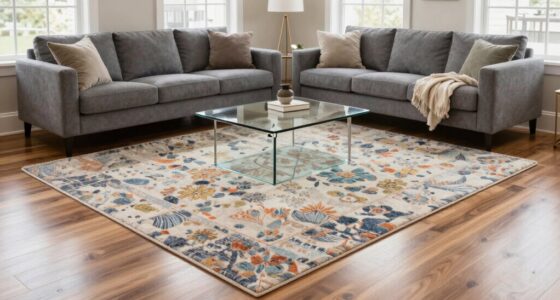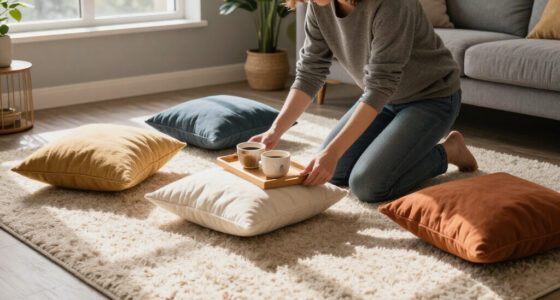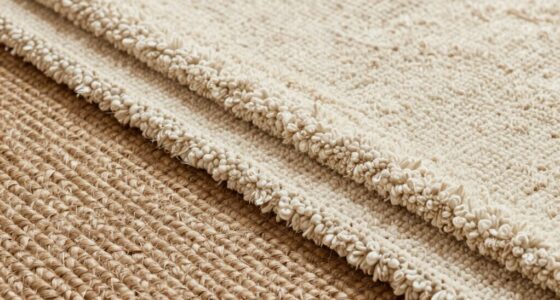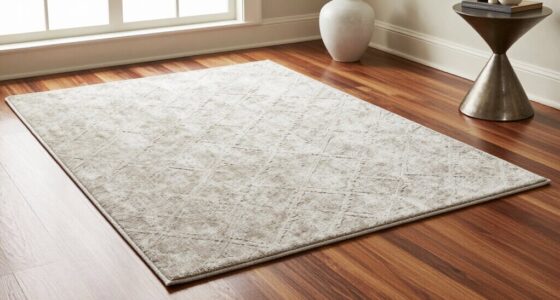
To make a room feel complete with area rugs, focus on layering rugs thoughtfully to add depth and warmth. Coordinate patterns by mixing subtle and bold designs, matching colors or motifs for harmony. Properly position rugs by anchoring furniture and creating natural flow, avoiding rigid layouts. Make certain rug sizes relate well to the space and furniture, supporting overall design. If you keep exploring, you’ll discover more tips to perfect your rug arrangements for a cohesive look.

Get furniture and decor delivered free — and shop member deals
- Fast, free delivery on millions of items
- Access to Prime Big Deal Days deals on October 6–7
- Prime Video, Amazon Music and more included
Key Takeaways
- Use layering techniques with textured or patterned rugs to add depth and visual interest.
- Coordinate rug patterns and colors to create a cohesive, harmonious look.
- Properly position rugs to anchor furniture and define different areas.
- Ensure rug size and scale complement the room dimensions and furniture layout.
- Plan with intentionality, combining layering and pattern coordination for a polished, complete space.
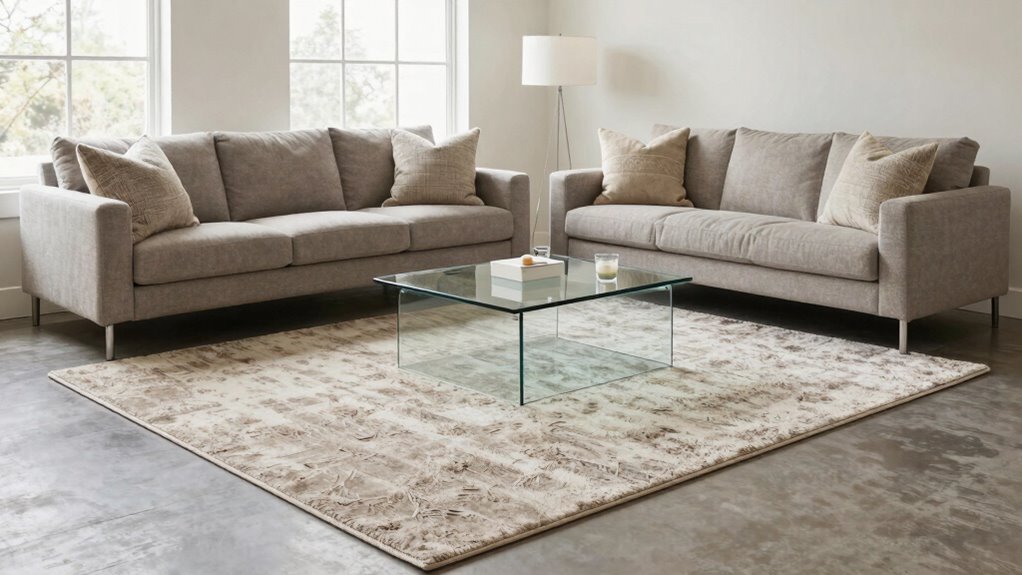
Choosing the right area rug layout can dramatically enhance the look and feel of your space. When you’re selecting a rug arrangement, consider how layering techniques can add depth and dimension, making your room feel more inviting and polished. Layering involves placing multiple rugs or mats in a way that creates visual interest without cluttering. For example, you might layer a smaller, textured rug over a larger, neutral base rug to define a seating area or add warmth to a hardwood floor. This approach brings a sense of intentionality and sophistication, especially when you combine different textures and sizes thoughtfully. Additionally, understanding rug placement principles can help you achieve a balanced and harmonious look.
Layer rugs with varying textures and sizes to add depth, warmth, and sophistication to your space.
Pattern coordination is equally essential in establishing a cohesive aesthetic. If your furniture and decor feature bold patterns, opt for rugs with subtle designs or solid colors to prevent visual overload. Conversely, if your space has neutral tones, don’t shy away from patterned rugs—just make sure the patterns complement each other. You can coordinate patterns by matching similar color schemes or repeating motifs, which helps unify the space. When layering rugs with different patterns, ensure one pattern is dominant while the others serve as accents. This technique creates harmony and balance, making your room feel complete rather than chaotic.
Positioning your rugs properly also plays a significant role. For larger areas, such as living rooms, place the rug so that your furniture sits partially or entirely on it, anchoring the entire setup. If you’re layering, consider staggering the edges of each rug to create a seamless flow, avoiding rigid, symmetrical alignments that may seem static. In smaller spaces or entryways, layering smaller rugs can add charm and personality. For instance, layering a vintage runner over a solid-colored mat can create a welcoming entry point while tying the space together.
Lastly, don’t forget to think about scale. Your rugs should be proportional to the furniture and the room’s size. A rug that’s too small can make the space feel disjointed, while one that’s too large might overpower the room. When layering, ensure that each rug’s size and placement support the overall layout, enhancing the room’s structure rather than disrupting it.
In the end, the key to a complete-looking room is intentionality. Using layering techniques and pattern coordination thoughtfully transforms your space into a cohesive, inviting environment. Experiment with different arrangements, trust your instincts, and you’ll find a layout that makes your room truly feel finished.
As an affiliate, we earn on qualifying purchases.
Frequently Asked Questions
How Do I Choose the Right Rug Size for My Room?
To choose the right rug size, measure your space first. You want a rug that complements your furniture and room proportions. Keep color coordination in mind—select a rug that harmonizes with your existing decor. If you’re into pattern mixing, opt for a size that balances bold designs without overwhelming the space. Usually, a larger rug that fits under key furniture pieces creates a cohesive, inviting look, making your room feel complete.
What Rug Shapes Work Best for Small Spaces?
In small spaces, rectangle and round rugs work best because they maximize the area without overwhelming the room. Pattern options like subtle geometric or soft floral designs add visual interest, while material choices such as wool or cotton keep it cozy and manageable. You’ll want to choose a shape that complements your furniture layout, making the room feel more complete and inviting without cluttering the space.
How Can I Prevent a Rug From Slipping?
To prevent your rug from slipping, you should use non-slip pads underneath it. These pads grip the rug and the floor, providing extra stability. Additionally, rug anchors can secure the edges and corners, preventing movement. Make certain the pad fits your rug size perfectly, and regularly check for wear. Combining non-slip pads with rug anchors ensures your rug stays in place, keeping your space safe and looking polished.
Should Rugs Match or Contrast With Furniture?
Think of your room as a symphony—your rug is the melody. You can choose to match your furniture for a harmonious, unified feel or contrast for a lively, dynamic vibe. With color coordination, a contrasting rug adds excitement, while pattern mixing can weave visual interest without clashing. Ultimately, your choice depends on your style—whether you want the space to blend seamlessly or stand out with bold character.
What Maintenance Is Required to Keep Rugs Looking New?
To keep your rugs looking new, follow regular cleaning routines like vacuuming weekly and spot cleaning spills immediately. Material selection matters—choose durable, stain-resistant fabrics for easy maintenance. Deep clean your rug every 12-18 months with professional services or gentle at-home methods, depending on the material. Rotate the rug periodically to prevent uneven wear. These steps help preserve color, texture, and overall appearance, ensuring your rug stays fresh and vibrant longer.
patterned and textured area rugs
As an affiliate, we earn on qualifying purchases.
As an affiliate, we earn on qualifying purchases.
Conclusion
Choosing the right rug layout is like selecting the perfect frame for a masterpiece — it unites and enhances the entire room. When you thoughtfully arrange your rug, you create a sense of harmony that invites comfort and style. Don’t be afraid to experiment; even small adjustments can transform your space into a beautifully balanced haven. Remember, your rug layout is the foundation that ties everything together, making your room feel truly complete.
large neutral area rugs for living room
As an affiliate, we earn on qualifying purchases.
As an affiliate, we earn on qualifying purchases.
As an affiliate, we earn on qualifying purchases.
Fall Picks
fall essentials
As an affiliate, we earn on qualifying purchases.