
To find the best sofa size for your room shape, measure your space carefully. In rectangular or square rooms, go for proportionally sized sofas or modular sections for flexibility. For L-shaped or irregular rooms, sectional sofas work well to maximize seating and fit angles. In narrow or elongated spaces, opt for slim, sleek designs in light colors to prevent a cramped feel. Keep these tips in mind to create a balanced, inviting space—more detailed advice awaits if you keep exploring.
Open a free Amazon Business account
Business pricing, bulk buying and tax-exempt orders.
As an affiliate, we earn on qualifying purchases.
Key Takeaways
- Choose proportionally sized sofas for rectangular or square rooms to avoid overpowering or underwhelming the space.
- Use sectional or modular sofas in L-shaped or irregular rooms to maximize seating and complement angles.
- Opt for slim, sleek sofas in narrow or elongated rooms to prevent a cramped appearance.
- Select light colors and reflective materials to visually expand small or narrow spaces.
- Ensure sofa placement allows for at least 24-30 inches of clearance around furniture for accessibility.
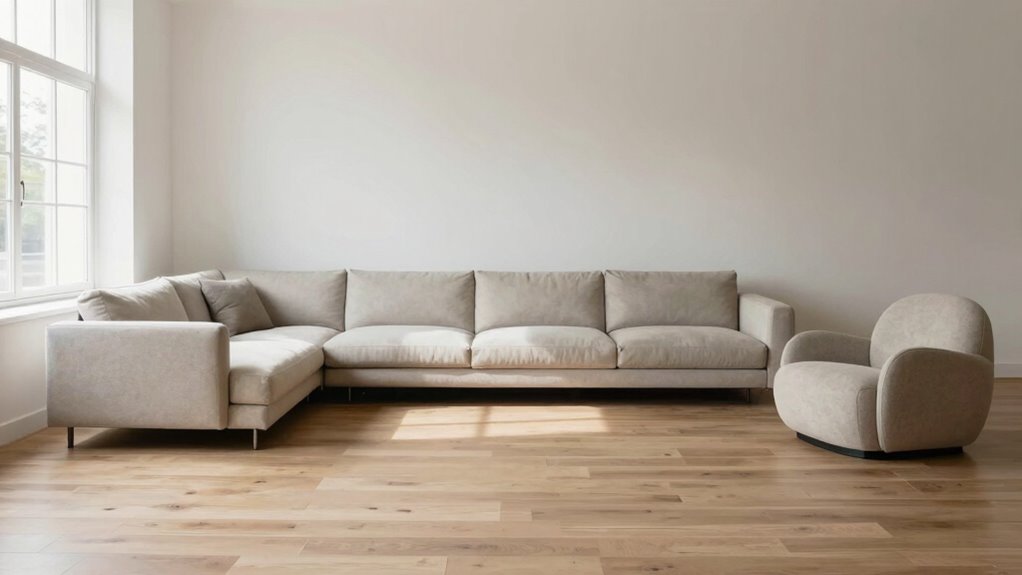
Choosing the right sofa size depends heavily on your room’s shape and layout. You want your furniture to enhance the space without overwhelming or underwhelming it. To do this, start by measuring your room carefully. Knowing the exact dimensions helps you choose a sofa that fits comfortably, leaving enough space for movement and other furniture. For rectangular or square rooms, opt for a sofa that fits proportionally—neither so large that it dominates the room nor so small that it looks lost. A modular or sectional sofa can work well here, offering flexibility to customize the shape and size based on available space.
Measure your space carefully to choose a proportionate sofa that fits comfortably and enhances your room’s flow.
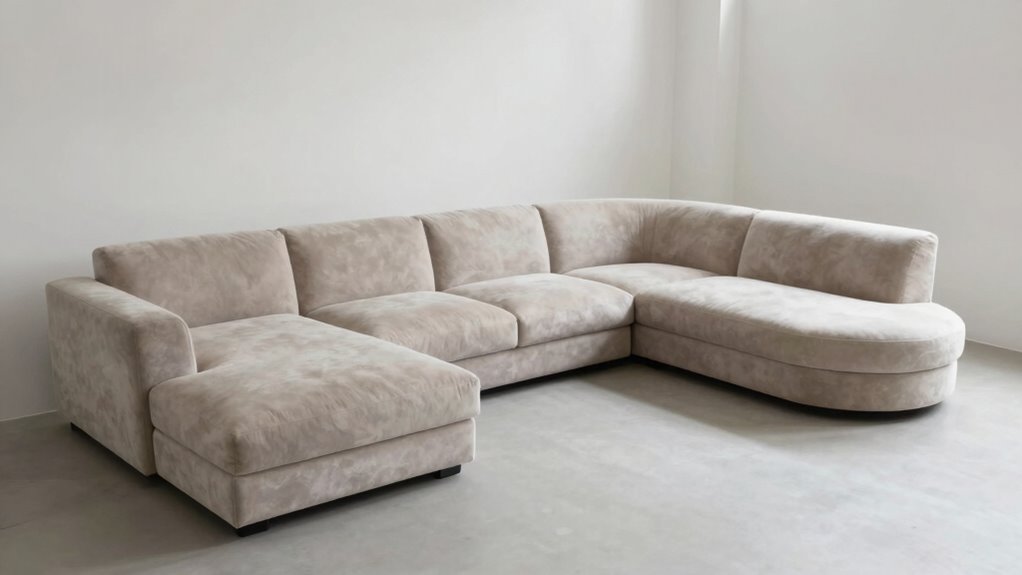
When dealing with L-shaped or irregular rooms, consider a sectional sofa that complements the angles and corners. These sofas maximize seating without cluttering the space, creating a natural flow. Keep in mind that the size of the sofa should leave pathways clear for walking—aim for at least 24-30 inches of clearance around it. This keeps the room feeling open and accessible. If your room is narrow or elongated, go for a slim profile sofa with clean lines. Avoid bulky furniture that may make the space feel cramped. Instead, choose a sleek design with a light color palette, which helps visually expand the room.
Color coordination is another key factor. Light-colored sofas, like beige, soft gray, or pastel shades, work well in smaller or narrow rooms, making the space feel airy and open. Darker hues, such as navy or charcoal, can add depth but should be used cautiously to avoid making the room feel smaller or overly dark. In larger rooms, bold or vibrant colors can add personality and serve as a focal point. Material selection also plays a role; smooth, reflective fabrics like leather or satin can make a space appear more open, while textured fabrics like chenille or velvet add warmth and coziness. If you’re working with a smaller room, choose materials that are easy to clean and maintain, and consider slipcovers for versatility.
Additionally, considering the room shape and how furniture interacts with architectural features can greatly influence the overall feel of your space. Thoughtful placement of furniture can enhance the natural flow of movement and make the room feel more harmonious. Incorporating appropriate furniture proportions ensures the pieces complement the room’s size and layout. Keep in mind that selecting the right size also involves considering the scale of other decor elements to create a balanced environment. Paying attention to furniture placement can help optimize the space and improve its functionality. Ultimately, the best sofa size matches your room’s shape while reflecting your style and needs. Pay attention to proportion, color coordination, and material choice to create a balanced, inviting space. Whether you prefer a minimalist look or a cozy, layered aesthetic, selecting the right size and style will make your room feel harmonious and functional. Remember, a well-chosen sofa should invite you to relax and enjoy your space, not dominate or diminish it.
sectional sofa for L-shaped room
As an affiliate, we earn on qualifying purchases.
As an affiliate, we earn on qualifying purchases.
Frequently Asked Questions
How Do I Measure My Room Accurately Before Choosing a Sofa Size?
To measure your room accurately, start by using a tape measure to find the length and width, noting any architectural features. Consider furniture placement and how the room layout will flow—leave enough space for walkways and other pieces. Mark measurements on a floor plan or use online room-design tools. This helps you visualize sofa sizes and guarantees your chosen piece fits comfortably without overcrowding or blocking pathways.
Can a Sectional Sofa Fit in a Small or Oddly Shaped Room?
Yes, a sectional sofa can fit in a small or oddly shaped room if you choose the right configuration. Focus on sectional configurations that maximize space, like L-shapes or modular pieces, and consider room shape considerations such as corners or irregular layouts. Measure your space carefully, and opt for a compact or custom sectional that complements your room’s dimensions, ensuring it doesn’t overwhelm or leave awkward gaps.
What Are the Best Sofa Sizes for Open-Concept Living Areas?
In open-concept living areas, opt for a sofa that complements your decor style and allows for easy movement. A sectional or a large sofa works well, providing ample seating without overwhelming the space. Choose a neutral color to coordinate with your overall color scheme, or add bold accents for visual interest. Keep proportions balanced, ensuring your sofa fits comfortably without dominating the room or disrupting the flow.
How Much Space Should Be Left Around the Sofa for Comfort?
Think of your sofa as the centerpiece of a well-orchestrated symphony; space around it should be harmonious for comfort. Keep at least 18-24 inches between the sofa and walls or other furniture, allowing easy movement. When planning, consider color coordination and material selection to create a cohesive look. Adequate clearance not only enhances comfort but also highlights your style choices, making your space both functional and inviting.
Are There Sofa Options Suitable for Irregular or Non-Standard Room Shapes?
Yes, there are sofa options suitable for irregular or non-standard room shapes. You should consider custom furniture to perfectly fit unique spaces, ensuring comfort and style. Modular designs are also great because they allow you to configure the sofa to match your room’s layout, giving you flexibility. These options help maximize space, provide a seamless look, and adapt easily to unconventional room shapes, making your living area both functional and inviting.
slim modern sofa for narrow space
As an affiliate, we earn on qualifying purchases.
As an affiliate, we earn on qualifying purchases.
Conclusion
Remember, choosing the right sofa size is like finding the perfect puzzle piece—when it fits, the whole room comes together. Whether your space is square, rectangular, or open-concept, selecting a sofa that complements your room’s shape guarantees comfort and style. Don’t forget, a well-chosen sofa can turn your living area into a cozy haven. After all, a small room with the right furniture can feel just as inviting as a spacious one—it’s all about making it work for you.
As an affiliate, we earn on qualifying purchases.
As an affiliate, we earn on qualifying purchases.
Flea & tick season Picks
flea and tick prevention
As an affiliate, we earn on qualifying purchases.