
TL;DR

Get furniture and decor delivered free with Prime
- Fast, free delivery on millions of items
- Prime Video, Amazon Music and more included
- Member-only deals all year
House Beautiful reports that organizing and design experts recommend a category-by-category review of belongings after five years in a home. Their suggested targets include unused gadgets, worn linens, expired products and leftover renovation materials, though disposal methods can vary by item and location.
A House Beautiful report has gathered organizing and design experts’ advice on 13 categories of household items residents may want to review after living in the same home for more than five years. The guidance is not a requirement to discard belongings; it recommends identifying what is no longer used, fits current routines or deserves the storage space it occupies.
The suggested categories include extra tote bags, reusable bottles and branded merchandise; manuals and cords for appliances people no longer own; worn linens; unused fitness equipment; and supplies for projects that have been postponed for years. The report also names decorative objects that have faded into visual clutter and furnishings or artwork that no longer suit the home.
Other recommendations focus on leftover paint, tile and building materials, rarely used kitchen gadgets and wellness devices, furniture that gets in the way, expired or unwanted bathroom products, and unopened boxes. The article advises keeping a small, labeled paint sample or perhaps one spare tile for repairs, while taking remaining materials to a local hazardous-waste drop-off when appropriate.
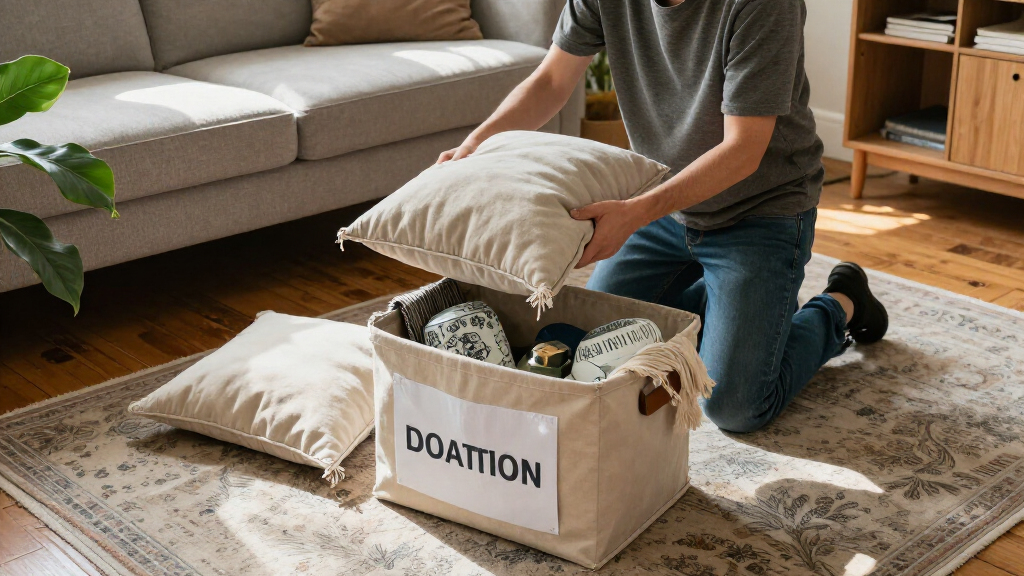
The experts recommend keeping items that are genuinely useful or meaningful, rather than treating the five-year mark as an automatic expiration date. Their proposed method is to work one drawer, cabinet or closet at a time: remove the contents, clean the space, and return only what the household wants to keep. The report also suggests donating or selling usable goods and recycling worn textiles where local services accept them.
Making Space for Current Routines
The advice addresses a common household problem: possessions accumulate while available storage and floor space stay the same. After several years, residents may have a clearer sense of how they use each room, while old purchases and plans continue taking up space. Reviewing items can free storage for things used now and make it easier to see or access belongings that remain.
The recommendations are practical rather than research findings. The report does not measure how much space households might recover or establish that five years is a universal threshold. Its relevance is as a prompt for a manageable household review, especially for people who feel overwhelmed by clutter but do not know where to start.
Products Worth Considering

Dreame H12 Pro Wet and Dry Vacuum Mop

Dyson W1 PencilWash Cordless Wet and Dry Floor Cleaner with Dock

Shark HydroVac MessMaster Cordless Wet Dry Vacuum and Mop Combo, AW261
As an affiliate, we earn on qualifying purchases.
Why Experts Point to Year Five
The House Beautiful article frames five years as a useful moment to take stock, not as a formal rule. Ann Lightfoot, cofounder of DDH Home Organizing & Move Management, said that by then the “endless storage” honeymoon has ended: belongings have multiplied, while the home’s square footage has not. Laura Kinsella, founder of Urban OrgaNYze, said careers, families, routines and interests can change even as stored possessions remain the same.
The experts’ broader point is to match possessions to present-day use. Kerrie Kelly, a designer and chief executive of Kerrie Kelly Studio, described editing as a way to make room for what people love and use, rather than an exercise in deprivation. She advised starting with one small area instead of trying to clear the whole home in a weekend.
“Our careers, families, routines, and interests can change dramatically, but the things we’ve accumulated don’t automatically change with us.”
— Laura Kinsella, founder of Urban OrgaNYze
What to Keep or Dispose Of
The article does not specify how often households should repeat this review, quantify the effect on storage, or provide a single disposal rule for every item. Whether a product is safe to use can depend on its label and condition, and local recycling and hazardous-waste rules vary. The report recommends responsible recycling or local hazardous-waste drop-off for relevant items, but residents may need to check their municipality’s guidance before disposal.
Nor does the advice mean that every item unused for five years should be thrown out. Sentimental objects, emergency supplies, spare repair materials and belongings with a planned use may merit keeping. The report leaves those decisions to residents’ needs and circumstances.
A Room-by-Room Review
The report does not announce a follow-up study or a formal program. Its practical next step is for residents who want to act to choose one drawer, cabinet or closet, remove and sort its contents, clean the area and return the items they intend to keep. Usable surplus can be considered for donation or sale, while other materials should be handled according to local disposal guidance.
Residents can then repeat the process by category, moving on to areas such as linens, kitchen tools or bathroom products only when ready. That approach keeps the task bounded and allows decisions to reflect how the household actually lives now.
Key Questions
Does the report say to throw away everything unused for five years?
No. It offers categories to review, not a blanket rule. Residents can keep belongings that remain useful, meaningful or necessary.
What kinds of items does it suggest reviewing?
Examples include unused cords and manuals, worn linens, old project supplies, duplicate kitchen tools, expired products and unwanted furniture.
How does the report suggest starting?
Organizing expert Kerrie Kelly recommends choosing one drawer, cabinet or closet, taking everything out, cleaning the space and putting back the items worth keeping.
How should leftover paint and building materials be handled?
The report suggests retaining a small, labeled paint sample or perhaps one spare tile and taking remaining materials to a local hazardous-waste drop-off when appropriate. Check local rules before disposal.
Source: housebeautiful.com