
TL;DR

Get furniture and decor delivered free with Prime
- Fast, free delivery on millions of items
- Prime Video, Amazon Music and more included
- Member-only deals all year
An interiors report describes a growing social-media trend for buying marble sinks directly from Turkish makers, where established stoneworking and processing industries can make bespoke pieces more affordable. Buyers should still check the exact stone, specifications, shipping, import costs and seller protections; the source does not provide verified prices or a detailed account of buyer outcomes.
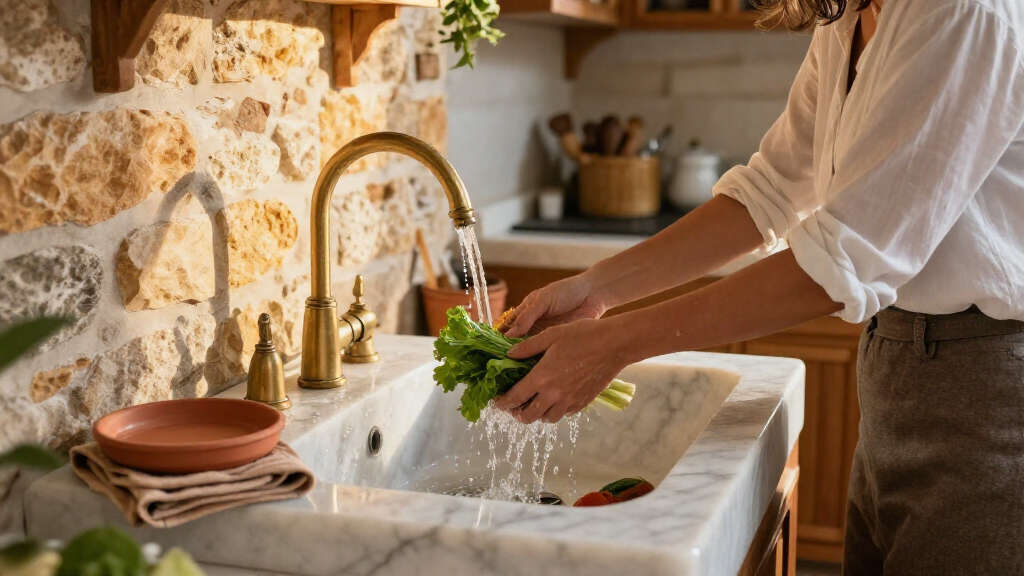
Marble sinks from Turkish manufacturers are gaining attention on home-renovation social media, with buyers praising the results after ordering direct, according to a Livingetc report. The appeal is a combination of bespoke designs, Turkish stoneworking expertise and potentially lower prices, but the article says stone type and appearance can differ from Italian marble, and it does not establish what a typical buyer pays or how often orders go wrong.
Livingetc reports that decorative marble basins are being offered through online retail platforms such as Etsy, while some social-media buyers describe ordering them as “worth the risk.” The article does not provide a sample of orders, independently verified prices, or data on delivery problems, so that phrase reflects buyers’ accounts rather than a measured assessment of the purchase risks.
Damla Turgut, founder of tile brand Otto Tiles, told Livingetc that Turkey has large quarries, processing facilities and workshops, alongside a long history of working with natural stone. She said Turkish manufacturers have increasingly made finished pieces, including sinks and furniture, for international interiors buyers. Turgut described Turkish marble as often roughly half the price of high-end Italian stone, but the report does not specify a matched product comparison or provide a price list.
Turgut cautioned that marble varies by type and slab. She said Turkish marble can have softer color and more uniform veining than some Italian varieties, while noting that individual pieces differ. That matters for buyers hoping to match a basin to other stone: a sink made from one source may not visually match tiles sourced elsewhere, even when the named marble varieties sound similar.
What Buyers Need to Verify
A marble basin is a substantial home purchase: its weight, dimensions and natural variation can affect transport, installation and how it looks in a finished bathroom. A lower listed price does not by itself establish the final cost. Buyers ordering across borders may need to account for freight, import charges, delivery arrangements and the practicalities of returning a heavy or custom-made item; Livingetc’s report does not quantify these expenses.
The trend also raises a quality and specification issue, not just a question of price. Shoppers should confirm the exact stone, finish, measurements, drainage details and sealing or care requirements before committing, and request photographs or video of the actual item or slab where possible. The source does not verify the standards, warranties or consumer protections offered by the sellers featured on social media or marketplaces.
For homeowners, the main takeaway is that Turkish sourcing may provide access to experienced makers and distinctive forms, but it is not a guarantee of a particular color, finish or bargain. The purchase depends on what the seller is actually supplying and what the full delivered cost and remedy are if the piece arrives damaged or differs from its description.
Products Worth Considering

Shark HydroVac MessMaster Cordless Wet Dry Vacuum and Mop Combo, AW261

Hisense 65-inch U6 Pro Mini-LED 4K UHD Smart Fire TV

Dyson Ball Animal 3 Upright Vacuum
As an affiliate, we earn on qualifying purchases.
Turkey’s Stoneworking Advantage
Turgut told Livingetc that Turkey’s natural-stone sector is supported by quarries and domestic processing capacity, which can help explain why finished stone goods are competitively priced. She also emphasized that the country’s attraction is not limited to raw material costs: established workshops can produce bespoke pieces to individual specifications.
The report discusses the hammam basin, or kurna, as a form associated with Turkish tradition. Designer Tanya Selway told Livingetc that a basin carved with an understanding of that form is best sourced in Turkey. The article presents this as a design and craft consideration, not as a claim that all Turkish basins are traditional or made to the same standard.
Comparisons with Italian marble need care. Turgut said Italian Carrara and Calacatta command higher prices because of demand and their reputation as luxury materials, and described some Turkish alternatives as having less saturated color or softer veining. These are broad observations from an industry professional; the report stresses that each slab is different.
“Turkey has an incredibly rich history of working with natural stone, stretching back thousands of years.”
— Damla Turgut, founder of Otto Tiles, speaking to Livingetc
Costs and Seller Protections
The report does not give current listing prices, shipping charges, import fees or delivery timelines, and it does not identify a standard price for a Turkish marble sink. Its roughly half-price comparison comes from Turgut and is not tied to specific, equivalent products. The extent of the trend is also not quantified: Livingetc describes social-media activity but gives no sales data or survey of buyers.
It is also unclear how frequently buyers experience breakage, delays, unexpected charges or disputes, or what remedies individual sellers offer. The source does not establish whether the products discussed share common testing, warranties or return terms. Buyers should treat social posts and seller descriptions as individual accounts, and check the terms directly before ordering.
Before Placing an Order
Anyone considering a direct purchase should ask the seller for a written quote that separates the basin price from packing, freight, taxes and delivery. Confirm the dimensions, weight, stone identification, finish, tap and drain compatibility, care instructions, estimated dispatch date and what happens if the piece arrives damaged or does not match its description.
Buyers should also check the seller’s reviews and return or refund terms, and get confirmation of who is responsible for transport and any import charges. For custom work, keep the specifications and agreed finish in writing. Livingetc’s report does not identify a new regulation, deadline or scheduled industry development; the next practical step for consumers is to verify the individual product and transaction before paying.
Key Questions
Why are Turkish marble sinks attracting buyers?
The report points to competitive pricing, established stoneworking expertise and bespoke production. It does not establish a typical saving or confirm how much buyers pay after shipping and import costs.
Are Turkish marble sinks always cheaper than Italian ones?
No universal price comparison is established. Damla Turgut told Livingetc that Turkish marble is often roughly half the price of high-end Italian stone, but the report gives no matched products or full-cost comparison.
Will a Turkish marble sink match Italian marble tiles?
Not necessarily. Turgut said color and veining can differ by stone and slab, so buyers seeking a close match should compare the actual materials rather than rely on country or variety names alone.
What should buyers check before ordering direct?
Confirm the stone and finish, exact dimensions and weight, delivery and import costs, return terms, damage procedures, and any care requirements. Ask for written specifications and details of the item being supplied.
Source: livingetc.com