
TL;DR
TikTok creator Derya.tavas shared a makeover that uses cardboard templates, organza and aluminum wire to turn a plain lamp into a flower-shaped fixture. The project reuses materials, but synthetic fabric near a bulb can pose a fire risk; the instructions recommend an LED bulb and keeping petals away from the light.
TikTok creator Derya.tavas has shared a lamp makeover that turns a plain silver fixture into a flower-shaped bedroom lamp, using cardboard, organza fabric and aluminum wire instead of a replacement shade. The project offers a way to reuse household materials, while its use of synthetic fabric calls for care around the bulb and heat. The makeover and materials are described in a report by Hunker, which covers the creator’s TikTok video.

Get furniture and decor delivered free with Prime
- Fast, free delivery on millions of items
- Prime Video, Amazon Music and more included
- Member-only deals all year
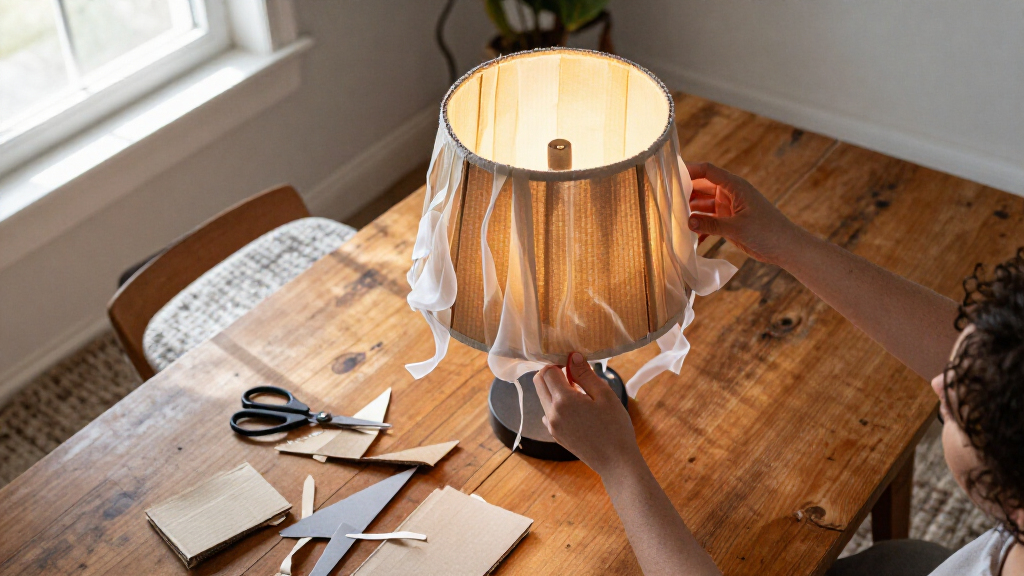
According to Hunker’s account of the project, the design is assembled from individual petals. A cardboard petal shape serves as a template: it can be traced onto organza, cut out and reinforced with three pieces of wire glued along its length. A second fabric layer can help conceal the supports and add structure. The creator used pastel pink, sparkly fabric; the instructions describe organza as sturdier than tulle while still allowing light to pass through.
Hunker reports that, after removing the lamp’s existing shade, the longest wire on a petal is wrapped around the fixture below the bulb. The petals can then be bent into shape, with additional petals added around the lamp. The instructions suggest adjusting the shade dimensions to the particular fixture and offer a rough guide: a shade about twice as wide as the base and one-third of the lamp’s overall height.
The project description warns that synthetic fabrics can melt at high temperatures. It recommends using an LED bulb, which generally produces less heat than other bulb types, keeping petals from touching the bulb and switching the lamp off when leaving the room. These precautions do not establish that every lamp or fabric combination is safe; Hunker’s report provides no specific testing or temperature measurements.
From Leftovers to Luxury A Cardboard and Organza Lamp Makeover
Derya.tavas reshapes a plain lamp with handmade petals and reused materials. The makeover is customizable, but fabric near a bulb calls for careful clearance and heat precautions.
Materials and purpose
The project changes a lamp that still works without buying a replacement shade.
Cardboard petals
Trace a repeatable petal shape, then cut it out.
Organza layers
The fabric forms the petals and lets light pass through.
Aluminum wire
Wire reinforces each petal and helps attach it to the fixture.
How the makeover works
The reported design builds a flower-shaped shade from individual petals.
Use a cardboard template to shape organza petals.
Glue wire along each petal; a second fabric layer can conceal the supports.
Wrap the longest wire below the bulb, then bend and arrange the petals.
Fit it to the fixture
The proportions are a rough guide; adapt the shade dimensions to the particular lamp.
- About twice the width of the base
- About one-third of the lamp’s overall height
- Crepe paper is mentioned as an alternative
- Bedside and pendant fixtures are proposed variations
Use fabric with care
The instructions include precautions, but the report gives no safety test or temperature measurements.
- Use an LED bulb, which generally produces less heat.
- Keep petals clear of the bulb.
- Switch the lamp off when leaving the room.
- Check the design against the specific lamp; these steps do not guarantee every setup is safe.
A Shade Built From Reused Materials
The makeover is a small-scale example of changing a home fixture without buying a new lamp or a manufactured shade. As described by Hunker, cardboard is used as a pattern, while fabric becomes the visible part of the design. For people with a plain lamp that still works, the approach offers a customizable alternative to replacing the whole fixture.
That reuse comes with a practical trade-off: a decorative shade must not interfere with the lamp’s heat management. Because the petals are made from fabric and sit close to a light source, the safety instructions are central to the project, not just a finishing detail. The project instructions recommend an LED bulb, clearance from the bulb and switching the fixture off when unattended. Those steps may reduce some risks, but Hunker notes no certification that the resulting setup is safe for all lamps.
Products Worth Considering

Dyson Cyclone V10 Origin Cordless Vacuum

eufy Security SoloCam S340 3K Dual-Lens Solar Security Camera

Hisense E6 Cinema Series 85-Inch 4K UHD Hi-QLED Smart Fire TV
As an affiliate, we earn on qualifying purchases.
How the Petal Design Works
In the makeover shown in the TikTok video and described by Hunker, the maker starts with a plain silver lamp and replaces its existing shade arrangement with a ring of individual fabric petals. The cardboard template allows the maker to repeat a shape, while different petal sizes can create a less uniform outline. Wire gives each light fabric piece support and can also provide the length needed to attach it to the lamp.
Hunker’s account says the same basic tracing and cutting method can be used with crepe paper instead of organza. The instructions also suggest adapting the idea to different fixtures, including a bedside lamp or a pendant. Those are proposed variations, not examples shown as tested installations. The shared project describes a decorative makeover rather than a commercial product or a formally evaluated lighting design.
Safety and Project Details
Hunker’s report does not specify the TikTok post’s date, the lamp’s bulb type or the exact materials used in the finished makeover beyond those described in the project. It provides no independent safety testing, temperature readings or fire-resistance information for the organza, glue or wire. The suggested shade proportions are a general guide, not a guarantee that a particular design will fit or operate safely.
It is also unclear whether Derya.tavas used all of the additional precautions described in the instructions, including an LED bulb and keeping the petals clear of the light. The project should not be treated as proof that fabric can safely surround any fixture; bulb heat, lamp construction and the distance between materials and the bulb vary.
Check the Lamp Before Use
Anyone adapting the design should first match the petal size and attachment method to the specific lamp, then check that fabric and wire remain clear of the bulb. The project instructions, as reported by Hunker, call for an LED bulb and turning the lamp off when leaving the room. Hunker reports no follow-up demonstration, safety assessment or planned product release, so no further milestone has been announced.
Source: Hunker
Key Questions
What materials are used for the flower-shaped lamp?
Hunker’s account of the project lists cardboard for a petal template, organza fabric for the petals, aluminum wire for support, and hot glue. The instructions also mention crepe paper as an alternative to fabric.
How are the petals attached to the lamp?
As described in Hunker’s report, wire is glued along each fabric petal. The longest wire is then wrapped around the lamp below the bulb, allowing the maker to attach and shape the petal.
What bulb does the project recommend?
The project instructions, as reported by Hunker, recommend an LED bulb because LEDs generally emit less heat. They also say to keep the petals from touching the bulb and switch the lamp off when leaving the room.
Is the fabric lamp design safety-tested?
Hunker’s report describes no safety testing or temperature measurements. The project instructions warn that synthetic fabric can melt under high heat, so the stated precautions should not be taken as a guarantee that every lamp setup is safe.
Source: hunker.com