To upcycle your furniture with decoupage, start by choosing a wallpaper or decorative paper that matches your style—vintage, modern, or quirky. Apply Mod Podge to the surface, carefully smooth your paper into place, and eliminate air bubbles with a brush. Once dry, add a protective coat for durability. This simple technique allows you to personalize furniture easily. Keep exploring for more tips on creating stunning, one-of-a-kind pieces that reflect your personality.

Get furniture and decor delivered free with Prime
- Fast, free delivery on millions of items
- Prime Video, Amazon Music and more included
- Member-only deals all year
Key Takeaways
- Use decorative wallpaper or patterned paper with Mod Podge to personalize furniture surfaces.
- Apply adhesive smoothly, removing air bubbles for a flawless finish.
- Seal with additional coats of Mod Podge for durability and protection.
- Choose vintage or modern prints to match your style and create unique focal points.
- Upcycling with decoupage is an eco-friendly way to refresh and add character to furniture.
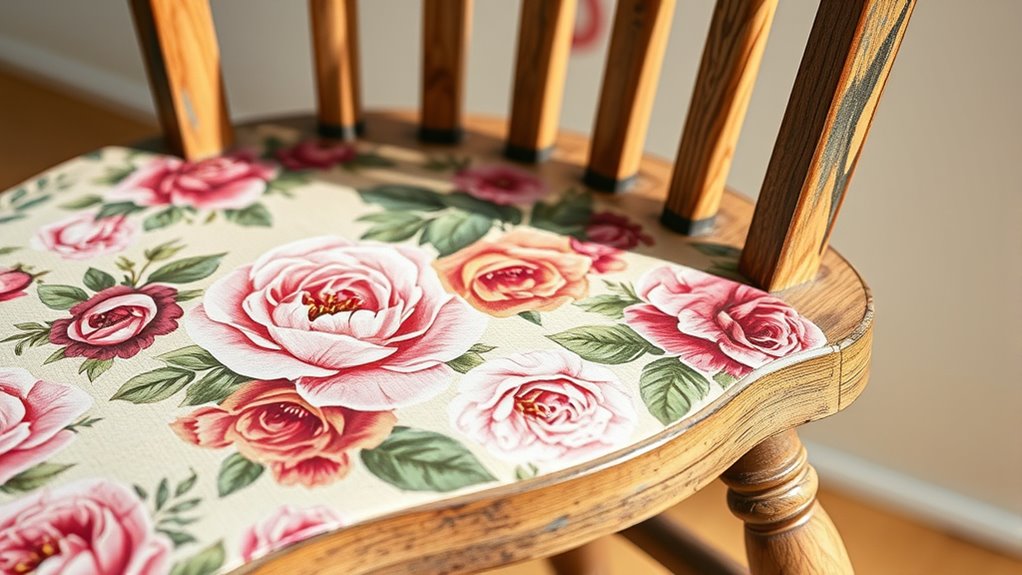
If you’re looking for a creative way to breathe new life into old or plain objects, upcycling with decoupage offers an easy and rewarding solution. This technique allows you to transform furniture and accessories by applying decorative paper, wallpaper, or fabric with a special adhesive like Mod Podge. Whether you prefer vintage patterns or sleek modern designs, decoupage gives you the freedom to customize pieces that reflect your personality and style. It’s a versatile craft that’s perfect for revamping everything from tabletop surfaces to dressers, creating unique focal points in your home.
Transform your furniture with decoupage—add vintage charm or modern flair to create personalized, stylish pieces.
When you start with vintage patterns, you tap into a world of nostalgia and timeless charm. Think floral motifs, damasks, or retro prints that add character and history to your furniture. Vintage patterns often evoke a sense of elegance and warmth, making your upcycled piece feel special. To incorporate these designs, you simply choose wallpaper or paper with vintage-inspired prints, cut it to size, and carefully adhere it onto your surface using a brush and Mod Podge. The key is to smooth out air bubbles and wrinkles for a flawless finish. Once dried, you can seal the surface with an additional coat of Mod Podge, which not only protects the design but also enhances its durability. Incorporating energy-efficient techniques can further improve the sustainability of your upcycling projects, aligning with eco-friendly practices.
Modern techniques in decoupage emphasize clean, minimalist aesthetics and innovative materials. You might opt for sleek geometric patterns, abstract art, or even digital prints to give your furniture a contemporary edge. Modern decoupage also involves experimenting with different textures—adding metallic accents, using textured papers, or layering multiple patterns for a dynamic look. The process remains similar: apply the chosen design with glue, smooth it out, and seal it with a protective coat. However, modern techniques often include blending different materials or incorporating mixed media elements, giving you endless creative possibilities. These approaches make it easier to create a chic, updated piece that fits perfectly into current interior styles.
Decoupage wallpaper for furniture
As an affiliate, we earn on qualifying purchases.
As an affiliate, we earn on qualifying purchases.
Frequently Asked Questions
Can Decoupage Be Applied on Outdoor Furniture?
Yes, you can apply decoupage on outdoor furniture, but you need to guarantee it’s weatherproofed. Use a weatherproof coating or sealant to protect your design from moisture and UV rays, which can damage the paper and adhesive. For outdoor durability, choose waterproof Mod Podge or an outdoor-specific sealer. Regularly reapply the coating to keep your decoupage looking fresh and protected against the elements.
What Is the Best Type of Wallpaper for Decoupage?
The best wallpaper for decoupage is lightweight, thin, and smooth, making it easier to apply without wrinkles. Look for decoupage paper or specialty decoupage wallpaper, which is designed for crafts. These options are less likely to tear and adhere well to surfaces. Avoid heavy or textured wallpaper, as it can be difficult to smooth out and may not adhere properly, affecting your finished look.
How Long Does Decoupage Furniture Typically Last?
Decoupage furniture can last several years if you consider durability and proper maintenance. Typically, with good quality materials and a protective topcoat, your decoupaged piece can stay beautiful for 3-5 years or more. To guarantee longevity, follow maintenance tips like avoiding excessive moisture, cleaning gently, and reapplying sealant when needed. Proper care helps your upcycled furniture retain its personality and withstand everyday use.
Is Special Sealing Necessary After Decoupage?
Yes, special sealing techniques are necessary after decoupage to guarantee finish durability. Applying a clear sealant like Mod Podge, polyurethane, or a spray lacquer protects the wallpaper and adhesive from moisture, scratches, and everyday wear. Proper sealing not only prolongs the life of your upcycled furniture but also enhances its appearance, giving it a smooth, professional finish. Always choose a sealant compatible with your decoupage materials for the best results.
Can Decoupage Be Removed Easily if I Change My Mind?
Thinking of changing your decoupage design? Good news—you can remove decoupage easily if you change your mind. The secret lies in gentle methods like soaking or peeling, which won’t damage your furniture. Removing decoupage is straightforward when you use the right techniques, making it simple to update your piece whenever inspiration strikes. So, go ahead, experiment with your design—your furniture will thank you for the flexibility!
As an affiliate, we earn on qualifying purchases.
Conclusion
Now that you know how to transform your furniture with decoupage, it’s time to get creative. Did you know that upcycling furniture can reduce waste by up to 70%? By adding wallpaper and Mod Podge, you not only personalize your space but also help the environment. So grab your supplies, embrace your unique style, and turn old pieces into stunning treasures. Your home—and the planet—will thank you for it!
Vintage patterned decoupage paper
As an affiliate, we earn on qualifying purchases.
As an affiliate, we earn on qualifying purchases.
Outdoor weatherproof decoupage sealant
As an affiliate, we earn on qualifying purchases.
As an affiliate, we earn on qualifying purchases.
Halloween Picks
halloween
As an affiliate, we earn on qualifying purchases.