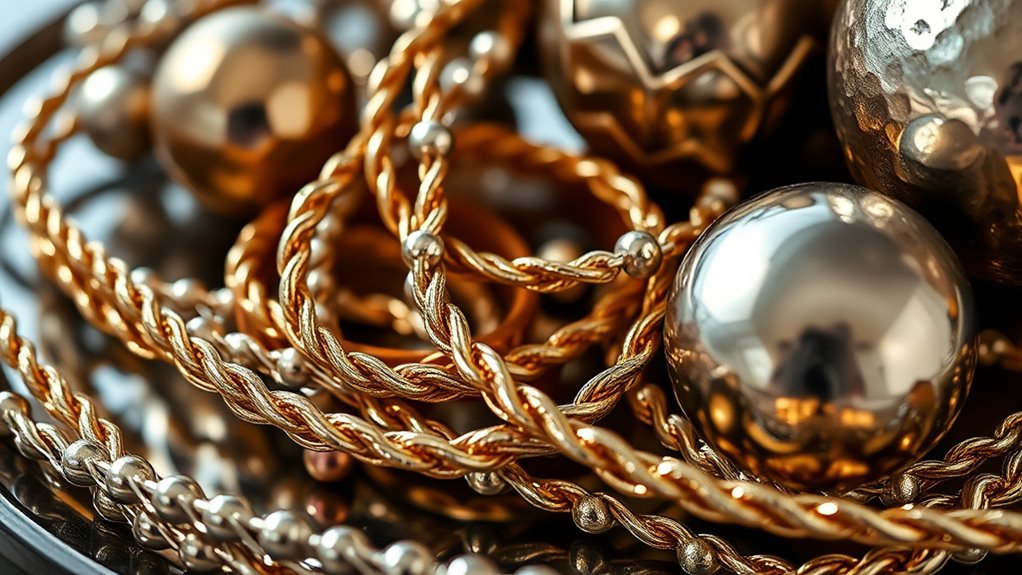

To blend gold, silver, and bronze accents effectively, start by matching finishes like brushed or polished textures to create consistency. Use contrasting tones strategically to add visual interest, such as pairing shiny gold with matte bronze for focal points. Balance the mix by combining similar finishes within different metals, which keeps the look harmonious. Pay attention to lighting, as it influences how metals interact. Keep experimenting; mastering these tips will elevate your design with confidence.
Prime for Young Adults — start your free trial
Fast free delivery, streaming and member deals for eligible 18–24 year olds.
As an affiliate, we earn on qualifying purchases.
Key Takeaways
- Match finishes like matte or polished to create visual harmony and a cohesive look.
- Use contrasting tones strategically, such as shiny gold with matte bronze, to add interest without overwhelming.
- Balance matching finishes with contrasting colors to maintain consistency while introducing visual depth.
- Consider how metals interact under lighting; warm gold softens silver, while bronze grounds the palette.
- Experiment confidently by combining metals and finishes, observing their effects in different environments for a personalized touch.
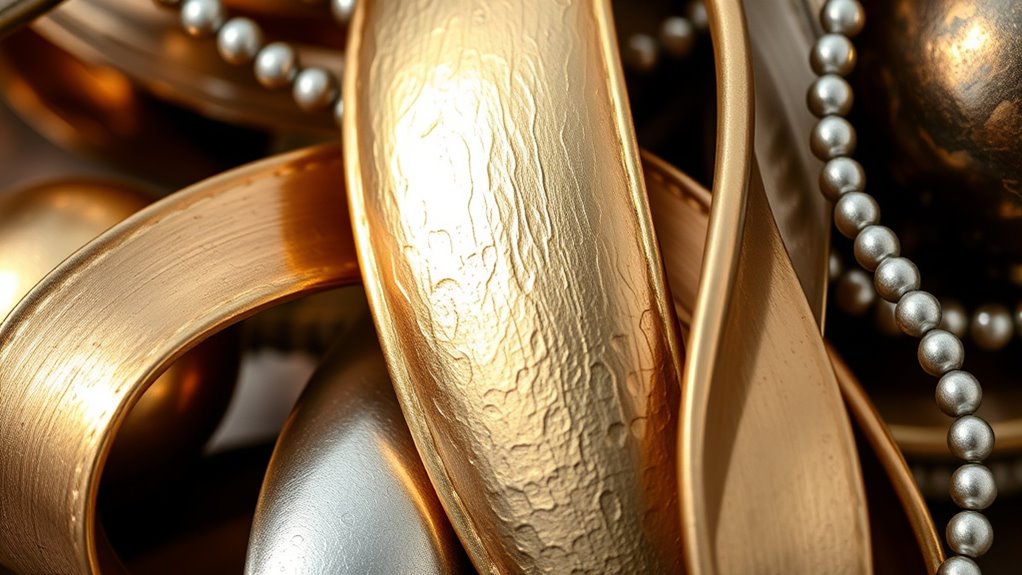
Have you ever wondered how mixing different metals can enhance your interior design or jewelry? The key lies in understanding how matching finishes and contrasting tones work together to create a cohesive yet dynamic look. When you’re blending metals like gold, silver, and bronze, it’s tempting to think you need everything to match perfectly, but that’s a misconception. Instead, focus on balancing matching finishes, such as brushed or polished surfaces, to establish harmony. For example, pairing matte gold fixtures with matte silver accents creates a subtle, sophisticated effect, allowing the different metals to coexist without clashing. Matching finishes help you maintain a consistent visual language, making your space or jewelry look intentional rather than haphazard.
Balancing matching finishes like brushed or polished surfaces creates harmony in mixed-metal designs.
On the other hand, contrasting tones add visual interest and depth. Think of mixing shiny gold with matte bronze or combining cool silver with warm copper. These contrasting tones create focal points and keep your design lively. To avoid overwhelming the eye, aim for a deliberate balance—you might use a bronze lamp as a statement piece against silver picture frames or incorporate gold hardware on a silver cabinet. The contrast between the tones draws attention without feeling chaotic, especially when you incorporate similar finishes across items. For instance, pairing polished silver with polished gold maintains a sleek, unified appearance, even with contrasting colors.
When you’re designing a space or assembling jewelry, consider how different metals will interact under various lighting conditions. Gold’s warm glow can soften the cool shine of silver, while bronze’s earthy hue grounds the overall look. Mixing metals with matching finishes, like satin or matte textures, helps unify these different tones, creating a harmonious aesthetic. Conversely, contrasting finishes—such as combining a matte bronze fixture with shiny silver hardware—can add layers of texture and visual intrigue. Incorporating an understanding of metal finishes ensures your design feels cohesive and thoughtfully curated. The goal is to strike a balance: use matching finishes to establish cohesion, then introduce contrasting tones strategically to highlight specific areas or pieces.
Ultimately, your success in mixing metals depends on your confidence in experimenting with these elements. Pay attention to how different metals and finishes interact in your environment, and don’t be afraid to combine them creatively. Whether you’re choosing jewelry or decorating a room, understanding the interplay between matching finishes and contrasting tones empowers you to craft a space or look that’s both stylish and uniquely yours. The key is intentionality—use matching finishes to create a base of harmony, then introduce contrasting tones to add excitement and personality. With a bit of practice, you’ll master the art of mixing metals seamlessly, elevating your interior design and jewelry with confidence.
As an affiliate, we earn on qualifying purchases.
Frequently Asked Questions
How Do I Determine the Right Balance of Metals in a Space?
You can determine the right balance of metals by aiming for metal harmony, where the metals complement each other without overwhelming. Use contrast techniques, like pairing warm gold with cool silver or bronze accents, to create visual interest. Mix different finishes—matte, shiny, or textured—to add depth. Trust your eye, and start with a few key pieces before gradually adding more, ensuring each metal enhances the overall aesthetic.
Can Mixing Metals Make a Room Look Cluttered or Chaotic?
Mixing metals doesn’t have to make your room look cluttered or chaotic. If you’re careful, it can actually add visual interest without causing metal clashing. To avoid visual clutter, stick to a cohesive color palette and balance shiny with matte finishes. When done thoughtfully, mixing metals creates a stylish, layered look that feels intentional, not chaotic. Just remember, moderation is key to keeping your space harmonious.
Are There Specific Color Schemes That Complement Mixed Metals?
Yes, certain color schemes enhance mixed metals beautifully. Complementary color palettes, like navy with gold or emerald with silver, create striking contrasts that highlight your metals. Monochromatic metal schemes, such as varying shades of gold or silver, offer a cohesive, elegant look. You should choose colors that balance and elevate your metals, making your space feel curated rather than chaotic. Consider your overall style and experiment with different combinations to find what works best.
How Do I Maintain the Shine of Mixed Metal Accents Over Time?
To keep your mixed metal accents shining, regularly use a high-quality metal polish suited for each metal type. This helps restore their luster and remove tarnish. To prevent oxidation, avoid exposure to moisture and harsh chemicals, and consider applying a clear protective coating. Wipe your accents gently with a soft cloth after cleaning, and store them properly when not in use to maintain their shine over time.
What Are Common Mistakes to Avoid When Blending Different Metals?
Avoid metal clashing and overmatching, or your space will look chaotic rather than cohesive. Don’t choose metals that compete for attention or stick to one overused hue, which can dull your design’s charm. Instead, balance contrasting tones thoughtfully, ensuring they complement rather than clash. Remember, harmony in mixing metals comes from intentional pairing, not random combinations. Keep your choices deliberate to create a stylish, unified look that stands the test of time.
brushed gold silver bronze fixtures
As an affiliate, we earn on qualifying purchases.
As an affiliate, we earn on qualifying purchases.
Conclusion
So, next time you’re mixing gold, silver, and bronze accents, remember that coincidence often works in your favor. When you unexpectedly pair those warm tones with cool ones, it creates a surprisingly harmonious look. The key is trusting your eye and embracing the mix. Sometimes, the best design moments happen when you least plan for them—proving that blending metals isn’t just about style, but about letting a little coincidence guide your creative flow.
matte and polished metal hardware
As an affiliate, we earn on qualifying purchases.
As an affiliate, we earn on qualifying purchases.
metal finish matching accessories
As an affiliate, we earn on qualifying purchases.
As an affiliate, we earn on qualifying purchases.
NFL season / tailgating Picks
team gear
As an affiliate, we earn on qualifying purchases.