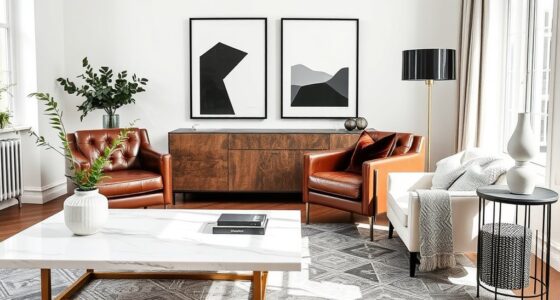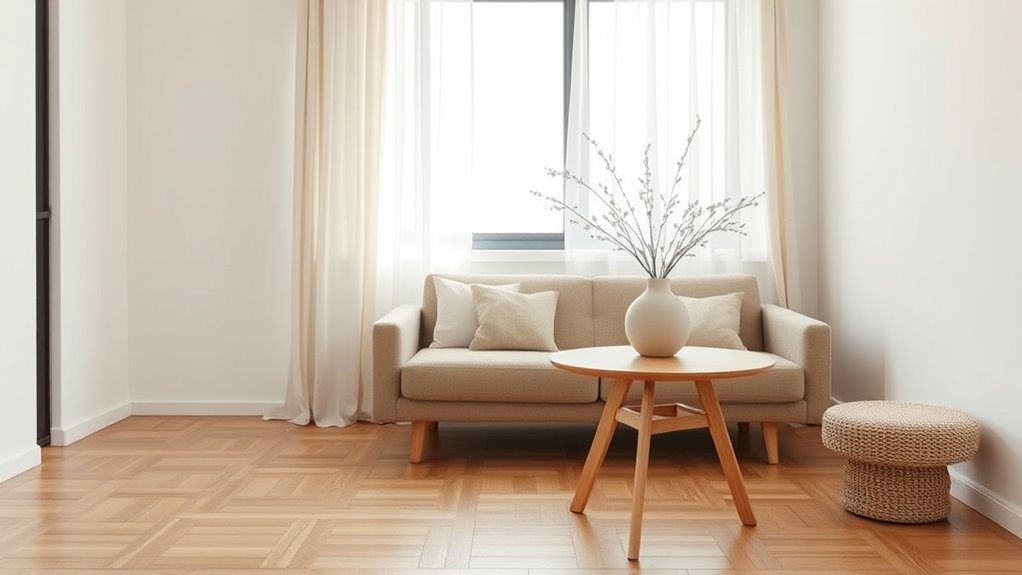

To blend Japanese and Scandinavian design in your space, start with neutral color palettes featuring soft, muted tones and understated contrasts. Incorporate natural materials like wood, linen, and stone to add warmth and texture, while choosing minimalist furniture with clean lines for a sleek look. Use simple, functional decor that enhances the environment without clutter, and balance open spaces with cozy touches like plush throws and warm lighting. Keep exploring to uncover ways to perfect this harmonious style.
Key Takeaways
- Use neutral, muted color palettes like beige, taupe, and warm gray for a balanced, calming aesthetic.
- Incorporate natural materials such as wood, linen, and stone to emphasize authenticity and texture.
- Choose minimalist furniture with clean lines that highlight craftsmanship and simplicity.
- Add functional decor accents like ceramics, wooden trays, and subtle textiles for utility and style.
- Balance open, airy spaces with cozy touches like plush throws, soft cushions, and warm lighting.

BreezeHug 3D Large Wooden Soccer Wall Decor 31.5" Soccer Ball Wall Hanging Art Sports Theme Hanging Ornaments with Tassel for Home Living Room Bedroom Party Decor
Wooden Soccer Ball Ornament: you will receive 1 soccer ball decor 31.5 inches in total length, consisting of...
As an affiliate, we earn on qualifying purchases.
Focus on Neutral Color Palettes

To achieve the serene and balanced look that defines Japandi style, focusing on neutral color palettes is essential. Cultural influences from Japanese minimalism and Scandinavian simplicity emphasize subtlety and calmness, guiding your color choices. Stick to soft, muted tones like beige, taupe, and warm grays, which create a cohesive base. This approach minimizes visual clutter and highlights natural beauty. When incorporating color contrast, keep it understated—think dark charcoal or black accents against light backgrounds—not loud or overwhelming. The goal is harmony, so choose colors that complement each other and echo the natural environment. Paying attention to color harmony principles can help you select palettes that reinforce tranquility and balance. Incorporating natural textures and materials further enhances the authentic Japandi aesthetic. Additionally, selecting appropriate lighting can enhance the calming effect of your color scheme and bring warmth to the space. Understanding visual weight can help you balance different elements within the space for a harmonious feel. A well-balanced use of scale and proportion will also contribute to the overall sense of tranquility. By adhering to these principles, your space will evoke tranquility while subtly reflecting cultural influences. This balance is the core of authentic Japandi aesthetics.

Srugn Washable Rugs 8x10 Area Rugs for Living Room,Ultra Soft Faux Wool Retro Rugs for Bedroom,Dining Room,Non Slip&Non-Shedding Low Pile Vintage Print Rug Indoor Large Carpets for Home Office Decor
CUSHIONED AND SOFT: Washable rugs might already exist, but none are as luxurious to touch as ours. More...
As an affiliate, we earn on qualifying purchases.
Incorporate Natural Materials and Textures
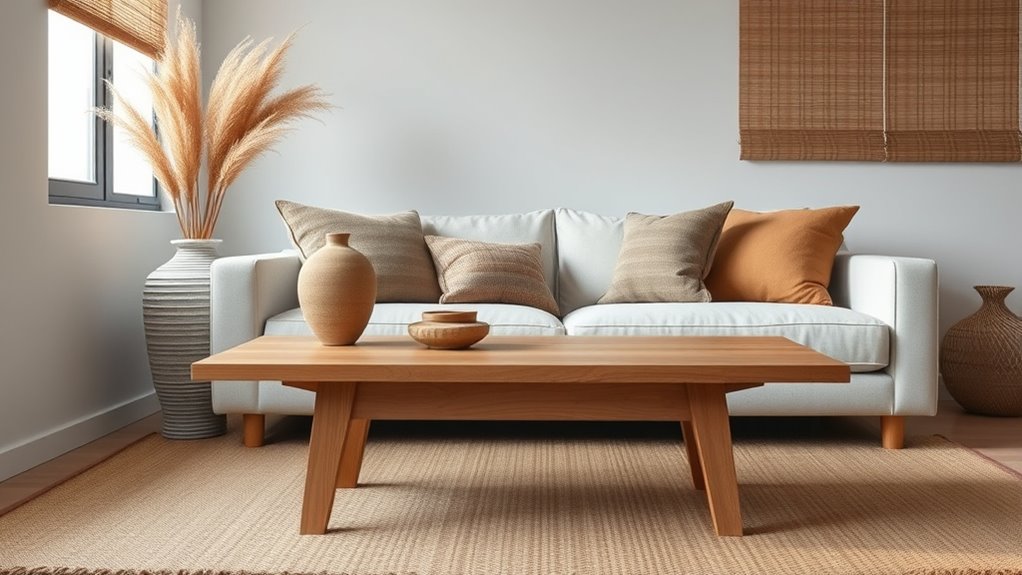
Incorporating natural materials and textures is fundamental to achieving the authentic Japandi look. You want to create a space that feels warm, inviting, and grounded in tradition. To do this, focus on elements that showcase traditional craftsmanship and organic textiles. These details add depth and character to your decor. Consider these options: 1. Use wooden furniture with visible grain or handcrafted finishes. 2. Incorporate organic textiles like linen or wool for cushions and throws. 3. Add stone or clay accessories, emphasizing natural, tactile surfaces. 4. Select woven baskets or rugs that highlight traditional craftsmanship. Additionally, choosing fabrics made from innovative Suprem fabric can enhance comfort and durability while maintaining eco-friendly qualities. Incorporating sustainable materials is increasingly important in modern design, aligning with eco-conscious values and emphasizing natural beauty. For a more cohesive look, consider selecting eco-friendly textiles that support sustainable living and add subtle texture to your space. Embracing biophilic design principles by integrating plant elements can further enhance the natural ambiance of your environment. Incorporating natural fibers like jute or hemp can also contribute to the authentic, tactile feel characteristic of Japandi interiors.

XLYFVLGF Vintage Abstract Landscape Wall Art Beige and brown Wall Decor Pictures Moody Neutral Tones Painting Modern Landscape Prints Artwork for Living Room Bedroom 16x24 Inch Set of 3
Vintage Abstract Wall Art: 16x24 inches, multiple sizes to meet your home decoration needs,The large-scale triptych format adds...
As an affiliate, we earn on qualifying purchases.
Emphasize Minimalist Furniture With Clean Lines

Emphasizing minimalist furniture with clean lines is essential to capturing the essence of Japandi style. Focus on sleek, simple pieces that highlight craftsmanship, like Japanese woodwork, which brings warmth and subtle detail. Opt for furniture with smooth surfaces and unadorned silhouettes to create a calm, uncluttered space. Incorporate Scandinavian textiles, such as soft throws or cushions, in muted tones to add comfort without complexity. These textiles complement the minimalist furniture and enhance the overall harmony. Keep the design streamlined by choosing pieces that serve multiple purposes, reducing visual clutter. The goal is to create a balanced environment where every item contributes to a serene, functional aesthetic. Minimalist furniture with clean lines is your foundation for a cohesive Japandi look.

Large 3D Textured Framed Boho Neutral Abstract Wall Art, Set of 3 Modern Paintings Artwork for Walls, Black White Brown Minimalist Geometric Pictures for Living Room, Entryway, Dining Room Wall Decor
[Framed Wall Art]: A set of 3 pieces contemporary 3d textured large framed minimalist abstract wall art, each...
As an affiliate, we earn on qualifying purchases.
Use Simple, Functional Decor Accents

Simple, functional decor accents are key to enhancing the calm and uncluttered feel of Japandi interiors. Focus on selecting decorative accessories that serve a purpose while maintaining simplicity. Incorporate vibrant accents sparingly to add visual interest without overwhelming the space. Keep your decor minimal but intentional. Consider these options:
Choose simple, purposeful decor with minimal vibrancy to create a serene, balanced Japandi interior.
- Elegant vases with natural flowers or branches
- Sculptural ceramic pieces with clean lines
- Wooden trays or bowls for organization
- Subtle textiles like linen throws or cushions
These accents should complement your furniture and architecture, emphasizing quality over quantity. By choosing decor that balances form and function, you maintain the serene, harmonious vibe central to Japandi style. Remember, less is more—each piece should contribute to the overall aesthetic. Additionally, selecting decor that is easy to clean and maintain helps sustain the minimalist look over time. Incorporating sustainable materials in your decor choices can also enhance the eco-friendly aspect of Japandi design. Being mindful of minimalist principles ensures your space remains uncluttered and tranquil. Incorporating eco-friendly decor options can further support your sustainable living goals while maintaining a refined aesthetic.
Balance Open Spaces With Cozy Elements
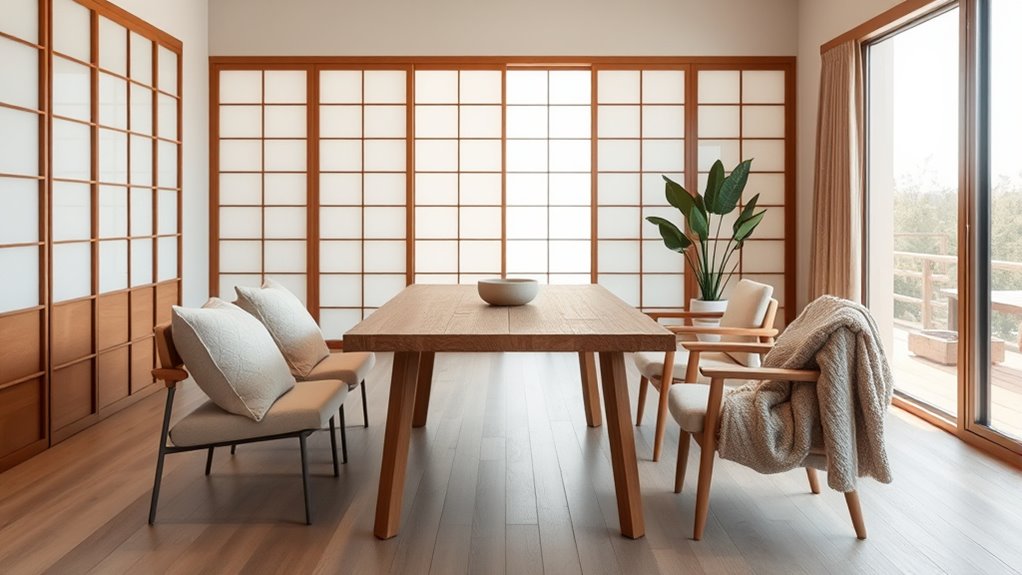
While Japandi style values open, uncluttered spaces, adding cozy elements prevents the environment from feeling too stark or sterile. Incorporate warmth through soft textiles, like plush throws or cushions, and traditional tatami mats for texture. Scandinavian hygge emphasizes comfort and coziness, balancing minimalism with inviting touches. To achieve harmony, consider blending these elements thoughtfully:
| Traditional Tatami | Cozy Textiles | Scandinavian Hygge |
|---|---|---|
| Natural fiber | Soft blankets | Warm lighting |
| Low profile | Cushions | Gentle textures |
| Minimalist design | Area rugs | Relaxed ambiance |
| Japanese heritage | Knitted throws | Inviting spaces |
| Serenity | Ambient warmth | Comfort-focused |
A key aspect of creating this balance is understanding the design principles that underpin both styles, ensuring a cohesive and inviting environment. Recognizing the importance of cultural influences can help in selecting authentic elements that enhance the overall aesthetic. Incorporating proper lighting is essential for setting the right mood and highlighting cozy elements effectively. Additionally, environmental considerations such as using natural and sustainable materials can enhance the overall harmony of the space. Proper attention to home maintenance can also help preserve these elements and maintain a comfortable atmosphere over time.
Frequently Asked Questions
How Do I Choose the Right Neutral Tones for My Japandi Space?
When choosing neutral tones for your Japandi space, consider color psychology to create a calming atmosphere. Opt for soft beige, warm gray, or muted taupe, which evoke tranquility and simplicity. Test paint swatches on your walls, observing how natural light changes their appearance throughout the day. Trust your instincts and pick shades that make you feel relaxed, ensuring your space remains balanced and harmonious in true Japandi style.
What Are the Best Natural Materials to Incorporate Into Japandi Decor?
Did you know that 80% of consumers prefer natural materials for sustainable sourcing? You should incorporate organic textures like bamboo, cork, and linen into your Japandi decor. These materials bring warmth and authenticity while supporting eco-friendly choices. Use bamboo for furniture, cork for flooring, and linen for textiles to seamlessly blend Japanese minimalism with Scandinavian coziness. Natural materials create a calming, authentic atmosphere that reflects both styles beautifully.
How Can I Ensure Furniture Remains Functional yet Minimalist?
To keep your furniture functional yet minimalist, choose multifunctional pieces that serve multiple purposes, like a sofa bed or a storage ottoman. Opt for clean lines and simple designs that don’t clutter your space. Incorporate space-saving solutions such as wall-mounted shelves or fold-away tables. Prioritize quality over quantity, and select pieces that blend seamlessly with your decor, ensuring your space remains calm, organized, and effortlessly stylish.
Which Decorative Accents Best Complement Japandi Style?
You should choose decorative accents that emphasize simplicity and natural beauty. Botanical prints work well, adding a touch of nature without overwhelming the space. Ceramic vases, especially in neutral tones or muted textures, complement the minimalist aesthetic while providing a subtle focal point. Keep your accents uncluttered and balanced, blending Japanese serenity with Scandinavian functionality. This approach enhances the tranquil, harmonious vibe characteristic of Japandi style.
How Do I Create a Cozy Atmosphere Without Cluttering Open Spaces?
Imagine your space as a warm hug—cozy yet open. To achieve this, use textural layering with soft throws, rugs, and cushions to add depth without clutter. Incorporate clever lighting techniques like warm LED lights or candles to create inviting ambiance. Keep surfaces minimal but purposeful, allowing your textures and lighting to foster a snug atmosphere, making open spaces feel intimate and calming.
Conclusion
By blending Japanese and Scandinavian styles thoughtfully, you create a space that feels effortlessly inviting and balanced. Embrace the simplicity and warmth, allowing subtle details to whisper elegance into every corner. When you gently weave these design elements together, you’ll find your home becomes a serene sanctuary—where beauty and function softly coexist. Keep experimenting with textures and open spaces, and you’ll discover your own perfect harmony. The journey to a Japandi-inspired home is simply waiting for your unique touch.