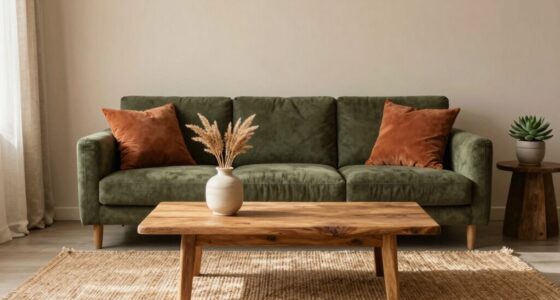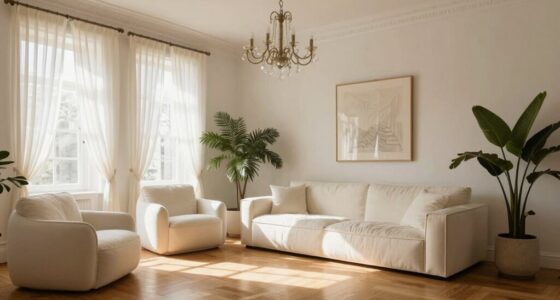
Soft neutral rooms can be calming yet dynamic. By using a palette of warm beiges and soft grays, you create a soothing atmosphere. Layering textures with plush pillows and cozy blankets adds depth while thoughtful lighting gives life to the space. Incorporate natural elements, like plants and wooden accents, for warmth. Finally, add personal touches like artwork to reflect your style. This balance guarantees your room feels inviting and unique, fostering a serene yet engaging environment. You’ll discover more tips to elevate your space!
Listen free for 30 days with Audible
Thousands of audiobooks and originals — cancel anytime.
As an affiliate, we earn on qualifying purchases.
Key Takeaways
- Incorporate varied textures with plush pillows and cozy blankets to create visual interest and warmth in soft neutral rooms.
- Use layered lighting techniques, combining ambient, accent, and task lighting to enhance depth and mood without feeling monotonous.
- Introduce natural elements like plants and wooden furniture to add organic warmth and a refreshing touch to neutral spaces.
- Personalize the decor with unique artwork and photographs, ensuring the space reflects your style while maintaining a serene atmosphere.
- Mix and match soft neutral tones with subtle patterns to create a dynamic yet calming environment that keeps the room engaging.

When you walk into a soft neutral room, you instantly feel a sense of calm wash over you. The gentle hues create a soothing backdrop that invites relaxation. You might notice how the colors, like warm beiges and soft grays, blend seamlessly to form a tranquil atmosphere. It’s not just about the walls, though—the magic lies in how you layer the elements within the space.
Soft textures play an essential role in making these rooms feel inviting. Think about plush throw pillows, cozy blankets, and a soft area rug underfoot. These elements add depth and warmth, making the room feel lived-in and comfortable. As you sink into a soft sofa, you can appreciate how these textures work together, creating a tactile experience that enhances the overall ambiance. You don’t just see the layers; you feel them, and that tactile quality turns an ordinary space into a haven.
Soft textures, like plush pillows and cozy blankets, transform a room into a warm and inviting haven, enhancing the overall ambiance.
Layered lighting is another key aspect that elevates a soft neutral room from drab to engaging. Instead of relying on a single overhead light, consider mixing different sources. You might start with a soft pendant light for overall illumination, then add table lamps with warm, glowing bulbs to create cozy corners. Wall sconces can provide accent lighting, highlighting artwork or architectural features. As you move through the space, you’ll notice how the different light sources interact, casting gentle shadows and creating a layered effect that keeps the room visually interesting. Incorporating layered lighting techniques can dramatically enhance the ambiance and depth of the room. Using multiple lighting layers also helps to highlight the natural elements, making them stand out and adding visual interest. Adding ambient lighting can further soften the overall glow, making the space feel more welcoming and relaxing. Incorporating smart lighting systems can give you even more control over these layers, allowing you to customize the mood effortlessly.
Incorporating natural elements can also breathe life into a neutral palette. Use plants with lush, green leaves to introduce a pop of color and texture. A simple wooden coffee table or rattan accents can add organic warmth, grounding the space. These natural touches blend beautifully with the soft textures and layered lighting, ensuring the room feels alive and inviting rather than bland. Additionally, focusing on home decor accents can help personalize the space and reinforce the calming vibe.
Finally, don’t shy away from personal touches. Incorporating artwork or photographs that reflect your style can add character without overwhelming the serene vibe. Whether it’s a large canvas or a small gallery wall, these elements make the space uniquely yours, drawing in the eye and sparking conversation.
In a soft neutral room, every detail counts. With the right mix of textures and lighting, you can create a space that feels both calming and enchanting, proving that neutral doesn’t have to mean boring.
As an affiliate, we earn on qualifying purchases.
Frequently Asked Questions
What Are the Best Paint Colors for Soft Neutral Rooms?
The best paint colors for soft neutral rooms include warm grays, soft beiges, and creamy whites. These shades create a calming atmosphere and promote relaxation, tapping into color psychology. For added depth, consider mixing different paint finishes; matte for walls can soften the look, while satin or eggshell on trim adds subtle contrast. By combining these colors and finishes, you can achieve a harmonious, inviting space that feels both soothing and stylish.
How Can I Add Texture to a Neutral Space?
To add texture to your neutral space, incorporate textured fabrics like linen or velvet in your accent cushions and decorative throws. Layered rugs can create warmth and depth, while natural elements such as wood or stone bring an organic feel. Don’t forget woven baskets; they add both storage and texture. By mixing these elements, you’ll create a cozy, inviting atmosphere that feels rich and engaging without overpowering the soft neutrals.
What Types of Furniture Work Well in Soft Neutral Rooms?
In soft neutral rooms, choose furniture styles like mid-century modern or Scandinavian for a clean, airy feel. Opt for pieces with natural materials, like wood or linen, to enhance warmth. Incorporate color accents through cushions or artwork to add personality without overwhelming the space. A plush rug can also create depth and comfort, making your neutral palette come alive while maintaining a serene atmosphere. You’ll find balance and charm effortlessly!
Are Soft Neutrals Suitable for Small Spaces?
Yes, soft neutrals are perfect for small spaces! They create an airy feel, enhancing space perception and making rooms appear larger. Color psychology suggests that lighter tones can promote calmness and openness, which is ideal for compact areas. By using soft neutrals, you can achieve a cozy yet spacious vibe. Pair these colors with strategic lighting and minimal furniture to maximize the effect, ensuring your small space feels inviting and stylish.
How Can I Incorporate Artwork Into a Neutral Room?
Think of your neutral room as a blank canvas waiting for a masterpiece. To incorporate artwork, focus on placement; hang pieces at eye level for maximum impact. Choose art with vibrant colors to create a striking color contrast against soft neutrals. You might also mix sizes and styles for added interest. Don’t shy away from grouping smaller pieces together—this can create a dynamic focal point that brings your space to life!
As an affiliate, we earn on qualifying purchases.
Conclusion
In the domain of interior design, soft neutral rooms are like a gentle hug, wrapping you in warmth and comfort. They create a serene backdrop that invites creativity and relaxation, ensuring your space feels inviting rather than dull. By layering textures and incorporating subtle pops of color, you can breathe life into these calming palettes. Embrace the beauty of simplicity, and let your soft neutral room become your personal sanctuary, a canvas for your unique story.
layered lighting fixtures for living room
As an affiliate, we earn on qualifying purchases.
As an affiliate, we earn on qualifying purchases.
As an affiliate, we earn on qualifying purchases.
Fall Picks
fall essentials
As an affiliate, we earn on qualifying purchases.