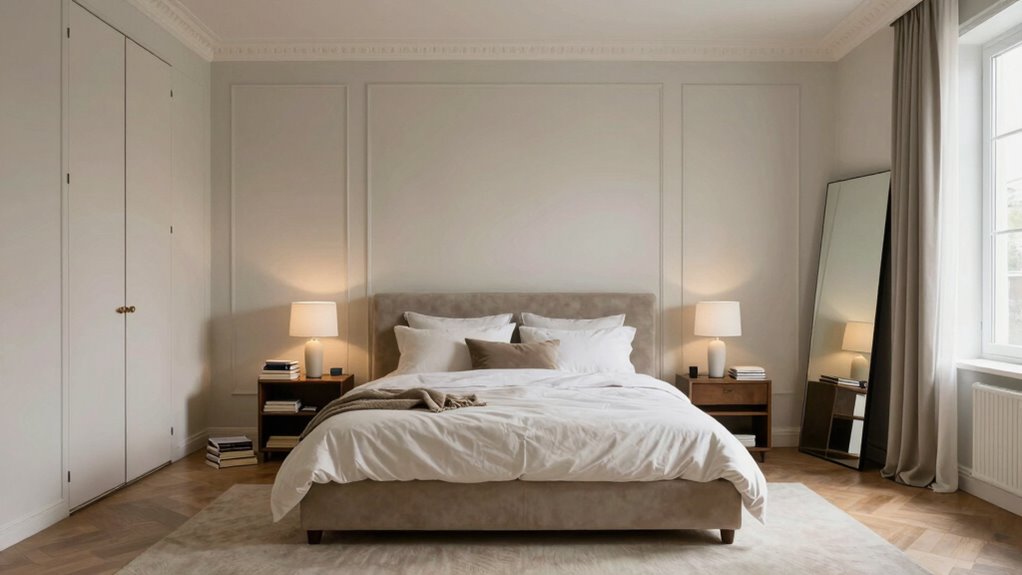

To avoid bedroom furniture placement mistakes, be mindful of how you position key pieces like your bed, ensuring it isn’t too close to doors or blocking windows. Avoid cluttered arrangements that hinder natural light and airflow, and use vertical storage to keep things organized. Centering your bed and keeping furniture away from radiators or vents helps create a relaxing environment. Keep these tips in mind to enhance your room’s flow—and if you keep going, you’ll discover even more ways to optimize your space.
Listen free for 30 days with Audible
Thousands of audiobooks and originals — cancel anytime.
As an affiliate, we earn on qualifying purchases.
Key Takeaways
- Avoid placing the bed directly in line with the door or blocking windows to ensure natural light and airflow.
- Do not position furniture against walls that hinder access, natural light, or ventilation.
- Keep the bed centered with easy access from both sides to promote balance and convenience.
- Refrain from blocking radiators, vents, or electrical outlets with furniture placement.
- Arrange furniture to create open, harmonious space that fosters a calming and relaxing atmosphere.
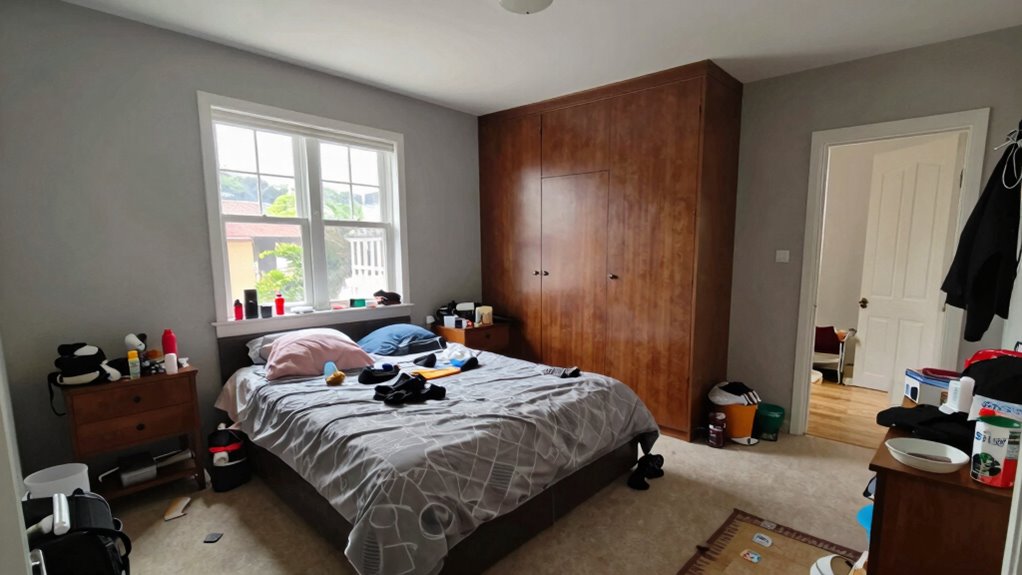
Arranging bedroom furniture might seem straightforward, but many people make common mistakes that can disrupt the room’s flow and comfort. One of the biggest pitfalls is neglecting proper color coordination. When you choose furniture and decor that clash or don’t complement each other, it can make the space feel chaotic rather than calming. Instead, focus on selecting a color palette that promotes relaxation—think soft neutrals, muted blues, or gentle earth tones. When your furniture and accessories follow a cohesive color scheme, your bedroom instantly looks more put-together and inviting. Avoid overly bright or contrasting colors that can overstimulate your senses, especially since the bedroom should be a sanctuary for rest.
Choose calming, cohesive colors to create a serene, inviting bedroom retreat.
Another mistake often made is overlooking storage solutions. People tend to place furniture without considering how much space they need for organization. Cluttering your room with furniture that doesn’t serve a purpose can make the space feel cramped and stressful. Instead, plan your layout around effective storage options, like beds with built-in drawers or nightstands with multiple compartments. Utilizing vertical storage, such as tall dressers or wall-mounted shelves, can free up floor space while keeping essentials within reach. When you prioritize smart storage solutions, you prevent clutter from piling up, which not only keeps your room tidy but also enhances the overall flow of the space. Proper storage is essential for maintaining a tidy and functional** bedroom environment and creating a sense of calm. Paying attention to storage solutions** can greatly improve the room’s usability and aesthetics.
Placement of your main furniture pieces is equally crucial. Positioning your bed improperly—like placing it too close to the door or against a wall that blocks windows—can hinder natural light and create a sense of imbalance. Aim to center your bed in a way that allows easy access from both sides and leaves enough room to move comfortably. Avoid blocking radiators, vents, or windows, as this can affect comfort and ventilation. Proper furniture placement also involves considering the room’s layout, which can significantly improve both its function and ambiance. Additionally, thoughtful placement can help in creating a harmonious and restful atmosphere that promotes relaxation.
Finally, consider how your furniture placement influences the room’s overall ambiance. Proper arrangement should foster a sense of openness and tranquility. When you pay attention to color coordination, incorporate practical storage solutions, and thoughtfully position your furniture, you create a bedroom that’s both functional and serene. Avoid common mistakes like mismatched colors, poor storage planning, and awkward placement, and instead design a space that truly feels like your retreat from everyday stress. A well-arranged bedroom can greatly enhance your overall well-being and comfort. Remember that spatial harmony is key to creating a peaceful environment that supports your rest and relaxation.
bed with built-in storage drawers
As an affiliate, we earn on qualifying purchases.
As an affiliate, we earn on qualifying purchases.
Frequently Asked Questions
How Can I Maximize Space in a Small Bedroom?
To maximize space in a small bedroom, choose space-saving furniture like beds with built-in storage or wall-mounted shelves. Opt for multifunctional designs, such as a bed that doubles as a desk or storage ottomans. Keep the layout open by placing furniture against walls, and avoid clutter by using vertical storage solutions. These strategies help create a more spacious, functional environment without sacrificing comfort.
What Are the Best Lighting Options for Bedroom Furniture?
Think of your bedroom lighting as a well-balanced symphony—ambient lighting provides the overall glow, while task lighting highlights specific areas. For instance, you might install soft overhead lights for general illumination and add bedside lamps for reading. Using layered lighting creates a cozy, functional space. Incorporate dimmable fixtures to modify brightness, and choose warm bulbs to foster relaxation. This combination guarantees your bedroom feels inviting and perfectly lit.
How Should I Arrange Furniture for Better Sleep Quality?
To improve sleep quality, place your bed with the bedside positioning that feels most natural and calming for you. Keep furniture symmetrical around the bed to create a balanced, harmonious environment that promotes relaxation. Avoid clutter and make certain there’s enough space to move freely. Position your bed away from windows and doors to minimize noise and drafts. This thoughtful arrangement helps foster a peaceful atmosphere, enhancing your sleep quality.
What Are Common Color Schemes for Bedroom Furniture?
You should consider classic color schemes like neutral tones, soft pastels, or cool blues and greys for bedroom furniture. These shades promote relaxation and restful sleep. Focus on color coordination by matching your furniture with your wall colors and bedding. Incorporate accent palettes with pops of color, such as cushions or decorative accessories, to add personality without overwhelming the space. This balance creates a harmonious and inviting bedroom environment.
How Can I Incorporate Storage Without Cluttering the Room?
To incorporate storage without cluttering your room, focus on smart decor organization and hidden storage solutions. Use multi-functional furniture like beds with built-in drawers or storage ottomans for extra space. Incorporate wall-mounted shelves to keep surfaces clear and opt for furniture with hidden compartments. These strategies help keep your bedroom tidy while maximizing space, ensuring a clean, organized look without sacrificing style or comfort.
As an affiliate, we earn on qualifying purchases.
Conclusion
Avoiding common bedroom furniture placement mistakes can transform your space into a cozy, functional retreat. Surprisingly, some experts believe that the way you arrange your furniture can even influence your sleep quality and overall mood. By thoughtfully planning your layout, you not only enhance the room’s aesthetics but also promote better rest and well-being. So, take the time to contemplate your setup—your bedroom’s comfort and your peace of mind depend on it.
As an affiliate, we earn on qualifying purchases.
compact bedroom nightstand with multiple compartments
As an affiliate, we earn on qualifying purchases.
As an affiliate, we earn on qualifying purchases.
NFL season / tailgating Picks
team gear
As an affiliate, we earn on qualifying purchases.