
TL;DR

Get furniture and decor delivered free with Prime
- Fast, free delivery on millions of items
- Prime Video, Amazon Music and more included
- Member-only deals all year
An Ideal Home report outlines seven ways to reuse Halloween pumpkins, including saving or roasting seeds, composting, burying pieces in a garden bed and making a temporary bird feeder. It warns against leaving pumpkins in woodland and says pumpkins that have been outdoors or held a candle should not be eaten.
Ideal Home has published seven suggestions for reusing Halloween pumpkins instead of putting them in the bin, including saving seeds, composting the flesh and burying small pieces in garden soil. The report also cautions readers not to leave pumpkins in woodland for wildlife, citing risks from mould, disease and decorations or candle residue.
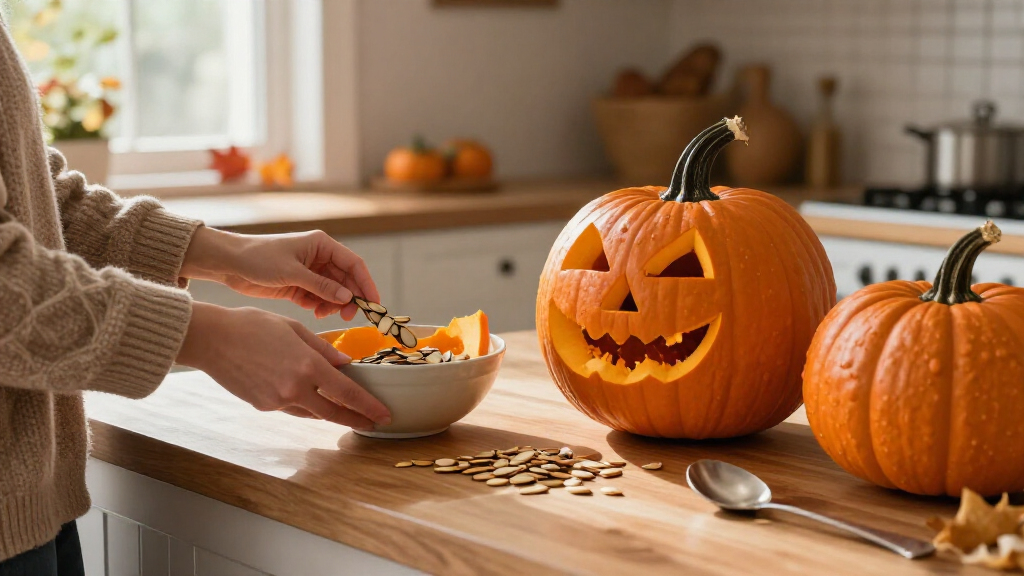
The suggestions range from using pumpkin parts in the garden to repurposing them for food. Seeds can be separated from the flesh, washed and dried before being stored for planting in spring; the report’s writer says two seedlings grown from saved seeds produced four pumpkins. Seeds can also be roasted after washing and drying, with oil and seasoning added before baking.
For pumpkins that are no longer suitable to eat, composting is one option. Rachel Cole, senior seed and plant buyer at DT Brown, advises cutting the flesh into smaller pieces and balancing its moisture and nitrogen content with dry, carbon-rich material such as fallen leaves. Turning the pile can help maintain airflow. The report also suggests burying small pieces in an empty garden bed, away from plant stems, and allowing them time to break down before planting there.
The remaining ideas are to choose no-carve decorations in future so a pumpkin may stay usable for cooking, use a hollowed-out shell as a temporary bird feeder, and cook edible pumpkin flesh in dishes such as soup or pie. Cole says an intact pumpkin kept indoors and stored properly may still be fit to eat if it is a food-safe variety and shows no deterioration. She advises against eating one that has been left outside or used to hold a candle.
Safer Ways to Reuse Pumpkins
The advice matters to households deciding what to do with pumpkins after Halloween. Reusing parts for food or garden compost can reduce the amount sent to waste, while saving seeds offers a way to grow pumpkins later. The report’s recommendations are practical rather than a claim that every pumpkin can be reused: condition and prior use determine what is safe.
Its warning about wildlife is particularly relevant to people considering leaving carved pumpkins outdoors. The report says pumpkins can rot quickly and are not a natural woodland food; mould, disease and traces of candlewax or other decorations may pose risks to animals. It recommends using a suitable composting or garden method instead of dumping them in natural areas.
Products Worth Considering

Philips Hue Festavia Globe Outdoor String Lights, 32 Bulbs, 91 ft

Roborock RockNeo Q110H Wire-Free Robot Lawn Mower

Dyson Ball Animal 3 Extra Upright Vacuum
As an affiliate, we earn on qualifying purchases.
From Carving to Garden Reuse
Carved pumpkins are commonly displayed at Halloween, but their condition changes after being cut and left outside. The Ideal Home report focuses on what readers can do once the celebrations are over, and distinguishes between intact pumpkins stored indoors and those exposed outdoors or used with a candle.
Its garden advice comes from Rachel Cole of DT Brown. She describes pumpkins as organic material that can return nutrients to soil, while stressing that composting requires attention to moisture and airflow. The article presents reuse as a series of options, not as a single approach suitable for every pumpkin.
“With a little planning, you can reduce waste while returning nutrients to the soil, which is a simple but worthwhile step towards more sustainable gardening.”
— Rachel Cole, senior seed and plant buyer at DT Brown
Food Safety Depends on Condition
The report does not give a single storage period or detailed food-safety test for deciding whether an intact pumpkin is still edible. Cole’s guidance is conditional: the pumpkin should be a food-safe variety, stored properly indoors and free from signs of deterioration. Readers should not treat the advice as applying to pumpkins that have sat outside or held a candle.
The source also does not provide detailed instructions for every proposed reuse. In particular, the bird-feeder suggestion is described as temporary, but the report excerpt does not specify how long a shell should remain outside or how it should be maintained. The article’s text ends during that suggestion, so the full details of the feeder method are not available in the supplied material.
Choose a Reuse Method
After Halloween, households can first check each pumpkin’s condition and how it was used. An intact, properly stored pumpkin may be considered for cooking if it is an edible variety and shows no deterioration; seeds can be washed and dried for planting or roasting. Pumpkins unsuitable for food can be cut into smaller pieces for a balanced compost heap or buried in an empty bed away from plant stems.
Readers should avoid leaving pumpkins in woodland and keep in mind that a buried pumpkin needs time to break down before the area is planted. For next year, the report suggests no-carve decorating as one way to preserve a pumpkin for longer and keep the option of cooking it open.
Key Questions
Can I eat a Halloween pumpkin after it has been displayed?
According to Rachel Cole of DT Brown, an intact pumpkin may still be suitable for cooking if it is an edible variety, has been stored properly indoors and shows no signs of deterioration. The report advises against eating pumpkins left outside or used to hold a candle.
Can I leave my pumpkin in the woods for animals?
The Ideal Home report says not to leave pumpkins in woodland. It warns that they can rot and grow mould, may spread disease or make wildlife unwell, and can contain candlewax or other decoration residue.
How should pumpkin pieces be added to compost?
Cole recommends cutting pumpkins into smaller pieces and mixing the moist, nitrogen-rich material with dry, carbon-rich matter such as fallen leaves. Turning the heap can help maintain airflow as it decomposes.
Can I save pumpkin seeds to plant next year?
Yes. The report says to separate the seeds from the flesh, wash and thoroughly dry them, then store them in an envelope until spring. Seeds can also be roasted for a snack instead of being saved for planting.
Source: idealhome.co.uk