
TL;DR
Audrey Fletcher refreshed her rental bathroom with paint, using a green-and-brick-red palette to put the apartment’s original 1950s tiles and fixtures at the center. The project took a day and relied on paint and items from a local Habitat ReStore; the exact cost and paint products were not reported.
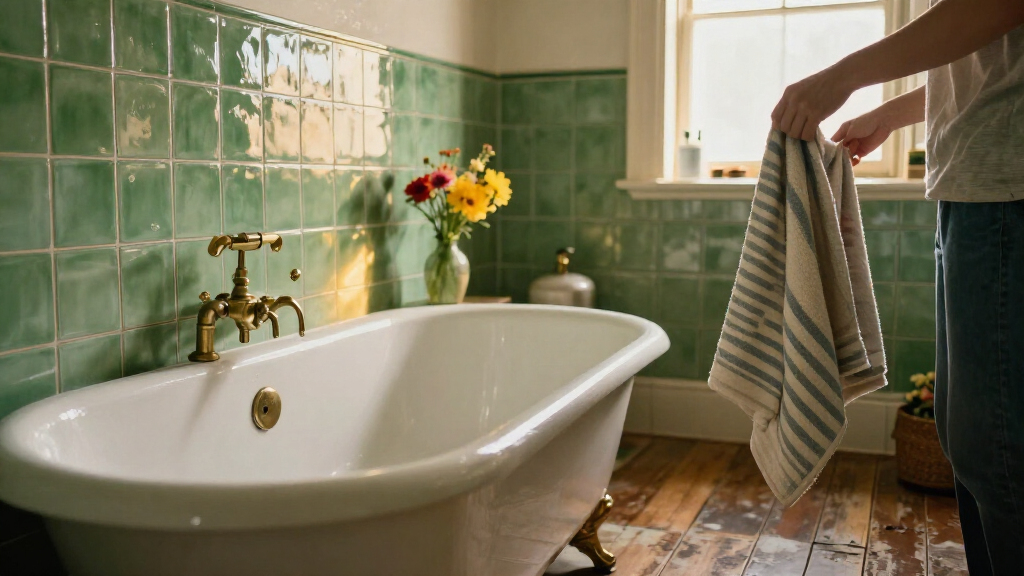
Audrey Fletcher has refreshed her rental bathroom with a one-day paint makeover that makes its original 1950s green tiles the focal point. Fletcher used a green-and-brick-red color scheme and secondhand finds to bring more character to the beige room while working within her landlord’s guidance and the rental contract’s ban on wallpaper.

Get furniture and decor delivered free with Prime
- Fast, free delivery on millions of items
- Prime Video, Amazon Music and more included
- Member-only deals all year
Fletcher, who shared the project through her Instagram account @lords_of_dickson, lives in an apartment in a converted 1940s movie theater. Much of the home had the neutral beige palette she associated with a traditional rental, while the bathroom retained green tiles and fixtures that she wanted to preserve and emphasize. She told Apartment Therapy that the earlier bathroom felt like a “renter’s special beige,” despite the tiles’ distinctive look.
After browsing images of 1950s-style bathrooms on Pinterest, Fletcher settled on a palette of green and brick red. The paint choice took the most consideration: she tried colors she already had but was not satisfied with them, then found inspiration in a green-and-red combination and located brick-red paint at a local Habitat ReStore. She said the building’s history and surviving original details shaped her aim of making the tiles and fixtures stand out while updating the rest of the room.
Fletcher said the painting itself was straightforward and took one day. Before painting, she sealed some tiles with paintable caulk, then applied color with a roller. She already owned the painting tools and reused leftover paint. She also said the items used in the project came from her local ReStore, which she believes saved her hundreds of dollars; no itemized budget or exact savings figure was provided.
A renter refreshes a bathroom around vintage green tile
Audrey Fletcher used paint and secondhand finds to make her rental’s original 1950s tiles and fixtures the focus.
A palette that puts tile first
Green and brick red replaced the room’s beige feel while keeping its original details in view.
Green tile
Existing tiles and fixtures became the room’s focal point.
Brick red
Paint from a local Habitat ReStore helped build the contrasting palette.
A renter-friendly approach
The lease prohibited wallpaper, so Fletcher spoke with her landlord and focused on paint.
She sealed some tiles with paintable caulk.
She applied color with a roller, reusing leftover paint and tools she already owned.
What the account leaves open
The project offers an idea, but not a full cost or durability guide.
- ReStore finds and reused supplies
- Fletcher said shopping there saved her hundreds
- Total cost or exact savings
- How the paint holds up over time
Paint Makes the Original Tile Stand Out
The makeover shows how a renter can change the feel of a room without removing older finishes that may be difficult or impossible to replace. In Fletcher’s case, the existing green tile and fixtures were not treated as obstacles to a new look; the paint scheme was chosen to draw attention to them and connect the bathroom to the building’s history.
For readers considering a similar update, the project also illustrates the limits of a low-cost makeover story: it depended on the room’s existing tile, permission from the landlord, paint Fletcher already had, and secondhand materials. Reusing supplies and shopping at a ReStore can reduce purchases, but the account does not include a full cost breakdown or establish that the same approach will work in every rental bathroom.
Products Worth Considering

eufy Security SoloCam E42 4-Camera Kit, 4K Solar Security Camera System

TCL 32-Inch R3D Series QLED Full HD Roku Smart TV (32R3D, 2026)

Sonos Era 100 SL Wireless Speakers, Black, Pack of 2
As an affiliate, we earn on qualifying purchases.
A Rental Inside a Former Theater
Fletcher said the apartment building has had several uses over the years and retains many of its original fixtures and tiles. The apartment itself is in a converted 1940s movie theater, and she wanted the updated bathroom to reflect some of that history rather than leave the room in a standard beige rental palette.
Her lease prohibits wallpaper, so she focused on paint after speaking with her landlord. Fletcher said the landlord had told her she could make changes that add value. That exchange informed her choice of a paint-based refresh, though the account does not give the lease wording beyond the wallpaper restriction or specify whether the landlord reviewed each color and surface before work began.
“I really wanted the tile to be the star.”
— Audrey Fletcher
Costs and Materials Not Itemized
The account does not identify the paint brands, exact colors, total project cost, or precise savings. Fletcher said ReStore shopping saved her hundreds, but did not provide a comparison budget or list prices. It is also unclear which surfaces, beyond some tile sealed with paintable caulk, were painted, and whether any work involved surfaces exposed to regular water or heavy wear.
The project is a personal makeover, not a tested guide to painting every kind of bathroom tile. The account does not report how the paint has held up over time, whether the landlord formally approved the final work, or what changes—if any—would be required when Fletcher moves out.
The Finished Room Remains in Use
No further work or follow-up testing was announced. Fletcher told Apartment Therapy she was pleased with the result and would not change anything. The next practical test is how the paint and sealed areas hold up through routine bathroom use; no durability update or planned renovation milestone was reported.
For renters considering comparable changes, Fletcher’s account points to checking lease restrictions and discussing alterations with a landlord before painting. Her project used paint and secondhand items, but the published details do not establish that its method or costs would suit every bathroom or rental agreement.
Source: rss
Key Questions
What was the main change in Audrey Fletcher’s bathroom?
She used paint in a green-and-brick-red palette to refresh the room and emphasize its original 1950s green tiles and fixtures.
How long did the makeover take?
Fletcher said the painting took one day. She sealed some tiles with paintable caulk before applying paint with a roller.
How much did the bathroom project cost?
An exact total was not reported. Fletcher reused leftover paint, already owned her painting tools, and said shopping at her local Habitat ReStore saved her hundreds of dollars, without giving a specific figure.
Did the landlord allow the changes?
Fletcher said she spoke with her landlord, who told her she could do anything that adds value. She also said her contract prohibits wallpaper, which is why she focused on paint.
Has the paint’s durability been reported?
No follow-up on wear or durability was included. The account does not say how the painted surfaces have performed over time.
Source: apartmenttherapy.com