
TL;DR
Interior designers Jamie Loren and Viviane d’Adesky say HomeGoods can yield polished, higher-quality decor, but its rotating assortment requires patience and careful inspection. Their six recommended categories are coffee table books, accent pillows, vases, lamps, decorative bowls and linens.
Interior designers Jamie Loren and Viviane d’Adesky recommend shoppers look beyond the variety at HomeGoods and inspect six categories—books, pillows, vases, lamps, bowls and linens—for pieces that can give a room a more considered look. Their advice is to judge items by materials and construction, rather than assuming a low price means low quality, while recognizing that the retailer’s changing inventory makes specific finds unpredictable.

Get furniture and decor delivered free with Prime
- Fast, free delivery on millions of items
- Prime Video, Amazon Music and more included
- Member-only deals all year
Loren says HomeGoods differs from retailers that sell coordinated collections because it carries pieces from different makers and styles. That mix can help shoppers find individual items for a room, but quality varies, she says. D’Adesky likewise advises looking closely at materials and gives the example of having seen a Natuzzi leather sofa at the store for about half its stated $5,000 retail price. The example is her account, not a guarantee of typical availability or pricing.
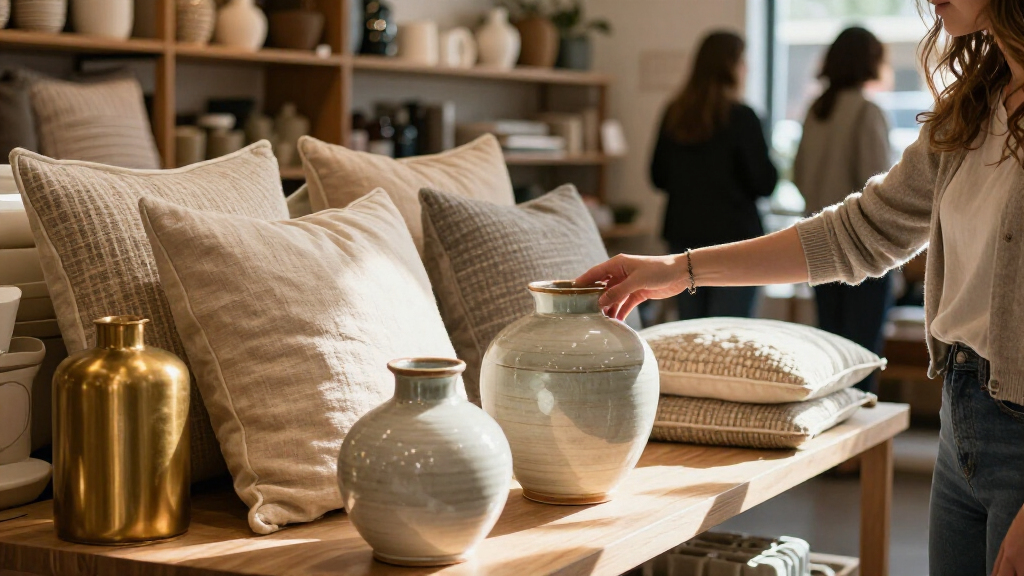
The six categories the designers suggest checking serve different purposes. Loren points to coffee table books as a way to add color, texture and personality, and recommends pillows with removable covers and distinctive fabrics. She says a vase can work as a sculptural object without flowers, and that one larger piece may make a stronger statement than several small accessories.
D’Adesky recommends examining table lamps, including ceramic or stone options, as softer lighting for a room. For decorative bowls and vessels, she cites marble and bone-inlay pieces that can dress up a console or conceal small items, while cautioning against crowding a surface. For linens, she suggests checking fabric composition and weave: she looks for organic cotton, advises skipping polyester, and says holding fabric to the light can help reveal whether its weave is consistent.
Shop with a designer’s eye Six categories to inspect
Interior designers Jamie Loren and Viviane d’Adesky recommend judging finds by their materials and construction. HomeGoods’ changing assortment makes patience part of the hunt.
Six places to look
These categories can add character and polish; availability and quality vary by item.
Coffee table books
Add color, texture and personality to a room.
Accent pillows
Look for distinctive fabrics and removable covers.
Sculptural vases
One larger vase can make a strong statement, even without flowers.
Table lamps
Consider ceramic or stone options for softer room lighting.
Decorative bowls
Marble or bone-inlay pieces can dress up a console or conceal small items.
Linens
Check the fabric label and weave; d’Adesky recommends organic cotton and avoiding polyester.
Inspect what you find
Use material, construction and room fit to guide each purchase.
Check fabric composition, especially for linens.
Hold fabric to the light to assess consistency.
Choose pieces that suit the room and avoid crowding surfaces.
A changing mix
HomeGoods carries pieces from different makers and styles rather than coordinated collections.
- Individual finds that may work with existing decor.
- Opportunities to build a room’s look over time.
- Inventory and prices can change.
- A specific item may not be available on another visit.
Shop with a flexible list
Bring room measurements, inspect available pieces and return another time if nothing fits your needs.
- Check condition, materials, dimensions and care requirements.
- Compare each item with your room and budget before buying.
- Treat the six categories as places to look, not guaranteed bargains.
How Material Checks Change the Hunt
The advice gives shoppers a practical way to make decisions in a store where the assortment is broad and not presented as a single coordinated collection. Instead of relying only on a label or appearance, shoppers can check fabric content, weave, texture and scale before buying. Those details matter especially for linens and pillows, which are handled and washed, and for larger decorative pieces that can shape the look of a room.
The designers’ suggestions also frame affordable decorating as a gradual process, rather than a one-trip project. A well-chosen lamp can change the feel of a corner, while a vase or bowl can add a focal point. But the recommendations are personal professional advice, not product testing or a promise that every store will carry the same items, quality or prices. Shoppers still need to inspect an individual item and decide whether it suits their room and budget.
Products Worth Considering

Dyson V15 Detect Cordless Stick Vacuum

Levoit Vital 100S-P Air Purifier with Washable Pre-Filter

Dyson V8 Cyclone Cordless Vacuum
As an affiliate, we earn on qualifying purchases.
A Rotating Mix, Not a Set Collection
HomeGoods carries a changing selection of home furnishings and accessories. Loren describes its assortment as a mix of makers and styles, in contrast with shops built around coordinated collections. That variety may give shoppers more chances to find an individual object that works with existing decor, but it also means a particular item may not be available at another location or on a later visit.
D’Adesky says shopping can feel like a matter of luck and recommends making multiple visits rather than expecting to complete a list at once. She describes a home’s look as something built by layering pieces over time. The decorating guide also notes that the retailer’s prices can change and that products are independently selected; purchases through some links may generate a commission for the publisher.
“Unlike stores that carry coordinated collections with a very specific aesthetic, HomeGoods offers an assortment of pieces from different makers and styles.”
— Interior designer Jamie Loren
Availability and Quality Vary
The advice does not establish how often the recommended items are in stock, whether the same products are available across locations, or how frequently prices match the examples. The reported Natuzzi sofa sighting is a designer’s anecdote, and the specific retail and store prices may depend on the item and timing. The guide also does not provide independent testing or durability data for the categories it discusses.
Shoppers should treat the six categories as places to look, not a checklist of guaranteed bargains. An item’s condition, materials, dimensions and care requirements still need to be assessed individually. The advice to avoid polyester and favor a tighter weave reflects d’Adesky’s recommendations; the article does not compare specific products or establish a universal quality standard.
Shop With a Flexible List
The practical next step is to visit with a short list of categories and measurements, then inspect what is actually available. Check removable pillow covers, read linen labels, examine the weave and look for lamps, vases or bowls that fit the room’s scale. If nothing meets those standards, the designers’ advice is to return another time rather than buy a substitute simply to finish the list.
There is no announced product launch or scheduled follow-up tied to the advice. HomeGoods inventory and prices may change, so shoppers will need to confirm details in store and compare an item with their needs before purchasing.
Key Questions
What six HomeGoods categories do the designers recommend checking?
They recommend looking at coffee table books, accent pillows, vases, lamps, decorative bowls and linens. These are categories to inspect, not a guarantee that a particular product will be in stock.
How can shoppers assess linens?
D’Adesky recommends checking the fabric composition, looking for organic cotton, and examining the weave by holding the fabric up to a light. She advises avoiding polyester, but the guide does not offer independent product testing.
Why does the advice recommend multiple visits?
The store’s assortment changes, and d’Adesky says finding a particular piece can be unpredictable. Returning later may be more useful than expecting to find everything on one trip.
Does HomeGoods guarantee designer brands or discounted prices?
No. D’Adesky recounts seeing a Natuzzi leather sofa listed at about half its stated retail price, but that is an example from her experience, not a guarantee of current stock, pricing or discounts.
Source: apartmenttherapy.com