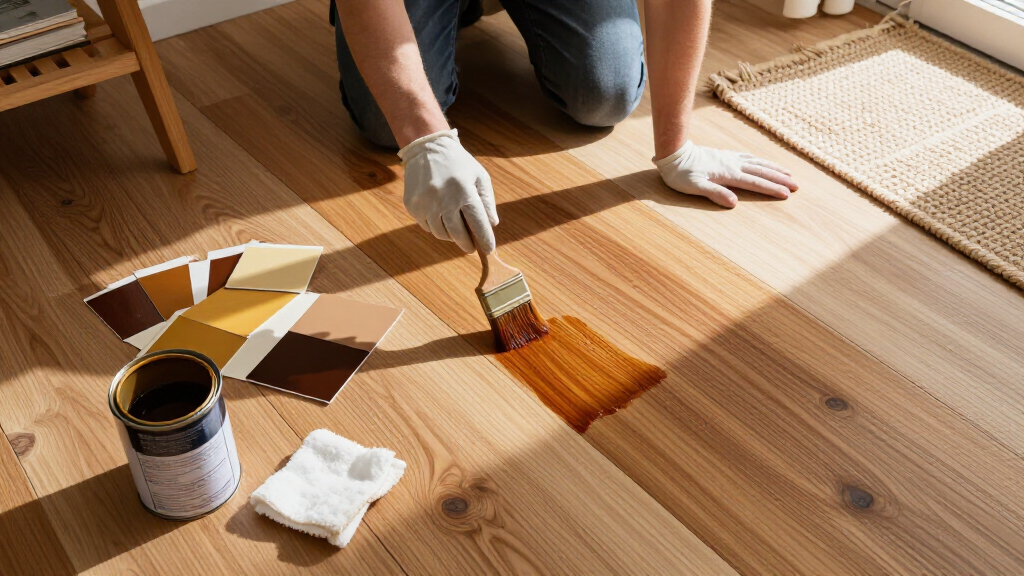

For the best Minwax wood stain colors, I’d start with Golden Oak as the most approachable all-around choice: its familiar warm tone suits many indoor wood projects. Dark Walnut offers a deeper, more dramatic look, while Phantom Gray gives wood a cooler, contemporary cast. The main tradeoff is not just color: Minwax options also differ in opacity, stain-and-finish combinations, and how much of the grain remains visible. A shade that looks right on a sample can change across wood species and under different lighting. Read on for my full comparison and guidance on matching the formula to your project.

Get furniture and decor delivered free with Prime
- Fast, free delivery on millions of items
- Prime Video, Amazon Music and more included
- Member-only deals all year
Complete the kit


Key Takeaways
- Color names do not tell the whole story: Dark Walnut appears in both semi-transparent and solid-color water-based formulas, so the finish’s opacity can matter as much as the shade.
- Golden Oak is the approachable starting point: its half-pint size suits a small project or color test, though it may not cover a larger piece.
- PolyShades combines color and polyurethane: that can simplify finishing, but it gives less flexibility than applying stain and a separate topcoat.
- Unusual colors call for extra sampling: Marine Blue, True Black, and Phantom Gray can create a strong look, but substrate and grain affect the result.
- Package size reflects project planning, not formula quality: Bombay Mahogany Gloss appears in both quart and half-pint sizes, making the smaller option useful for limited work and the quart more suitable for larger coverage.


| Minwax wood stain color | Color | Base | Finish | Drying time |
|---|---|---|---|---|
| Minwax Wood Finish Wood Stain | Phantom Gray | Oil-based | — | About 2 hours |
| Minwax Water-Based Solid Color | Dark Walnut | Water-based | Smooth, flat | About 1 hour |
| Minwax Wood Finish | Golden Oak | Oil-based | — | About 2 hours |
| Minwax Interior Gel Stain | Mahogany | — | — | — |
| Minwax Color Wash Transparent | Barnwood Brown | Water-based | Matte or satin | — |
| Minwax Wood Finish Interior St | Rustic Beige | Oil-based | — | About 2 hours |
| Minwax Express Color Wiping St | Oak | Water-based | Semi-gloss | About 1 hour |
| Minwax PolyShades Stain and Po | Pecan | Oil-based | Satin | — |
| Minwax PolyShades Wood Stain & | Antique Walnut | Oil-based | Satin | — |
| Minwax Water-Based Semi-Transp | Dark Walnut | Water-based | Semi-gloss | About 1 hour |
| Minwax Water-Based Semi-Transp | True Black | Water-based | Semi-transparent | About 1 hour |
| Minwax Water-Based Semi-Transp | Marine Blue | — | Satin | About 1 hour |
| Minwax Water-Based Solid Color | Marine Blue | Water-based | Smooth, flat | About 1 hour |
| Minwax PolyShades Wood Stain a | Bombay Mahogany | Oil-based | Gloss | — |
| Minwax PolyShades Wood Stain a | Bombay Mahogany | — | Gloss | — |
More Details on Our Top Picks
Minwax Wood Finish Wood Stain, Phantom Gray, 1 Quart
Phantom Gray is my pick for buyers who want a cool gray tone without covering the wood’s natural pattern. Its oil-based penetrating formula adds color while keeping grain visible, unlike Minwax Water-Based Solid Color Wood Stain in Dark Walnut, which is designed to hide much of the grain. The quart size suits larger indoor jobs such as cabinets, trim, or floors, and the stated two-hour drying time gives it a relatively quick turnaround for an oil-based stain. A formula that resists lapping may help produce more even color across a surface. The tradeoff is its indoor-only use and oil-based format, which calls for appropriate ventilation and is less convenient than a water-based option. Choose it for a grain-forward gray; skip it if you want opaque coverage or an exterior stain.
Pros:- Penetrating color enhances rather than obscures natural wood grain.
- Phantom Gray offers a distinct alternative to traditional brown stains.
- Stated drying time is about two hours.
- Lapping resistance is intended to support more even color.
Cons:- Intended for indoor wood surfaces, not exterior projects.
- Oil-based formula requires suitable ventilation.
- Coverage is not specified, making material planning less precise.
Best for: DIYers staining indoor furniture, cabinets, or floors who want a gray color that still lets the wood grain show.
Not ideal for: Buyers seeking an outdoor finish, a water-based cleanup routine, or solid coverage that conceals grain.
- Base:Oil-based
- Color:Phantom Gray
- Container size:1 quart
- Liquid volume:32 fluid ounces
- Drying time:About 2 hours
- Recommended use:Indoor wood surfaces
- Container type:Can
- Model number:118620000
Our verdict“Choose Phantom Gray when you want a cool indoor stain that preserves visible grain, not an opaque or exterior finish.”
Minwax Water-Based Solid Color Wood Stain, Dark Walnut, 1 Quart
Dark Walnut suits projects where a consistent, solid color matters more than displaying the wood beneath. Its one-coat solid-color coverage is a sharper departure from Minwax Wood Finish Golden Oak, which is intended to enhance natural grain rather than conceal it. The thicker water-based formula is designed to make application easier, while a one-hour drying time can help keep an indoor project moving. The listed coverage is 100 square feet per quart, useful when estimating how much stain to prepare. That opacity is also the main compromise: it hides much of the grain, so it is a poor match for attractive wood you want to show off. This is an interior-only stain, making it less versatile than a product intended for other surfaces or settings.
Pros:- Solid color is designed to cover much of the wood grain in one coat.
- Water-based formula is an alternative to the oil-based Golden Oak and Phantom Gray stains.
- About one-hour drying time supports faster project turnaround.
- Listed coverage is 100 square feet per quart.
Cons:- Conceals much of the natural grain.
- Intended for interior wood only.
- Flat, solid-color appearance is less suited to traditional grain-enhancing stain results.
Best for: Indoor-project owners who want a dark walnut look with broad, consistent color on furniture, cabinets, doors, or trim.
Not ideal for: Woodworkers who want visible grain, a transparent stain effect, or a product for exterior surfaces.
- Base:Water-based
- Color:Dark Walnut
- Volume:1 quart
- Finish:Smooth, flat
- Coverage:100 square feet per quart
- Drying time:About 1 hour
- Recommended use:Interior wood
- Model number:108610000
Our verdict“Pick this stain for fast, opaque walnut color on indoor wood, but choose Golden Oak or Phantom Gray if grain visibility matters.”
Minwax Wood Finish, Golden Oak, 1/2 Pint
Golden Oak is the compact choice for a familiar warm stain on a smaller indoor project. Its penetrating oil-based formula is made to add an even color while bringing out the grain, unlike the opaque coverage of Minwax Water-Based Solid Color Wood Stain in Dark Walnut. Application with a cloth or brush and a single-coat approach keep the process straightforward for furniture, trim, or a limited cabinet refresh. The eight-ounce container is less cumbersome than a quart when the job is modest, though it may not stretch far across a large room or several pieces. It dries in about two hours, but the oil base can have a strong odor and calls for good ventilation. Choose this classic brown-gold look when you want grain enhancement in a manageable quantity.
Pros:- Warm Golden Oak color enhances natural grain.
- Designed to provide a deep, even color in one coat.
- Can be applied with a cloth or brush.
- Smaller container suits limited projects and reduces leftover stain.
Cons:- Eight-ounce volume may be insufficient for larger projects.
- Oil-based formula can have a strong odor and requires ventilation.
- Designed for interior use.
Best for: DIYers refreshing a small piece of indoor furniture, a limited run of trim, or another project suited to an eight-ounce quantity.
Not ideal for: People staining large floors or multiple large pieces, and anyone who needs water-based application or an exterior product.
- Product type:Penetrating interior wood stain
- Base:Oil-based
- Color:Golden Oak
- Unit count:8 fluid ounces
- Application:Cloth or brush
- Coat guidance:Single coat
- Drying time:About 2 hours
- Model number:221024444
Our verdict“Choose Golden Oak for a small indoor project that calls for a warm, grain-enhancing color in a compact container.”
Minwax Interior Gel Stain, Mahogany, 1 Quart
Mahogany Gel Stain earns its place for controlled application, especially on doors, cabinets, and other vertical surfaces where a thin liquid stain can run. Its thick, non-drip formula makes it a more targeted choice than Minwax Wood Finish Phantom Gray, a penetrating oil-based stain intended for indoor wood. This gel stain also lists compatibility with wood, metal, veneer, and fiberglass, giving it broader surface options than the wood-only Golden Oak stain. Apply it with a cloth, brush, or foam applicator and wipe away excess after three minutes. The tradeoff is extra preparation: bare wood should be pre-treated for more uniform color. It is an interior product, and exterior use calls for an exterior clear protective finish, so it is not a ready-to-use outdoor stain.
Pros:- Thick, non-drip consistency helps control application on vertical surfaces.
- Can be applied with a cloth, brush, or foam applicator.
- Listed for wood, metal, veneer, and fiberglass.
- Mahogany color offers a rich alternative to the lighter Golden Oak stain.
Cons:- Bare wood should be pre-treated to promote more uniform color.
- Exterior application requires an exterior clear protective finish.
- Excess must be wiped off after the stated three-minute application interval.
Best for: DIYers staining indoor doors, cabinets, or furniture with vertical surfaces, or working with compatible veneer, metal, or fiberglass.
Not ideal for: Buyers who want a simple stain for untreated bare wood without pre-treatment, or a stain ready for exterior use.
- Stain type:Interior gel stain
- Color:Mahogany
- Volume:32 fluid ounces (1 quart)
- Formula:Thick-bodied, non-drip
- Suitable surfaces:Wood, metal, veneer, and fiberglass
- Application tools:Cloth, brush, or foam applicator
- Wipe-off interval:After 3 minutes
- Model number:66050000
Our verdict“Choose Mahogany Gel Stain for controlled indoor application on vertical or compatible mixed surfaces, provided you are prepared to pre-treat bare wood.”
Minwax Color Wash Transparent Layering Color, Barnwood Brown, 1 Quart
Barnwood Brown Color Wash is the pick for an aged effect rather than a conventional, grain-enhancing stain. Its transparent finish adds color and depth to bare or previously stained wood, while a second coat can increase the intensity. That makes it more adjustable than Minwax Water-Based Solid Color Wood Stain in Dark Walnut, which is designed to hide much of the grain in one coat. This water-based option lists 100 square feet of coverage per quart and can be applied over either oil- or water-based stains, offering useful flexibility for interior furniture, cabinets, doors, and trim. Its main limitation is the restrained first-coat color: buyers seeking a strong, opaque brown may need another coat or a different stain. It is intended for interior wood, not exterior projects.
Pros:- Transparent color adds aged character while allowing the wood to show through.
- Can be applied to bare wood or over oil- or water-based stains.
- Second coat offers a way to intensify the color.
- Listed coverage is 100 square feet per quart.
Cons:- A second coat may be needed for stronger color.
- Interior wood use only.
- Transparent layering effect is not suited to concealing grain.
Best for: Furniture refinishers and DIY decorators who want a transparent, aged barnwood effect on bare or already-stained indoor wood.
Not ideal for: Buyers who want opaque one-coat coverage, a strongly saturated brown immediately, or a finish for exterior wood.
- Product type:Transparent layering color wash
- Base:Water-based
- Color:Barnwood Brown
- Container size:1 quart
- Finish:Matte or satin
- Coverage:100 square feet per quart
- Coats:One coat; a second may intensify color
- Recommended surfaces:Interior wood
- Model number:404140000
Our verdict“Pick Barnwood Brown Color Wash for a flexible, layered aged look on indoor wood, not for opaque coverage or outdoor staining.”
Minwax Wood Finish Interior Stain, Rustic Beige, 1 Quart
Rustic Beige suits projects where I want added warmth without hiding the wood’s natural pattern. Its oil-based penetrating formula absorbs into bare or stripped wood, and the lapping-resistant application can help keep color more even across broad surfaces. Compared with the darker, more dramatic Minwax PolyShades Pecan Satin, this stain keeps the color lighter and leaves the choice of protective topcoat open. The tradeoff is that it does not combine stain and protection, so finishing takes an additional step. It is also interior-only, which rules it out for outdoor projects. With a stated drying time of about two hours, it is a practical pick for furniture, cabinets, trim, and other indoor woodwork where visible grain matters.
Pros:- Penetrates wood pores while leaving natural grain visible
- Rustic Beige offers a lighter alternative to Pecan and Antique Walnut
- Resists lapping to support more even-looking color
- About two-hour drying time
Cons:- Limited to interior use
- Requires a separate protective finish
- Designed for bare or stripped wood rather than covering an existing finish
Best for: DIYers staining bare or stripped indoor furniture, cabinets, or trim who want a light beige tone and visible grain.
Not ideal for: Outdoor project owners and anyone seeking a one-step stain-and-protect finish; this is for interior use and needs a separate protective coating.
- Color:Rustic Beige
- Base:Oil-based
- Finish type:Penetrating
- Use:Interior
- Volume:1 quart (32 fluid ounces)
- Coverage:150 sq ft
- Drying time:About 2 hours
- Recommended surface:Wood
Our verdict“Choose Rustic Beige when you want a light, grain-enhancing color on indoor bare wood and are prepared to apply protection separately.”
Minwax Express Color Wiping Stain and Finish, Oak
Express Color Oak is the convenience pick for small indoor jobs where I would rather wipe on color than manage a separate stain and finish routine. The water-based, one-step formula dries in about an hour and cleans up with soap and water, a simpler process than the oil-based Minwax PolyShades Pecan Satin, which calls for mineral spirits. Its wiping application also suits furniture and accessories where a brush-heavy process feels excessive. The tradeoff is protection: the manufacturer recommends a separate clear coat for added shine and durability, so the one-step approach may not be the last step after all. A second coat can deepen the color and sheen, but buyers seeking a highly protective standalone finish may prefer PolyShades instead.
Pros:- Combines Oak color and a finish in one wiping step
- Water-based formula has low odor
- About one-hour drying time
- Cleans up with soap and water, with a second coat available for deeper color
Cons:- A separate clear coat is recommended for added protection and shine
- Limited to interior wood surfaces
- Wiping application may be less convenient than brushing on larger projects
Best for: DIYers refreshing indoor furniture, cabinets, or wood accessories who value quick application, low odor, and water cleanup.
Not ideal for: People finishing high-wear pieces who want stain and durable clear protection in one product, or anyone working outdoors.
- Color:Oak
- Base:Water-based
- Application:Wiping stain
- Finish:Semi-gloss
- Drying time:About 1 hour
- Coats:One coat; a second coat after one hour can deepen color and sheen
- Cleanup:Soap and water
- Recommended surfaces:Interior wood surfaces, furniture, woodwork, cabinets, and accessories
Our verdict“Pick Express Color Oak for a fast, low-odor indoor refresh, but plan on a clear coat if the surface needs added protection.”
Minwax PolyShades Stain and Polyurethane, Pecan Satin, 8 fl oz
Pecan Satin in the 8-ounce size fits small projects where a warm brown stain and protective finish in one product are more useful than a full quart. Like the larger Minwax PolyShades Antique Walnut Satin, it combines oil-based stain with polyurethane and can go over bare or previously finished interior wood after light sanding. That makes it a more direct choice for updating an existing finish than Rustic Beige, which is a penetrating stain for bare or stripped wood. The smaller container is the main tradeoff: it limits how much furniture or woodwork I can cover, and the oil-based formula requires mineral spirits for brush cleanup. Choose it for a compact refresh, not for broad room-scale work or outdoor surfaces.
Pros:- Combines Pecan stain and polyurethane protection in one step
- Can be applied to bare or previously finished interior wood after light sanding
- Satin sheen provides a softer finish than gloss
- Compact volume suits a small furniture refresh
Cons:- Eight-ounce volume may not cover larger projects
- Brushes require mineral spirits for cleanup
- Restricted to interior wood surfaces
Best for: DIYers updating one small indoor furniture piece or a limited area of previously finished wood who want color and polyurethane together.
Not ideal for: People covering multiple large surfaces, seeking water cleanup, or staining outdoor wood; the 8-ounce oil-based formula is interior-only.
- Color:Pecan
- Finish:Satin
- Base:Oil-based
- Volume:8 fluid ounces (½ pint)
- Product type:Stain and polyurethane
- Use:Interior wood surfaces
- Compatible surfaces:Bare or previously finished wood, including polyurethane finishes
- Cleanup:Mineral spirits
Our verdict“Choose the compact Pecan Satin can for a small indoor project that needs both a warm color update and a polyurethane finish.”
Minwax PolyShades Wood Stain & Polyurethane Finish – 1 Qt, Antique Walnut, Satin
Antique Walnut Satin brings a deeper, traditional brown tone to larger indoor projects while combining stain and polyurethane in one application. Its quart volume is a better fit for several furniture pieces or substantial woodwork than the compact PolyShades Pecan Satin 8-ounce, though the two share the convenience of a combined finish. Antique Walnut gives the color a darker, more established look than Rustic Beige, but it will not suit buyers aiming to keep a pale, understated appearance. It can go over an existing interior finish after light sanding, reducing the need to strip, but the oil-based formula brings stronger odor and mineral-spirits cleanup. That convenience comes with less flexibility than a standalone stain, since color and topcoat are bundled together.
Pros:- Combines stain color and polyurethane in one application
- Quart volume suits larger projects than the 8-ounce Pecan option
- Can be applied over an existing interior finish after light sanding
- Antique Walnut color pairs with a satin sheen
Cons:- Oil-based formula requires mineral spirits for cleanup
- Application has a strong odor
- Limited to interior wood surfaces
Best for: DIYers refinishing multiple indoor furniture pieces, doors, or cabinets who want a dark walnut tone and built-in satin polyurethane protection.
Not ideal for: People working outdoors, sensitive to oil-based fumes, or wanting to choose a separate protective topcoat and sheen.
- Color:Antique Walnut
- Finish:Satin
- Base:Oil-based
- Volume:1 quart (32 fluid ounces)
- Product type:Stain and polyurethane finish
- Use:Interior wood surfaces
- Compatible surfaces:Bare or previously finished interior wood
- Cleanup:Mineral spirits
Our verdict“Pick the quart of Antique Walnut Satin when you want a darker one-step finish for several indoor surfaces and can work with oil-based cleanup.”
Minwax Water-Based Semi-Transparent Wood Stain, Dark Walnut, 1 Quart
Dark Walnut offers a deep color while keeping the grain visible, making it a useful middle ground between a transparent stain and a solid-color coating. Its water-based formula dries in about an hour, faster than the roughly two-hour drying time listed for Rustic Beige, and the semi-transparent finish avoids fully concealing the wood pattern. Compared with PolyShades Antique Walnut Satin, this is a standalone stain rather than a stain-and-polyurethane product, so I can choose a separate protective finish—but that also adds another step. The stated coverage is 100 square feet per quart, and the product is described as suited to small projects. That makes it less appealing for extensive flooring or broad surfaces, especially when a built-in protective coating is the priority.
Pros:- Semi-transparent color keeps wood grain visible
- Water-based formula dries in about one hour
- Dark Walnut creates a deeper look than Rustic Beige
- Quart format suits small furniture and trim projects
Cons:- Stated coverage is 100 square feet per quart
- Does not combine stain and polyurethane protection
- Intended for small projects rather than extensive surfaces
Best for: DIYers staining small indoor furniture, cabinets, doors, or trim who want a dark walnut color, visible grain, and quick drying.
Not ideal for: People finishing large areas or seeking stain and polyurethane protection in one product; its stated coverage is limited and a separate topcoat may be needed.
- Color:Dark Walnut
- Base:Water-based
- Finish:Semi-gloss
- Size:1 quart
- Coverage:100 sq ft per quart
- Drying time:About 1 hour
- Recommended surface:Wood
- Recommended uses:Small projects, unfinished furniture, cabinets, doors, and trim
Our verdict“Choose this Dark Walnut stain for a quick-drying, grain-visible color on smaller indoor projects when you are comfortable adding protection separately.”
Minwax Water-Based Semi-Transparent Wood Stain, True Black, 1 Quart
True Black is the pick when you want a strong black tone without turning wood into a fully opaque surface. Its semi-transparent finish lets grain remain visible, unlike the solid-color Marine Blue stain in this lineup, which is designed to hide it. A single coat is described as coloring the wood, and the one-hour drying time can help keep a small furniture or trim project moving.
The tradeoff is that grain visibility also means the underlying wood can affect the final look; this is not the choice for a uniform, fully covered black finish. The quart is described for smaller projects, with coverage of 100 square feet, so I would choose it for furniture, cabinets, doors, or trim rather than a large surface. Compared with the oil-based Bombay Mahogany PolyShades, it offers no combined polyurethane finish.
Pros:- Semi-transparent color keeps wood grain visible
- Designed to add color in one coat
- Dries in about one hour
- Suitable for furniture, cabinets, doors, and trim
Cons:- Semi-transparent coverage may leave natural wood variation visible
- The quart format is intended for smaller projects
- Does not combine stain with a polyurethane protective finish
Best for: DIYers staining a small furniture, cabinet, door, or trim project who want black color while keeping some wood grain visible.
Not ideal for: Buyers seeking opaque, consistent black coverage or a stain-and-protective-finish product in one step.
- Color:True Black
- Base:Water-based
- Finish:Semi-transparent
- Size:1 quart (32 fl oz)
- Coverage:100 sq ft
- Drying time:About 1 hour
- Recommended uses:Cabinets, interior, furniture
- Compatible material:Wood
Our verdict“Choose True Black for a small wood project where visible grain matters more than fully opaque coverage.”
Minwax Water-Based Semi-Transparent Wood Stain, Marine Blue, 1 Quart
Marine Blue Semi-Transparent suits projects where the color should feel expressive but the wood should still read as wood. Unlike the solid-color Marine Blue option, this stain is intended to show the grain, giving the surface a less uniform, more wood-led appearance. The product description calls out a thicker formula for easier application, and its one-coat color and roughly one-hour drying time fit smaller furniture, cabinet, door, or trim jobs.
Its main limitation is the project guidance: the listed recommended use is exterior, while the description does not specify indoor use. That makes it a less straightforward pick for interior furniture than the True Black semi-transparent stain, whose listed uses include interior projects. Coverage is 100 square feet per quart, so this is better matched to a focused project than extensive surfaces. Choose the solid Marine Blue instead if hiding grain is the priority.
Pros:- Adds Marine Blue color while showing wood grain
- Designed to provide color in one coat
- Dries in about one hour
- Thicker formula is described as easier to apply
Cons:- Recommended-use data lists exterior, while indoor use is not specified
- Semi-transparent color will not conceal grain or underlying wood variation
- One-quart size and stated coverage suit smaller projects better than broad applications
Best for: Woodworkers seeking a blue stain for a limited project where visible grain and a semi-transparent look are part of the design.
Not ideal for: Buyers who need clearly specified interior use or want an opaque blue surface that conceals the grain.
- Color:Marine Blue
- Base and coating:Water-based semi-transparent stain
- Finish:Satin
- Size:1 quart
- Coverage:100 sq ft per quart
- Drying time:About 1 hour
- Recommended surface:Wood
- Recommended use:Exterior
Our verdict“Pick this Marine Blue stain for a small grain-visible project, but choose the solid-color version for more uniform coverage.”
Minwax Water-Based Solid Color Wood Stain, Marine Blue, 1 Quart
If a project calls for a clear, even blue rather than a wood-toned effect, Solid Color Marine Blue is the more direct choice than the semi-transparent Marine Blue stain. Its solid-color coating is designed to hide the grain in one coat, which can make mismatched or less attractive wood less prominent. It is specified for interior projects such as furniture, cabinets, doors, and trim, and the roughly one-hour drying time makes it practical for smaller updates.
That coverage comes at the expense of natural character: unlike the semi-transparent Marine Blue, this finish conceals more of the grain. It is also listed for interior use only, so I would not select it for an exterior job. With 100 square feet of stated coverage per quart, it fits a furniture refresh or a contained room detail better than a large-scale application. Its smooth, flat finish also differs from the satin semi-transparent version.
Pros:- Solid color is designed to hide wood grain in one coat
- Dries in about one hour
- Thicker formula is described as easier to apply
- Suitable for interior furniture, cabinets, doors, and trim
Cons:- Conceals more of the wood’s natural grain than the semi-transparent Marine Blue
- Specified for interior use only
- Stated coverage of 100 square feet per quart limits its fit for larger projects
Best for: Interior DIYers who want a consistent Marine Blue finish on furniture, cabinets, doors, or trim and do not need visible grain.
Not ideal for: Buyers who want the natural grain to remain a feature or need a stain specified for exterior use.
- Color:Marine Blue
- Coating:Solid-color stain
- Base:Water-based
- Finish:Smooth, flat
- Size:1 quart
- Coverage:100 sq ft per quart
- Drying time:About 1 hour
- Recommended uses:Interior, cabinets
Our verdict“Choose this version over the semi-transparent Marine Blue when uniform interior color matters more than visible wood grain.”
Minwax PolyShades Wood Stain and Polyurethane Finish, Bombay Mahogany, Gloss, Quart
Bombay Mahogany PolyShades is the lineup’s practical choice for buyers who want color and a gloss protective finish in one product. Its oil-based formula combines stain with polyurethane, so it differs from the water-based True Black and Marine Blue stains, which provide color but do not list an integrated protective topcoat. It can be applied to bare or previously finished interior wood after light sanding, making it useful for refreshing furniture, doors, cabinets, and other woodwork without starting from a completely bare surface.
The compromise is a more involved cleanup: this formula requires mineral spirits, unlike a water-based stain. It is also limited to interior wood and has a glossy look, so it is not the right match for a low-sheen finish or an exterior project. The quart size suits a broader furniture or woodwork task better than the ½-pint version, though the smaller Bombay Mahogany can make more sense for a small piece or test area.
Pros:- Combines stain color and polyurethane protection in one step
- Can be applied to bare or previously finished wood after light sanding
- Suitable for furniture, doors, cabinets, and woodwork
- Quart volume suits a larger task than the ½-pint Bombay Mahogany option
Cons:- Oil-based formula requires mineral spirits for cleanup
- For interior wood surfaces only
- Gloss finish may not suit buyers who prefer a lower sheen
Best for: DIYers refinishing several interior wood items who want Bombay Mahogany color and a gloss polyurethane finish in one oil-based product.
Not ideal for: Buyers working outdoors, avoiding mineral-spirits cleanup, or seeking a matte or satin appearance.
- Color:Bombay Mahogany
- Finish:Gloss
- Base:Oil-based
- Volume:1 quart (32 fl oz)
- Application:Brush-on
- Use:Interior wood surfaces
- Cleanup:Mineral spirits
- Compatible material:Wood
Our verdict“Pick the quart for multiple interior wood surfaces when one-step Bombay Mahogany color and gloss protection outweigh cleanup convenience.”
Minwax PolyShades Wood Stain and Polyurethane, Bombay Mahogany, Gloss, ½ Pint
The ½-pint Bombay Mahogany PolyShades offers the same basic appeal as the quart: oil-based stain color and a glossy polyurethane finish in one step. Its smaller 8-fluid-ounce size makes it a better fit for a single small item or a limited touch-up than the quart version, which is more sensible when several pieces or broader woodwork are involved. Like the quart, it can be used on bare or previously finished interior wood after light sanding, so the project need not begin with completely stripped wood.
There are real constraints. The finish is glossy and interior-only, and cleanup calls for mineral spirits, so it is less convenient than the water-based True Black stain. This product’s description does not provide a coverage figure, which makes planning for a larger job less certain. I would choose it for a small furniture or accessory project where the combined stain-and-polyurethane step matters; for a larger job, the quart is the more practical Bombay Mahogany format.
Pros:- Combines stain and polyurethane protection in one step
- Smaller ½-pint volume suits a limited project
- Can be applied to bare or previously finished wood after light sanding
- Provides a rich brown color with a glossy sheen
Cons:- Oil-based formula requires mineral spirits for cleanup
- For interior wood surfaces only
- Smaller volume is less suited to multiple pieces or broad woodwork
Best for: DIYers finishing one small piece of interior furniture or woodwork who want Bombay Mahogany color and a gloss protective finish in one product.
Not ideal for: Buyers covering multiple large surfaces, needing a documented coverage estimate, or avoiding oil-based cleanup.
- Color:Bombay Mahogany
- Finish:Gloss
- Formula:Oil-based stain and polyurethane
- Volume:½ pint (8 fl oz)
- Recommended uses:Furniture, woodwork, doors, cabinets, and accessories
- Application surface:Bare or previously finished interior wood after light sanding
- Cleanup:Mineral spirits
- Model number:214804444
Our verdict“Choose the ½-pint over the quart when one small interior project needs the combined Bombay Mahogany stain-and-gloss finish.”

How We Picked
I compared the 15 listed Minwax options by color character, transparency, finish type, and intended use, rather than treating a shade name as a full description. I also weighed how much control each formula gives the buyer: transparent and semi-transparent stains preserve more visible grain, solid-color products create a more uniform appearance, and stain-and-polyurethane combinations reduce the number of finishing steps.
The ranking favors options with a clear, broadly useful role and a practical balance of appearance and application. More specialized shades and combined finishes rank for the buyers they suit, not because they are inferior. Package size helps match a product to a project but does not determine quality; where two listings share a color and finish family, I distinguish them by their stated size and the scale of work they suit. Wood species, preparation, and lighting can change the final appearance, so I treat color names as starting points rather than guarantees.
| Minwax wood stain color | Base | Drying time | Finish |
|---|---|---|---|
| Minwax Wood Finish Wood Stain | Oil-based | About 2 hours | — |
| Minwax Water-Based Solid Color | Water-based | About 1 hour | Smooth, flat |
| Minwax Wood Finish | Oil-based | About 2 hours | — |
| Minwax Interior Gel Stain | — | — | — |
| Minwax Color Wash Transparent | Water-based | — | Matte or satin |
| Minwax Wood Finish Interior St | Oil-based | About 2 hours | — |
| Minwax Express Color Wiping St | Water-based | About 1 hour | Semi-gloss |
| Minwax PolyShades Stain and Po | Oil-based | — | Satin |
| Minwax PolyShades Wood Stain & | Oil-based | — | Satin |
| Minwax Water-Based Semi-Transp | Water-based | About 1 hour | Semi-gloss |
| Minwax Water-Based Semi-Transp | Water-based | About 1 hour | Semi-transparent |
| Minwax Water-Based Semi-Transp | — | About 1 hour | Satin |
| Minwax Water-Based Solid Color | Water-based | About 1 hour | Smooth, flat |
| Minwax PolyShades Wood Stain a | Oil-based | — | Gloss |
| Minwax PolyShades Wood Stain a | — | — | Gloss |
Factors to Consider When Choosing Best Minwax Wood Stain Colors
Choosing among these stains starts with the look you want, but the formula determines how that look behaves on wood. I’d settle the visibility of the grain, finish steps, and project size before choosing a color label.
Decide How Much Grain You Want to See
Transparency is one of the biggest differences in this lineup. Transparent and semi-transparent products leave more of the wood’s natural pattern visible, while a solid-color formula creates a more even, painted-like effect. Neither is automatically better: prominent grain may be part of the appeal on oak, but uneven boards or repairs can stand out under a more transparent stain. A solid color can visually unify mixed surfaces, though it conceals more of the wood character. Test the exact formula on an offcut from the project, since the same named shade can look different across transparency levels.
Match the Formula to Your Finishing Plan
A stain-only product gives you more choice about the protective coat you apply afterward, while PolyShades combines stain and polyurethane in one product. The combined route can reduce steps, but it also limits the ability to choose a separate clear finish or adjust the stain and topcoat independently. Check the product directions for surface preparation, application, and recoat guidance before buying; a combined finish is not a shortcut around those requirements. If you want to build a particular sheen or protection system, separate products may give you more control. If fewer finishing stages matter more, a stain-and-polyurethane option may fit better.
Treat the Color Name as a Starting Point
Names such as Golden Oak, Dark Walnut, and Bombay Mahogany suggest a color family, not a guaranteed result on every board. Species, grain density, prior coatings, sanding, and the wood’s natural undertone all influence the appearance. Even a familiar brown can read warmer or darker when applied to a different surface. Make a sample using the same preparation and number of coats planned for the project, then view it in the room’s lighting. This matters even more with high-impact choices such as True Black, Marine Blue, and cool gray.
Choose by Project Scale, Not Just Container Size
A small container can be a sensible way to handle a trim detail, a limited repair, or a sample, while a quart is more practical for a broad surface or multiple pieces. Buying too little can interrupt work and make it harder to maintain a consistent finish across a project. Buying far more than needed can leave you with a color you may not use again. Estimate the total surface area and check the product’s coverage information and directions for the specific formula before deciding. For a color-sensitive project, reserve enough of the same product for all visible surfaces.
Plan Around Existing Finishes and Repairs
Stain works differently on bare wood than on a surface with an existing coating, so identify what is already on the piece before selecting a product. Old clear coats, paint, wax, and spot repairs can keep new stain from absorbing evenly. A transparent stain may emphasize patches rather than disguise them, while an opaque option can hide more of the underlying variation. Do not assume that a new coat will blend seamlessly with an old finish just because the color name matches. Test a discreet area and follow the product directions for surface preparation before committing to the full piece.
Balance Color Impact Against Long-Term Flexibility
Neutral browns and oak tones tend to work across more furniture and trim styles, while blue, black, gray, and glossy mahogany make a stronger design statement. A bold color can be the right choice for a feature piece, but it is less adaptable if the room’s palette changes. Sheen also affects the visual weight of a finish: gloss reflects more light than satin and can draw attention to surface imperfections. When uncertain, sample the color and sheen together rather than judging the stain shade alone. Choose a distinctive tone deliberately for a focal project, and favor a more restrained color when future flexibility matters.
Frequently Asked Questions
Will Dark Walnut look the same in the semi-transparent and solid-color Minwax options?
No. The shared shade name does not make the formulas interchangeable: a semi-transparent stain leaves more of the wood’s character visible, while a solid-color option gives a more uniform appearance. The species, grain, and preparation also affect the result. Compare samples on the actual wood rather than relying on a color name or screen image. Choose based on the balance you want between visible grain and color coverage.
Can I use a stain-and-polyurethane product if I want to change the sheen later?
PolyShades combines color and polyurethane, so it offers less separation between the staining and protective-finish decisions than a stain-only product. If you want to select a different clear coat or build a finish in separate stages, a standalone stain gives you more flexibility. Follow the product’s directions before adding another coating, since compatibility and preparation matter. Test the complete finishing plan on a sample first rather than assuming a later coat will behave as expected.
Which Minwax color is the safest choice for a first small project?
Golden Oak is a reasonable starting point if you want a familiar warm wood tone, and its half-pint listing can suit a small project or a sample. That does not mean it will look identical on every wood species, so try it on an offcut first. If your project needs a more contemporary or dramatic look, Phantom Gray or Dark Walnut may be a better match, but each makes a stronger visual shift. Choose based on the wood and room, not simply on which color sounds easiest.
How can I reduce the risk of a bold color like Marine Blue or True Black overwhelming a room?
Use a sample large enough to judge the color alongside the room’s flooring, wall colors, and lighting. A small accent piece or a limited area can let a high-impact shade add contrast without dominating every surface. The product’s transparency also changes how strongly the color reads, so compare the appropriate formula rather than assuming all versions behave alike. Check the sample in daylight and at night before choosing. If the color feels too strong across the full sample, reserve it for a focal piece or select a quieter tone.
Should I buy a half-pint or a quart when two listings have the same color?
Base that choice on the project’s surface area, not the color name alone. A half-pint is suited to a limited job or a sample, while a quart is more practical when several pieces or a larger surface need a consistent finish. Check the stated coverage and directions for the specific product, since formulas can differ. For a set of matching pieces, plan enough product to complete all visible surfaces from the same container or batch where practical. That helps avoid running short or ending with a visible difference in color.
Conclusion
For the best overall starting point, I’d choose Golden Oak when a familiar warm tone and a small-project size fit the job. Best for a deeper classic look is Dark Walnut, with the semi-transparent and solid-color versions serving different grain-visibility preferences. Best for beginners is the small Golden Oak listing for a modest project or test, while buyers who want fewer finishing steps can look to PolyShades—with the tradeoff of less separation between stain and protective coat. For a more distinctive project, Phantom Gray, Marine Blue, True Black, and Bombay Mahogany offer stronger visual statements; sample them before committing. I’d choose the quart when coverage across a larger project matters, and the half-pint when the work is limited. The right pick is the formula and color combination that suits your wood, desired grain visibility, and finishing plan.
Fall Picks
fall essentials
As an affiliate, we earn on qualifying purchases.